
Guides · Technique
The Bottomless Portafilter: What It Shows You
A bottomless portafilter is a diagnostic instrument, not an upgrade. It will not improve a single shot by itself — what it does is show you, in real time, exactly how your puck prep is failing.
The short answer
A bottomless portafilter removes the spouts so you can watch extraction directly on the basket's underside. Even sheeting means a well-prepared puck; squirts, side jets and early blonding mean channeling. It diagnoses rather than fixes — the cures are consistent dosing, a level tamp and a better grinder.
We earn a commission if you buy through a link on this page. It costs you nothing extra and it does not change what we recommend. Full disclosure.
Key takeaways
- A bottomless portafilter has no spouts — you see the naked underside of the basket, so you can watch the shot form.
- It is a diagnostic tool. It changes nothing about the coffee on its own; it makes an existing fault visible.
- Even, cone-shaped sheeting means a good puck. Squirts to the side, fast jets or early blonde patches mean channeling.
- The fixes are upstream: a consistent dose, an even distribution, a level tamp, and most of all a grinder that produces fewer fines.
What it actually is
A standard portafilter has a base with one or two spouts that collect the coffee and pour it neatly into a cup. A bottomless portafilter — also called a naked portafilter — is the same ring and handle with that base machined away, so the bottom of the filter basket is exposed. Lock it into the group, start the shot, and you can see coffee emerging from the holes in the basket in real time.
That is the entire difference. There is no change to pressure, temperature, dose or extraction; the coffee is not routed differently on its way out of the puck. What changes is that the part of the process normally hidden inside a metal spout becomes visible — and because puck preparation faults announce themselves in that first centimetre, the bottomless portafilter turns an invisible problem into an obvious one.
You will also see it described as a way to get "better crema" or a nicer pour. Ignore that. The honest claim is narrower and more useful: it is a window, and it is considerably cheaper than guessing.
Why you would want one
Here is the situation it solves. You pull a shot. It tastes thin and harsh at once — sour and bitter in the same mouthful, which is the classic signature of channeling: water finding a low-resistance route through part of the puck, over-extracting there while leaving the rest barely touched. With a spouted portafilter you have no way to tell whether that happened. You just have a bad drink and four plausible culprits — grind, dose, distribution, tamp.
With a bottomless basket the answer is in front of you within five seconds of the pump starting. A jet shooting sideways off one edge is a definitive answer: water broke through at the edge. Even sheeting that converges into a single cone is also a definitive answer: your puck prep is fine, so look at the grind or the ratio instead. That is why experienced home baristas own one and why most of them use it occasionally rather than daily.
How to read what you see
Watch the underside of the basket from the first drip until the flow blondes. Four patterns cover almost everything.
- Even sheeting into a single cone. Coffee appears across the whole basket face, converges and falls as one stream, dark and viscous. This is what you want. It means water passed through the puck broadly evenly, and any remaining problem with the shot is grind, dose or ratio rather than puck prep.
- Squirts and side jets. A thin, fast stream fires sideways, often from the edge or from one spot. That is channeling: water found a path of least resistance and blew through it. The shot will taste both under- and over-extracted.
- Early blonding in patches. Parts of the basket face go pale and watery well before the rest. That is uneven extraction across the bed — some of the coffee is finished while some has barely started.
- Spraying everywhere at the start. A fine mist across the whole underside in the first seconds, before proper flow. Usually a dose that is too low for the basket, leaving headroom that lets the shower screen disturb the puck surface.
One practical warning: a bottomless portafilter makes a mess while you are learning. Side jets do not land in the cup. Pull your first few over the drip tray, not over a worktop or a white shirt. You will also see more loose grounds around the group than usual, which is normal here rather than the fault described in grounds in my espresso or coffee stuck in the group head.
What causes each pattern
The value of the diagnosis is knowing which variable to change. These are the usual mappings, in the order worth checking.
- Side jets near the edge → an uneven or under-filled tamp. If the puck surface is sloped, water reaches the thin side first. Tamping level matters far more than tamping hard.
- A single persistent jet in the same spot → a crack or a void in the puck. Usually caused by clumpy grounds that were never distributed before tamping, or by knocking the portafilter after the tamp.
- Widespread early blonding → too many fines, or too low a dose. Fines migrate and block, creating uneven resistance across the bed. That is a grinder problem, and the honest answer is a grinder with a tighter particle distribution — which is why the grinder matters more than the machine.
- Initial spraying → the dose does not fill the basket properly. Weigh the dose rather than scooping it; the correct dose for a basket is its stated capacity, and scoops vary by grind density. Over-dosing has its own tell: a portafilter that is hard to lock in usually means the puck is touching the shower screen.
- Everything looks fine and the shot is still bad → stop blaming the puck. Look at grind size, ratio and time instead: how to dial in espresso.
A note on baskets, because it changes everything a bottomless basket can show you: if you are running a pressurized basket, the restrictor at the bottom creates the flow and the crema, and you cannot meaningfully diagnose a puck through it. A bottomless portafilter is only a useful instrument with a traditional, non-pressurized basket — see pressurized vs non-pressurized baskets.
The gear that fixes it
We do not carry a bottomless portafilter in our own product registry, so we are not going to point you at one we have not checked — buy one specified for your exact machine from a retailer who states the fitment. What we can point you at is the gear that fixes the faults a bottomless basket reveals, which is where the money actually belongs. In order of how much difference each makes:
What actually fixes channeling
Every pick on this page in one view, with the live Amazon price and stock on each row. Specs are the figures the maker or the listing publishes — nothing measured or scored by us. Prices are read from Amazon's API and were last checked October 10, 2026; where we have no verified price, the row says so rather than show you an old number.
| # | Gear | What it removes | Price & availability |
|---|---|---|---|
| 1 | 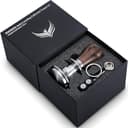 #1 KNODOS calibrated 58mm espresso tamper Best for consistency · 58 mm, spring-loaded Calibrated (spring-loaded) tamper — gives or clicks at a set pressure, so the tamp pressure is identical every time Removes tamp pressure as a variable while you are chasing a fault. | Removes tamp pressure as a variable while you are chasing a fault.Calibrated (spring-loaded) tamper — gives or clicks at a set pressure, so the tamp pressure is identical every time | $43.99In stock, checked October 10, 2026 Check Price on Amazon |
| 2 | 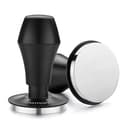 #2 Normcore V4 58mm espresso tamper Best plain tamper · 58 mm, flat base Mainstream 58 mm tamper from one of the better-regarded accessory makers — the straight replacement for a boxed plastic tamper A flat, properly sized base, so a level tamp is actually achievable. | A flat, properly sized base, so a level tamp is actually achievable.Mainstream 58 mm tamper from one of the better-regarded accessory makers — the straight replacement for a boxed plastic tamper | $43.69In stock, checked October 10, 2026 Check Price on Amazon |
| 3 | 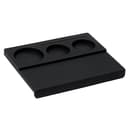 #3 Normcore Espresso Tamping Station (Corner Mat) Best for a level tamp · Corner mat Silicone corner mat that holds the portafilter steady on the counter edge while you tamp A wobbling portafilter is the easiest way to tamp at an angle. | A wobbling portafilter is the easiest way to tamp at an angle.Silicone corner mat that holds the portafilter steady on the counter edge while you tamp | $29.99In stock, checked October 10, 2026 Check Price on Amazon |
| 4 | 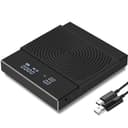 #4 Timemore Black Mirror Basic 2 coffee scale Best for dosing · 0.1 g scale 0.1 g resolution espresso scale with a built-in timer A weighed dose means the same puck depth every shot — the fix for spraying. | A weighed dose means the same puck depth every shot — the fix for spraying.0.1 g resolution espresso scale with a built-in timer | $55.00In stock, checked October 10, 2026 Check Price on Amazon |
A calibrated tamper, if you are chasing a fault
Who it is for: anyone trying to work out whether a bad shot was the grind, the dose or the tamp.
A calibrated tamper is spring-loaded: you press until it gives or clicks, and then you stop. The value is not that the specific pressure is magic — it is that the pressure becomes the same every single time, which removes one variable from a process that has too many. When you are reading spray patterns off a bottomless basket, eliminating a variable is exactly what you want.
Or a plain tamper that is the right size
Who it is for: Gaggia Classic Pro and Rancilio Silvia owners replacing the tamper that came in the box.
On the Gaggia in particular, the boxed plastic tamper is genuinely the weakest thing in the carton, and a flat metal base of the correct diameter makes a level tamp achievable in a way that a loose, undersized one does not. Size it to your machine — see the sizing section below, because this is where people buy the wrong thing.
Something to tamp against, and a scale
Who they are for: anyone whose bottomless shots spray at the start, or who is still dosing with the scoop that came in the box.
These two solve the two most mechanical causes of what you will see. A corner mat holds the portafilter square and stable so your tamp lands flat instead of at an angle — a portafilter rocking on a counter edge is the single easiest way to produce the sloped puck that fires a side jet. And a 0.1 g scale makes the dose repeatable, which fixes the first-second spraying that comes from under-filling a basket. Our coffee scales and tamping mats pages cover both categories properly.
And the real fix, if the pattern is widespread early blonding rather than a single jet, is upstream of all of this: a grinder that makes fewer fines. That is not an accessory purchase, it is the main one — the best grinders for espresso is the page for it.
Getting the size right
A bottomless portafilter is machine-specific hardware, and this is where the purchase most often goes wrong. Three things to check, in order.
- The group diameter.The Gaggia Classic Pro and Rancilio Silvia are 58 mm — the commercial standard. Breville's Barista Express and Barista Pro are 54 mm. De'Longhi publishes noportafilter diameter for the Dedica Duo or the Stilosa anywhere, including in the manual's technical data table, so the figures circulating online for those machines come from third-party sellers rather than from De'Longhi. Our 54 mm vs 58 mm guide covers what that means for buying anything that clips to a portafilter.
- The mounting ears.Even at the same diameter, portafilters differ in how they lock into the group. "58 mm" does not guarantee it will seat in your machine — buy one listed for your specific model.
- The basket. A bottomless portafilter is only a diagnostic tool with a traditional non-pressurized basket. If the only basket you own is pressurized, budget for a traditional one too, or the window shows you nothing.
If you own a lever machine, you may already have one. Flair's 49 PRO, for instance, ships with both a pressurized and a bottomless basket in the box — one of the few products we cover where the diagnostic option arrives as standard (see the manual machine roundup).
Who should not buy one
We would rather talk you out of it than sell you a disappointment, so here are the cases where it is the wrong purchase.
- You only own a pressurized basket. The restrictor controls the flow, so there is no puck behaviour to observe. Fix the basket first.
- You grind on a blade grinder, or use pre-ground coffee. You already know what the diagnosis will be, and the money belongs in a burr grinder instead.
- You own a super-automatic. There is no portafilter at all — the brew unit is sealed. That is the category trade-off, not something an accessory addresses.
- Your shots are already consistent and you like them. Then the window shows you a cone of coffee and confirms what you knew. Spend the money on beans.
The short version
A bottomless portafilter is a cheap, genuinely useful instrument for one specific job: finding out whether your puck preparation is the reason your espresso is inconsistent. Even sheeting into a single cone means your prep is fine and you should look at grind and ratio. Squirts, side jets and patchy early blonding mean channeling, and they tell you where.
What it will not do is make any shot better by itself. Once it has told you what is wrong, the money goes on the things that actually fix it: a weighed dose, a stable surface and a level tamp, and — above everything else — a grinder that produces fewer fines. Buy one sized for your specific machine, pull the first few over the drip tray, and read our channeling guide alongside it.
What we know, and how we know it
What we did
- Took the specs from the manufacturer's own documentation — Manufacturer portafilter specifications in our spec database (Breville 54 mm, Gaggia and Rancilio 58 mm, De'Longhi unpublished). Not from a retailer listing, and not from another blog.
- Priced it from Amazon's API, with the date we checked shown next to the number. If that price is more than 48 hours old, this page stops showing a number at all rather than show you a wrong one.
- Formed a verdict from those specs, the price, and what owners publicly report.
Where we hedged, and why
We do not sell or recommend a specific bottomless portafilter, because we do not carry one in our product registry. Fitment is model-specific and we will not point you at a part we have not verified against your machine. The accessories we do link are ones we cover elsewhere on the site, and they address the faults a bottomless basket reveals rather than the basket itself.
We have not used these machines or accessories and we run no lab, so the spray patterns described here are standard espresso diagnostics — a description of how water moves through a bed of coffee under pressure — rather than observations from a test rig we own. We attach no percentages or extraction yields to any pattern, because we have measured none.
Portafilter diameters are taken from our manufacturer-sourced spec database: 54 mm for Breville's Barista Express and Barista Pro, 58 mm for the Gaggia Classic Pro and Rancilio Silvia, and not publishedfor De'Longhi's Dedica Duo and Stilosa — which is why we tell you to check the listing rather than quoting a number for those. No price appears in our prose; every number here is live from Amazon with the date it was checked.
What we did not do
We do not run a lab. We have not pulled thousands of shots on this machine, and we are not going to pretend otherwise. We have not used this unit ourselves. Everything above is sourced research, and it is labeled as such. Where we have used a machine, we say so and show it.
How we're paid
If you buy through a link on this page, we earn a commission. It costs you nothing extra and it does not change what we recommend — we link to the better option for the buyer even when it earns us less. See how we review and our full disclosure.
Frequently asked questions
What is a bottomless portafilter for?
Watching extraction. Removing the spouts exposes the underside of the filter basket, so you can see coffee emerging from the basket holes as the shot pulls. Even sheeting that converges into a cone means a well-prepared puck; squirts, side jets and patchy early blonding mean channeling. It is a diagnostic instrument, not an upgrade — it does not improve a shot by itself.
Does a bottomless portafilter make better espresso?
No. It changes nothing about pressure, temperature, dose or extraction — it only makes the result visible. What improves espresso is what you do after it shows you the fault: weigh the dose, distribute the grounds, tamp level on a stable surface, and above all grind with a burr grinder that produces fewer fines.
Why does my bottomless portafilter spray everywhere?
Most often channeling or an under-filled basket. A thin jet firing sideways means water found a low-resistance path, usually from an uneven tamp, clumpy undistributed grounds, or a knock that cracked the puck after tamping. A fine mist across the whole underside in the first seconds usually means the dose is too low for the basket, leaving headroom for the shower screen to disturb the surface.
Can you use a bottomless portafilter with a pressurized basket?
You can fit one, but it tells you nothing useful. A pressurized basket has a restrictor that creates the flow and the crema, so what you see is the restrictor working rather than how water moved through your puck. A bottomless portafilter is only a diagnostic tool with a traditional, non-pressurized basket.
What size bottomless portafilter do I need?
It depends on your machine, and diameter alone is not enough. Breville's Barista Express and Barista Pro are 54 mm; the Gaggia Classic Pro and Rancilio Silvia are 58 mm. De'Longhi publishes no portafilter diameter at all for the Dedica Duo or Stilosa, so figures circulating for those come from third-party sellers. Mounting ears also differ between machines, so buy one listed for your exact model.
Is a bottomless portafilter worth it for a beginner?
Yes, if you already have a burr grinder and a traditional basket — it shortens the learning curve a lot by replacing guesswork with evidence. No, if you are using pre-ground coffee, a blade grinder or only a pressurized basket, because you already know what the diagnosis will be and the money belongs upstream.
Sources
Specs come from the manufacturer's own documentation. Prices come from Amazon's API. Where a claim comes from what owners report, we link the thread and say so.
- Gaggia Classic E24 official spec page (58 mm portafilter, three baskets in the box including a pressurized 'Crema perfetta' and two traditional)
- Rancilio Silvia official spec sheet (58 mm chrome-plated portafilter, traditional 8 g and 16 g non-pressurized baskets)
- Breville BES870 Barista Express product page and manual (54 mm portafilter)
- Flair Espresso — 49 PRO product information (ships with pressurized and bottomless baskets)
- Specialty Coffee Association — coffee research and standards
Keep reading
- Espresso channelingThe fault a bottomless basket exists to show you, and how to stop it.
- Pressurized vs non-pressurized basketsWhy a bottomless portafilter tells you nothing through a pressurized basket.
- Portafilter size: 54 mm vs 58 mmGet the fitment right before you buy anything that clips to a portafilter.
- How to dial in espressoWhat to change once the puck prep is confirmed good.
- Espresso tampersFlat, calibrated and sized — including the 54 mm trap on Breville machines.
- The best grinders for espressoThe real fix for widespread early blonding, rather than an accessory.