The Espresso Report Blog
Shorter pieces: what changed in the category, what's overrated, and corrections when we get something wrong.
Troubleshooting
Sour means under-extracted — water ran through too fast and left too much in the puck. The five causes, ranked, and the one-thing-at-a-time sequence for fixing them.
Explainer
Pressurized vs Non-Pressurized Baskets
A dual-wall basket manufactures crema regardless of your grind — which flatters a bad grinder and hides every piece of feedback you need. Here's what's actually in the box, and which basket to use.
Explainer
Do You Need a PID on an Espresso Machine?
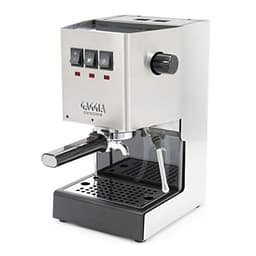
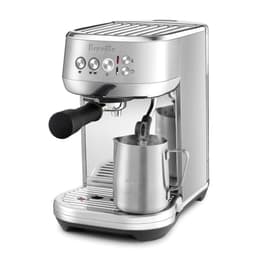
What a PID actually controls, why brew temperature decides whether your shot is sour or bitter, and the counter-intuitive spec fact: Breville fits PID to machines that undercut the Gaggia Classic Pro, which has none.
Troubleshooting · No water
No water, or weak flow, ranked from the free fixes to the paid ones: an empty or unseated tank, an airlock that needs priming, scale blockage, a clogged basket or screen, a choked shot, and — last and least likely — a genuinely dead pump.
Troubleshooting · No crema
Missing crema, ranked by how often it's the culprit: stale beans first and by a distance, then a grind too coarse, then pre-ground coffee, then the basket you're using. Plus the honest note that crema is a freshness signal, not a quality guarantee.
Troubleshooting · Leaks
Find the leak by where it appears: the group head or portafilter (usually a worn gasket), from underneath (most often a full drip tray), or the tank and base (seating or a crack). What you can fix yourself, when to descale, and when to service.
Maintenance · Descaling
Limescale from hard water is the most common reason home espresso machines die — it narrows flow, throws off temperature and eventually blocks the boiler solid. Here is how often to descale, why a proper descaler beats vinegar, and the exact routine, done properly and rinsed twice.
Troubleshooting · Pump noise
Nearly every home espresso machine runs a vibratory pump that is loud by design, so a hard buzz during the shot is normal, not a fault. Here is the reassurance first, then the four noises that are actually a signal — a changed pitch, grinding, an airlock, or a pump running dry.
Troubleshooting · Temperature surfing
Temperature surfing is the flush-and-wait routine that gives a single-boiler, no-PID machine a repeatable brew temperature. Why those machines need it, the basic method, why exact seconds vary by machine, and how a PID or a dual boiler makes it unnecessary.
Troubleshooting · Bitter espresso
Bitter usually means over-extracted — the water took too much out of the puck. The causes ranked: grind too fine or the shot too long, brew too hot, over-dosing, a dark or stale roast, and a dirty machine. Plus the fix sequence and the sour-and-bitter-together trap.
Troubleshooting · Steam wand
No or weak steam, ranked from the free fixes to the paid ones: not in steam mode or up to steam temperature yet, a clogged or scaled tip, not purging, technique, scale in the boiler, and — last — a genuine steam-path fault.
Troubleshooting · Channeling
Channeling is water forcing a low-resistance path through the coffee puck, so part of the bed is over-extracted and part is skipped and the shot tastes bitter and sour at once. The causes ranked, from uneven grind distribution and a tilted tamp to a coarse or inconsistent grind, plus the technique that fixes them.
Blog · Machine lifespan
Espresso machine lifespan comes down to build philosophy and maintenance. Sealed budget Thermoblock machines have a shorter serviceable life and are often not worth repairing; serviceable commercial-hardware machines can run for many years on cheap wear parts; super-autos have more to go wrong but stay maintainable. The single biggest lever the owner controls is descaling and water quality.
Troubleshooting · Not heating
When an espresso machine powers on but won't heat, or heats far too slowly, the causes run from free and simple to hardware. Start with the machine still warming or the wrong mode, then power and reset, then heavy limescale insulating the heater, and finally a tripped thermal fuse, failed thermostat or dead heating element. We order the checks so you try the cheap fixes first.
Troubleshooting · Weak espresso
Weak, watery espresso means the water ran through too fast to extract properly — under-extraction. Ranked causes: a grind too coarse first and by a distance, then too low a dose, then channeling, then too light a tamp. The fix is usually one adjustment on the grinder, and it costs nothing.
Troubleshooting · Choked shot
A choked shot drips slowly or barely flows because the puck is over-restricting the water. Ranked causes: a grind too fine first, then too high a dose, then too hard or uneven a tamp, and occasionally a scaled or clogged machine. The fix is usually a coarser grind — the mirror of an under-extracted shot.
Troubleshooting · Burnt taste
Burnt, ashy espresso most often comes from a very dark, oily roast, then from brew water that's too hot, then from over-extraction (grind too fine or shot too long), then from rancid coffee oils in a dirty machine. Ranked causes and fixes, none of which need new equipment.
Maintenance · Steam wand
After every milk drink: purge a burst of steam through the wand and wipe it with a damp cloth while the milk is still wet. Weekly or when it clogs: soak the tip in hot water or a milk cleaner and clear the holes with a pin. That habit stops soured milk, blocked tips and off-tasting drinks.
Basics · Single vs double
A double shot uses roughly twice the coffee of a single and a bigger basket, yielding about twice the espresso. Doubles are the standard because they're far easier to pull consistently and are the basis of nearly every café drink. Singles are harder to dial in and mostly useful when you genuinely want less coffee.
Basics · Dose
A single espresso uses roughly 7-9 grams of coffee and a double roughly 14-18 grams, set by the size of your filter basket. Weighing the dose rather than scooping is the cheapest consistency upgrade in espresso, because the dose is the fixed starting point everything else — grind, yield, taste — is measured against.
Troubleshooting · Won't power on
Before you assume a dead espresso machine, work the free checks in order: the outlet and a different socket, the plug and cable, the power switch, the water tank seated correctly, and a thermal cutout that needs time to cool. Only after those does it become a real electrical fault worth weighing against the machine's value.
Troubleshooting · Wet puck
A wet or soupy espresso puck is usually normal, not a fault — it mostly means your machine has no 3-way solenoid valve to dump the water sitting above the puck, so it stays wet. A low dose leaving too much headspace also causes it. It rarely affects taste; only worry if a soupy puck comes with genuinely bad shots.
Blog · Maintenance
How often you descale depends mostly on your water hardness and how much you brew — soft or filtered water and light use stretch the interval, hard water and daily brewing shorten it, and many machines flash a descale prompt when they've counted their way to it. Here's how to read the signs and set the right cadence.
Blog · Maintenance
Backflushing runs water or detergent back through the group using a blind, holeless basket to clear coffee oils from behind the shower screen and the 3-way solenoid valve. It only works on machines that have that valve — like the Gaggia Classic Pro and Rancilio Silvia. Thermoblock De'Longhis and most Brevilles can't be backflushed; they get wiped and soaked instead.
Blog · Troubleshooting
A portafilter that's stiff to lock or won't rotate far enough is most often simply over-dosed — too much coffee so the puck hits the screen. Dose to the basket's rating and it eases. The next most common cause is a new, stiff group gasket that loosens with use, then a worn gasket, grounds on the rim, or the wrong basket. Here's the order to check.
Blog · Troubleshooting
The puck sticking up to the shower screen is largely normal on machines without a 3-way solenoid valve — most thermoblock De'Longhis and Brevilles — because pressure isn't dumped off the puck. On solenoid machines like the Gaggia Classic Pro and Rancilio Silvia, a puck that suddenly sticks usually means over-dosing, too fine a grind, or a screen that needs cleaning.
Troubleshooting · Beans & grind
You can put regular coffee through an espresso machine, but supermarket drip-ground coffee is usually too coarse, so it channels and gives a fast, watery, crema-less shot. The real fix is a burr grinder set fine, not a different roast — 'espresso roast' is a preference, not a rule. Here's how to tell grind from roast.
Guides · Capacity
How many shots a machine makes in a row depends on the water tank, the boiler type and how fast it recovers, the grinder's throughput, and heat cutoffs on small machines. A single boiler makes you wait between brewing and steaming; a dual boiler or prosumer machine handles a crowd. What limits volume, and when to size up.
Espresso drinks · Cappuccino vs latte
A cappuccino is roughly equal parts espresso, steamed milk and foam — smaller, with a stronger coffee flavor and more foam. A latte is mostly steamed milk under a thin layer of foam — larger and milder. The difference is the milk texture, and this explains how each is made and which machine features help.
Espresso drinks · Flat white vs latte
A flat white is the smaller, stronger-tasting drink with a thin layer of silky microfoam; a latte is larger, milkier and milder with a bit more foam. The three real differences — size, coffee-to-milk ratio and milk texture — plus how each is made and the microfoam skill that carries both.
Espresso drinks · Macchiato
Macchiato means 'stained.' An espresso macchiato is a strong shot marked with a small dab of milk; a latte macchiato is the reverse, milk marked with espresso; and the caramel macchiato from coffee chains is a larger, sweeter drink again. What each one is, and how to make a proper espresso macchiato.
Espresso drinks · Cortado
A cortado is espresso 'cut' with a roughly equal amount of warm steamed milk and very little foam, served small — milkier than a macchiato but stronger and smaller than a flat white or latte. Its Spanish origin, where it sits among the milk drinks, and how to make one at home.
Espresso drinks · Americano vs long black
Both drinks are espresso diluted with hot water, but the order is reversed. An americano adds hot water on top of the shots; a long black pulls the shots on top of the water. That difference changes the crema, and with it the strength and aroma of the top of the cup.
Espresso drinks · Caffeine
A single espresso is strong per sip but small, so it usually carries less total caffeine than a typical mug of drip coffee. A double shot roughly doubles it. Published figures are ranges, not fixed numbers — they shift with bean type, roast, dose and extraction — and 'strong' means concentration, not caffeine.
Espresso drinks · Strength
"Stronger" can mean more concentrated per sip or more total caffeine, and espresso answers those two questions in opposite directions. Espresso is far more intense per mouthful; a single small shot often carries less total caffeine than a full mug of drip. The honest version of both, with sourced figures and why they vary.
Espresso drinks · Doppio
A doppio is simply a double shot of espresso — two shots' worth of coffee pulled together through one double basket. It is the standard base for most home machines and nearly every milk drink, which is why most people already pull doppios without using the word. What it is, how it differs from a single, and why doubles are easier to dial.
Espresso drinks · Cappuccino styles
A wet cappuccino has more steamed milk and less foam, so it drinks silkier and closer to a small latte or flat white; a dry cappuccino has more airy foam and less liquid milk, so the coffee reads stronger up front. How to steam and pour for each, which to order, and the milk gear that makes it repeatable at home.
Troubleshooting · Grinding noise
On a machine with a built-in grinder or a super-automatic, a grinding noise while it grinds is normal. The reassurance first, then the noises that are a real signal: a new rattle or screech, a stone or debris in the beans, worn burrs, or an empty hopper grinding dry — plus how to tell grinder noise from the pump groan.
Troubleshooting · Cold shots
Lukewarm espresso is rarely a broken machine. The causes ranked: a cold cup and portafilter stealing the heat (the number-one fix), a machine not fully warmed up, thin glass cups, milk not steamed hot enough, a thermoblock that needs a flush, and scale blocking heat transfer. A fix for each.
Milk · No steam wand
Four honest ways to froth milk without a steam wand: a handheld electric frother, an automatic electric milk frother, the French-press pump method, and the jar-shake-then-microwave trick. How to do each, which drink it suits, and the honest truth that none match a good wand's silky microfoam for latte art.
Maintenance · Portafilter
The portafilter and basket are where coffee oils build up fastest, and stale oil is the quiet reason a shot starts tasting dull or bitter. The daily knock-rinse-wipe, the periodic detergent soak and backflush, how to clear blocked basket holes, and why this is a separate job from cleaning the steam wand.
Setup · First use
What to actually do on unboxing day before you chase a perfect shot: wash the removable parts, fit the water filter and set your water hardness, run a few water-only cycles to flush manufacturing residue, then pull one low-stakes shot to learn the controls. Plus why an early plastic smell is normal off-gassing.
Troubleshooting · Grounds in cup
Grounds and sludge in the cup, ranked: a grind too fine, an overfilled basket that lets the puck break against the screen, a damaged or wrong-size basket, a torn basket seam, a clogged or worn shower screen, or normal fine sediment from a pressurized basket. How to tell harmless silt from a real fault, and the fixes in order.
Troubleshooting · Spitting
Spitting and sputtering ranked by source: the steam wand spits because condensed water sits in it, so purge before and after steaming; the group head sputters from a worn gasket, trapped air after a refill, low water, or scale. How to tell a normal purge splutter from a real fault, and the fixes.
Troubleshooting · Descale light
The descale or clean light stays on after descaling, usually because the cycle wasn't run all the way to the end or wasn't confirmed. How to complete the full descale and rinse so the machine resets its counter, plus the button-hold, filter and water-hardness steps some machines need — and why it varies by brand.
Troubleshooting · Burning smell
Diagnose a burning smell by type: a faint plastic smell on a brand-new machine is normal off-gassing you run out with water-only cycles; a burnt-coffee smell is old oils baked onto the group and tray, so clean them; but an electrical or acrid burning smell, or any smoke, means stop and unplug immediately. The safety line, made clearly.
Blog · Troubleshooting
A fast, gushing shot is under-restriction: water is sprinting through the puck instead of being held back. Ranked causes: a grind too coarse for the dose first, then an under-dosed or channeling puck, then the pressurized-basket confusion, then stale beans. Grind finer first — it's the mirror image of a choked shot.
Blog · Espresso basics
A common guideline is roughly 25–30 seconds for a standard double from the moment the pump starts — but time is a proxy, not the target. What you control is the ratio (dose in, liquid out) and the taste. Use the clock to tell whether your grind is too coarse (fast) or too fine (slow).
Blog · Espresso basics
Pre-infusion is a gentle, low-pressure wetting of the coffee puck before full pressure hits, which helps the puck settle evenly and can reduce channeling. What it does, why it improves extraction evenness, machine vs manual pre-infusion, and which of our machines document it — honestly.
Blog · Espresso basics
Ristretto, normale and lungo are shot styles defined by brew ratio — how much liquid you pull per gram of coffee. A ristretto is short and restricted (syrupy, sweeter-leaning), a normale is standard, a lungo is long (bigger, more bitter-leaning). How to pull each, honest taste tendencies, and which beans suit them.