
Accessories · Knock boxes
The Best Espresso Knock Box Under $50
A knock box is a metal bucket with a bar across it. There are exactly two features worth checking and a lot of marketing around the rest - so this is a page about not overspending.
The short answer
Buy the Rattleware stainless knock box: it is heavy-duty commercial gear with a welded knock bar, the kind of box that turns up on cafe counters and does not wear out, and weight is genuinely a feature in an object you strike every morning. The budget pick is the DIBTSA knock box - a generic stainless box with a removable knock bar and a non-slip rubber base, which is the entire feature list that matters.
We earn a commission if you buy through a link on this page. It costs you nothing extra and it does not change what we recommend. Full disclosure.
All three picks, compared
Every pick on this page in one view, with the live Amazon price and stock on each row. Specs are the figures the maker or the listing publishes — nothing measured or scored by us. Prices are read from Amazon's API and were last checked November 22, 2026; where we have no verified price, the row says so rather than show you an old number.
| # | Knock box | Who it's for | Price & availability |
|---|---|---|---|
| 1 | 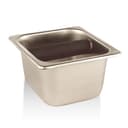 #1 Rattleware Stainless Steel Knock Box Best overall · Under $50 Commercial stainless box with a welded knock bar · heavy, solid build with no consumable parts · a coffee-industry brand · no manufacturer spec sheet in our database, so check the listing for dimensions For the brewer buying this once and never thinking about it again. | For the brewer buying this once and never thinking about it again.Commercial stainless box with a welded knock bar · heavy, solid build with no consumable parts · a coffee-industry brand · no manufacturer spec sheet in our database, so check the listing for dimensions | $28.08In stock, checked November 22, 2026 Check Price on Amazon |
| 2 | 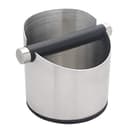 Budget pick · Under $25 Generic stainless box with a removable knock bar and a non-slip rubber base per the listing · not a coffee-industry brand · the cheapest pick here For somewhere to put the puck, today, for the least money. | For somewhere to put the puck, today, for the least money.Generic stainless box with a removable knock bar and a non-slip rubber base per the listing · not a coffee-industry brand · the cheapest pick here | $21.99In stock, checked November 22, 2026 Check Price on Amazon |
| 3 | 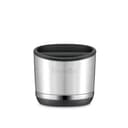 Best match for a Breville · Under $50 Compact stainless box from the machine brand, finished to match Breville machines · on the smaller side, aimed at a home setup pulling a handful of shots a day For a Breville owner who wants the counter to look deliberate. | For a Breville owner who wants the counter to look deliberate.Compact stainless box from the machine brand, finished to match Breville machines · on the smaller side, aimed at a home setup pulling a handful of shots a day | $33.95In stock, checked November 22, 2026 Check Price on Amazon |
Why $50 is more than enough
A knock box has no pump, no heater, no electronics, no moving part and nothing that can be engineered to work better. It is a container with a bar across it that you strike a portafilter against. That is the whole product. Nothing above this band knocks a puck out more cleanly, because there is no mechanism to improve — above $50 you are buying walnut trim, a drawer housing, a branded lid or a larger capacity than a home kitchen will ever use.
So the sensible way to shop here is to decide between two things — will this live on the counter for a decade, or do you just need somewhere to put the puck — and buy the cheapest box that answers. There is no third consideration, and there is certainly no quality ladder. Every pick below was under $50 at our last price check, and the exact date of that check is stamped on the comparison table and on each buy button above the price.
If you are wondering whether you need one at all: you do not, strictly. People manage with the bin. What a knock box buys you is a counter that is not covered in wet grounds and a sink trap that is not slowly filling with coffee, which is a maintenance problem rather than a coffee problem. It is a quality-of-life object, and that is exactly why it should be cheap.
The two features that matter
1. A knock bar that does not move when you strike it.The bar is the whole mechanism: you hit the portafilter rim against it and the puck drops out in one piece. A welded bar, as on the Rattleware, is the strongest arrangement and cannot loosen. A removable bar, as on the DIBTSA, is easier to clean around and is the more common design at the cheap end — perfectly fine, provided it seats firmly rather than rattling. A bar that flexes turns one confident knock into three apologetic taps, which is how grounds end up on the floor.
2. A base that stays put.You knock one-handed, usually while holding a cup or a jug in the other, so the box has to absorb the strike without sliding. Two things achieve that: mass, which is the Rattleware's approach, or a non-slip rubber base, which is the DIBTSA's. Either works. A light box with a hard base is the one genuinely bad combination, and it is common in the cheapest listings — so check for one or the other.
What does not matter: capacity, in any realistic home setup. These boxes hold far more pucks than you will produce between emptyings, and a bigger box only takes more counter. Also not worth paying for: lids, which get taken off and left off; bamboo and walnut surrounds, which stain; and silicone inserts, which hold water and smell. Stainless with a bar in it is the correct amount of knock box.
The three picks
Rattleware knock box — the one that outlives the machine
Who it is for:the brewer who intends to be doing this in ten years and wants to buy the thing once. Rattleware's knock box is heavy-duty commercial gear — the stainless box that turns up on cafe counters and simply does not wear out. The welded knock bar and the solid build are the appeal, and the extra weight is the point rather than a side effect: a heavy box takes a firm strike without moving. It is heavier and less dainty than the Breville, which is exactly what you want in an object you hit repeatedly, and it is a little more effort to lift and rinse. There is nothing on it to break, which is the best thing you can say about a product in this category.
DIBTSA knock box — the budget pick
Who it is for:anyone who wants somewhere to put the puck and would rather spend the difference on beans. This is the budget pick and the cheapest product on the page: a generic stainless box with a removable knock bar and a non-slip rubber base, which is the entire feature list that matters. It is not a coffee-industry brand and we would not pretend it is built like the Rattleware. But a knock box is about the simplest object in espresso, and a cheap one with the right two features genuinely does the same daily job. This is the "I just need somewhere to put the puck" answer, and it is not a compromise in any way you will notice at 7am.
Breville Knock Box 10 — the tidy match
Who it is for: the owner of a Breville machinewho wants the counter to look deliberate. A compact stainless box from the same brand, finished to sit next to the machine without looking like an afterthought. It is on the smaller side, which suits a home setup pulling a handful of shots a day and helps if your clearance is tight. You are paying a small premium for the badge and the finish — and if a matching counter is worth something to you, that is a fair trade rather than a trick. Just do not expect it to take the abuse the Rattleware will.
What to do with the puck afterwards
Two practical notes that save more hassle than the choice of box:
- Do not knock pucks into the sink. Spent espresso grounds are fine and they compact. Over months they build up in the trap, and the eventual plumbing bill is many times the price of every box on this page. This is the actual argument for owning one.
- Spent pucks are good for compost and houseplants in moderation, and they are far easier to handle dry, which is one reason to let them sit in the box for a day rather than scraping them straight out wet.
- Rinse the box, do not scrub it. Coffee oils go rancid, which is a smell rather than a hygiene crisis, and a rinse under hot water after emptying is all a stainless box ever needs. Save the real cleaning for the parts that touch the water.
If the puck is coming out wet, soupy or stuck rather than as a clean disc, that is not the box's fault — a wet puck after espresso explains what it actually means, and usually it means nothing at all. The rest of the counter setup is on the knock boxes and tamping mats page, which also covers the mat that protects the surface you are knocking next to, and the home espresso bar setup guide covers where everything goes. If this is your first accessory purchase, buy a scale before a knock box: one changes the coffee, the other changes the cleaning.
What we know, and how we know it
What we did
- Took the specs from the manufacturer's own documentation. Not from a retailer listing, and not from another blog.
- Priced it from Amazon's API, with the date we checked shown next to the number. If that price is more than 48 hours old, this page stops showing a number at all rather than show you a wrong one.
- Formed a verdict from those specs, the price, and what owners publicly report.
Where we hedged, and why
None of these knock boxes is in our spec database, which covers pump espresso machines and grinders only, and we hold no verified manufacturer spec sheet for any of them. That is why this page states no dimensions, no capacities in pucks or litres and no weights: read the listing for those, and measure your counter gap, which is the figure that actually decides the purchase.
We have not used these boxes and we have not tested how they hold up to being struck daily. The ordering comes from the construction each listing publishes — a welded versus a removable knock bar, mass versus a rubber base — and from price. There are no scores, tests or awards here beyond that reasoning. The "under $50" framing is based on the live price layer at the date stamped on the table above; the button is the authority, not this sentence.
What we did not do
We do not run a lab. We have not pulled thousands of shots on this machine, and we are not going to pretend otherwise. We have not used this unit ourselves. Everything above is sourced research, and it is labeled as such. Where we have used a machine, we say so and show it.
How we're paid
If you buy through a link on this page, we earn a commission. It costs you nothing extra and it does not change what we recommend — we link to the better option for the buyer even when it earns us less. See how we review and our full disclosure.
More on the accessories hub.
Frequently asked questions
What is the best espresso knock box under $50?
The Rattleware stainless knock box. It is commercial-grade with a welded knock bar, it has no consumable parts to break, and its weight is a feature - a heavy box absorbs a one-handed strike instead of sliding across the counter. If you want to spend less, the DIBTSA has the same two features that matter for a fraction of the price.
Do I need a knock box for espresso?
Not strictly - but you should not knock pucks into the sink. Spent grounds are fine and they compact, so over months they build up in the trap and the plumbing bill dwarfs the price of any box here. A knock box is a quality-of-life and maintenance object rather than a coffee one, which is exactly why it should be cheap.
What should I look for in a knock box?
Two things. A knock bar that does not move when you strike it - welded is strongest, a firmly seated removable bar is fine and easier to clean around. And a base that stays put, achieved either by mass or by a non-slip rubber foot. A light box with a hard base is the one genuinely bad combination, and it is common at the cheapest end.
Is an expensive knock box worth it?
No. A knock box has no pump, no heater and no moving part that can be engineered to work better - it is a container with a bar across it. Above about $50 you are paying for walnut trim, a drawer housing, a lid or a capacity no home kitchen will use. Buy stainless with a solid bar and spend the difference on beans.
What size knock box do I need?
Smaller than you think. Any of these holds far more pucks than you will make between emptyings, so capacity is not the constraint - counter clearance is. The box has to sit within an easy arm's swing of the group head, which on a crowded counter is often just a few inches. Measure that gap first and prefer the compact box if it is tight.
Can you put coffee pucks in the compost?
Yes, in moderation, and they are much easier to handle dry than wet - which is a reason to let them sit in the box for a day rather than scraping them out immediately. They also work in small amounts around houseplants. What you should not do is wash them down the sink, where they compact in the trap.
How do you clean a knock box?
Rinse it under hot water after emptying and leave it to dry. Coffee oils go rancid, which is a smell rather than a hygiene problem, and a stainless box with no silicone insert or wooden surround does not need more than that. Save the real cleaning products for the parts of the machine that touch the water.
Sources
Specs come from the manufacturer's own documentation. Prices come from Amazon's API. Where a claim comes from what owners report, we link the thread and say so.
- Rattleware stainless steel knock box, DIBTSA espresso knock box and Breville Knock Box 10 - construction, knock-bar type, non-slip base and material as published on the Amazon listings, read November 21, 2026. No manufacturer spec sheet is held for any of them, so no dimensions, weights or capacities are stated on this page
- Specialty Coffee Association - coffee research and standards
Keep reading
- Knock boxes and tamping matsThe full category, including the mat that protects the counter next to it.
- Wet puck after espressoIf the puck is not coming out as a clean disc, it is not the box.
- Espresso machine cleaning and maintenanceThe parts that genuinely need a cleaning product, unlike this one.
- The best coffee scale under $100Buy this accessory first. It changes the coffee rather than the cleaning.
- Home espresso bar setupWhere the knock box goes, and what else earns counter space.
- Espresso tampers: get the size right firstThe other object that lives within arm's reach of the group head.