
Grinders · Under $200
The Best Coffee Grinder Under $200 for Espresso
The price band where a set-and-forget electric espresso grinder finally becomes real — and where most home setups should aim.
The short answer
Under $200 is where a genuine electric espresso grinder becomes possible, and the Baratza Encore ESP is our default — its lower dial is dedicated to fine espresso. The Fellow Opus is the all-purpose alternative; if you'll hand-crank, the Kingrinder K6 and Timemore C3 ESP cost far less. Skip the base Encore — it's for filter.
We earn a commission if you buy through a link on this page. It costs you nothing extra and it does not change what we recommend. Full disclosure.
All four picks, compared
Every pick on this page in one view, with the live Amazon price and stock on each row. Specs are the figures the maker or the listing publishes — nothing measured or scored by us. Prices are read from Amazon's API and were last checked October 11, 2026; where we have no verified price, the row says so rather than show you an old number.
| # | Grinder | Why it's here | Price & availability |
|---|---|---|---|
| 1 | 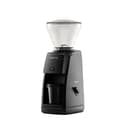 Best overall for espresso · Electric 40 mm conical steel (M2) burrs by Etzinger · 40 stepped settings: 1-20 espresso, 21-40 filter · 300 g hopper, 120 g bin · 70 W, 550 RPM · 7 lb · 1-year warranty A dial built around espresso, and a maker that publishes specs and repairs its grinders. | A dial built around espresso, and a maker that publishes specs and repairs its grinders.40 mm conical steel (M2) burrs by Etzinger · 40 stepped settings: 1-20 espresso, 21-40 filter · 300 g hopper, 120 g bin · 70 W, 550 RPM · 7 lb · 1-year warranty | $199.95In stock, checked October 11, 2026 Check Price on Amazon |
| 2 | 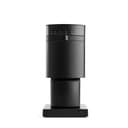 #2 Fellow Opus Conical Burr Grinder Best all-purpose alternative · Electric 40 mm six-blade stainless conical burrs · 41+ settings with an inner adjustment ring · 110 g load bin · 6 Nm torque motor · about 4 lb · 2-year limited warranty, plus a year with free US registration Espresso to cold brew in one grinder, with the longest warranty here. Being superseded by the Opus 2. | Espresso to cold brew in one grinder, with the longest warranty here. Being superseded by the Opus 2.40 mm six-blade stainless conical burrs · 41+ settings with an inner adjustment ring · 110 g load bin · 6 Nm torque motor · about 4 lb · 2-year limited warranty, plus a year with free US registration | $199.95In stock, checked October 11, 2026 Check Price on Amazon |
| 3 | 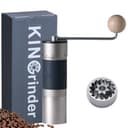 Best value · Manual Stainless steel burrs (size not published) · 16 microns per click, 60 clicks per rotation, 4 rotations · 25-35 g hopper · 1-year warranty Roughly half the budget for espresso-grade grind, if you'll do the cranking. | Roughly half the budget for espresso-grade grind, if you'll do the cranking.Stainless steel burrs (size not published) · 16 microns per click, 60 clicks per rotation, 4 rotations · 25-35 g hopper · 1-year warranty | $109.00In stock, checked October 11, 2026 Check Price on Amazon |
| 4 | 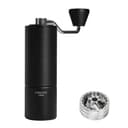 Cheapest capable option · Manual 38 mm S2C660 conical stainless burrs · 0.0233 mm (23 microns) per click, 30 clicks per rotation · 20 g catch cup · warranty not published by Timemore Well under the budget with room for better beans — buy the ESP dial, not the plain C3. | Well under the budget with room for better beans — buy the ESP dial, not the plain C3.38 mm S2C660 conical stainless burrs · 0.0233 mm (23 microns) per click, 30 clicks per rotation · 20 g catch cup · warranty not published by Timemore | $99.00In stock, checked October 11, 2026 Check Price on Amazon |
Why under $200 is the sweet spot
This is the price band we point most home espresso buyers at, and it is not a coincidence. As our under-$100 guide lays out, below $100 a capable espresso grinder means grinding by hand. Somewhere just under $200 that changes: it is where the first genuinely good electric espresso grinders live — machines you can set once, dose into a portafilter every morning, and never crank. For a huge number of home setups, this is exactly the right amount to spend on a grinder, because the grinder is the component that decides more about your espresso than the machine does, and this is where diminishing returns really begin.
It is also the band where an honest guide can offer a real choice: a set-and-forget electric at the top of the budget, or an espresso-grade hand grinder for half the price if you are willing to do the work. Both are defensible. Which is right for you comes down to one question — how much do you value not cranking? — and this page answers for both answers.
What to look for in this range
The thing that separates a real espresso grinder from a filter grinder that claims espresso is the fineness and definition of its adjustment in the low range. Espresso lives in a tiny window of grind sizes where a couple of steps is the difference between a shot that gushes and one that chokes, so the grinder needs enough distinct, fine steps down there to let you dial in. The best grinders in this band do this deliberately — the Encore ESP, for instance, dedicates its entire lower dial range to fine espresso micro-steps and its upper range to coarser filter steps, which is exactly the right way to build a stepped espresso grinder. A grinder whose espresso window falls between two of its steps is the failure mode to avoid, and it is why the base model of an otherwise-good grinder is often the wrong buy for espresso.
The picks under $200
As always: the Baratza Encore ESP is in our spec database and covered in full in the main grinder guide. For the other two, every figure in the comparison table is one the maker or the Amazon listing publishes, read on October 2, 2026 — and where a figure is not published, the table says so rather than fill the gap. Prices in this band move around $200, so trust the live figure on each button over any number we could type.
Baratza Encore ESP — the default first electric espresso grinder
This is the grinder we send most first-time espresso buyers to, and the reasoning is in the dial: the Encore ESP puts settings roughly 1–20 into a dedicated fine espresso range and 21–40 into coarser filter steps, so it dials espresso properly and still makes a good pour-over. Baratza has a long reputation for supporting and repairing its grinders, publishes its specs (including the burr material, which some competitors do not), and states a warranty. It is the safe, sensible, do-it-right choice at the top of this budget, and the one we would buy without overthinking. Its nearest rival at this money is the 60-step Breville, weighed up in Encore ESP vs Smart Grinder Pro.
Fellow Opus — the versatile all-purpose alternative
The Fellow Opus is the design-led all-purpose grinder in this band — a single-dose-style conical burr grinder with a wide range that Fellow positions for everything from espresso to cold brew, and a look that suits a modern kitchen. An honest, current note: Fellow has moved the line on to the Opus 2(with larger 48 mm burrs), and the original Opus is being cleared out — which is why you may see it at a discount and why the button below often shows "check price" rather than a live figure, as its Amazon availability comes and goes during the transition. If you want an all-rounder over a dedicated espresso grinder, it is a strong pick; if espresso is the sole job, the Encore ESP's dedicated fine range is the more focused tool. Check current availability and which generation you are buying. We put the two head to head in Encore ESP vs Fellow Opus.
Kingrinder K6 — the value route (if you'll hand-grind)
If your $200 could go further and you are willing to crank, an espresso-capable hand grinder gets you grind quality that rivals the electrics for around half the price. The Kingrinder K6 is the value pick — a metal-bodied manual grinder with fine external adjustment, at roughly the cost of a nice dinner. You trade convenience for money: 30–60 seconds of grinding per double shot, every time. For a single-cup-a-day drinker who cares more about the grind than the cranking, it is the smart-money option. More manual choices in the hand grinder guide, and the full argument either way in hand vs electric grinders.
Timemore Chestnut C3 ESP — the cheapest capable option
And if you want to spend the least while still owning a grinder that can genuinely feed an espresso machine, the Timemore C3 ESP sits well under this budget with room to spare — buy the ESP version, not the plain C3. It is the value benchmark of hand grinders, with the one caveat (covered in the main guide) that Timemore publishes little about it. Spending the difference between this and the Encore ESP on better beans is a genuinely defensible way to allocate the budget if you do not mind hand-grinding.
What another $100-200 buys
For completeness, because people in this band often wonder what the next step up gets them: past $200, you move into grinders like the single-dose DF64 and DF54 platforms and the Eureka Mignon range, which bring stepless or micrometric adjustment, larger burrs, and lower retention. They are genuinely better grinders, and for most home setups they are also more grinder than the espresso needs — the Encore ESP already dials a shot properly. We cover those higher-tier options in the main espresso grinder guide. If you are choosing between spending the extra on the grinder or on the machine, read machine or grinder first before you decide — the answer surprises people.
What we know, and how we know it
What we did
- Took the specs from the manufacturer's own documentation. Not from a retailer listing, and not from another blog.
- Priced it from Amazon's API, with the date we checked shown next to the number. If that price is more than 48 hours old, this page stops showing a number at all rather than show you a wrong one.
- Formed a verdict from those specs, the price, and what owners publicly report.
Where we hedged, and why
The Baratza Encore ESP and the Timemore C3 ESP are in our spec database and researched in depth in the main grinder guide. The Fellow Opus and Kingrinder K6 are not in that database, so the figures in the comparison table above were read off the manufacturer specifications on their Amazon listings on October 2, 2026, and we quote only what is published there — which is why the K6 row says "size not published" against the burrs instead of repeating a number from a review somewhere. On the Fellow Opus specifically: Fellow has superseded it with the Opus 2, the original is in clearance, and its Amazon listing does not always carry a live buyable price — so its button may show "check price on Amazon" rather than a number. That is the fallback working exactly as intended: a link that still takes you to the product and never shows a stale figure.
We have not used these grinders ourselves. The recommendations are formed from published specs, how the products are built and priced, and what owners report — not from a bench test we did not run.
What we did not do
We do not run a lab. We have not pulled thousands of shots on this machine, and we are not going to pretend otherwise. We have not used this unit ourselves. Everything above is sourced research, and it is labeled as such. Where we have used a machine, we say so and show it.
How we're paid
If you buy through a link on this page, we earn a commission. It costs you nothing extra and it does not change what we recommend — we link to the better option for the buyer even when it earns us less. See how we review and our full disclosure.
The deep dive on every grinder here — electric and manual — is the best grinders for espresso guide, and the case for buying the grinder before the machine is here. If you are buying this tier for someone else, it is also the best-value tier in our gifts for espresso lovers guide. More on the grinders hub.
Frequently asked questions
What's the best coffee grinder under $200 for espresso?
The Baratza Encore ESP is our default pick — it dedicates its lower dial range to fine espresso micro-steps, so it dials a shot properly, and Baratza publishes its specs, states a warranty, and is known for repairability. The Fellow Opus is the versatile all-purpose alternative. If you'll hand-grind, the Kingrinder K6 or Timemore C3 ESP deliver espresso-grade grind for far less money.
Is the base Baratza Encore good for espresso?
No — buy the Encore ESP instead. The standard Encore is an excellent filter and drip grinder, but its adjustment steps are too coarse in the fine range to dial espresso. The Encore ESP is the espresso-tuned sibling with a dedicated fine range in its lower settings. Buying the base Encore for espresso is one of the most common ways people spend around $150 and can't get a shot to run right.
Should I buy an electric or a hand grinder under $200?
It comes down to how much you value not cranking. Near the top of the budget, an electric like the Encore ESP lets you set it once and dose every day with no effort. For roughly half the price, an espresso-capable hand grinder (Kingrinder K6, Timemore C3 ESP) matches the grind quality but asks 30–60 seconds of cranking per double shot. Both are good buys; the electric wins on convenience, the manual on value.
Is the Fellow Opus discontinued?
No, but it's being succeeded. Fellow has moved the line on to the Opus 2, which has larger 48 mm burrs, and the original Opus is being cleared out — so you may see it discounted, and its Amazon availability comes and goes during the transition. It remains a capable all-purpose grinder. If you're buying, check which generation the listing is and confirm current availability.
Is a grinder under $200 enough for good espresso?
For most home setups, yes — this is the sweet spot. A grinder like the Encore ESP dials espresso properly, and it's where diminishing returns really begin. More expensive grinders (the DF64, Eureka Mignon range) bring stepless adjustment, bigger burrs and lower retention, which are genuinely nice but more than the espresso strictly needs. Spend to $200 on the grinder before spending more on the machine.
How many grind settings does the Baratza Encore ESP have?
Forty stepped settings, split deliberately in two: 1 to 20 are fine espresso micro-steps and 21 to 40 are coarser macro-steps for filter. Baratza also publishes the rest — 40 mm conical steel (M2) burrs made by Etzinger, a 300 g hopper and 120 g grounds bin, a 70 W motor at 550 RPM grinding 1.3 to 2.2 g per second, 7 lb, and a one-year warranty. Each unit is factory-calibrated.
What burrs does the Fellow Opus have?
A 40 mm six-blade stainless steel conical burr set, driven by a motor Fellow rates at 6 Nm of torque, with 41-plus settings adjusted on an inner ring and a 110 g load bin. The warranty is the longest in this group: two years limited, plus a third if you register the grinder free in the US. Note that Fellow has since moved the line on to the Opus 2, which steps up to 48 mm burrs.
What specs should I compare in a grinder under $200?
Four things, and all four are published. How fine the adjustment is in the espresso range — the Encore ESP's 1-20 espresso band, the Kingrinder K6's 16 microns per click, the Timemore C3 ESP's 0.0233 mm per click. Burr size and material: 40 mm steel on the Encore ESP and Fellow Opus, 38 mm on the C3 ESP. Capacity, if you grind for more than one drink. And the warranty, which is where these four differ most.
Which grinder under $200 has the best warranty?
The Fellow Opus: two years limited, plus a third year if you register it free in the US. Baratza states one year on the Encore ESP and has a long record of publishing parts and repair guides. The Kingrinder K6 listing states one year, noting that replacement-part shipping may fall to the customer. Timemore publishes no warranty for the C3 ESP at all — the figures quoted elsewhere come from retailers, not the maker.
Sources
Specs come from the manufacturer's own documentation. Prices come from Amazon's API. Where a claim comes from what owners report, we link the thread and say so.
- Baratza — Encore ESP official product page
- Fellow — Opus 2 conical burr grinder
- Timemore Chestnut C3 series — official specifications (38 mm burrs, ESP dial at 0.0233 mm per click)
- Fellow Opus — manufacturer specifications on the Amazon listing (40 mm six-blade conical burrs, 41+ settings, 110 g load bin, 6 Nm, 2-year warranty plus registration year), read October 2, 2026
- KINGrinder K6 — manufacturer specifications on the Amazon listing (16 microns per click, 60 clicks per rotation, 25-35 g hopper, 1-year warranty), read October 2, 2026
- Specialty Coffee Association — coffee research and standards
Keep reading
- Gifts for espresso loversA grinder is the best gift on the list. Seven picks by budget, with live prices.
- Baratza Encore ESP vs Breville Smart Grinder ProThe two entry espresso grinders, head to head.
- Best espresso grinder under $300The tier above, where dedicated espresso grinders hit their stride.
- Best grinder for beginnersA forgiving first grinder, across three prices.
- The best grinders for espressoThe full guide, including the higher tiers just above this budget.
- Best grinders under $100Where the budget forces the choice toward hand grinders.
- The best hand grindersThe value route in this band, if you're willing to crank.
- Machine or grinder first?Why this is the spend to prioritize. Read before you decide.