
Accessories · Cups
The Best Espresso Cups Under $50
A cold, oversized cup will flatten a shot you spent $900 of machine and twenty minutes of practice on. That is the entire reason this page exists, and it is a problem you can fix for under $30.
The short answer
Buy the Sweese porcelain demitasse set: six cups with real saucers in the classic straight-espresso size, thick enough porcelain to hold heat once warmed, at a price that makes owning six of them painless. The budget pick is the De'Longhi double-wall espresso glasses, a two-glass set and the cheapest thing here - insulated, cool to hold, and the obvious match if you own a De'Longhi machine.
We earn a commission if you buy through a link on this page. It costs you nothing extra and it does not change what we recommend. Full disclosure.
All four picks, compared
Every pick on this page in one view, with the live Amazon price and stock on each row. Specs are the figures the maker or the listing publishes — nothing measured or scored by us. Prices are read from Amazon's API and were last checked November 22, 2026; where we have no verified price, the row says so rather than show you an old number.
| # | Cup | Who it's for | Price & availability |
|---|---|---|---|
| 1 | 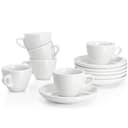 #1 Sweese Porcelain Espresso Cups with Saucers (Set of 6) Best overall · Under $50 Porcelain demitasse cups with saucers, set of six, in the classic straight-espresso size per the listing · no manufacturer spec sheet in our database, so check the listing for capacity and dishwasher guidance For straight espresso, for a household, at the lowest cost per cup. | For straight espresso, for a household, at the lowest cost per cup.Porcelain demitasse cups with saucers, set of six, in the classic straight-espresso size per the listing · no manufacturer spec sheet in our database, so check the listing for capacity and dishwasher guidance | $20.90In stock, checked November 22, 2026 Check Price on Amazon |
| 2 | 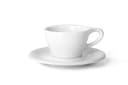 #2 notNeutral LINO Cappuccino Cup & Saucer Best for milk drinks · Under $50 A specialty-coffee cappuccino cup and saucer, designed around the interior shape and rim that milk-drink drinkers care about for pouring art · single cup, not a set For cappuccinos and flat whites, and for pouring latte art into. | For cappuccinos and flat whites, and for pouring latte art into.A specialty-coffee cappuccino cup and saucer, designed around the interior shape and rim that milk-drink drinkers care about for pouring art · single cup, not a set | $44.95In stock, checked November 22, 2026 Check Price on Amazon |
| 3 | 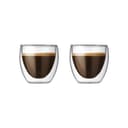 #3 Bodum Pavina Double-Wall Espresso Glasses (Set of 2) Best glass · Under $25 Double-wall borosilicate glass, set of two, espresso size · insulates the drink and stays cool to hold · Bodum also sells larger sizes, so confirm which you are ordering For seeing the crema, and for a cup you can hold straight away. | For seeing the crema, and for a cup you can hold straight away.Double-wall borosilicate glass, set of two, espresso size · insulates the drink and stays cool to hold · Bodum also sells larger sizes, so confirm which you are ordering | $14.99In stock, checked November 22, 2026 Check Price on Amazon |
| 4 | 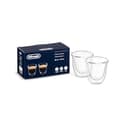 #4 De'Longhi Double-Wall Espresso Glasses (Set of 2) Budget pick · Under $25 De'Longhi's own double-wall thermal glasses in the espresso size, set of two · same insulation and suspended-shot look as the Bodum, from the machine brand The cheapest pick here, and the tidy match for a De'Longhi machine. | The cheapest pick here, and the tidy match for a De'Longhi machine.De'Longhi's own double-wall thermal glasses in the espresso size, set of two · same insulation and suspended-shot look as the Bodum, from the machine brand | $15.40In stock, checked November 22, 2026 Check Price on Amazon |
Why the cup changes the drink
An espresso is about one fluid ounce of liquid at roughly brew temperature, and it is served into an object with far more thermal mass than itself. That is an unusual situation in drinks, and it has one blunt consequence: the cup sets the serving temperature, not the machine. Pull a perfect shot into a cold, thin cup and a meaningful share of its heat goes into the ceramic in the first few seconds. What reaches your mouth is cooler than what left the spouts, and cooler espresso reads as thinner, more sour and less sweet.
This is the most common reason a home shot tastes worse than a cafe shot pulled on worse equipment. Cafes keep cups on top of the machine, warm, all day. At home the cup comes out of a cupboard at room temperature or, worse, straight from a draining rack still cool and damp. It is also the cheapest problem on this entire site to fix, because warming the cup costs nothing — see the last section.
The second thing the cup decides is milk. A cappuccino or flat white is mostly textured milk, and the interior shape of the cup controls how that milk folds in and whether a pattern holds its edges. A straight-sided mug fights you. A rounded, tapering cup with a defined rim is what every cafe pours into, which is why there is a specialty-cup category at all and why the most expensive thing on this page is one cappuccino cup rather than a set of six.
Size, material, and nothing else
1. Size, which is really drink choice.Straight espresso wants a demitasse — small enough that the shot fills it rather than puddling. Macchiatos want the same cup with a spoon of foam. Cappuccinos and flat whites want something in the region of a small bowl, and lattes want more again. Buy for the drink you actually make most mornings, and check the capacity on the listing: makers sell the same model in several sizes, and ordering the wrong one is the single most common complaint in this whole category.
2. Material, which is a trade between heat, looks and survival.Porcelain has the thermal mass to hold heat well once warmed and is the most durable option here. Double-wall borosilicate glass insulates differently — it keeps the drink hot while staying cool to hold, and it gives espresso that suspended-in-air look that shows off the crema. The catch is fragility: double-wall glass is more delicate than porcelain, and a trapped-air wall is not something you can replace a part of. Single-wall glass is the worst of both and is not on this page.
3. The rim and the interior curve, if you pour milk.This is the only place where paying specialty-cafe money for a cup buys something functional rather than aesthetic. A cup designed for latte art has an interior profile that lets the milk roll and a rim that gives a pattern a clean edge. If you are learning to pour — see the machines you can actually pour art on — a wide, shallow cup is dramatically easier to work in than a tall mug, and that is worth more than the next upgrade to your tamper.
What does not matter: brand on the base, handle shape, colour, and whether the set came with a wire stand. Every pick below was under $50 at our last price check, and the exact date of that check is stamped on the comparison table and on each buy button above the price.
The four picks
Sweese porcelain demitasse set — the one to buy
Who it is for:anyone who wants proper espresso cups and is not trying to make a statement with them. This is the "just give me real espresso cups" answer: small porcelain demitasse cups with saucers, in the classic straight-espresso size, at a price that makes owning six of them painless. Thick-enough porcelain holds heat once warmed, the saucers are real saucers rather than coasters, and six is the number that stops you washing up mid-dinner-party. Nothing about them is fancy and nothing about them is wrong. The honest limits: they are plain, and they are the wrong size for milk drinks, so a cappuccino household should read this page as "buy these anda LINO" rather than choosing between them.
notNeutral LINO — the specialty-cafe cappuccino cup
Who it is for:the person making cappuccinos and flat whites who wants the cup the coffee world actually uses. notNeutral's LINO is a genuine specialty-coffee cup — the kind of thing you see in third-wave cafes and in barista competitions — designed around the interior shape and rim that milk-drink drinkers care about for pouring latte art and presenting the drink. It is the premium pick here and it is priced like one: you are buying one cup and saucer for more than the Sweese six-pack costs. That is a real decision rather than an obvious upgrade. Buy it if you pour milk every morning and the pour is the part you enjoy; skip it if you drink straight espresso, where it does nothing the porcelain does not.
Bodum Pavina double-wall glasses — the floating-shot look
Who it is for:the drinker who wants to look at the shot. Bodum's Pavina is the classic double-wall borosilicate glass: it insulates the drink, stays cool enough to pick up immediately, and gives espresso that striking suspended-in-air look that shows off the crema. Being able to see the crema is also quietly useful feedback while you are learning — a thin, pale layer is information. Two cautions, both from the listing rather than from us: double-wall glass is more fragile than porcelain, and Bodum sells the Pavina in several sizes, so confirm you are ordering the espresso size and not a larger one.
De'Longhi double-wall glasses — the budget pick
Who it is for: someone who wants the insulated glass look for the least money, and especially someone who owns a De'Longhi machineand wants the counter to match. This is the budget pick and the cheapest product on the page: De'Longhi's own double-wall thermal glasses in the espresso size, with the same insulation and the same floating-shot effect as the Bodum, from the machine brand. It is a small set of two, so it is a starting point rather than a household's worth; add the cappuccino size separately if you make milk drinks. Same fragility caveat as any double-wall glass applies.
The free upgrade: warm the cup
Whichever cup you buy, this matters more than the choice between them, and it costs nothing:
- Run hot water into the cup while the machine heats up, then tip it out just before you pull. Thirty seconds of standing water does most of the work.
- Leave cups on top of the machine if yours has a flat top that gets warm. This is why cafe cups are always warm and home cups almost never are.
- Never pull into a cup straight off a drying rack. Cool and damp is the worst case, and it is the most common one.
If your espresso is arriving at the table cold rather than merely cooling, why your espresso is cold works through the other causes, and why your espresso tastes sourcovers the flavor symptom a cold cup produces. For the cup's wider context in a home setup, the espresso cups page has the full category, and the home espresso bar setup guide covers where to put them. If you are weighing cups against a scale, buy the scalefirst — it changes the shot, and the cup only changes how the shot arrives.
What we know, and how we know it
What we did
- Took the specs from the manufacturer's own documentation. Not from a retailer listing, and not from another blog.
- Priced it from Amazon's API, with the date we checked shown next to the number. If that price is more than 48 hours old, this page stops showing a number at all rather than show you a wrong one.
- Formed a verdict from those specs, the price, and what owners publicly report.
Where we hedged, and why
None of these cups is in our spec database, which covers pump espresso machines and grinders only, and we hold no verified manufacturer spec sheet for Sweese, notNeutral or either double-wall glass. That is why this page states no capacities in ounces, no wall thicknesses, no temperatures and no dishwasher or microwave claims: read the listing for those, and in particular confirm the size you are ordering, because every maker here sells more than one.
We have not drunk out of these cups and we have not measured how fast any of them loses heat. The ordering comes from material, set size, the drink each cup is shaped for, and price — plus the physics of serving one ounce of hot liquid into a much larger thermal mass, which is well established and is not a test of ours. The "under $50" framing is based on the live price layer at the date stamped on the table above; the button is the authority, not this sentence.
What we did not do
We do not run a lab. We have not pulled thousands of shots on this machine, and we are not going to pretend otherwise. We have not used this unit ourselves. Everything above is sourced research, and it is labeled as such. Where we have used a machine, we say so and show it.
How we're paid
If you buy through a link on this page, we earn a commission. It costs you nothing extra and it does not change what we recommend — we link to the better option for the buyer even when it earns us less. See how we review and our full disclosure.
More on the accessories hub.
Frequently asked questions
What are the best espresso cups under $50?
The Sweese porcelain demitasse set of six, for straight espresso: real saucers, the classic small size, and thick-enough porcelain to hold heat once warmed, at the lowest cost per cup here. If you make cappuccinos and flat whites, the notNeutral LINO is the right shape instead - one specialty cup and saucer for more than the Sweese six-pack costs.
Does the cup really affect how espresso tastes?
Yes, through temperature. An espresso is about an ounce of liquid served into an object with far more thermal mass than itself, so the cup sets the serving temperature rather than the machine. A cold, thin cup pulls heat out in the first seconds, and cooler espresso reads as thinner, more sour and less sweet. Warming the cup is free and fixes most of it.
Porcelain or double-wall glass for espresso?
Porcelain has the thermal mass to hold heat well once warmed and is far more durable. Double-wall borosilicate glass keeps the drink hot while staying cool to hold and lets you see the crema, which is useful feedback while you are learning - but it is noticeably more fragile, and you cannot replace half of a trapped-air wall. Single-wall glass is the worst of both.
What size cup do I need for espresso?
A demitasse for straight espresso, small enough that the shot fills it rather than puddling at the bottom. Cappuccinos and flat whites want something closer to a small bowl, and lattes more again. Check the capacity on the listing before ordering: makers sell the same model in several sizes, and getting the wrong one is the most common complaint in this category.
Do I need a special cup for latte art?
It helps a great deal. A cup designed for milk drinks has an interior profile that lets the milk roll and a rim that gives the pattern a clean edge, and a wide shallow cup is dramatically easier to pour into than a tall mug. That is the one place where specialty-cafe cup money buys something functional, which is why the notNeutral LINO is on this page.
How do I warm an espresso cup?
Run hot water into it while the machine heats, then tip it out just before you pull - thirty seconds of standing water does most of the work. If your machine has a warm flat top, keep cups there, which is exactly why cafe cups are always warm. Never pull a shot into a cup straight off a drying rack: cool and damp is the worst case.
Are expensive espresso cups worth it?
Only for milk drinks. For straight espresso, a cheap porcelain demitasse that holds heat does the same job as a specialty cup, and the thing that changes the taste is warming it rather than buying it. For cappuccinos and flat whites, the interior shape and rim genuinely affect how the milk folds and how a pattern holds, and that is worth paying for once.
Sources
Specs come from the manufacturer's own documentation. Prices come from Amazon's API. Where a claim comes from what owners report, we link the thread and say so.
- Sweese porcelain espresso cups, notNeutral LINO cappuccino cup, Bodum Pavina and De'Longhi double-wall espresso glasses - material, set size, drink size and double-wall construction as published on the Amazon listings, read November 21, 2026. No manufacturer spec sheet is held for any of them, so no capacity, wall-thickness or temperature figures are stated on this page
- Specialty Coffee Association - coffee research and standards
Keep reading
- Espresso cups and demitasse setsThe full category, including the larger milk-drink sizes.
- The best espresso machine for latte artIf the cup is for pouring into, the machine has to make the milk first.
- Why is my espresso cold?The cup is one cause. This covers the rest of them.
- The best coffee scale under $100Buy this first: it changes the shot, not just how it arrives.
- Home espresso bar setupWhere the cups go, and what else earns its counter space.
- Milk pitchers for steaming and latte artThe other half of a milk-drink setup, in the same price band.