
Espresso Machines · Latte art
The Best Espresso Machine for Latte Art
Latte art is not drawn with an espresso machine. It is drawn with microfoam, which only a manual steam wand makes - so this page rules out machines other roundups recommend, including one of the most popular machines we cover.
The short answer
Buy the Breville Barista Pro: its steam wand is manual, not automatic, which is the requirement; it has a PID, a 360-degree swivel wand, a 2 L tank and a 480 ml stainless jug in the box; and Breville's published 3-second ThermoJet heat-up means you are not waiting between the shot and the milk. The budget pick is the De'Longhi Dedica Duo, whose wand De'Longhi literally calls 'My LatteArt' - the cheapest machine here with a wand you can steer.
We earn a commission if you buy through a link on this page. It costs you nothing extra and it does not change what we recommend. Full disclosure.
All five picks, compared
Every pick on this page in one view, with the live Amazon price and stock on each row. Specs are the figures the maker or the listing publishes — nothing measured or scored by us. Prices are read from Amazon's API and were last checked November 22, 2026; where we have no verified price, the row says so rather than show you an old number.
| # | Machine | Who it's for | Price & availability |
|---|---|---|---|
| 1 | 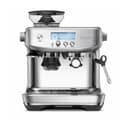 #1 Breville Barista Pro (BES878) Best overall · Under $1,000 Manual 360° swivel steam wand (explicitly not automatic) · ThermoJet, 3 seconds to temperature · PID · 54 mm · built-in 30-setting conical grinder · 2 L tank · 480 ml stainless jug in the box · 2-year limited warranty For the learner who wants one box with a dialable shot and a real wand. | For the learner who wants one box with a dialable shot and a real wand.Manual 360° swivel steam wand (explicitly not automatic) · ThermoJet, 3 seconds to temperature · PID · 54 mm · built-in 30-setting conical grinder · 2 L tank · 480 ml stainless jug in the box · 2-year limited warranty | $629.95In stock, checked November 22, 2026 Check Price on Amazon |
| 2 | 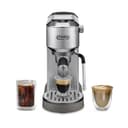 #2 De'Longhi Dedica Duo (EC890M) Budget pick · Under $200 Manual 'My LatteArt' cool-touch steam wand · Thermoblock · 15 bar pump · only 15 cm wide · 1.1 L tank · 4.2 kg · De'Longhi publishes no portafilter diameter and no clear warranty term For learning to pour on the smallest counter and the smallest budget. | For learning to pour on the smallest counter and the smallest budget.Manual 'My LatteArt' cool-touch steam wand · Thermoblock · 15 bar pump · only 15 cm wide · 1.1 L tank · 4.2 kg · De'Longhi publishes no portafilter diameter and no clear warranty term | $199.95In stock, checked November 22, 2026 Check Price on Amazon |
| 3 | 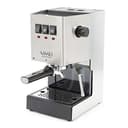 Best wand for the money · Under $500 Manual commercial-style stainless steam wand, with a panarello attachment also in the box · 58 mm portafilter · no PID · single boiler For the buyer who already owns a grinder and wants commercial-style steam. | For the buyer who already owns a grinder and wants commercial-style steam.Manual commercial-style stainless steam wand, with a panarello attachment also in the box · 58 mm portafilter · no PID · single boiler | $449.76In stock, checked November 22, 2026 Check Price on Amazon |
| 4 | 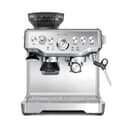 #4 Breville Barista Express (BES870XL) Best all-in-one · Under $1,000 Manual commercial-style 360° swivel steam wand · PID · 54 mm · built-in 16-setting conical grinder, 250 g hopper · pre-infusion For the same one-box route as the Pro, at a lower price and a slower warm-up. | For the same one-box route as the Pro, at a lower price and a slower warm-up.Manual commercial-style 360° swivel steam wand · PID · 54 mm · built-in 16-setting conical grinder, 250 g hopper · pre-infusion | $494.95In stock, checked November 22, 2026 Check Price on Amazon |
| 5 | 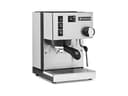 #5 Rancilio Silvia Espresso Machine Best steam power · Over $900 Manual commercial-style articulating stainless wand, not a panarello · 58 mm commercial portafilter · single boiler, no PID · Rancilio publishes no bar rating For the committed learner who wants a cafe wand and will temperature surf. | For the committed learner who wants a cafe wand and will temperature surf.Manual commercial-style articulating stainless wand, not a panarello · 58 mm commercial portafilter · single boiler, no PID · Rancilio publishes no bar rating | $995.00In stock, checked November 22, 2026 Check Price on Amazon |
The one requirement: a manual wand
Latte art is not a machine feature. It is a property of the milk. You need microfoam: milk in which the air has been broken down and folded in so thoroughly that there is no separate foam layer at all, and the whole jug is a single glossy, paint-like liquid. Pour that into espresso and it sinks and resurfaces, which is what lets you draw with it. Pour stiff, meringue-like foam into espresso and it sits on top in a lump. No amount of practice makes the second one into art.
Microfoam comes from steam pressure applied by hand, in two phases: a short stretching phase with the wand tip just at the surface, where you hear air being drawn in, and a longer texturing phase with the tip submerged and the milk spinning in a vortex that breaks those bubbles smaller. Both phases depend on you moving the jug by small amounts while listening. That is the part a machine can take away from you.
Which is why this page recommends differently from almost every other "best for milk drinks" roundup, including our own. Two kinds of machine are disqualified here:
- Automatic wands. The Breville Bambino Plustextures milk hands-free — you choose one of three temperatures and one of three foam levels and it does the rest with its own wand. It is excellent, it is the machine we recommend to most milk drinkers on the lattes and cappuccinos page, and it is not what you buy to learn to pour, because the whole skill is the thing it performs for you. The same logic rules out the automatic milk systems on bean-to-cup machines.
- Pannarello wands. A pannarello is a plastic sleeve over the wand that draws air in through a side hole. It makes hot milk with a stiff cap of foam reliably and forgivingly, and it cannot make microfoam, because you are not controlling the air. The De'Longhi Stilosa— our usual sub-$200 recommendation elsewhere on this site — has a pannarello-style frother, and that is why the Dedica Duo is the budget pick here instead of the cheaper machine.
Note the Gaggia Classic Pro ships a panarello attachment in addition to its bare commercial wand. That is the right arrangement: train with the bare wand, keep the attachment in a drawer for guests.
The three specs that help after that
1. How fast it gets from shot to steam. A single-boiler machine uses one heating element for brewing and steaming, so after the shot it has to climb to steam temperature. On the Barista Pro, Breville publishes a ThermoJet heater reaching extraction temperature in 3 seconds, so that transition is effectively instant. On a Gaggia Classic Pro or a Rancilio Silvia you wait for the steam light, and on the way back down you have to temperature surf— flush water through to drop the boiler back to brew temperature. That is not a flaw so much as a ritual, but it is a real difference in how fast you can practise.
2. Steam power and wand articulation.A wand that reaches, swivels and sits at a workable angle lets you hold the jug level and keep the vortex spinning. Breville publishes 360-degree swivel wands on both the Barista Pro and the Barista Express. Rancilio's wand on the Silvia is a commercial-style articulating stainless wand — explicitly not a panarello — and it is the closest thing here to what is behind a cafe counter. Raw steam pressure matters less than people think at home; what matters is that the wand does not fight you.
3. PID, which stabilises the shot, not the milk.The Barista Pro and Barista Express both have PID temperature control; the Gaggia Classic Pro and the Silvia do not, and De'Longhi publishes no PID on the Dedica Duo. PID makes the espresso under the milk repeatable, which matters because latte art is judged on the drink, not the jug. It does nothing for the steam. Do not pay for PID expecting better microfoam.
The five picks
Breville Barista Pro — the one to buy
Who it is for:the home barista who wants to learn to pour and wants the shot, the grind and the milk in one box. The spec that puts it first is almost a joke in Breville's own catalogue: the Barista Pro costs more than the Bambino Plus and has a manual360-degree swivel wand rather than the Bambino's automatic one. For most buyers that is a downgrade. For you it is the requirement. Around it: a ThermoJet heater Breville publishes at 3 seconds to extraction temperature, PID, a 54 mm portafilter, pre-infusion, a built-in conical grinder with 30 settings and a 250 g hopper, a 2 L tank, 15 bar pump, 1,680 W, and a 480 ml stainless milk jug plus the Razor dose-trimming tool in the box. Two years limited warranty. The honest catch is value rather than capability: the money over a Barista Express buys the faster heater, the LCD and a finer grinder, not better steam. Barista Express vs Barista Pro has that argument in full.
De'Longhi Dedica Duo — the budget pick
Who it is for:someone who wants to find out whether they enjoy pouring before spending four figures on the question. This is the cheapest machine on this page and the cheapest one that does the job, and De'Longhi named the wand for exactly this purpose: the published spec is a manual, cool-touch "My LatteArt" steam wand. The rest is a Thermoblock boiler, a 15 bar pump, a 1.1 L tank, 1,450 W, 4.2 kg, and a body only 15 cm wide, which is the narrowest machine we cover. Be clear-eyed about the compromises. It is a thermoblock, so steam is less plentiful than a boiler machine's and a 12 oz jug is about the practical limit. De'Longhi publishes no portafilter diameter anywhere — not on the product page, not in the manual's technical data table — and no clear warranty term for this model. And a cool-touch sleeve is slightly thicker in the hand than a bare wand, which makes the tip position a touch harder to judge at first. It still produces pourable milk, which the cheaper Stilosa does not.
Gaggia Classic Pro — the best wand for the money
Who it is for:the buyer who already owns a grinder and would rather put every dollar into the machine's hardware. You get a 58 mm commercial portafilter — the size cafes use, with the widest accessory ecosystem of any format — and a manual commercial-style stainless steam wand, with the panarello attachment supplied separately in the box so you can choose. There is no PID and no built-in grinder, so you will be temperature surfingbetween milk and espresso, and you need a grinder before this machine is useful at all — the Gaggia pairing page covers that. In exchange it is the cheapest route to a genuinely cafe-shaped wand and a machine that rewards learning for years rather than months.
Breville Barista Express — the cheaper all-in-one
Who it is for:the same buyer as the Barista Pro, with less to spend. The wand is the same kind of thing — a manual commercial-style 360-degree swivel wand — and it has PID, pre-infusion, a 54 mm portafilter and a built-in conical grinder with 16 settings and a 250 g hopper. What you give up is the ThermoJet heater, which means a real warm-up and a real wait between brewing and steaming rather than Breville's published 3 seconds. For someone practising several drinks in a row, that wait is the thing they notice first. For someone making one cappuccino a morning it is irrelevant, and this is the better buy.
Rancilio Silvia — the most steam
Who it is for: the learner who has decided this is a long-term hobby and wants the wand they will not outgrow. The published description is a commercial-style articulating stainless wand, explicitly not a panarello, on a 58 mm commercial portafilter and a single boiler. Rancilio publishes no bar rating for the machine at all, which is unusual and which we report rather than fill in. This is the most demanding machine here: no PID, so temperature surfing is mandatory rather than optional, no grinder, and no automation of any kind. It is also the one whose steam a cafe barista would recognise. If you are weighing it against the hands-free option, we compare them directly in Bambino Plus vs Rancilio Silvia, and the upgrade path to it is here.
The jug matters more than the next $300 of machine
If you buy one thing alongside the machine, buy a jug the right size for the drink. An over-filled jug cannot vortex, and a jug much larger than the drink leaves the milk too shallow to spin. For single cappuccinos and lattes a 12 oz pitcher is the standard answer; 20 oz is for two drinks at once. A sharp, tapered spout is what gives you a thin stream to draw with, and a thick rolled lip is what makes a pour wander.
We cover the shortlist on the milk pitchers page, and the honest companion to this page is the milk frothers page, which explains why a jug-style automatic frother cannot pour art no matter what the box says. Beyond that: whole milk is the easiest to texture, cold milk gives you a longer stretching window, and a wide, shallow cup is far easier to pour into than a tall mug. Everything else is repetition.
If the machine is still undecided more broadly, the best espresso machines for home covers the general case, and how to choose a machine walks the decision from the start.
What we know, and how we know it
What we did
- Took the specs from the manufacturer's own documentation. Not from a retailer listing, and not from another blog.
- Priced it from Amazon's API, with the date we checked shown next to the number. If that price is more than 48 hours old, this page stops showing a number at all rather than show you a wrong one.
- Formed a verdict from those specs, the price, and what owners publicly report.
Where we hedged, and why
All five machines are in our spec database and every figure above was read from Breville, De'Longhi, Gaggia or Rancilio's own pages and manuals. Where a maker publishes nothing, we say so: Rancilio publishes no bar rating for the Silvia, De'Longhi publishes no portafilter diameter for the Dedica Duo and no clear warranty term for it, and the 3-second heat-up on the Barista Pro is Breville's own figure, quoted as theirs.
We have not steamed milk on these machines and we have not measured steam pressure, recovery time or foam quality. The ranking here is driven by one published, verifiable fact per machine — whether the steam wand is manual, automatic or a pannarello — plus heat-up behaviour and wand type. There are no scores, no tests and no awards on this page beyond that reasoning. Prices and tier labels come from the live price layer at the date stamped on the table above.
What we did not do
We do not run a lab. We have not pulled thousands of shots on this machine, and we are not going to pretend otherwise. We have not used this unit ourselves. Everything above is sourced research, and it is labeled as such. Where we have used a machine, we say so and show it.
How we're paid
If you buy through a link on this page, we earn a commission. It costs you nothing extra and it does not change what we recommend — we link to the better option for the buyer even when it earns us less. See how we review and our full disclosure.
More machine roundups on the espresso machines hub.
Frequently asked questions
What is the best espresso machine for latte art?
The Breville Barista Pro. Its steam wand is manual - a 360-degree swivel wand that Breville's own spec notes is not automatic, despite the machine costing more than the Bambino Plus - and its ThermoJet heater reaches extraction temperature in a published 3 seconds, so there is almost no wait between the shot and the milk. It also ships with a 480 ml stainless jug.
Can you pour latte art with an automatic milk frother?
No. A jug-style automatic frother whips air in with a whisk and produces a stiff foam layer that sits on top of the drink. Latte art needs microfoam, where the air is folded in so finely that there is no separate layer at all and the milk pours like paint. That texture comes from steam pressure applied by hand, and no technique gets you there with a whisk.
Can you do latte art on a Breville Bambino Plus?
Not in the way this page means. The Bambino Plus textures milk hands-free - you pick one of three temperatures and one of three foam levels and its wand does the rest. That makes it our usual recommendation for milk drinkers, and the wrong machine for learning to pour, because the skill is the part it performs for you. Buy a machine with a manual wand instead.
What is the cheapest espresso machine for latte art?
The De'Longhi Dedica Duo, whose manual cool-touch wand De'Longhi calls 'My LatteArt'. It is a thermoblock machine, so steam is less plentiful than on a boiler machine and a 12 oz jug is about the practical limit. We would not go cheaper: the De'Longhi Stilosa below it uses a pannarello-style frother, which makes stiff foam rather than pourable microfoam.
Why can't you pour latte art with a pannarello wand?
A pannarello is a sleeve over the wand that draws air in through a side hole. It makes hot milk with a stiff cap of foam very reliably, which is why beginner machines use it - but because the sleeve controls the air rather than you, it cannot produce microfoam. The Gaggia Classic Pro handles this well by shipping a bare commercial wand with the panarello as a separate attachment.
Does a PID help with latte art?
No. PID stabilises brew temperature, which makes the espresso under the milk repeatable - worth having, because the drink is what gets judged. It does nothing for steam. The Barista Pro and Barista Express have PID; the Gaggia Classic Pro and Rancilio Silvia do not, and both make excellent microfoam.
What milk jug size should I use for latte art?
A 12 oz pitcher for single cappuccinos and lattes, and a 20 oz for two drinks at once. Fill to somewhere under halfway: an over-filled jug cannot form a vortex, and a jug much bigger than the drink leaves the milk too shallow to spin. A sharp tapered spout gives you the thin stream you draw with; a thick rolled lip makes the pour wander.
Sources
Specs come from the manufacturer's own documentation. Prices come from Amazon's API. Where a claim comes from what owners report, we link the thread and say so.
- Breville - BES878 Barista Pro product page (manual 360° wand, ThermoJet, PID, jug)
- Breville - BES878 official instruction manual (PDF)
- De'Longhi - EC890M Dedica Duo product page ('My LatteArt' cool-touch steam wand)
- Gaggia Classic Pro and Rancilio Silvia - steam wand description, portafilter size and boiler type as published by the makers and recorded in our spec database (Docs/Research/ProductSpecs-Gaggia-Rancilio.md)
- Specialty Coffee Association - coffee research and standards
Keep reading
- How to pour latte artThe technique this page buys you the hardware for.
- The best espresso machine for lattes and cappuccinosThe milk-drinks page, where an automatic wand is an advantage instead.
- Milk pitchers for steaming and latte artThe cheapest thing on this page that changes your pour.
- Milk frothers: do you actually need one?Why the frother aisle cannot get you to microfoam.
- Espresso temperature surfingThe ritual the two no-PID picks here require between milk and shot.
- Barista Express vs Barista ProWhether the faster heater is worth the gap, head to head.