
Espresso Machines · For home
The Best Espresso Machines for Home
The right home machine is decided by who drinks from it and how much work they will do on a Tuesday - not by which one reviews best. So this page sorts by household, and names the machine that fails in each one.
The short answer
Buy the Breville Bambino Plus: it is ready in a published 3 seconds, textures milk hands-free across three temperatures and three foam levels, has PID and a 54 mm basket, and is 7.5 inches wide - which makes it the machine that fits the most households without asking anything of them. The budget pick is the De'Longhi Stilosa, the cheapest machine here and the only one in its band with a real stainless steel boiler rather than a Thermoblock.
We earn a commission if you buy through a link on this page. It costs you nothing extra and it does not change what we recommend. Full disclosure.
All five picks, compared
Every pick on this page in one view, with the live Amazon price and stock on each row. Specs are the figures the maker or the listing publishes — nothing measured or scored by us. Prices are read from Amazon's API and were last checked November 22, 2026; where we have no verified price, the row says so rather than show you an old number.
| # | Machine | Which household | Price & availability |
|---|---|---|---|
| 1 | 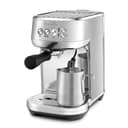 #1 Breville Bambino Plus (BES500) Best overall · Under $500 ThermoJet, 3 seconds to temperature · automatic hands-free milk, 3 temperatures x 3 foam levels with auto-purge · PID · 54 mm · 15 bar · pre-infusion · 1.9 L tank · 7.5" W x 13.5" D x 12" H · 4.95 kg · 2-year limited warranty · no grinder Most homes: one or two drinkers, milk drinks, limited counter. | Most homes: one or two drinkers, milk drinks, limited counter.ThermoJet, 3 seconds to temperature · automatic hands-free milk, 3 temperatures x 3 foam levels with auto-purge · PID · 54 mm · 15 bar · pre-infusion · 1.9 L tank · 7.5" W x 13.5" D x 12" H · 4.95 kg · 2-year limited warranty · no grinder | $485.00In stock, checked November 22, 2026 Check Price on Amazon |
| 2 | 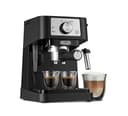 #2 De'Longhi Stilosa (EC260BK) Budget pick · Under $200 Stainless steel boiler, not a Thermoblock · manual pannarello-style frother · 15 bar · 1 L tank · 1,100 W · 3.9 kg · 1-year warranty plus 1 more on registration · De'Longhi publishes no portafilter diameter A first machine, or a household testing whether espresso sticks. | A first machine, or a household testing whether espresso sticks.Stainless steel boiler, not a Thermoblock · manual pannarello-style frother · 15 bar · 1 L tank · 1,100 W · 3.9 kg · 1-year warranty plus 1 more on registration · De'Longhi publishes no portafilter diameter | $149.95In stock, checked November 22, 2026 Check Price on Amazon |
| 3 | 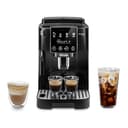 #3 De'Longhi Magnifica Start (ECAM22022) Least work · Under $500 Super-automatic bean-to-cup · built-in conical burr grinder, 13 settings, 250 g hopper · Thermoblock · 15 bar · 1.8 L tank · 1,250 W (US 120 V) · manual frother, NOT the automatic LatteCrema system A house where nobody wants a hobby, only coffee at a press. | A house where nobody wants a hobby, only coffee at a press.Super-automatic bean-to-cup · built-in conical burr grinder, 13 settings, 250 g hopper · Thermoblock · 15 bar · 1.8 L tank · 1,250 W (US 120 V) · manual frother, NOT the automatic LatteCrema system | $449.95In stock, checked November 22, 2026 Check Price on Amazon |
| 4 | 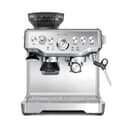 #4 Breville Barista Express (BES870XL) Best all-in-one · Under $1,000 Semi-automatic with built-in grinder · steel conical burrs, 16 grind settings, 250 g hopper · PID · 54 mm · manual commercial-style 360° swivel steam wand · pre-infusion · 15 bar One drinker who wants to learn, with no room for two machines. | One drinker who wants to learn, with no room for two machines.Semi-automatic with built-in grinder · steel conical burrs, 16 grind settings, 250 g hopper · PID · 54 mm · manual commercial-style 360° swivel steam wand · pre-infusion · 15 bar | $494.95In stock, checked November 22, 2026 Check Price on Amazon |
| 5 | 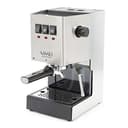 Best to learn on · Under $500 58 mm commercial portafilter · single brass boiler on the current E24 · solenoid valve · manual commercial steam wand plus a panarello attachment in the box · no PID · 2.1 L tank · 1,350 W · 1-year parts and labor A learner who will buy a separate grinder and keep this for years. | A learner who will buy a separate grinder and keep this for years.58 mm commercial portafilter · single brass boiler on the current E24 · solenoid valve · manual commercial steam wand plus a panarello attachment in the box · no PID · 2.1 L tank · 1,350 W · 1-year parts and labor | $449.76In stock, checked November 22, 2026 Check Price on Amazon |
Find your household
Almost every bad home espresso purchase is a mismatch between the machine and the people, not a bad machine. So pick the row that describes your kitchen rather than the one with the best specs.
One or two drinkers who want lattes and flat whites. This is most homes, and the answer is the Bambino Plus. The milk is automated, the heat-up is effectively instant, and it is narrow enough to live out permanently — which matters more than any spec, because a machine in a cupboard gets used twice.
A household where nobody wants to learn anything. Buy bean-to-cup. The Magnifica Startgrinds and brews at a press, which is a genuinely different product. Be clear that De'Longhi's cost saving on this model is milk — it has a manual frother, not their automatic LatteCrema system, which starts at the Evo tier — so a latte-at-a-button household needs to look higher or look at the alternatives.
One person who wants this to become a hobby, in a small kitchen. The Barista Express: grinder, PID, manual wand and a dose-trimming tool in one box, so you learn every step without owning two appliances.
One person who wants this to become a hobby, with room for a grinder. The Gaggia Classic Pro, which puts the money into 58 mm commercial hardware instead of into an integrated grinder you will outgrow. Add a real grinder and this is a machine you keep for a decade.
A household that is not sure espresso will stick. The Stilosa. It costs less than a year of pods, it has a real stainless boiler, and if it turns out nobody uses it you have lost very little. If it turns out everybody does, you have learned what to buy next with real information.
What a home setup really costs
Three of these five machines have no grinder, and that is the single most common budgeting mistake in home espresso. Pre-ground supermarket coffee will make any of them taste mediocre, because espresso needs a grind you can adjust in small steps and coffee that was ground minutes rather than months ago. So the honest price of a home setup is:
- The machine. Live prices on this page, stamped with the date we checked.
- A grinder, unless you bought the Barista Express or the Magnifica Start, both of which have one built in. Entry options start low — see grinders under $100 and the electric shortlist— and the case for prioritising this is in why the grinder matters more than the machine.
- A scale. Not optional in practice, and cheap: the best scales under $100. Without one you are not following a recipe, you are producing a surprise.
- Beans, forever.This is where a home setup actually beats a cafe, and it is also where it beats itself if you buy stale coffee — best espresso beans.
The full arithmetic, including the running cost per cup against a cafe habit, is in what home espresso costs, and how much to spend on an espresso machine covers how to split a fixed budget between machine and grinder. If you have not decided whether to buy at all, is a home espresso machine worth it is the sceptical version.
The five picks
Breville Bambino Plus — the machine for most homes
Who it is for:a household of one or two who drink milk-based coffee and do not want the machine to be a project. Breville publishes a ThermoJet heater reaching extraction temperature in 3 seconds, on the product page and in the manual, so there is no warm-up negotiation on a weekday; automatic, hands-free milk texturing across three temperatures and three foam levels with auto-purge; PID temperature control; a 54 mm portafilter; pre-infusion; a 15 bar pump; a 1.9 L tank; 1,560 W; 4.95 kg; dimensions of 7.5 inches wide by 13.5 deep by 12 high; and a two-year limited warranty. In the box: a 54 mm tamper, the Razor precision dosing tool, a 480 ml stainless milk jug and both single- and dual-wall baskets. The two honest limits are no grinder and no latte-art ceiling — the automatic wand that makes it easy is the same wand that means you are not learning to pour, which is why our latte art page picks differently. The full review is the long version.
De'Longhi Stilosa — the budget pick
Who it is for: the household finding out whether this is for them, and the first-machine buyer who refuses to spend four figures on a guess. This is the cheapest machine on the page and the cheapest that does the job. Its one genuinely notable spec for the price is a stainless steel boilerrather than a Thermoblock — the only real boiler in De'Longhi's entry range. Also published: 15 bar pump, 1 L tank, 1,100 W, 3.9 kg, and one year of warranty plus another with product registration. The compromises are clear and we will not soften them: the milk system is a pannarello-style frother, which makes reliable stiff foam and cannot make pourable microfoam; there is no PID; and De'Longhi publishes no portafilter diameter for it anywhere. De'Longhi itself sells this machine on ease, price and footprint rather than on control, which tells you where the ceiling is.
De'Longhi Magnifica Start — the least work
Who it is for:a household that wants good coffee and zero process. A super-automatic grinds, doses and brews from whole beans at a press. Published specs: a built-in conical burr grinder with 13 settings and a 250 g hopper, a Thermoblock boiler, a 15 bar pump, a 1.8 L tank and 1,250 W on the US 120 V machine — De'Longhi's EU sibling lists 1,450 W, which is a 230 V unit and does not apply here. Two things we will not state because De'Longhi does not publish them for this model: a warranty term, and a reliable weight — their stated net weight is heavier than their stated shipping weight, which cannot be right, so we repeat neither. The thing to know before buying: the milk is manual, not the automatic LatteCrema system, which begins at the Evo tier. More in the super-automatic roundup.
Breville Barista Express — the best all-in-one
Who it is for:one person who wants to learn the whole process and has room for exactly one appliance. Published specs: steel conical burrs with 16 grind settings and a 250 g hopper, PID temperature control, a 54 mm portafilter, pre-infusion, a 15 bar pump, and a manual commercial-style 360-degree swivel steam wand. That combination is unusual and it is why this machine has been a default recommendation for a decade: you grind, dose, tamp, pull and steam, all in one box, with the dose-trimming tool included to make the 54 mm basket behave. The compromise is the integrated grinder, which is good rather than excellent and is the part a keen owner outgrows first — at which point you are running an external grinder into a machine you paid a grinder premium for. If you already know you will buy a good grinder, the Gaggia is the better value; all-in-one vs a separate grinder is that argument.
Gaggia Classic Pro — the best to learn on
Who it is for: the learner who will buy a proper grinder and wants the machine to still be worth owning in ten years. The hardware is the argument: a 58 mm commercial portafilter, which is the format cafes use and has by far the widest accessory ecosystem; a single brass boiler and group on the current E24 generation; a solenoid valve, which is why the puck comes out dry; a manual commercial-style stainless steam wand with a panarello attachment supplied separately in the box; a 2.1 L tank; and 1,350 W per gaggia.com and Gaggia's service manual, which is the figure we cite because Gaggia's North American site says 1,425 W and we quote the two that agree. One year of parts and labour. What you give up: no PID, so temperature surfingis part of the routine, and no grinder at all, so it is useless on day one without one — the pairing pagecovers that. Note also that the pressurised "Crema perfetta" basket is the one pre-installed; swap to the traditional double once you have a grinder.
Counter space, water and noise
The three practical constraints that decide whether a home machine gets used, and the ones spec sheets bury:
- Height under the cupboard, not just width. You have to lift the water tank out, and on most machines that happens from the top or the back. Measure the clearance above the counter as well as along it. The Bambino Plus is 12 inches tall and 7.5 wide; the Gaggia is 14.2 inches tall with a 2.1 L tank to remove.
- Water hardness, which decides how long the machine lives.Scale is the number one killer of home espresso machines and it is entirely preventable. Filter the water or use the machine's filter, and descale on schedule — water for espresso and how often to descale.
- Noise, which is mostly the grinder. A pump runs for 30 seconds; a grinder is the loud part, and in a flat or an open-plan house with someone asleep that is the actual constraint. If it matters, see the quiet machine roundup.
Once the machine is chosen, the first shot checklist is what to do the morning it arrives, and the home espresso bar setup guide covers the layout. If you want a different cut of the same catalog, the best value machines sorts by price tier and the beginners page sorts by what kind of beginner you are.
What we know, and how we know it
What we did
- Took the specs from the manufacturer's own documentation. Not from a retailer listing, and not from another blog.
- Priced it from Amazon's API, with the date we checked shown next to the number. If that price is more than 48 hours old, this page stops showing a number at all rather than show you a wrong one.
- Formed a verdict from those specs, the price, and what owners publicly report.
Where we hedged, and why
All five machines are in our spec database and every figure above was read from Breville, De'Longhi or Gaggia's own product pages, spec pages and manuals. Where a maker publishes nothing or contradicts itself, we say so rather than picking a number: De'Longhi publishes no portafilter diameter for the Stilosa, and no warranty term or reliable weight for the Magnifica Start; Gaggia's own sites disagree on the Classic Pro's wattage (1,350 W versus 1,425 W) and its weight (8.1 kg versus 19 lb), so we cite the two sources that agree and give a range.
We have not used these machines in our own kitchen and we have not measured extraction, temperature stability, milk quality or noise. The ordering on this page is driven by which household each machine suits, read off published specs and the daily work each one asks for — not from a test we did not run. There are no scores, no awards and no reliability rankings here. Prices and tier labels come from the live price layer at the date stamped on the table above; the button is the authority, not this sentence.
What we did not do
We do not run a lab. We have not pulled thousands of shots on this machine, and we are not going to pretend otherwise. We have not used this unit ourselves. Everything above is sourced research, and it is labeled as such. Where we have used a machine, we say so and show it.
How we're paid
If you buy through a link on this page, we earn a commission. It costs you nothing extra and it does not change what we recommend — we link to the better option for the buyer even when it earns us less. See how we review and our full disclosure.
More on the espresso machines hub.
Frequently asked questions
What is the best espresso machine for home use?
The Breville Bambino Plus for most households: ready in a published 3 seconds, hands-free milk texturing across three temperatures and three foam levels, PID, a 54 mm basket, and only 7.5 inches wide so it can live on the counter. It has no grinder, so budget for one. If nobody in the house wants to touch a steam wand, buy a bean-to-cup machine instead.
How much should I spend on a home espresso machine?
Think in terms of the whole setup rather than the machine. Three of the five picks here have no grinder, and pre-ground supermarket coffee will make any of them taste mediocre - so the real budget is machine plus grinder plus a scale plus beans. If a fixed budget has to cover machine and grinder, splitting it rather than spending it all on the machine produces better coffee.
What is the cheapest espresso machine worth buying for home?
The De'Longhi Stilosa. It is the cheapest machine here and has a real stainless steel boiler rather than a Thermoblock, which is unusual at its price. The compromises are a pannarello-style frother that cannot make pourable microfoam, no PID, and no published portafilter diameter from De'Longhi. It is the right buy for a household testing whether espresso sticks.
Should I buy an espresso machine with a built-in grinder for home?
If counter space is tight and you want one appliance, yes - the Breville Barista Express is the long-standing answer, with 16 grind settings, PID and a manual swivel wand. The catch is that the integrated grinder is good rather than excellent and is the part a keen owner outgrows first, at which point you have paid a grinder premium for a machine running an external grinder.
What is the best home espresso machine for a family?
Usually a bean-to-cup machine, because the failure case in a mixed household is one enthusiast making everybody's drink until they resent it. The Magnifica Start grinds and brews at a press - though note its frother is manual, not De'Longhi's automatic LatteCrema system. The Bambino Plus is the other answer, since its hands-free milk means anyone can make a decent latte.
Do I need a PID on a home espresso machine?
It helps and it is not essential. PID holds brew temperature steady, which makes shots repeatable - the Bambino Plus and both Brevilles here have it. The Gaggia Classic Pro does not, which is why its routine includes temperature surfing: flushing water through to bring the boiler back down to brew temperature after steaming. Plenty of excellent home espresso is made without PID.
What else do I need besides the espresso machine?
A grinder unless the machine has one built in, a scale that reads to a tenth of a gram with a timer, and fresh beans. Those three decide more about the cup than the difference between any two machines on this page. A tamper and a milk jug usually come in the box; a knock box and a water filter are the next two useful purchases.
Sources
Specs come from the manufacturer's own documentation. Prices come from Amazon's API. Where a claim comes from what owners report, we link the thread and say so.
- Breville - BES500 Bambino Plus product page (ThermoJet 3 seconds, automatic milk, dimensions)
- Breville - BES870XL Barista Express product page (16 grind settings, PID, swivel wand)
- De'Longhi - EC260BK Stilosa product page (stainless boiler, pannarello frother, warranty)
- De'Longhi - ECAM22022B Magnifica Start product page (13 grind settings, manual frother)
- Gaggia - Classic E24 official spec page (58 mm, brass boiler, solenoid, 1,350 W)
- Gaggia North America - Classic Pro (the page whose wattage and weight disagree with Gaggia's global site)
- Docs/KeywordData.md - Bing Webmaster impressions for 'espresso machines for home' (697), 'best espresso machine for home' (561) and 'best home espresso machine' (235), the measured demand this page targets
Keep reading
- The best value espresso machinesThe same catalog sorted by price tier instead of by household.
- The best espresso machine for beginnersIf what you need sorting by is experience rather than household.
- How much to spend on an espresso machineHow to split a fixed budget between machine and grinder.
- What home espresso actually costsThe total setup cost, and the running cost against a cafe habit.
- The best coffee scale under $100The cheap purchase that makes every other variable legible.
- Why the grinder matters more than the machineRead before you spend the whole budget on the machine.