
Grinders · Electric
The Best Electric Coffee Grinders
An electric grinder buys you two things a hand grinder cannot: speed, and the ability to dose into a portafilter without holding anything. Those are the only two reasons to pay more, and they decide which one you want.
The short answer
Buy the Baratza Encore ESP: 40 mm Etzinger conical burrs, 40 stepped settings split into an espresso range and a filter range, and factory calibration, for about the price of the least expensive grinder we would put in front of an espresso machine. The budget pick is the SHARDOR conical burr grinder, which is the cheapest thing here that is a burr grinder at all rather than a blade.
We earn a commission if you buy through a link on this page. It costs you nothing extra and it does not change what we recommend. Full disclosure.
All six picks, compared
Every pick on this page in one view, with the live Amazon price and stock on each row. Specs are the figures the maker or the listing publishes — nothing measured or scored by us. Prices are read from Amazon's API and were last checked November 22, 2026; where we have no verified price, the row says so rather than show you an old number.
| # | Grinder | Who it's for | Price & availability |
|---|---|---|---|
| 1 | 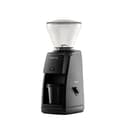 Best overall · Under $200 40 mm conical M2 steel burrs by Etzinger · 40 stepped settings, dual range (1-20 espresso, 21-40 filter) · factory-calibrated · 300 g hopper, 120 g bin · 70 W at 550 rpm · 1-year warranty For the home brewer who wants one grinder for espresso and filter. | For the home brewer who wants one grinder for espresso and filter.40 mm conical M2 steel burrs by Etzinger · 40 stepped settings, dual range (1-20 espresso, 21-40 filter) · factory-calibrated · 300 g hopper, 120 g bin · 70 W at 550 rpm · 1-year warranty | $199.95In stock, checked November 22, 2026 Check Price on Amazon |
| 2 | 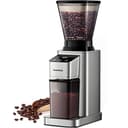 #2 SHARDOR Conical Burr Coffee Grinder Budget pick · Under $100 Conical burrs rather than blades, with multiple grind settings and a built-in timer per the listing · SHARDOR publishes no burr diameter and no spec sheet, so we quote none For the drip and French press drinker replacing a blade grinder. | For the drip and French press drinker replacing a blade grinder.Conical burrs rather than blades, with multiple grind settings and a built-in timer per the listing · SHARDOR publishes no burr diameter and no spec sheet, so we quote none | $59.99In stock, checked November 22, 2026 Check Price on Amazon |
| 3 | 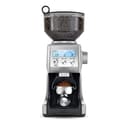 #3 Breville Smart Grinder Pro (BCG820) Most programmable · Under $200 Stainless conical burrs (Breville publishes no diameter) · 60 stepped settings · grind time programmable in 0.2-second increments · 18 oz hopper · 165 W · 50-54 mm and 58 mm portafilter cradles in the box For a Breville machine owner who wants to dose by time into the basket. | For a Breville machine owner who wants to dose by time into the basket.Stainless conical burrs (Breville publishes no diameter) · 60 stepped settings · grind time programmable in 0.2-second increments · 18 oz hopper · 165 W · 50-54 mm and 58 mm portafilter cradles in the box | $199.95In stock, checked November 22, 2026 Check Price on Amazon |
| 4 | 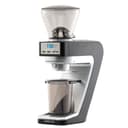 Fastest · Under $300 40 mm conical S1 burrs by Etzinger (material not stated by Baratza) · 31 steps on one macro adjustment · the ring burr spins and the cone stays fixed, so coffee drops straight down · 200 W, 650 rpm, 2.9-4.0 g/sec · 1-year warranty For back-to-back shots, where grind speed and leftover grounds matter. | For back-to-back shots, where grind speed and leftover grounds matter.40 mm conical S1 burrs by Etzinger (material not stated by Baratza) · 31 steps on one macro adjustment · the ring burr spins and the cone stays fixed, so coffee drops straight down · 200 W, 650 rpm, 2.9-4.0 g/sec · 1-year warranty | $299.95In stock, checked November 22, 2026 Check Price on Amazon |
| 5 | 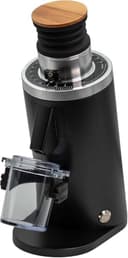 #5 DF54 Single Dose Coffee Grinder Best single dose · Under $300 54 mm custom flat burrs · stepless micrometric adjustment · 25 g single-dose hopper · 150 W, 1,400 rpm · 4.7 kg · 1-year warranty For the single-doser who wants flat burrs and stepless dial-in. | For the single-doser who wants flat burrs and stepless dial-in.54 mm custom flat burrs · stepless micrometric adjustment · 25 g single-dose hopper · 150 W, 1,400 rpm · 4.7 kg · 1-year warranty | $260.00In stock, checked November 22, 2026 Check Price on Amazon |
| 6 | 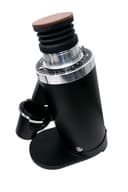 #6 DF64 Gen 2 Most upgradeable · Under $500 64 mm flat burrs, stainless or Red Titanium (TiCN) coated · stepless micrometric · 50 g single-dose bellows hopper · 250 W at 1,400 rpm · 6.8 kg · 1-year warranty For the brewer who will eventually swap in aftermarket burrs. | For the brewer who will eventually swap in aftermarket burrs.64 mm flat burrs, stainless or Red Titanium (TiCN) coated · stepless micrometric · 50 g single-dose bellows hopper · 250 W at 1,400 rpm · 6.8 kg · 1-year warranty | $389.00In stock, checked November 22, 2026 Check Price on Amazon |
What the motor actually buys you
It does not buy you better coffee. That is the uncomfortable part of this page and it is worth saying before any of the money. A good hand grinder and a good electric grinder with the same burr geometry produce broadly comparable grind quality, because the burrs do the work and the motor only turns them. What the motor buys you is speed and hands-free dosing, and those two things are worth a great deal to some households and nothing at all to others.
Speed matters in a specific way. A hand grinder takes something like 30 to 60 seconds of cranking for an espresso dose, and the finer the grind the harder the crank. Three drinks on a weekday morning turns that into a chore you will eventually stop doing. The Baratza Encore ESP grinds at a published 1.3-2.2 g per second, so an 18 g dose is roughly 8 to 14 seconds of standing still. The Sette 30 is published at 2.9-4.0 g per second, which is about twice as fast again.
Hands-free dosing matters more than people expect. With the Breville Smart Grinder Pro you clip the portafilter into a cradle, press once, and the grinder doses by time into the basket while you do something else. The Sette 30 drops coffee straight down rather than through a chute, because the outer ring burr spins while the inner cone stays fixed. Both of those are workflow features rather than quality features, and workflow is what makes a setup survive past month three.
The four things that separate them
1. Adjustment resolution, which decides whether espresso is realistic. A grinder with coarse steps can make good filter coffee and bad espresso, because espresso needs changes smaller than its steps. The Encore ESP solves this by splitting its 40 steps into a fine espresso range and a coarse filter range. The DF54 and DF64 solve it by being stepless: a continuous collar with no clicks at all, so you can land between any two points. Stepless is the better mechanism and it is also the main thing you are buying in the step up from $200 to $300.
2. Retention, which decides how much of yesterday you drink today. Every grinder keeps some grounds inside it. A hopper grinder with a long chute keeps more; a single-dose grinder is designed so that what you weigh in is almost all of what you get out. That is the entire pitch of the DF54 and DF64 Gen 2, and it is why they have a 25 g and a 50 g hopper instead of a 300 g one. If you brew one coffee type with one bean, retention barely matters. If you switch beans weekly, it is the difference between tasting the bag you bought and tasting a blend of the last three.
3. Throughput, which only matters if there is a queue. Baratza publishes 2.9-4.0 g/sec for the Sette 30 against 1.3-2.2 g/sec for the Encore ESP, and describes that as roughly double the throughput of similarly sized grinders. For one or two drinks nobody notices. For a household of four on a school morning it is the spec that gets thanked.
4. Burr provenance, which is the one claim worth checking. Baratza names Etzinger as the burr maker for both the Encore ESP (40 mm M2 conical) and the Sette 30 (40 mm S1 conical). DF Grinders publishes 54 mm and 64 mm flats and names the Red Titanium coating option. Breville publishes noburr diameter for the Smart Grinder Pro anywhere, and SHARDOR publishes no spec sheet at all — which is why you will not find a burr size for either of them on this page. Any 40 mm figure you read elsewhere for the Breville is not manufacturer-sourced.
The six picks
Baratza Encore ESP — the one most people should buy
Who it is for:the home brewer who owns or is about to own an espresso machine and wants one electric grinder to also handle drip and French press. Baratza re-engineered its entry classic specifically for espresso, and the dual range is the reason it works: settings 1-20 are fine micro-steps where espresso lives, 21-40 are coarse macro-steps for filter, so you are not trying to find a shot inside a dial built for a cafetiere. The burrs are 40 mm conical M2 steel by Etzinger, the hopper holds 300 g with a 120 g grounds bin, and the motor is 70 W at 550 rpm. Baratza's own line is that it "delivers the grind resolution you need to brew creamy, syrupy shots of espresso". The honest catch is speed: at 1.3-2.2 g/sec it is the slowest thing here. There is a full review of this grinder if you want the long version.
SHARDOR Conical Burr Grinder — the budget pick
Who it is for:the drip, French press or moka pot drinker replacing a blade grinder, who is not pulling espresso and does not want to spend $200 to stop chopping beans. This is the cheapest product on this page and the cheapest one that does the job, which is exactly what a budget pick should be. The listing states conical burrs rather than blades, multiple grind settings and a built-in timer; SHARDOR publishes no spec sheet, no burr diameter and no warranty term, so we are not going to invent any. Treat it as the floor of the category rather than a bargain version of the Baratza: it is happiest at the coarser end, and we would not buy it to dial in a shot. What it does do is end the single biggest source of bad home coffee, which is a blade grinder — see burr vs blade for why that gap is so large.
Breville Smart Grinder Pro — for Breville machine owners
Who it is for:someone who owns a Breville machine without a grinder, or who wants to dose into the basket by time rather than by weight. Both the 50-54 mm and the 58 mm portafilter cradles are in the box, grind time is programmable in 0.2-second increments, and there are 60 stepped settings spanning, in Breville's words, "the finest espresso to the coarsest French Press grind". The hopper is published in ounces only — 18 oz, with no gram figure anywhere — and the motor is 165 W with no published rpm. It is the natural pairing for a Bambino Plus, which is the argument made in full on that pairing page. Dosing by time drifts as beans age, so weigh the result occasionally.
Baratza Sette 30 — the fastest
Who it is for:the household making several espresso drinks in a row, where standing at a grinder is the bottleneck. The mechanism is the reason to want it: the outer ring burr spins while the inner cone stays fixed, so ground coffee drops straight down into the portafilter instead of winding through a chute, and Baratza says that roughly doubles the throughput of similarly sized grinders while leaving almost nothing behind. Published figures are 40 mm conical S1 burrs by Etzinger, 31 steps on a single macro adjustment, 200 W at 650 rpm, and 2.9-4.0 g/sec. Baratza does not state the burr material for this model. The compromise is adjustment: 31 macro steps is less resolution than the Encore ESP's split range, and it is loud in a way the spec sheet does not capture.
DF54 — the single-dose flat burr step up
Who it is for: the brewer who switches beans often and wants stepless adjustment without paying for 64 mm burrs. The published specification is 54 mm custom flat burrs, stepless micrometric adjustment, a 25 g single-dose hopper, 150 W at 1,400 rpm, 4.7 kg, and a one-year warranty. Single-dosing means you weigh beans in and get almost all of them back, so a bean change is a bean change rather than three shots of cross-contamination. Stepless means you can stop anywhere between two points, which is the single biggest quality-of-life upgrade in dialing espresso in. The trade-off is that you must weigh every dose, every time: there is no hopper to grab from, which some people love and some find tiresome by the second week.
DF64 Gen 2 — the most upgradeable
Who it is for:the brewer who expects this to be the last grinder they buy, because the burrs are replaceable with better ones. 64 mm flats, stainless or Red Titanium (TiCN) coated, stepless micrometric adjustment, a 50 g single-dose bellows hopper, 250 W at 1,400 rpm, 6.8 kg, one-year warranty. The 64 mm platform is the most widely supported aftermarket burr size there is, so a future SSP or similar set drops straight in — which makes this less a grinder than a chassis. It is also the heaviest and largest thing on this page by a distance, and the step from the DF54 is mostly burr diameter rather than mechanism. DF64 vs DF54 is the direct comparison.
When a hand grinder is the better buy
Three situations, honestly. If you make one or two drinks a day, a good hand grinder gives you equivalent grind quality for less money and no counter footprint. If you travel with your coffee, there is no electric answer. And if your budget is under about $120, a hand grinder at that price is simply a better grinder than an electric one at the same price, because you are not paying for a motor, a housing and a timer out of the same hundred dollars.
The case against is physical: fine espresso grinds are hard work, and multiple doses a day gets old. We lay the whole argument out in hand vs electric grinders, and if that sends you the other way, the beginner grinder guide is the gentler starting point. For which grind setting to actually use once the grinder arrives, the grind size chart is the reference, and why the grinder matters more than the machine is the argument for spending here at all. If you already own a machine, the pairing pages are more specific than this one — for instance the best grinder for a Gaggia Classic Pro.
What we know, and how we know it
What we did
- Took the specs from the manufacturer's own documentation. Not from a retailer listing, and not from another blog.
- Priced it from Amazon's API, with the date we checked shown next to the number. If that price is more than 48 hours old, this page stops showing a number at all rather than show you a wrong one.
- Formed a verdict from those specs, the price, and what owners publicly report.
Where we hedged, and why
Four of these six grinders are in our spec database and every figure quoted for them comes from Baratza, Breville or DF Grinders directly. Where a maker does not publish something, we say so rather than borrowing a number from a retailer: Breville publishes no burr diameter and no rpm for the Smart Grinder Pro, Baratza does not state the burr material for the Sette 30, and SHARDOR publishes no spec sheet at all, so its row carries only what the listing states.
We have not used these grinders ourselves and we have not measured particle distribution, retention or noise. The ranking comes from published burr specs, adjustment mechanism, throughput figures and price — not from a test we did not run. Prices and the under-$100 / under-$200 / under-$300 labels in the table come from the live price layer at the date stamped on the table; the button is the authority, not this sentence.
What we did not do
We do not run a lab. We have not pulled thousands of shots on this machine, and we are not going to pretend otherwise. We have not used this unit ourselves. Everything above is sourced research, and it is labeled as such. Where we have used a machine, we say so and show it.
How we're paid
If you buy through a link on this page, we earn a commission. It costs you nothing extra and it does not change what we recommend — we link to the better option for the buyer even when it earns us less. See how we review and our full disclosure.
More grinder pages on the grinders hub, and if the machine is still undecided, start at espresso machines.
Frequently asked questions
What is the best electric coffee grinder?
The Baratza Encore ESP. It uses 40 mm conical M2 burrs made by Etzinger and splits its 40 stepped settings into an espresso range (1-20) and a filter range (21-40), so one grinder covers both jobs without fighting the dial, and every unit is factory-calibrated. The catch is speed: at a published 1.3-2.2 g per second it is the slowest grinder on this page.
Is an electric grinder better than a hand grinder?
Not for grind quality - the burrs do that work, not the motor. An electric grinder buys you speed and hands-free dosing. If you make one or two drinks a day, or your budget is under about $120, a hand grinder is usually the better buy at the same money. If you make several espresso drinks every morning, cranking gets old fast and the motor is worth paying for.
What is the cheapest electric burr grinder worth buying?
The SHARDOR conical burr grinder is the cheapest pick here and it is a genuine burr grinder rather than a blade chopper, which is the gap that matters most for drip, French press and moka pot. SHARDOR publishes no spec sheet, burr diameter or warranty term, so treat it as the floor of the category - we would not buy it to dial in espresso.
What does single dosing mean on a grinder?
You weigh in exactly the beans you are about to brew instead of filling a hopper, and the grinder is designed to give back almost all of them. The DF54 has a 25 g single-dose hopper and the DF64 Gen 2 a 50 g bellows hopper for this reason. It matters if you change beans often, because a hopper grinder with a long chute holds old grounds that end up in your next brew.
Do I need a stepless grinder for espresso?
No, but it helps. Stepless means a continuous adjustment collar with no clicks, so you can land between any two points - the DF54 and DF64 Gen 2 both work this way. A stepped grinder works for espresso if its steps are fine enough in the espresso range, which is exactly what the Baratza Encore ESP's dual range is for. Coarse single-range steps are what make espresso frustrating.
Which electric grinder is fastest?
The Baratza Sette 30, at a published 2.9-4.0 g per second against 1.3-2.2 g per second for the Encore ESP. Its outer ring burr spins while the inner cone stays fixed, so coffee drops straight down into the portafilter rather than through a chute, and Baratza says that roughly doubles the throughput of similarly sized grinders. It is noticeably louder in exchange.
Can one electric grinder do espresso and drip coffee?
Yes, and the Baratza Encore ESP is the clearest example because its dial is split into a fine espresso range and a coarse filter range. The Breville Smart Grinder Pro covers the same span with 60 stepped settings. What you give up versus a dedicated espresso grinder is retention: switching between ranges leaves some of the previous grind inside the machine.
Sources
Specs come from the manufacturer's own documentation. Prices come from Amazon's API. Where a claim comes from what owners report, we link the thread and say so.
- Baratza - Encore ESP product page (burrs, dual range, throughput, warranty)
- Baratza - Sette 30 product page (S1 burrs, 31 steps, 2.9-4.0 g/sec)
- Breville - BCG820 Smart Grinder Pro product page (60 settings, cradles, 165 W)
- DF Grinders - DF64 technical specifications (64 mm flats, stepless, bellows hopper)
- SHARDOR conical burr grinder and DF54 - burr type, settings, timer and single-dose hopper as published on the Amazon listings, read November 21, 2026
- Specialty Coffee Association - coffee research and standards
Keep reading
- Hand vs electric grindersThe decision this page sits on one side of, argued properly.
- The best coffee grinders for espressoSame catalog, sorted by espresso capability rather than by motor.
- The best flat burr grindersIf the flat-versus-conical question is the one you are stuck on.
- Baratza Encore ESP reviewThe long version on this page's top pick.
- Burr vs blade grindersWhy the budget pick is still a large upgrade over what most people own.
- Grind size chartWhere to set whichever of these you buy, by brew method.