
Grinders · Comparison
DF64 Gen 2 vs DF54
Same single-dose platform, same stepless micrometric adjustment, same maker. The difference is ten millimetres of burr, a hundred watts of motor and two kilos of grinder — and whether you ever intend to swap the burrs.
The short answer
Buy the DF64 Gen 2 if you want the 64 mm burr platform aftermarket sets drop straight into, and have the counter space and budget for it. Buy the DF54 if you want the same stepless single-dose workflow for less money and less counter — DF Grinders calls it all-purpose rather than espresso-first.
We earn a commission if you buy through a link on this page. It costs you nothing extra and it does not change what we recommend. Full disclosure.
The short answer
These are not rival designs. They are the same design in two sizes, from the same maker, and the specification sheets line up almost row for row: single-dose bellows hopper, flat burrs, genuinely stepless micrometric adjustment, a 1,400 rpm motor, a one-year warranty. What changes is the scale of everything. The DF64 Gen 2 runs 64 mm flat burrs, a 250 W motor, a 50 g hopper and 6.8 kg of grinder. The DF54 runs 54 mm flat burrs, a 150 W motor, a 25 g hopper and 4.7 kg.
Buy the DF64 Gen 2if you are committed to espresso and want the platform rather than just the grinder — 64 mm is the burr size the aftermarket is built around, and well-regarded burr sets drop straight in, which means you can change this grinder's character years from now instead of replacing it. Buy the DF54 if you want the same stepless single-dose workflow for less money and less counter space, and you are not planning a burr-swapping hobby. DF Grinders describes the DF54 as an all-purpose grinder rather than an espresso-only one, so treat it as a smaller DF64, not a different kind of machine.
If you are not yet sure single-dosing is the workflow you want at all, read single dose vs hopper before you spend — it is the fork that decides more about your daily routine than burr size ever will.
What the two share
Being explicit about the overlap narrows the decision, because most of what people worry about when choosing between these two is identical on both.
- Flat burrs. Both use flat burr sets, not conical. Neither geometry is simply better — we take that argument apart in conical vs flat burrs — but it does mean the two grinders are the same kind of tool, differing in burr area rather than in principle.
- Stepless micrometric adjustment. Both adjust continuously rather than in clicks, so you can land exactly on the setting a coffee wants. For espresso that is a real advantage, and stepped vs stepless explains why.
- Single-dose bellows hopper. Both are built around weighing in the beans for one brew, grinding them all through, and using a bellows to push the last grounds out of the chamber. Low retention, maximum freshness, one extra step per shot.
- 1,400 rpm and a one-year warranty. Same motor speed, same stated warranty period, same maker.
So the decision is not "which grinder is better built" or "which adjusts more precisely". It is burr area, physical size, hopper capacity, motor power and price — and, above all, whether the 64 mm aftermarket ecosystem matters to you.
DF64 Gen 2: the upgradeable one
| Type | Electric |
|---|---|
| Burrs | 64 mm flat — stainless, or Red Titanium (TiCN) coated |
| Adjustment | Stepless micrometric |
| Stepless? | Yes — genuinely stepless |
| Good for espresso? | Yes — the stepless adjustment is sold specifically on easier espresso dial-in |
| Capacity | 50 g single-dose bellows hopper |
| Motor | 250 W, 1400 RPM |
| Dimensions | 13 x 22.5 x 30 cm (W x D x H) |
| Weight | 15 lb (6.8 kg) |
| Warranty | 1 year |
The DF64 is the one that made this category popular, and the reason is less about any single spec than about what 64 mm means as a standard. Sixty-four millimetres is the burr size the enthusiast aftermarket builds for, so a DF64 is a grinder you can re-character later: swap the stock set for a different one and the machine behaves differently, without buying a new machine. That is the headroom you are paying for, and it is genuine.
The rest of the sheet backs it up. The 250 W motor is two-thirds more powerful than the DF54's 150 W at the same 1,400 rpm, so it has more to give when you ask it for a fine espresso grind on a dense, light roast. The 50 g bellows hopper is twice the DF54's, so a large filter brew or a back-to-back pair of doubles does not need two loads. DF Grinders offers the burrs in stainless or a Red Titanium (TiCN) coating, and the stepless micrometric collar is the adjustment you want when the shot is three seconds fast and you need a hair's-width change rather than a click.
The honest cons.It is the bigger machine in every dimension that matters on a counter: 13 cm wide, 22.5 cm deep, 30 cm tall and 6.8 kg, against the DF54's 4.7 kg. It costs more. And the platform argument cuts both ways — if you are never going to buy an aftermarket burr set, you are paying for a ceiling you will not reach, and the smaller grinder will make you just as happy.
DF54: the same idea, smaller
| Burrs | 54 mm custom flat |
|---|---|
| Adjustment | Stepless micrometric |
| Hopper | 25 g single-dose |
| Motor | 150 W, 1,400 rpm |
| Weight | 4.7 kg |
| Warranty | 1 year |
| Positioning | DF Grinders describes the DF54 as an all-purpose grinder rather than an espresso-only one |
The DF54 is the DF64's smaller-burr sibling and it is the better buy for more people than the enthusiast forums would have you believe. You keep the two things that make this platform worth having — stepless micrometric adjustment and a true single-dose workflow with a bellows — and you give up burr area, motor power and hopper capacity in exchange for meaningfully less money and about two kilos and a chunk of counter depth.
Note how DF Grinders itself positions it: all-purpose, not espresso-first. That is a useful signal. If your week includes espresso and pour over andthe occasional French press, the DF54 is being sold to you as the grinder for exactly that life. The 25 g hopper is a single-dose capacity in the literal sense — it holds one brew's beans, not two — which fits how a single-doser actually works but will annoy you if you routinely grind for a 1-litre press.
The honest cons. Smaller burrs and a less powerful motor mean less headroom at the fine end, where espresso lives and where dense light roasts ask the most of a grinder. There is no 54 mm aftermarket ecosystem to speak of, so what you buy is what you keep. And the hopper capacity is genuinely small if your brewing is not single-dose-shaped.
Both grinders, compared
Every pick on this page in one view, with the live Amazon price and stock on each row. Specs are the figures the maker or the listing publishes — nothing measured or scored by us. Prices are read from Amazon's API and were last checked October 5, 2026; where we have no verified price, the row says so rather than show you an old number.
| # | Grinder | Why you'd pick it | Price & availability |
|---|---|---|---|
| 1 | 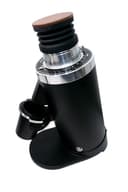 #1 DF64 Gen 2 Best platform · Single-dose, flat burr 64 mm flat burrs (stainless or Red Titanium TiCN) · stepless micrometric · 50 g bellows hopper · 250 W at 1,400 rpm · 6.8 kg · 1-year warranty The 64 mm standard the aftermarket builds for — re-character it later instead of replacing it. | The 64 mm standard the aftermarket builds for — re-character it later instead of replacing it.64 mm flat burrs (stainless or Red Titanium TiCN) · stepless micrometric · 50 g bellows hopper · 250 W at 1,400 rpm · 6.8 kg · 1-year warranty | $389.00In stock, checked October 5, 2026 Check Price on Amazon |
| 2 | 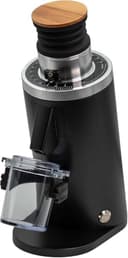 #2 DF54 Single Dose Coffee Grinder Best value · Single-dose, flat burr 54 mm custom flat burrs · stepless micrometric · 25 g hopper · 150 W at 1,400 rpm · 4.7 kg · 1-year warranty Same stepless single-dose workflow, less money, two kilos lighter and less counter depth. | Same stepless single-dose workflow, less money, two kilos lighter and less counter depth.54 mm custom flat burrs · stepless micrometric · 25 g hopper · 150 W at 1,400 rpm · 4.7 kg · 1-year warranty | $260.00In stock, checked October 5, 2026 Check Price on Amazon |
| 3 |  Best if you want a hopper · Hopper-fed, conical 40 mm conical burrs · 40 stepped settings across a dual espresso/filter range · factory-calibrated · conventional hopper No weighing-in step, factory-calibrated, and Baratza's parts-and-repair support behind it. | No weighing-in step, factory-calibrated, and Baratza's parts-and-repair support behind it.40 mm conical burrs · 40 stepped settings across a dual espresso/filter range · factory-calibrated · conventional hopper | $199.95In stock, checked October 5, 2026 Check Price on Amazon |
Does 10 mm of burr matter?
Less than the internet thinks, and more than nothing. Here is the honest version, kept at the level the makers actually support.
Larger burrs present more cutting edge to the beans, which generally means faster grinding and less work per revolution — and at the fine, dense end of the range, where espresso lives, that extra margin is where a bigger set earns its money. The DF64's 250 W motor at the same 1,400 rpm is part of the same story: more burr and more power to turn it. Where you will notice it is grinding time and composure under load, not a dramatic difference in the cup.
What matters much more than the ten millimetres is the thing nobody prints on a box: alignment, adjustment resolution and the workflow around the grinder. Both of these grinders are stepless, both are single-dose, and both come off the same platform — so on the factors that dominate, they are level. If you want a specific, concrete reason to pay for 64 mm, the strongest one is not grind quality. It is that the aftermarket burr ecosystem exists at that size and does not at 54 mm.
The caveat that applies to both
One warning belongs on both grinders and we would be doing you a disservice to bury it. This is a multi-brand platform built in China and sold under several badges — the Amazon listing for the DF54, for instance, is badged DF64Coffee rather than MiiCoffee. That means warranty and after-sales support depend less on the model name than on whose box actually arrives at your door.
Quality control across this whole category of enthusiast single-dose grinders is known to vary unit to unit. That is a category-level caution rather than a claim about a specific defect rate, and it does not stop these being good grinders — but it does mean the seller matters as much as the spec sheet. Buy from one who will stand behind the grinder if your unit needs attention, and check which brand is on the box before you order. By contrast, a Baratza is the opposite proposition: a smaller, simpler grinder with a long-standing parts-and-repair reputation behind it.
If single-dosing isn't for you
| Type | Electric |
|---|---|
| Burrs | 40 mm conical steel (M2), made by Etzinger in Liechtenstein |
| Adjustment | 40 stepped settings, adjusted by twisting the hopper. Dual range: 1-20 espresso, 21-40 filter. |
| Stepless? | No — it clicks between steps (most grinders described as 'stepless' online aren't) |
| Good for espresso? | Yes, and it is the headline use — Baratza: 'delivers the grind resolution you need to brew creamy, syrupy shots of espresso' |
| Capacity | 300 g hopper, 120 g grounds bin |
| Motor | 70 W, 550 RPM. Grinds 1.3-2.2 g/sec. |
| Dimensions | 13 x 15 x 34 cm (W x D x H) |
| Weight | 7 lb (3.1 kg) |
| Warranty | 1 year |
Both DF grinders ask you to weigh beans in for every brew. Some people find that the satisfying heart of the ritual; others resent it by the second week. If you suspect you are in the second camp, the honest recommendation is not a smaller single-doser — it is a hopper-fed grinder, and the Baratza Encore ESPis the one we point most people at. It is a 40 mm conical with 40 stepped settings across a dual espresso-and-filter range, factory-calibrated so the espresso settings mean something out of the box, with Baratza's parts support behind it. You give up stepless adjustment and accept a little more retention; you gain a grinder you load once and use for a week. We compare it directly with the bigger DF in DF64 vs Baratza Encore ESP.
Which one for which buyer
| If this is you | Buy | Because |
|---|---|---|
| You want to swap burr sets and tinker for years | DF64 Gen 2 | 64 mm is the size the aftermarket builds for; 54 mm effectively is not. |
| Espresso is your main drink, especially light roasts | DF64 Gen 2 | More burr area and a 250 W motor give more margin at the fine, dense end. |
| You want the single-dose workflow for the least money | DF54 | Same stepless micrometric platform and bellows, smaller burrs, lower price. |
| Counter space or weight is genuinely tight | DF54 | 4.7 kg against 6.8 kg, and less depth to find on the worktop. |
| You brew espresso, pour over and press in the same week | DF54 | DF Grinders positions it as all-purpose rather than espresso-first. |
| You routinely grind for a big filter batch | DF64 Gen 2 | A 50 g hopper does it in one load; the DF54's 25 g does not. |
| Weighing beans in every time sounds like a chore | Neither — buy a hopper grinder | Single-dosing is the whole premise of both; a Baratza Encore ESP suits you better. |
The verdict
For the committed espresso drinker who enjoys the gear as much as the coffee, the DF64 Gen 2 is the right buy. The 64 mm flat burrs and the 250 W motor give it more margin where espresso is hardest, the 50 g bellows hopper covers filter batches too, and — the real argument — 64 mm is the standard the aftermarket serves, so this is a grinder you can re-character in three years rather than replace. Accept that it is bigger, heavier and pricier, and that the headroom only pays off if you use it.
For most people buying their first serious single-dose grinder, the DF54is the smarter money. You keep the stepless micrometric adjustment and the bellows workflow that make this platform worth owning, you lose burr area you may never miss, and you save both cash and counter. DF Grinders' own all-purpose framing is the tell: if your week has espresso in it alongside pour over and a press, this is the grinder aimed at you.
Either way, buy from a seller who will stand behind the unit — this is a multi-brand platform and support follows the badge on the box. Put both in context with the best grinders for espresso, or see the tier each sits in at the best grinders under five hundred.
What we know, and how we know it
What we did
- Took the specs from the manufacturer's own documentation — DF Grinders' own published specifications for the DF64 and the DF54 V4. Not from a retailer listing, and not from another blog.
- Priced it from Amazon's API, with the date we checked shown next to the number. If that price is more than 48 hours old, this page stops showing a number at all rather than show you a wrong one.
- Formed a verdict from those specs, the price, and what owners publicly report.
Where we hedged, and why
We have not used either grinder and we run no lab, so there is no grind-consistency or taste test behind this page. Every figure above — burr sizes, wattage, rpm, hopper capacity, weight, warranty — is DF Grinders' own published specification. The DF64 is in our spec database and its table is generated from it; the DF54 V4 is not, so its table is rendered inline and captioned with its source.
We keep the burr-size discussion at the level the maker supports. More burr area generally means faster grinding and more margin under load; we do not assert a measured difference in extraction, particle distribution or taste between 54 mm and 64 mm, because we have not measured one. The concrete, checkable reason to prefer 64 mm is the aftermarket burr ecosystem at that size, not a cup result.
Our note that quality control varies across enthusiast single-dose grinders is a category-level caution, not a claim about any specific unit's defect rate. The observation that the DF54 listing is badged DF64Coffee rather than MiiCoffee is what the listing itself shows. No price appears in our prose; every number on the page is live from Amazon and carries the date it was checked.
What we did not do
We do not run a lab. We have not pulled thousands of shots on this machine, and we are not going to pretend otherwise. We have not used this unit ourselves. Everything above is sourced research, and it is labeled as such. Where we have used a machine, we say so and show it.
How we're paid
If you buy through a link on this page, we earn a commission. It costs you nothing extra and it does not change what we recommend — we link to the better option for the buyer even when it earns us less. See how we review and our full disclosure.
Frequently asked questions
What is the difference between the DF64 and the DF54?
Scale, on an otherwise shared platform. Both are single-dose grinders with a bellows hopper, flat burrs, stepless micrometric adjustment, a 1,400 rpm motor and a one-year warranty. The DF64 Gen 2 has 64 mm burrs, a 250 W motor, a 50 g hopper and weighs 6.8 kg; the DF54 has 54 mm burrs, a 150 W motor, a 25 g hopper and weighs 4.7 kg. The DF54 costs less and takes less counter.
Is the DF64 worth the extra money over the DF54?
It depends on one thing: whether you will ever swap the burrs. 64 mm is the size the enthusiast aftermarket builds for, so a DF64 can be re-charactered years later with a drop-in burr set, while there is no comparable 54 mm ecosystem. Add more burr area and a 250 W motor for margin at the fine espresso end. If you are never going to tinker, the DF54 gives you the same stepless single-dose workflow for less.
Is the DF54 good for espresso?
Yes, with a caveat about positioning. It keeps the two features that matter most for espresso on this platform — stepless micrometric adjustment and a true single-dose workflow with a bellows — so dialing in is as precise as on the DF64. But DF Grinders describes the DF54 as an all-purpose grinder rather than an espresso-only one, and its smaller burrs and 150 W motor leave less margin on dense light roasts at a fine grind.
Do DF64 aftermarket burrs fit the DF54?
No. The whole point of the 64 mm format is that it is a widely supported standard, so well-regarded aftermarket sets drop straight into a DF64. The DF54's burrs are a 54 mm custom set and there is no meaningful aftermarket at that size, so what you buy is what you keep. If swapping burrs is part of your plan, that alone decides the comparison in the DF64's favour.
What is the warranty situation on DF grinders?
DF Grinders publishes a one-year warranty on both the DF64 and the DF54 V4. The practical caveat is that this is a multi-brand platform built in China and sold under several badges — the DF54's Amazon listing, for example, is badged DF64Coffee rather than MiiCoffee — so warranty and after-sales support depend on which seller's box arrives. Buy from a seller who will stand behind the grinder.
Should I buy a DF grinder or a Baratza Encore ESP?
Choose by workflow, not by burr spec. Both DF grinders are built around weighing in the beans for every brew; if that sounds like a satisfying ritual, buy one. If it sounds like a chore you will resent, buy the hopper-fed Baratza Encore ESP instead — a factory-calibrated 40 mm conical with 40 stepped settings across espresso and filter ranges, and a long-standing parts-and-repair reputation behind it.
Sources
Specs come from the manufacturer's own documentation. Prices come from Amazon's API. Where a claim comes from what owners report, we link the thread and say so.
Keep reading
- Single dose vs hopper grindersThe workflow question that decides whether either of these belongs on your counter.
- DF64 vs Baratza Encore ESPThe same DF64 against the hopper-fed entry grinder, if you're weighing platforms.
- The best grinders for espressoWhere both DF grinders land against the full field, electric and manual.
- Best grinders under five hundredThe tier these two share, and what else competes at the money.
- Conical vs flat burrsBoth of these are flat. Here is what that actually buys you, without the tribalism.
- Stepped vs stepless grindersWhy stepless micrometric adjustment is the feature these two really share.