
Grinders · Workflow
Single Dose vs Hopper Grinders
One asks you to weigh beans every single time. The other asks you to accept slightly staler coffee and a little retention. Nobody tells you that this is a temperament question, not a quality question.
The short answer
Single-dose if you switch coffees often, chase precision or buy small bags of expensive beans — you gain freshness and almost no retention, at the cost of weighing in every time. Choose a hopper if you drink the same coffee daily and want to grind without a weighing step. Neither grinds better coffee.
We earn a commission if you buy through a link on this page. It costs you nothing extra and it does not change what we recommend. Full disclosure.
Key takeaways
- Neither workflow grinds better coffee. Burrs, alignment and adjustment decide grind quality. This is a question about your mornings.
- Single-dosing means weighing the exact beans for one brew and grinding them all through, usually with a bellows to clear the chamber. Maximum freshness, almost no retention, one extra step per shot.
- A hopper holds days of beans and grinds on demand. Lowest friction, at the cost of beans staling in the hopper and a little retention between grinds.
- The decider is how often you change coffees. Switch often and retention is a daily tax; drink one bag for a fortnight and it is a rounding error.
- Hand grinders are single-dose by nature. If you want single-dosing cheaply, a 1Zpresso J-Ultra gets you there without an electric.
The short answer
Choose single-dosing if you switch between coffees often, buy small bags of expensive beans, or care about pulling each shot from beans you weighed moments ago. Choose a hopper if you drink the same coffee every day, make several drinks in a row, or know in your bones that a weighing step at 6:40 a.m. is a step you will come to resent.
What nobody says plainly enough: this is not a quality ranking. Grind quality comes from the burrs, their alignment and the resolution of the adjustment — not from how the beans arrive at them. A hopper-fed Baratza and a single-dose DF are both capable of excellent coffee. The workflow decides how pleasant your mornings are and how much coffee you waste, which is a different and more practical question.
What each one actually means
A hopper grinder has a container on top that holds a few days of beans — 300 g on a Baratza Encore ESP, 18 oz on a Breville Smart Grinder Pro. You fill it, and then each morning you grind straight into a portafilter or a bin, either by time or by pressing until you have enough. The beans live in the hopper between uses.
A single-dose grinderhas no meaningful storage. You weigh out the beans for exactly this brew — 18 g for a double, 30 g for a V60 — tip them into a small funnel, grind them all through, and usually squeeze a rubber bellows to push the last grounds out of the burr chamber. The DF54's hopper holds 25 g, which is to say one dose. Nothing is stored, because storage is not the point.
And a hand grinder is a single-dose grinder whether it says so or not. You load the beans you want, you crank, you empty the catch cup. If single-dosing appeals to you but a dedicated electric single-doser does not, a good manual grinder is the cheapest route into the workflow — see the best hand grinders.
Retention: the real argument
Retention is the coffee that stays inside the grinder after you have ground — in the burr chamber, in the chute, on the surfaces. Every grinder retains some. It matters for two reasons, and only one of them is about freshness.
First, the stale-grounds problem.Grounds left in the chute from yesterday come out at the front of today's dose. Coffee stales dramatically faster once ground than it does as whole beans, so those first grams are the oldest coffee in your cup.
Second, and more significant: the coffee-swap problem. If you change beans — a different roast, a decaf, a new bag — the retained grounds from the last coffee come through in the first dose of the new one. Switch coffees weekly and that is a minor nuisance. Switch daily, or run a decaf alongside a regular, and you are drinking a blend you never chose, every single time.
This is what single-dosing is engineered to solve. Weigh in, grind through, bellows out: what you put in is very close to what you get back. It is also why the people most evangelical about single-dosing are the people who buy three 250 g bags at a time from a roaster, and why people who drink one house blend for a fortnight genuinely do not notice.
The honest case for a hopper
Hoppers are unfashionable among enthusiasts and they are the right answer for a great many people. Four genuine advantages:
Zero friction. No scale, no funnel, no weighing. Beans are already there. For a household where several people make coffee — or where you make three drinks in a row on a Sunday — that matters far more than retention does.
It is the better fit for an all-in-one workflow. If the grinder doses straight into a portafilter, a hopper plus a programmable grind time means one button and done. The same logic is why machines with a grinder built in have a hopper, not a funnel — see machines with a built-in grinder.
Cheaper, at any given grind quality. The single-dose format is an enthusiast feature and priced like one. At the money a modest single-doser costs, a hopper grinder typically gives you more burr and more support.
Repairability and support are often better. The established hopper grinders — Baratza especially — have long parts-and-repair reputations. Many single-dose grinders come off multi-brand platforms where support follows whichever badge is on the box.
The costs are real but bounded: beans sitting in a clear hopper under kitchen light stale faster than beans in a sealed bag, you carry some retention between grinds, and swapping coffees is messy. Keep the hopper only part-full and those costs shrink.
The honest case for single-dosing
Freshness, every brew. The beans you grind were in a sealed bag ninety seconds ago. Nothing has been sitting in a clear plastic hopper warming up under the counter lights.
Clean coffee swaps. This is the strongest practical argument. Change bags, grind, and you get the new coffee rather than a smear of the last one. If you run a decaf for the evening or buy several small bags at a time, single-dosing is the workflow that makes that painless.
Dose precision by default. You are weighing beans anyway, so your dose is exactly what you intended rather than whatever a timer produced. That removes one of the two big variables when you are dialing a shot in — the other being grind, covered in how to dial in espresso.
Less waste. No purge dose, no half-hopper of beans going stale when you change roasters.
The costs, stated plainly: you need a scale and you use it every time; making four drinks in a row means four weigh-ins; and the format carries an enthusiast price. Whether weighing beans is a satisfying ritual or an irritation is genuinely a personality trait, and it is worth being honest with yourself about which you are before you spend.
How to choose, in four questions
1. How often do you change coffees? Several bags on the go, or a decaf alongside a regular: single-dose. One bag at a time for a fortnight: hopper. This question alone decides it for most people.
2. How many drinks do you make back to back? One or two a day: either works. A tray of drinks for the family on a Sunday: hopper, or you will be weighing beans all morning.
3. Do you already weigh your dose? If a scale is on the counter and you use it, single-dosing adds almost nothing to your routine. If you have never weighed a dose, single-dosing is two new habits, not one.
4. Is it just you? A shared machine wants the lowest-friction workflow in the house, because the person who did not read the manual will not weigh anything. The same logic drives our office machine picks.
Grinders that do each one well
Four grinders on this site, two for each workflow, chosen because their makers designed them for the job rather than tolerating it.
Two single-dosers, two hopper grinders
Every pick on this page in one view, with the live Amazon price and stock on each row. Specs are the figures the maker or the listing publishes — nothing measured or scored by us. Prices are read from Amazon's API and were last checked October 5, 2026; where we have no verified price, the row says so rather than show you an old number.
| # | Grinder | Workflow it's built for | Price & availability |
|---|---|---|---|
| 1 | 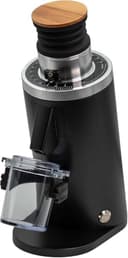 #1 DF54 Single Dose Coffee Grinder Best single-doser · Single-dose, electric 54 mm custom flat burrs · stepless micrometric · 25 g single-dose hopper · 150 W at 1,400 rpm · 4.7 kg · 1-year warranty Built around weigh-in, grind-through, bellows-out — and stepless, so dose precision pairs with grind precision. | Built around weigh-in, grind-through, bellows-out — and stepless, so dose precision pairs with grind precision.54 mm custom flat burrs · stepless micrometric · 25 g single-dose hopper · 150 W at 1,400 rpm · 4.7 kg · 1-year warranty | $260.00In stock, checked October 5, 2026 Check Price on Amazon |
| 2 | 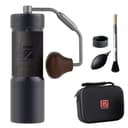 Cheapest way in · Single-dose by nature, hand 48 mm coated burrs · 8 microns per click, external ring · 35-40 g catch cup · about 700 g · 1-year limited warranty A hand grinder is a single-doser whether it says so or not — no electric needed. | A hand grinder is a single-doser whether it says so or not — no electric needed.48 mm coated burrs · 8 microns per click, external ring · 35-40 g catch cup · about 700 g · 1-year limited warranty | $199.00In stock, checked October 5, 2026 Check Price on Amazon |
| 3 | 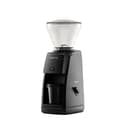 Best hopper grinder · Hopper-fed, electric 40 mm conical steel (M2, Etzinger) · 40 stepped settings, 1-20 espresso / 21-40 filter · 300 g hopper, 120 g bin · 70 W at 550 rpm · factory-calibrated · 1-year warranty Load 300 g and forget it, with Baratza's parts-and-repair support behind it. | Load 300 g and forget it, with Baratza's parts-and-repair support behind it.40 mm conical steel (M2, Etzinger) · 40 stepped settings, 1-20 espresso / 21-40 filter · 300 g hopper, 120 g bin · 70 W at 550 rpm · factory-calibrated · 1-year warranty | $199.95In stock, checked October 5, 2026 Check Price on Amazon |
| 4 | 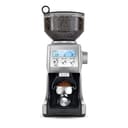 #4 Breville Smart Grinder Pro (BCG820) Best one-button dose · Hopper-fed, programmable Stainless conical burrs (diameter not published by Breville) · 60 stepped settings · grind time programmable in 0.2-second steps · 18 oz hopper · 165 W · 1-year warranty A hopper plus a saved grind time is the lowest-friction routine there is. | A hopper plus a saved grind time is the lowest-friction routine there is.Stainless conical burrs (diameter not published by Breville) · 60 stepped settings · grind time programmable in 0.2-second steps · 18 oz hopper · 165 W · 1-year warranty | $159.95In stock, checked October 5, 2026 Check Price on Amazon |
DF54 — the single-doser to buy
| Burrs | 54 mm custom flat |
|---|---|
| Adjustment | Stepless micrometric |
| Hopper | 25 g single-dose |
| Motor | 150 W, 1,400 rpm |
| Weight | 4.7 kg |
| Warranty | 1 year |
The DF54 is the workflow in hardware: a 25 g hopper — one dose, deliberately — flat burrs, a bellows to clear the chamber, and stepless micrometric adjustment so your grind precision matches the dose precision you are already getting by weighing in. Who it is for: someone who keeps several bags on the go and wants each brew to taste of the bag it came from.
The honest cons. This is a multi-brand platform built in China and sold under several badges — the Amazon listing is badged DF64Coffee rather than MiiCoffee — so warranty and support depend on whose box arrives, and category quality control is known to vary unit to unit. Buy from a seller who will stand behind it. If you want the bigger-burr version with an aftermarket upgrade path, that is the DF64, compared here.
1Zpresso J-Ultra — single-dosing without an electric
| Type | Manual hand grinder |
|---|---|
| Burrs | 48 mm, coated. 1Zpresso does not say whether it is conical or flat for this model, and does not name the coating — so neither do we. |
| Adjustment | External ring, 8 microns per click — the finest of any 1Zpresso. Clicked, not stepless. |
| Stepless? | No — it clicks between steps (most grinders described as 'stepless' online aren't) |
| Good for espresso? | Yes — 1Zpresso: 'optimized for espresso' |
| Capacity | 35-40 g magnetic catch cup |
| Dimensions | 19 x 18.5 x 5.5 cm |
| Weight | About 700 g. 1Zpresso's own product page says 700 g and their own comparison table says 670 g. |
| Warranty | 1 year limited |
If the single-dose argument has persuaded you but the price of an electric single-doser has not, this is the answer. A hand grinder is single-dose by construction: you load the beans you weighed, you crank, the catch cup holds what you ground and nothing else. The J-Ultra is the espresso-tuned one, with the finest adjustment 1Zpresso publishes at 8 microns per click. Who it is for: one or two drinks a day, a scale already on the counter, and no desire to spend electric-single-doser money.
The honest cons. You are the motor, every morning, roughly 30 to 60 seconds of firm cranking per double. And it is clicked rather than stepless. If filter is your main brew the wider-ranging K-Ultra suits you better — that comparison is here.
Baratza Encore ESP — the hopper grinder to buy
| Type | Electric |
|---|---|
| Burrs | 40 mm conical steel (M2), made by Etzinger in Liechtenstein |
| Adjustment | 40 stepped settings, adjusted by twisting the hopper. Dual range: 1-20 espresso, 21-40 filter. |
| Stepless? | No — it clicks between steps (most grinders described as 'stepless' online aren't) |
| Good for espresso? | Yes, and it is the headline use — Baratza: 'delivers the grind resolution you need to brew creamy, syrupy shots of espresso' |
| Capacity | 300 g hopper, 120 g grounds bin |
| Motor | 70 W, 550 RPM. Grinds 1.3-2.2 g/sec. |
| Dimensions | 13 x 15 x 34 cm (W x D x H) |
| Weight | 7 lb (3.1 kg) |
| Warranty | 1 year |
Three hundred grams of hopper, a 120 g grounds bin, a 40 mm Etzinger-made conical burr set and a dial split into an espresso band and a filter band — factory-calibrated, so the espresso settings mean something out of the box. Load it on Sunday and grind all week. Who it is for: someone who drinks one coffee at a time, wants no weighing step, and wants a grinder with genuine repair support behind it.
The honest cons. Stepped rather than stepless, adjusted by twisting the hopper, and it carries the hopper trade-offs in full: beans stale in the hopper, and you will want to purge a little when you change coffees.
Breville Smart Grinder Pro — the one-button routine
| Type | Electric |
|---|---|
| Burrs | Stainless steel conical |
| Adjustment | 60 stepped settings. Grind time is separately programmable in 0.2-second increments. |
| Stepless? | No — it clicks between steps (most grinders described as 'stepless' online aren't) |
| Good for espresso? | Yes — Breville: '60 precise grind settings from the finest espresso to the coarsest French Press grind' |
| Capacity | 18 oz (Breville publishes ounces only — no gram figure exists) |
| Motor | 165 W. RPM not published. |
| Dimensions | 8.5" W x 6.3" D x 15.3" H |
| Weight | 6.39 lb (2.9 kg) |
| Warranty | 1 year |
The lowest-friction routine on this page: a hopper you fill once, a grind time programmable in 0.2-second increments, and a portafilter cradle so it doses straight into the basket. Sixty settings span, in Breville's words, "the finest espresso to the coarsest French Press grind". Who it is for: a household where more than one person makes coffee, or anyone who wants to press one button half asleep.
The honest cons. Dosing by time is less precise than dosing by weight, because bean density varies between roasts — so a saved time drifts when you change bags. Breville publishes no burr diameter for this grinder anywhere, so we state none.
The verdict
If you keep several coffees on the go, buy small bags, or already weigh your dose, go single-dose — the DF54 if you want an electric, the 1Zpresso J-Ultra if you would rather crank and keep the money. What you are buying is not better grind quality; it is a brew that tastes of the bag it came from, and no daily purge.
If you drink one coffee for a fortnight at a time, make several drinks in a row, or share the kitchen with people who will never weigh anything, buy a hopper grinder and feel no guilt about it. The Baratza Encore ESP is the one we point most people at; the Breville Smart Grinder Pro if a saved one-button dose is what you want. Keep the hopper part-full rather than brimming and most of the freshness objection goes away.
And if you catch yourself purging a dose into the bin every morning to clear yesterday's grounds: that is the moment to stop defending the hopper. You are already single-dosing — just inefficiently. More grinder guides are on the grinders hub.
What we know, and how we know it
What we did
- Took the specs from the manufacturer's own documentation — DF Grinders, 1Zpresso, Baratza and Breville product pages for the four grinders. Not from a retailer listing, and not from another blog.
- Priced it from Amazon's API, with the date we checked shown next to the number. If that price is more than 48 hours old, this page stops showing a number at all rather than show you a wrong one.
- Formed a verdict from those specs, the price, and what owners publicly report.
Where we hedged, and why
We have not used any of these grinders and we run no lab, so there is no retention measurement behind this page. We give no grams-retained figure for any grinder here — retention is routinely quoted in reviews as a precise number, and we cannot stand behind one we have not measured. What we describe instead is the mechanism: grounds remain in the chute and burr chamber, stale faster than whole beans, and carry over between coffees. That is how the machines work, not a measurement.
Three of the four grinders are in our spec database and their tables are generated from it; the DF54 V4 is not, so its table is rendered inline from DF Grinders' published specification and captioned with the source. Range and feature claims are attributed to the makers who publish them, and where a maker publishes nothing we say so — Breville states no burr diameter for the BCG820.
Our note that quality control varies across enthusiast single-dose grinders is a category-level caution rather than a claim about any unit's defect rate, and the DF54 listing being badged DF64Coffee is what the listing itself shows. No price appears in our prose; every number is live from Amazon with the date it was checked.
What we did not do
We do not run a lab. We have not pulled thousands of shots on this machine, and we are not going to pretend otherwise. We have not used this unit ourselves. Everything above is sourced research, and it is labeled as such. Where we have used a machine, we say so and show it.
How we're paid
If you buy through a link on this page, we earn a commission. It costs you nothing extra and it does not change what we recommend — we link to the better option for the buyer even when it earns us less. See how we review and our full disclosure.
Frequently asked questions
What is a single dose grinder?
One with no meaningful bean storage. You weigh out the beans for exactly one brew — say 18 g for a double shot — tip them in, grind them all through, and usually squeeze a rubber bellows to push the last grounds out of the burr chamber. The DF54's 25 g hopper is literally one dose. The point is that what you put in is very close to what you get back out, with almost nothing retained for next time.
Is single-dosing better than a hopper?
Not better — different, and it is a workflow choice rather than a quality one. Grind quality comes from the burrs, their alignment and the adjustment resolution, not from how beans reach them. Single-dosing wins on freshness, on low retention and on clean coffee swaps. A hopper wins on friction: no scale, no funnel, no weighing step. Pick the one whose daily routine you will still be happy with in month three.
Does grinder retention actually matter?
It matters most when you change coffees. Grounds left in the chute and burr chamber come out at the front of your next dose, so if you switch bags — or run a decaf alongside a regular — you drink a blend you never chose. If you work through one bag over a fortnight, retention is a minor freshness issue you can mostly ignore. We deliberately quote no grams-retained figure, because we have not measured one.
Can I single-dose a hopper grinder?
Yes, and plenty of people do: weigh your beans, drop them into the empty hopper and grind. It works, but you lose the two things a purpose-built single-doser gives you — a bellows to clear the chamber, and a design that does not retain much to begin with. The common workaround is a small purge dose thrown away first, which wastes coffee daily and reintroduces exactly the step a hopper was meant to save you.
Is a hand grinder a single dose grinder?
Effectively yes, by construction. You load the beans you measured, crank, and empty the catch cup — nothing is stored between uses. That makes a good manual grinder the cheapest way into the single-dose workflow, with no electric to buy. The 1Zpresso J-Ultra is the espresso-tuned option, with 8 microns per click of adjustment. The trade is that you are the motor, roughly 30 to 60 seconds per double shot.
Which is better for espresso, single dose or hopper?
Both work, and the best espresso grinders exist in each format. Single-dosing suits espresso slightly better for one practical reason: you are weighing the dose anyway, which removes a variable while you dial a shot in, and you avoid yesterday's retained grounds skewing the first part of the basket. But a factory-calibrated hopper grinder like the Baratza Encore ESP pulls excellent shots, and its lower friction suits a shared kitchen far better.
Sources
Specs come from the manufacturer's own documentation. Prices come from Amazon's API. Where a claim comes from what owners report, we link the thread and say so.
- DF Grinders — DF54 V4 published specifications (54 mm flat burrs, stepless micrometric, 25 g hopper, 150 W at 1,400 rpm, 4.7 kg, 1-year warranty)
- DF Grinders — DF64 technical specifications
- Baratza Encore ESP product page (300 g hopper, 120 g grounds bin, 40 mm Etzinger M2 conical, dual range)
- Breville BCG820 product page (18 oz hopper, 60 settings, grind time programmable in 0.2-second increments)
- 1Zpresso J-Ultra — official product page (8 microns per click, 35-40 g catch cup)
Keep reading
- DF64 vs DF54If single-dosing is the workflow you want, these two are the platform decision.
- The best grinders for espressoThe full field in both formats, ranked by how well they dial a shot in.
- The best hand grindersSingle-dosing without an electric — the cheapest route into the workflow.
- Coffee scalesSingle-dosing means you weigh every brew, so the scale stops being optional.
- Stepped vs stepless grindersThe other axis single-dose grinders tend to win on, and when it earns its money.
- Coffee grind size chartWhere each brew method sits, whichever way the beans reach the burrs.