
Grinders · Single dose
The Best Single Dose Grinders for Espresso
Weigh the beans for one shot, grind them, get almost all of them back. These are the grinders built for that workflow — and the cheapest honest way into it.
The short answer
The DF64 Gen 2 is our pick for most people single-dosing espresso at home: 64 mm flat burrs, stepless adjustment, and the burr platform the aftermarket builds for. The budget pick is the 1Zpresso J-Ultra — the cheapest grinder here that single-doses by design, because a hand grinder holds nothing back.
We earn a commission if you buy through a link on this page. It costs you nothing extra and it does not change what we recommend. Full disclosure.
All five picks, compared
Every pick on this page in one view, with the live Amazon price and stock on each row. Specs are the figures the maker or the listing publishes — nothing measured or scored by us. Prices are read from Amazon's API and were last checked November 6, 2026; where we have no verified price, the row says so rather than show you an old number.
| # | Grinder | Who it's for | Price & availability |
|---|---|---|---|
| 1 | 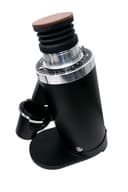 #1 DF64 Gen 2 Best overall · Electric, flat burr 64 mm flat burrs (stainless or Red Titanium TiCN) · stepless micrometric · 50 g bellows hopper · 250 W at 1,400 rpm · 6.8 kg · 1-year warranty For the home barista who weighs every dose and wants an upgradeable platform. | For the home barista who weighs every dose and wants an upgradeable platform.64 mm flat burrs (stainless or Red Titanium TiCN) · stepless micrometric · 50 g bellows hopper · 250 W at 1,400 rpm · 6.8 kg · 1-year warranty | $389.00In stock, checked November 6, 2026 Check Price on Amazon |
| 2 | 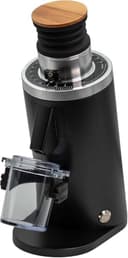 #2 DF54 Single Dose Coffee Grinder Cheapest electric · Electric, flat burr 54 mm custom flat · stepless micrometric · 25 g single-dose hopper · 150 W, 1,400 rpm · 4.7 kg · 1-year warranty For the one-drink-a-day drinker who wants the workflow without the DF64's footprint. | For the one-drink-a-day drinker who wants the workflow without the DF64's footprint.54 mm custom flat · stepless micrometric · 25 g single-dose hopper · 150 W, 1,400 rpm · 4.7 kg · 1-year warranty | $260.00In stock, checked November 6, 2026 Check Price on Amazon |
| 3 | 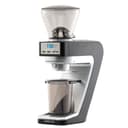 Shortest chute · Electric, conical 40 mm conical (S1) by Etzinger · 31 steps, single macro adjustment · 200 W, 650 RPM, 2.9-4.0 g/sec · 7 lb · 1-year warranty For someone who hates fiddling: grounds drop straight down into the portafilter. | For someone who hates fiddling: grounds drop straight down into the portafilter.40 mm conical (S1) by Etzinger · 31 steps, single macro adjustment · 200 W, 650 RPM, 2.9-4.0 g/sec · 7 lb · 1-year warranty | $299.95In stock, checked November 6, 2026 Check Price on Amazon |
| 4 | 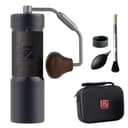 Budget pick · Manual 48 mm coated burrs · 8 microns per click on an external ring · 35-40 g magnetic catch cup · about 700 g · 1-year limited warranty For anyone who wants true single-dosing for the least money and will crank. | For anyone who wants true single-dosing for the least money and will crank.48 mm coated burrs · 8 microns per click on an external ring · 35-40 g magnetic catch cup · about 700 g · 1-year limited warranty | $199.00In stock, checked November 6, 2026 Check Price on Amazon |
| 5 | 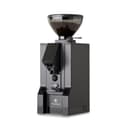 Smallest footprint · Electric, flat burr 50 mm flat burrs · stepless micrometric collar · compact body, no touch panel · Eureka publishes no warranty term For the kitchen where the counter, not the budget, is the limit. | For the kitchen where the counter, not the budget, is the limit.50 mm flat burrs · stepless micrometric collar · compact body, no touch panel · Eureka publishes no warranty term | $299.00In stock, checked November 6, 2026 Check Price on Amazon |
What single-dosing actually buys you
A conventional grinder keeps a hopper of beans sitting on top of the burrs, and you grind out of that reservoir. Single-dosing inverts it: you weigh the beans for one drink, put only those beans in, grind them, and the grinder goes back to empty. Nothing stales on the counter between shots, and you can change coffees between one drink and the next without purging through half a hopper.
The number that decides whether a grinder is any good at this is retention — how many grams stay inside the chute and burr chamber after a dose. If you put 18 g in and 16.5 g comes out, you are not really single-dosing, you are feeding the grinder. Worse, the grams that stay behind come out mixed into tomorrow's shot. That is why the grinders on this page are built with short, straight chutes, bellows, or a mechanism that drops grounds directly down rather than winding them through a path. The long version of the argument, with the counter-case for hoppers, is in single dose vs hopper grinders.
One honest note before the picks: no maker on this page publishes a retention figure. Every number we quote below is a published specification — burr size, adjustment type, hopper capacity, motor rating, weight, warranty — and where a figure is not published we say so instead of filling the gap from a review somewhere.
What separates a real single-doser
Four things, and all four are published figures you can check on the listing before you buy.
Stepless adjustment. When you grind one dose at a time you adjust more often, and a stepped dial eventually puts the shot you want between two of its steps. The DF64 Gen 2, the DF54 and the Mignon Notte are all stepless or micrometric; the Sette 30 is 31 stepped settings, which is a real constraint to know about rather than a dealbreaker. The difference is covered properly in stepped vs stepless grinders.
A dosing chamber, not a hopper.The DF54 publishes a 25 g single-dose hopper and the DF64 Gen 2 a 50 g bellows chamber — both sized for a dose or two, not a week of beans. The Mignon Notte is the odd one out here: it is a small-hopper grinder that people single-dose anyway, which works, but it was not designed around the workflow.
Burr size, and whether the aftermarket cares. 64 mm is the home-espresso standard, and the DF64 platform is the one third-party burr sets are cut for. That is the strongest argument for the DF64 Gen 2 over the cheaper DF54: not that it grinds better out of the box, but that it is still interesting in three years.
Where the grounds land.Baratza's own description of the Sette mechanism is the clearest statement of the goal on any of these listings: the outer ring burr spins while the inner cone stays fixed, so coffee drops straight down into the portafilter instead of travelling through a chute. Baratza says that roughly doubles the throughput of similarly-sized grinders and leaves almost nothing behind.
The five picks
DF64 Gen 2 — the platform to buy once
Who it is for:the home barista who already weighs doses and wants the grinder to stop being the variable in the shot. The published figures are 64 mm flat burrs in either stainless or Red Titanium TiCN, stepless micrometric adjustment, a 50 g bellows hopper, a 250 W motor at 1,400 rpm, 6.8 kg, and a one-year warranty. The reason we lead with it is the burr size rather than any of those numbers: 64 mm is where the aftermarket lives, so a burr swap two years from now changes the character of the grinder instead of obsoleting it. The honest catch is bulk — it is the heaviest thing on this page and it looks like a piece of equipment, not an appliance. If that is fine, this is the one to buy. We put it head to head with its smaller sibling in DF64 vs DF54.
DF54 — the cheapest electric single-doser here
Who it is for:the one-or-two-drinks-a-day drinker who wants the single-dose workflow and does not want the DF64's footprint on the counter. It publishes 54 mm custom flat burrs, stepless micrometric adjustment, a 25 g single-dose hopper, 150 W at 1,400 rpm, 4.7 kg and a one-year warranty — the same workflow as the DF64 Gen 2 in a smaller, lighter and cheaper body. What you give up is the 64 mm aftermarket and some grind speed. For a lot of home setups that is a trade worth taking, and it is the grinder we would point at first if the DF64's price is the thing stopping you. If you are coming from a stepped entry grinder, the step-change is laid out in Encore ESP vs DF54.
Baratza Sette 30 — the shortest path from burr to basket
Who it is for:someone who wants the low-retention benefit without learning a new routine, and who would rather grind into the portafilter than into a cup and then transfer. Baratza publishes 40 mm conical (S1) burrs made by Etzinger — the same burr set as the pricier Sette 270 — 31 stepped settings on a single macro adjustment, a 200 W motor at 650 RPM grinding 2.9 to 4.0 g per second, 7 lb, and a one-year warranty. It is roughly twice as fast as an entry grinder like the Encore ESP, and the ring-burr mechanism is the reason. Two honest caveats: the adjustment is stepped rather than stepless, which is the opposite of what most single-dosers want, and Baratza does not state the burr material for this model, so neither do we.
1Zpresso J-Ultra — the budget pick
Who it is for: anyone who wants genuine single-dosing for the least money and will accept the cranking. This is the cheapest product on this page, and it is worth being clear about why it belongs here rather than only on the hand grinder page: a hand grinder is a single-dose grinder by construction. There is no hopper to hold beans and no motor chamber for grounds to hide in — you load a dose, grind it, and tip out the catch cup. 1Zpresso publishes 48 mm coated burrs, 8 microns per click on an external adjustment ring, a 35 to 40 g magnetic catch cup, about 700 g, and a one-year limited warranty. The company does not say whether the burr is conical or flat for this model, or name the coating, so we do not either. The cost is 30 to 60 seconds of effort per double shot, every time — the full argument either way is in hand vs electric grinders.
Eureka Mignon Notte — for the smallest counter
Who it is for: the kitchen where the counter, not the budget, is the limit. The published figures are 50 mm flat burrs, a stepless micrometric collar, a compact body with no touch panel, and no warranty term published by Eureka at all. It is the smallest electric here and an Italian-built grinder in a category otherwise dominated by DF and Baratza. The honest framing: the Notte is a small-hopper grinder that plenty of people single-dose, not a purpose-built single-doser like the DF pair. If retention is your main reason for buying, the DF54 is the more direct answer at a similar price. If the footprint decides it, this is the pick. More Italian gear on the best Italian espresso machines page.
When single-dosing is the wrong answer
Three situations, stated plainly, because this is a workflow with real costs.
You make several drinks back to back.Weighing each dose for four morning cappuccinos is slower than scooping from a hopper, and the Sette 30 is the only grinder here with throughput that makes it painless. A good hopper grinder is the better tool for a household that drinks together — see the best espresso machines for a family.
You are still choosing your first grinder.Single-dosing is a refinement of a routine you already have. If you have not pulled a shot yet, the money is better spent on a grinder that dials espresso properly at a lower price — the best grinders under $200 is the page for that, and the beginner grinder guide explains what forgiving actually means.
Your machine has a grinder in it.If you own a Barista Express or a bean-to-cup machine, a separate single-dose grinder is a second grinder, and the case for buying one is a different argument — we make it in all-in-one vs a separate grinder.
What we know, and how we know it
What we did
- Took the specs from the manufacturer's own documentation. Not from a retailer listing, and not from another blog.
- Priced it from Amazon's API, with the date we checked shown next to the number. If that price is more than 48 hours old, this page stops showing a number at all rather than show you a wrong one.
- Formed a verdict from those specs, the price, and what owners publicly report.
Where we hedged, and why
The Baratza Sette 30 and the 1Zpresso J-Ultra are in our spec database, sourced from Baratza's and 1Zpresso's own product pages. The DF64 Gen 2, the DF54 and the Eureka Mignon Notte are not, so the figures in the comparison table are the ones the maker or the Amazon listing publishes — which is why the Notte row says Eureka publishes no warranty term rather than quoting one from a retailer.
No maker here publishes a retention figure in grams, so none is claimed on this page. We have not used these grinders ourselves: the recommendations come from published specs, how the products are built and priced, and what owners report — not from a bench test we did not run.
What we did not do
We do not run a lab. We have not pulled thousands of shots on this machine, and we are not going to pretend otherwise. We have not used this unit ourselves. Everything above is sourced research, and it is labeled as such. Where we have used a machine, we say so and show it.
How we're paid
If you buy through a link on this page, we earn a commission. It costs you nothing extra and it does not change what we recommend — we link to the better option for the buyer even when it earns us less. See how we review and our full disclosure.
If you are weighing a single-doser against the stepped electric tier below it, the two pages to read next are the best grinders under $300 and the best grinders under $500. For the case that this is the right place to put your money at all, start with why the grinder matters more than the machine. More on the grinders hub.
Frequently asked questions
What is the best single dose grinder for espresso?
The DF64 Gen 2 is our pick for most home setups: 64 mm flat burrs, stepless micrometric adjustment and a 50 g bellows chamber, on the burr platform the aftermarket builds for. The DF54 is the cheaper electric with the same workflow in a smaller body, and the 1Zpresso J-Ultra is the cheapest way into single-dosing of any kind, because a hand grinder holds nothing back by design.
What does single-dosing actually mean?
You weigh out the beans for one drink, grind only those beans, and the grinder returns to empty. There is no hopper of beans sitting on the burrs between shots, so nothing goes stale on the counter and you can switch coffees from one drink to the next without purging. The trade is that you weigh every dose, so a 0.1 g scale is a prerequisite.
Is the DF54 or the DF64 Gen 2 better for single-dosing?
Both run the same workflow. The DF54 publishes 54 mm flat burrs, a 25 g single-dose hopper, 150 W and 4.7 kg; the DF64 Gen 2 publishes 64 mm flat burrs, a 50 g bellows chamber, 250 W and 6.8 kg. The DF54 is cheaper, smaller and lighter. The DF64's advantage is the 64 mm burr standard, which is what third-party burr sets are cut for, so it stays upgradeable.
Can a hand grinder be a single dose grinder?
It already is one. A manual grinder has no hopper and no motor chamber, so you load a dose, crank it, and tip out the catch cup. That is why the 1Zpresso J-Ultra sits on this page: 48 mm coated burrs, 8 microns per click on an external ring and a 35-40 g catch cup, for less money than any electric here. The cost is 30 to 60 seconds of cranking per double shot.
Do single dose grinders really have zero retention?
No, and nobody should claim they do. None of these makers publishes a retention figure in grams. What the designs do is shorten the path grounds travel - a bellows chamber on the DF64 Gen 2, a 25 g dosing hopper on the DF54, and on the Baratza Sette 30 a ring-burr mechanism that drops coffee straight down into the portafilter rather than through a chute. Less retained, not none.
Is the Eureka Mignon Notte a single dose grinder?
Not by design. It is a compact small-hopper grinder with 50 mm flat burrs and a stepless micrometric collar that many owners single-dose anyway, and it works. We include it because it is the smallest electric on this page and the footprint is a real constraint in small kitchens. If low retention is your main reason for buying, the DF54 is the more direct answer at a similar price.
Do I need a scale to use a single dose grinder?
Yes. The entire benefit depends on knowing the weight of what you put in, so a 0.1 g resolution scale is the prerequisite rather than an accessory. It costs a small fraction of any grinder on this page. If you are not already weighing your dose, buy the scale first and see whether you like the routine before spending on the grinder.
Is single-dosing worth it if I make several drinks at once?
Usually not. Weighing four separate doses is slower than scooping from a hopper, and only the Baratza Sette 30 - which Baratza rates at 2.9 to 4.0 g per second - has the throughput to make it painless. For a household that drinks together, a good hopper grinder is the better tool and the single-dose workflow is a cost rather than a benefit.
Sources
Specs come from the manufacturer's own documentation. Prices come from Amazon's API. Where a claim comes from what owners report, we link the thread and say so.
- Baratza Sette 30 product page (40 mm Etzinger S1 burrs, 31 steps, 200 W / 650 RPM, 2.9-4.0 g/sec, 1-year warranty)
- 1Zpresso J-Ultra official product page (48 mm coated burr, 8 microns per click, 35-40 g catch cup)
- DF64 Gen 2 - manufacturer specifications as published on the Amazon listing (64 mm flat burrs, stepless micrometric, 50 g bellows hopper, 250 W at 1,400 rpm, 6.8 kg, 1-year warranty), read November 7, 2026
- DF54 - manufacturer specifications as published on the Amazon listing (54 mm custom flat burrs, stepless micrometric, 25 g single-dose hopper, 150 W at 1,400 rpm, 4.7 kg, 1-year warranty), read November 7, 2026
- Eureka Mignon Notte - manufacturer specifications as published on the Amazon listing (50 mm flat burrs, stepless micrometric collar; no warranty term published by Eureka), read November 7, 2026
Keep reading
- Single dose vs hopper grindersThe explainer behind this roundup, including the honest case for keeping a hopper.
- DF64 vs DF54The two picks at the top of this page, head to head on burr size and footprint.
- Best flat burr grindersSame shortlist, sorted by burr geometry instead of workflow.
- Best grinders under $300The tier most of these grinders sit in, with the stepped alternatives included.
- The best hand grindersEvery manual grinder single-doses by design. Five picks, cheapest route in.
- Coffee scalesThe prerequisite. Single-dosing without a 0.1 g scale is just a smaller hopper.