
Grinders · Comparison
Baratza Encore ESP vs DF54
Two espresso grinders a few dollars apart that disagree about almost everything: burr shape, burr size, how you adjust them, how you load them, and what happens when something breaks. The specs do not pick a winner — your morning does.
The short answer
Buy the Baratza Encore ESP if you want the dependable choice: 40 settings split into a dedicated 1-20 espresso range, factory calibration, and Baratza's published parts and repair guides. Buy the DF54 if you want stepless micrometric adjustment and single-dosing — 54 mm flat burrs, 25 g hopper, and no retained coffee between doses.
We earn a commission if you buy through a link on this page. It costs you nothing extra and it does not change what we recommend. Full disclosure.
Key takeaways
- Burrs: 40 mm conical on the Encore ESP, 54 mm flat on the DF54. Different shape, different size, different grind character.
- Adjustment: 40 stepped settings against genuinely stepless micrometric. Stepless lets you land anywhere; stepped makes a setting repeatable.
- Loading: a 300 g hopper with a 120 g grounds bin against a 25 g single-dose hopper. That changes your whole morning, not just the spec sheet.
- Support: Baratza publishes parts and repair guides and factory-calibrates each unit. DF Grinders states a one-year warranty and calls the DF54 all-purpose rather than espresso-first.
The short answer
Buy the Baratza Encore ESP if you want to stop thinking about your grinder. It arrives calibrated, its 1-20 range exists specifically so espresso adjustments are small, and when something wears out Baratza publishes the part and the guide to fit it. That last point is worth more than any spec on this page over a five-year horizon.
Buy the DF54if the workflow is the point. Stepless micrometric adjustment means you can land between two settings instead of choosing the nearer one, and a 25 g single-dose hopper means what you weigh in is what comes out — no stale coffee sitting in a chute between sessions. It is the enthusiast's answer, and it asks a little more of you.
Two philosophies, one price
These grinders land within a few dollars of each other and agree on nothing. The Encore ESP is a refinement of a design Baratza has sold for over a decade: a conical burr, a stepped dial, a hopper on top, parts you can buy. The DF54 is part of the newer single-dose wave: a flat burr, a stepless collar, a tiny hopper, a bellows to push the last grounds through.
Neither philosophy is correct. They suit different households. The useful questions are how often you change coffee, whether you weigh every dose, and what you intend to do when the grinder is five years old — and we answer all three below. If you want the broader argument first, it is in single dose vs hopper and conical vs flat burrs.
Baratza Encore ESP: the serviceable one
| Type | Electric |
|---|---|
| Burrs | 40 mm conical steel (M2), made by Etzinger in Liechtenstein |
| Adjustment | 40 stepped settings, adjusted by twisting the hopper. Dual range: 1-20 espresso, 21-40 filter. |
| Stepless? | No — it clicks between steps (most grinders described as 'stepless' online aren't) |
| Good for espresso? | Yes, and it is the headline use — Baratza: 'delivers the grind resolution you need to brew creamy, syrupy shots of espresso' |
| Capacity | 300 g hopper, 120 g grounds bin |
| Motor | 70 W, 550 RPM. Grinds 1.3-2.2 g/sec. |
| Dimensions | 13 x 15 x 34 cm (W x D x H) |
| Weight | 7 lb (3.1 kg) |
| Warranty | 1 year |
Who it is for: the espresso drinker who wants a grinder that works out of the box, holds a setting, and can be repaired rather than replaced.
Baratza re-engineered its entry classic specifically for espresso, and the clever part is the split range. Settings 1-20 are fine micro-steps aimed at the espresso window; 21-40 are coarser macro-steps for filter. You are not winding past twenty irrelevant filter settings to reach a shot. Baratza's own claim for it is grind resolution good enough "to brew creamy, syrupy shots of espresso," and every unit ships factory-calibrated. The burrs are 40 mm conical steel M2 made by Etzinger in Liechtenstein — both the size and the manufacturer are published, which is more than most brands in this bracket manage.
The honest cons. It is stepped, so there will be coffees where the right setting sits between two clicks. The 70 W motor at 550 RPM grinding 1.3-2.2 g per second is not fast. And it is hopper-fed: unless you single-dose into the hopper deliberately, some coffee lives in the machine between sessions. Our full take is in the best grinders under $200.
DF54: the stepless single-doser
| Burrs | 54 mm custom flat |
|---|---|
| Adjustment | Stepless micrometric |
| Hopper | 25 g single-dose |
| Motor | 150 W, 1,400 rpm |
| Weight | 4.7 kg |
| Warranty | 1 year |
| Positioning | DF Grinders describes the DF54 as an all-purpose grinder rather than an espresso-only one |
Who it is for: the buyer who already weighs every dose and wants stepless adjustment and a clean grind path without paying 64 mm money.
The DF54 brings the single-dose platform down a price tier. Fifty-four millimetres of flat burr is a bigger cutting surface than the Encore's 40 mm conical, the stepless micrometric collar means there is no "nearest click" compromise, and a 25 g hopper with a 150 W motor at 1,400 rpm clears a dose quickly. If you change beans often — which is when stepless adjustment earns its keep — this is the more flexible instrument of the two.
The honest cons.Stepless cuts both ways: there is no numbered setting to return to, so you keep your own notes or you re-dial. At 4.7 kg it is heavier than the Encore. DF Grinders describes it as all-purpose rather than espresso-first, so the espresso framing is ours and the market's rather than theirs. And we could not find published parts diagrams or repair guides of the kind Baratza maintains, which matters most in year four. The full picture, including the bigger sibling, is in DF64 vs DF54.
Both grinders, compared
Every pick on this page in one view, with the live Amazon price and stock on each row. Specs are the figures the maker or the listing publishes — nothing measured or scored by us. Prices are read from Amazon's API and were last checked October 17, 2026; where we have no verified price, the row says so rather than show you an old number.
| # | Grinder | Why it's here | Price & availability |
|---|---|---|---|
| 1 | 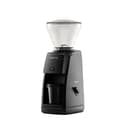 Safest buy · Electric, hopper-fed 40 mm Etzinger M2 conical · 40 stepped settings (1-20 espresso, 21-40 filter) · factory-calibrated · 300 g hopper, 120 g bin · 70 W, 550 RPM · 7 lb · 1-year warranty Calibrated, repeatable, and Baratza publishes parts and repair guides. | Calibrated, repeatable, and Baratza publishes parts and repair guides.40 mm Etzinger M2 conical · 40 stepped settings (1-20 espresso, 21-40 filter) · factory-calibrated · 300 g hopper, 120 g bin · 70 W, 550 RPM · 7 lb · 1-year warranty | $199.95In stock, checked October 17, 2026 Check Price on Amazon |
| 2 | 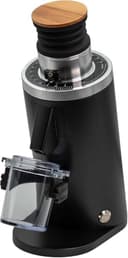 #2 DF54 Single Dose Coffee Grinder Best workflow · Single-dose, flat burr 54 mm custom flat · stepless micrometric · 25 g single-dose hopper · 150 W, 1,400 rpm · 4.7 kg · 1-year warranty Stepless adjustment and single-dosing, for people who weigh everything. | Stepless adjustment and single-dosing, for people who weigh everything.54 mm custom flat · stepless micrometric · 25 g single-dose hopper · 150 W, 1,400 rpm · 4.7 kg · 1-year warranty | $260.00In stock, checked October 17, 2026 Check Price on Amazon |
| 3 |  #3 DF64 Gen 2 Same idea, bigger · Step up 64 mm flat (stainless or Red Titanium) · stepless micrometric · 50 g single-dose bellows hopper · 250 W, 1,400 RPM · 15 lb · 1-year warranty The upgradeable 64 mm platform aftermarket burrs drop into. | The upgradeable 64 mm platform aftermarket burrs drop into.64 mm flat (stainless or Red Titanium) · stepless micrometric · 50 g single-dose bellows hopper · 250 W, 1,400 RPM · 15 lb · 1-year warranty | $389.00In stock, checked October 17, 2026 Check Price on Amazon |
| 4 |  Italian alternative · Italian, stepless 50 mm flat burrs · stepless micrometric collar · compact body, no touch panel · Eureka publishes no warranty term Stepless in a smaller footprint, if counter space is the constraint. | Stepless in a smaller footprint, if counter space is the constraint.50 mm flat burrs · stepless micrometric collar · compact body, no touch panel · Eureka publishes no warranty term | $299.00In stock, checked October 17, 2026 Check Price on Amazon |
Stepped vs stepless, in practice
This is the difference people over-think, so here is the plain version.
Steppedadjustment gives you numbered positions. You can write down "setting 9" for a bag of coffee, come back to it a month later, and be in the same place. The cost is that some coffees want to sit between 9 and 10, and you cannot go there — you take the nearer click and compensate with dose or ratio.
Stepless adjustment removes that ceiling. You rotate a collar continuously and land exactly where the shot wants to be. The cost is memory: there is no number to return to, so you either keep notes or you dial in again next time. Enthusiasts who change beans weekly love it. People who buy the same coffee every month genuinely do not need it.
Hopper vs single dose, in practice
The Encore ESP holds 300 g of beans on top and catches grounds in a 120 g bin. You fill it once a week, push a button, and coffee appears. Some beans stay in the hopper and some grounds stay in the chute; if you drink one coffee all month, neither matters much.
The DF54 holds 25 g — one or two doses. You weigh beans in, grind, and the grinder is empty again. That is the appeal if you own three bags at once, or if you want the shot you pull to be made entirely of the coffee you just weighed. The cost is a scale and twenty extra seconds every morning, forever.
Be honest with yourself about which of those two descriptions sounds like your kitchen. It predicts satisfaction with these two grinders better than burr size does.
What sits either side of them
If the DF54's platform appeals but you want headroom, the DF64 Gen 2 runs 64 mm flat burrs on the same stepless single-dose design, with a 50 g bellows hopper and a 250 W motor — and 64 mm is the size aftermarket burr sets are made for.
If you want stepless adjustment in a smaller, quieter Italian package, the Eureka Mignon Notte is the entry point to the Mignon platform: the same stepless micrometric collar in a compact body with 50 mm flat burrs and no touch panel. Note that Eureka publishes no warranty term, which the Baratza and the DF54 both do.
Which one for which buyer
| If this is you | Buy | Because |
|---|---|---|
| You want it to just work, for years | Encore ESP | Factory-calibrated, and Baratza publishes parts and repair guides. |
| You buy the same coffee every month | Encore ESP | A numbered setting you can return to beats stepless freedom. |
| You keep three bags open and switch daily | DF54 | Stepless adjustment and an empty grinder between doses. |
| You already weigh every dose on a scale | DF54 | Single-dosing is built for exactly that habit. |
| You brew filter as often as espresso | Either — Encore ESP if stepped is fine | Its 21-40 range is a real filter range; DF Grinders calls the DF54 all-purpose. |
| You want the largest burrs for the money | DF54 | 54 mm flat against 40 mm conical. |
| You intend to swap in aftermarket burrs later | Neither — the DF64 Gen 2 | 64 mm is the platform aftermarket sets are built for. |
| Counter space is the binding constraint | Encore ESP or the Mignon Notte | 13 cm wide, and the Mignon is deliberately compact. |
The verdict
For most people the Baratza Encore ESP is the better buy, and the reason is not the burrs. It is that the grinder arrives calibrated, its espresso range was designed as an espresso range, and the company publishes the parts and the instructions to keep it alive. A grinder you can repair at year four is worth more than fourteen millimetres of extra burr.
The DF54 is the better instrument for the buyer who already works like a single-doser. Stepless micrometric adjustment and 54 mm flat burrs genuinely give you more control, and if you change coffees weekly you will use all of it. Go in knowing that the control comes with record-keeping, and that DF Grinders positions it as all-purpose rather than espresso-first.
Either way, this is the right tier to be shopping in. Below it, adjustment gets too coarse for espresso; above it you are buying refinement rather than capability — the argument is laid out in the best grinders under $300.
What we know, and how we know it
What we did
- Took the specs from the manufacturer's own documentation — Baratza's own Encore ESP product page and DF Grinders' published DF54 V4 specifications. Not from a retailer listing, and not from another blog.
- Priced it from Amazon's API, with the date we checked shown next to the number. If that price is more than 48 hours old, this page stops showing a number at all rather than show you a wrong one.
- Formed a verdict from those specs, the price, and what owners publicly report.
Where we hedged, and why
We have not ground coffee with either grinder, we run no lab, and we have measured no particle distributions. Every figure here is the manufacturer's: the 40 mm Etzinger M2 conical, the 1-20 / 21-40 split and the 70 W / 550 RPM motor from Baratza; the 54 mm flat burr, stepless micrometric collar, 25 g hopper and 150 W / 1,400 rpm motor from DF Grinders.
Two honest gaps. First, nobody in this bracket publishes a particle distribution, so we make no claim that either grinder produces fewer fines than the other — flat against conical is a difference in geometry, not a measured result we can hand you. Second, our point about serviceability is based on what each company publishes: Baratza maintains parts and repair guides, and we could not find equivalents for the DF54. That is a documentation comparison, not a reliability test. No price appears in our prose; every number here is live from Amazon with the date it was checked.
What we did not do
We do not run a lab. We have not pulled thousands of shots on this machine, and we are not going to pretend otherwise. We have not used this unit ourselves. Everything above is sourced research, and it is labeled as such. Where we have used a machine, we say so and show it.
How we're paid
If you buy through a link on this page, we earn a commission. It costs you nothing extra and it does not change what we recommend — we link to the better option for the buyer even when it earns us less. See how we review and our full disclosure.
Frequently asked questions
Is the DF54 better than the Baratza Encore ESP for espresso?
It has the larger burr (54 mm flat against 40 mm conical) and stepless micrometric adjustment, both of which give you more control. Whether that makes it better for you depends on workflow: the DF54 assumes you weigh every dose and keep your own dial-in notes, while the Encore ESP arrives factory-calibrated with numbered settings and a dedicated 1-20 espresso range you can return to.
What does single-dosing actually change?
The DF54's hopper holds 25 g — one or two doses — so you weigh beans in and the grinder is empty again afterwards. Nothing sits in the machine between sessions, which matters if you keep several bags open or switch coffees often. The Encore ESP's 300 g hopper is the opposite trade: fill it weekly and press a button, at the cost of some beans and grounds living in the machine.
Is stepless adjustment worth it?
It is worth it if you change coffees often, because stepped grinders occasionally want a setting that sits between two clicks. It is worth less if you buy the same beans every month, because then a numbered setting you can write down and return to is the more useful feature. Baratza partly closes the gap by making settings 1-20 fine micro-steps for espresso.
Which one is easier to repair?
The Baratza, on the published evidence. Baratza maintains parts listings and repair guides for its grinders, which is why they have a reputation for lasting. We could not find equivalent published parts diagrams or repair documentation for the DF54. Both state a one-year warranty.
Should I just get the DF64 instead?
If you intend to swap burrs later, yes — 64 mm is the size aftermarket sets such as SSP are made for, and the DF64 Gen 2 runs the same stepless single-dose platform with a 50 g bellows hopper and a 250 W motor. It also costs more, weighs 15 lb and takes more counter. If you have no burr-swapping ambitions, the DF54 gives you the same workflow for less.
Can either of these grind for French press and pour over?
Yes. The Encore ESP's settings 21-40 are a dedicated filter range, and DF Grinders describes the DF54 as an all-purpose grinder rather than an espresso-only one. If filter is your main brew method and espresso the occasional one, note that the Encore ESP's stepped filter range is quicker to move across than winding a stepless collar.
Sources
Specs come from the manufacturer's own documentation. Prices come from Amazon's API. Where a claim comes from what owners report, we link the thread and say so.
- Baratza Encore ESP product page (40 mm Etzinger M2 conical; 40 settings split 1-20 espresso / 21-40 filter; factory-calibrated; 300 g hopper, 120 g bin; 70 W, 550 RPM, 1.3-2.2 g/sec; 7 lb; 1-year warranty)
- DF Grinders — published DF54 V4 specifications (54 mm custom flat burrs, stepless micrometric, 25 g single-dose hopper, 150 W / 1,400 rpm, 4.7 kg, 1-year warranty, described as all-purpose)
- DF Grinders — DF64 technical specifications (64 mm flat, stepless micrometric, 50 g bellows hopper, 250 W / 1400 RPM, 15 lb)
Keep reading
- DF64 vs DF54The same platform in two burr sizes, compared properly.
- DF64 vs Baratza Encore ESPThe bigger version of this comparison, one tier up.
- Single dose vs hopperThe workflow argument behind this whole decision.
- Conical vs flat burrsWhat burr geometry does and does not change.
- The best grinders under $300Where both of these sit in the wider field.
- The best grinders under $200The Encore ESP's home tier, with the hand grinders that undercut it.