
Grinders · Flat burrs
The Best Flat Burr Grinders for Espresso
What a flat burr set actually changes in the cup, which ones you can buy in the US right now, and the honest case for spending the money on a conical instead.
The short answer
The DF64 Gen 2 is the flat burr grinder to buy for home espresso: 64 mm burrs on the platform third-party burr sets are cut for, with stepless adjustment. The budget pick is the DF54 — the cheapest flat burr grinder here with a live price, at 54 mm and the same stepless workflow in a smaller body.
We earn a commission if you buy through a link on this page. It costs you nothing extra and it does not change what we recommend. Full disclosure.
The flat burr grinders, compared
Every pick on this page in one view, with the live Amazon price and stock on each row. Specs are the figures the maker or the listing publishes — nothing measured or scored by us. Prices are read from Amazon's API and were last checked November 6, 2026; where we have no verified price, the row says so rather than show you an old number.
| # | Grinder | Who it's for | Price & availability |
|---|---|---|---|
| 1 | 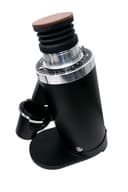 #1 DF64 Gen 2 Best overall · 64 mm flat 64 mm flat burrs (stainless or Red Titanium TiCN) · stepless micrometric · 50 g bellows hopper · 250 W at 1,400 rpm · 6.8 kg · 1-year warranty For the home barista chasing clarity in single-origin espresso. | For the home barista chasing clarity in single-origin espresso.64 mm flat burrs (stainless or Red Titanium TiCN) · stepless micrometric · 50 g bellows hopper · 250 W at 1,400 rpm · 6.8 kg · 1-year warranty | $389.00In stock, checked November 6, 2026 Check Price on Amazon |
| 2 | 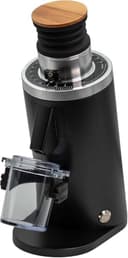 #2 DF54 Single Dose Coffee Grinder Budget pick · 54 mm flat 54 mm custom flat · stepless micrometric · 25 g single-dose hopper · 150 W, 1,400 rpm · 4.7 kg · 1-year warranty For the cheapest honest way into flat burrs with stepless adjustment. | For the cheapest honest way into flat burrs with stepless adjustment.54 mm custom flat · stepless micrometric · 25 g single-dose hopper · 150 W, 1,400 rpm · 4.7 kg · 1-year warranty | $260.00In stock, checked November 6, 2026 Check Price on Amazon |
| 3 | 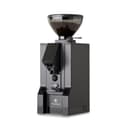 Smallest footprint · 50 mm flat 50 mm flat burrs · stepless micrometric collar · compact body, no touch panel · Eureka publishes no warranty term For a small kitchen that still wants Italian-built flat burrs. | For a small kitchen that still wants Italian-built flat burrs.50 mm flat burrs · stepless micrometric collar · compact body, no touch panel · Eureka publishes no warranty term | $299.00In stock, checked November 6, 2026 Check Price on Amazon |
| 4 | Step-up, if you can find it · 55 mm flat 55 mm flat hardened steel burrs, rated by Eureka for 300 kg of coffee · micrometric adjustment · Amazon US does not stock it, so there is no live price to show For the buyer who wants the Eureka workhorse and will shop a specialist retailer. | For the buyer who wants the Eureka workhorse and will shop a specialist retailer.55 mm flat hardened steel burrs, rated by Eureka for 300 kg of coffee · micrometric adjustment · Amazon US does not stock it, so there is no live price to show | No verified price right now Check Price on Amazon |
What a flat burr actually changes
A conical burr set is a cone spinning inside a matching ring; coffee falls through the gap under gravity and gets progressively crushed on the way down. A flat burr set is two parallel rings facing each other; coffee is thrown outwards between them and leaves at the rim. That geometric difference is the whole story, and it has two practical consequences that matter for espresso.
First, particle distribution. Because every bean takes a similar path across a flat burr, flats are generally credited with a narrower spread of particle sizes, which in the cup reads as more clarity and more separation between flavours — the reason specialty cafes grinding light single origins almost all run flats. Conicals produce a broader spread, which tends to read as more body and more forgiveness. Neither is "better"; they are different targets. We lay the full comparison out in conical vs flat burrs.
Second, retention. The flat geometry means grounds have to be swept out of a chamber rather than simply falling, so a flat burr grinder typically holds more coffee inside than a comparable conical. That is why the flat-burr grinders people actually buy for home espresso ship with bellows, dosing cups and short chutes — the DF64 Gen 2 publishes a 50 g bellows hopper and the DF54 a 25 g dosing hopper for exactly this reason. If retention rather than clarity is your real concern, read the best single dose grinders instead: it is the same shortlist sorted by workflow, and it includes conical options this page deliberately excludes.
An honest caveat before the picks: no maker on this page publishes a particle-distribution figure, and we have not measured one. The characterisation above is how the geometry is understood in the trade and how these makers position their own products — not a result from a bench we do not have.
Burr diameter is the spec that matters
Among flats, diameter is the figure to compare, and every grinder here publishes it. A bigger burr does more work per rotation, runs cooler for the same dose, and clears faster. The four on this page span 50 mm to 64 mm:
- 64 mm— DF64 Gen 2. The home-espresso standard, and the only size here with a real aftermarket in third-party burr sets.
- 55 mm— Eureka Mignon Specialita, with hardened steel burrs Eureka rates for 300 kg of coffee. Not stocked on Amazon US.
- 54 mm— DF54. The cheapest flat burr grinder here with a live price.
- 50 mm— Eureka Mignon Notte. The smallest body, and the only one for which Eureka publishes no warranty term.
For context on how unusual those numbers are, the entry grinders most people own run 38 mm to 40 mm conicals: the Baratza Encore ESP is 40 mm, the Timemore C3 ESP is 38 mm. Moving to a 64 mm flat is a genuine step change in the mechanism, not a marketing tier.
The picks
DF64 Gen 2 — the one to buy
Who it is for: the home barista chasing clarity and separation in a single-origin shot rather than forgiveness. Published figures are 64 mm flat burrs in stainless or Red Titanium TiCN, stepless micrometric adjustment, a 50 g bellows hopper, a 250 W motor at 1,400 rpm, 6.8 kg, and a one-year warranty. The 64 mm size is the reason it leads: it is the diameter the aftermarket builds for, so changing burrs later changes the character of the grinder instead of making it obsolete. Stepless matters more on a flat than it does anywhere else, because the useful espresso window is narrow and fixed steps have a habit of landing on either side of it. The catch is size and weight. Our head to head with the smaller DF is DF64 vs DF54.
DF54 — the budget pick
Who it is for: anyone who wants flat burrs and stepless adjustment for the least money. This is the cheapest flat burr grinder on this page with a live price, and it is not a stripped-down one: 54 mm custom flat burrs, stepless micrometric adjustment, a 25 g single-dose hopper, 150 W at 1,400 rpm, 4.7 kg, one-year warranty. What you give up against the DF64 Gen 2 is 10 mm of burr, some grind speed, and the 64 mm aftermarket. What you gain is a notably smaller and lighter grinder for less money. If you are coming from a stepped 40 mm conical, the difference is laid out in Encore ESP vs DF54.
Eureka Mignon Notte — the smallest flat burr grinder here
Who it is for: the small kitchen that still wants Italian-built flat burrs. Published: 50 mm flat burrs, a stepless micrometric collar, a compact body with no touch panel, and no warranty term published by Eureka. It is the smallest electric grinder we recommend anywhere on this site and the matte-black Mignon body is genuinely counter-friendly. Two honest points: 50 mm is the smallest flat here, so the clarity argument for flats is at its weakest; and it is a small-hopper grinder rather than a purpose-built single-doser, which some buyers expect at this price. If your counter has room, the DF54 is the better grinder for similar money.
Eureka Mignon Specialita — the step-up you cannot buy on Amazon
Who it is for:the buyer who wants the Eureka workhorse and is willing to shop a specialist retailer for it. The Specialita publishes 55 mm flat hardened steel burrs that Eureka rates for 300 kg of coffee, with micrometric adjustment — the only burr-life figure published by anybody on this page. We include it because it is a genuinely better grinder than the Notte and readers ask about it, and we are explicit about the catch: Amazon US does not stock it. A search returns the Notte, Silenzio and Libra instead, so the button above is a search rather than a listing and no price is shown, because we have none to show. That is the fallback working as designed rather than a broken link.
The honest case for a conical instead
Nobody selling you a flat burr grinder makes this argument, so we will. For a large number of home setups, a good conical is the better buy, for three reasons.
Forgiveness. The broader particle spread of a conical is more tolerant of a dose that is a gram off or a tamp that is uneven. If you are not yet consistent with distribution and timing, a flat burr will faithfully show you every mistake. The 40 mm conical Encore ESPdials espresso properly for a fraction of the DF64's price:
Retention.Flats hold more. The DF pair fight that with bellows and dosing hoppers; a conical often does not need to. If you switch coffees constantly and hate purging, that is a point for conicals, and the Baratza Sette 30 — whose ring-burr mechanism drops grounds straight into the portafilter — is the extreme version of the idea.
Money, and where it should go.The cheapest flat burr grinder here costs more than a capable conical plus a year of good beans. If your machine is an entry semi-automatic, the grinder is probably not your limiting factor any more — machine or grinder first is the page for that decision, and the best grinders under $200 is where most first-time espresso buyers should actually be looking.
What we know, and how we know it
What we did
- Took the specs from the manufacturer's own documentation. Not from a retailer listing, and not from another blog.
- Priced it from Amazon's API, with the date we checked shown next to the number. If that price is more than 48 hours old, this page stops showing a number at all rather than show you a wrong one.
- Formed a verdict from those specs, the price, and what owners publicly report.
Where we hedged, and why
The Eureka Mignon Specialita and the Baratza grinders named here are in our spec database, sourced from the makers' own pages. The DF64 Gen 2, the DF54 and the Eureka Mignon Notte are not, so their figures are the ones the maker or the Amazon listing publishes — which is why the Notte row says Eureka publishes no warranty term instead of quoting a retailer's number.
We have not measured particle distribution, grind uniformity or retention for any grinder on this page, and no maker here publishes figures for them. The flat-versus- conical characterisation is how the geometry is understood in the trade and how these products are positioned by their makers, stated as that rather than as a test result.
What we did not do
We do not run a lab. We have not pulled thousands of shots on this machine, and we are not going to pretend otherwise. We have not used this unit ourselves. Everything above is sourced research, and it is labeled as such. Where we have used a machine, we say so and show it.
How we're paid
If you buy through a link on this page, we earn a commission. It costs you nothing extra and it does not change what we recommend — we link to the better option for the buyer even when it earns us less. See how we review and our full disclosure.
If the burr question is still open, read conical vs flat burrs before you spend. If you have decided on flats and the real driver is workflow, the best single dose grinders is the page to read next, and the best grinders under $500 puts every option in this price band side by side. More on the grinders hub.
Frequently asked questions
What is the best flat burr grinder for espresso?
The DF64 Gen 2. It publishes 64 mm flat burrs in stainless or Red Titanium TiCN, stepless micrometric adjustment, a 50 g bellows hopper, 250 W at 1,400 rpm and 6.8 kg. 64 mm is the home-espresso standard, which is why third-party burr sets exist for it, so a burr swap later re-characters the grinder instead of retiring it. The DF54 is the cheaper 54 mm alternative.
Are flat burrs better than conical burrs for espresso?
They are a different target, not a straight upgrade. Flats are credited with a narrower particle spread, which reads as clarity and separation in the cup - the reason specialty cafes grinding light single origins run them. Conicals produce a broader spread that reads as more body and is more forgiving of an uneven dose or tamp. Flats also tend to retain more grounds inside the grinder.
What size flat burr do I need for home espresso?
64 mm is the practical home standard and the only size on this page with a real aftermarket in third-party burr sets. Below that, 54 mm and 55 mm grinders are perfectly capable for one or two drinks a day, and 50 mm is the smallest we would recommend. For scale, the entry grinders most people own run 38 mm to 40 mm conicals.
What is the cheapest flat burr grinder worth buying?
The DF54, which is the budget pick on this page. It publishes 54 mm custom flat burrs, stepless micrometric adjustment, a 25 g single-dose hopper, 150 W at 1,400 rpm, 4.7 kg and a one-year warranty - so it is not a stripped-down version of the workflow, just a smaller one. Against the DF64 Gen 2 you give up 10 mm of burr, some speed, and the 64 mm aftermarket.
Why do flat burr grinders retain more coffee?
Geometry. In a conical set, coffee falls through the gap under gravity. In a flat set, two parallel rings throw the coffee outward and it has to be swept out of a chamber, so more of it stays behind. That is why the flat burr grinders built for home espresso ship with bellows and dosing hoppers - the DF64 Gen 2 publishes a 50 g bellows chamber and the DF54 a 25 g dosing hopper.
Can I buy the Eureka Mignon Specialita on Amazon?
No. Amazon US does not stock it - a search returns the Notte, Silenzio and Libra instead. That is why its button on this page is a tagged Amazon search rather than a product listing, and why no price is shown for it: we have no verified price to show. The Specialita publishes 55 mm flat hardened steel burrs rated by Eureka for 300 kg of coffee, which is the only burr-life figure any maker here publishes.
How long do flat burrs last?
Only Eureka publishes a figure for any grinder on this page: 300 kg of coffee for the Specialita's hardened steel burrs. DF Grinders publishes nothing for the DF54 or DF64 Gen 2, and Eureka publishes nothing for the Notte. Any specific replacement mileage you see quoted for those grinders is somebody's estimate rather than a specification.
Sources
Specs come from the manufacturer's own documentation. Prices come from Amazon's API. Where a claim comes from what owners report, we link the thread and say so.
- Eureka - Mignon Specialita official product page (55 mm flat hardened steel burrs, rated for 300 kg of coffee)
- Baratza - Encore ESP official product page (40 mm conical steel burrs by Etzinger, espresso-dedicated lower dial range)
- DF64 Gen 2 - manufacturer specifications as published on the Amazon listing (64 mm flat burrs, stainless or Red Titanium TiCN, stepless micrometric, 50 g bellows hopper, 250 W at 1,400 rpm, 6.8 kg), read November 7, 2026
- DF54 - manufacturer specifications as published on the Amazon listing (54 mm custom flat burrs, stepless micrometric, 25 g single-dose hopper, 150 W at 1,400 rpm, 4.7 kg), read November 7, 2026
- Eureka Mignon Notte - manufacturer specifications as published on the Amazon listing (50 mm flat burrs, stepless micrometric collar; no warranty term published by Eureka), read November 7, 2026
Keep reading
- Conical vs flat burrsThe explainer this page is the shopping list for. Read it before you spend.
- Best single dose grindersThe same shortlist sorted by workflow instead of burr geometry, with conicals included.
- DF64 vs DF5464 mm against 54 mm, head to head on footprint, speed and the aftermarket.
- Best grinders under $500Every grinder in this price band, flat and conical, in one list.
- How long do coffee grinders last?What makers actually publish about burr life, and what they leave unsaid.
- Why the grinder matters more than the machineThe case for spending here first, before the next machine.