
Grinders · Ownership
How Long Do Coffee Grinders Last?
The honest answer is measured in kilograms of coffee, not years — and the part that wears out is almost never the part people replace. Here is what fails, in what order, and which grinders are designed to survive it.
The short answer
A decent burr grinder lasts years, but lifespan is really measured in coffee ground rather than time: burrs dull gradually and are the main wear part. Baratza's support article for its Flat Series puts steel burrs at roughly 500 lb of coffee and ceramic at about 750 lb. Replaceable burrs and available parts matter more than brand.
We earn a commission if you buy through a link on this page. It costs you nothing extra and it does not change what we recommend. Full disclosure.
Key takeaways
- Burrs are the wear part. They dull slowly rather than failing suddenly, which is why people blame their beans, their machine or themselves long before they blame the grinder.
- Lifespan is a function of throughput. A grinder doing one double a day and the same grinder doing twenty will not last the same number of years.
- The only manufacturer lifespan figures we could find are Baratza's, for its Flat Series: roughly 500 lb of coffee for steel burrs, about 750 lb for ceramic. Nobody publishes a figure for the conical home grinders most people own.
- What really decides lifespan is whether the maker sells parts. A grinder with available burrs, a documented strip-down and a replaceable motor is a twenty-year appliance; a sealed one is a five-year one.
The short answer
A good burr grinder used at home will keep working for years — but "working" and "grinding well" part company long before it stops. Burrs lose their edge progressively, and a progressive failure is one you adapt to without noticing. The useful way to think about lifespan is therefore not how old is my grinder but how much coffee has been through these burrs, and can I buy new ones.
That reframing has a practical payoff: a grinder whose burrs cost a fraction of the machine and drop in with a screwdriver effectively never expires. A grinder with no parts channel is a consumable with a motor in it.
What actually wears out
Four things fail in home grinders, in roughly this order of likelihood.
- The burrs dull. Every bean passing between two cutting surfaces takes a microscopic amount of metal with it. Dull burrs crush more and cut less, which shifts the particle mix toward fines and boulders at the same setting — so your shots get slower and more bitter, or your filter coffee gets muddier, while nothing visibly changed.
- The motor or gearbox gives up. Usually from heat and duty cycle rather than age: grinding long batches back to back is what kills small motors. This is the failure that feels like death, because the grinder simply stops.
- The adjustment mechanism drifts or seizes. Threads pack with coffee oils and fines, and a dial that no longer returns to the same place is a grinder you cannot dial in. On stepped grinders this shows up as settings that no longer mean what they used to.
- Plastic parts fatigue. Hopper tabs, bin catches, the little lugs that hold a chute. Annoying rather than fatal — and entirely dependent on whether the part is for sale.
The only published numbers we could find
We went looking for manufacturer burr-life figures and found almost nothing — which is itself the finding. Here is what exists, with its scope attached.
Baratza's support article for its Flat Series("Flat Series | Ceramic Vs. Steel Burr") states that steel burrs last roughly 500 lb of coffee — about 225 kg — and that ceramic burrs average around 750 lb, about 340 kg. Read that for what it is: Baratza's figure, for Baratza's flat-burr grinders, on the model numbers that article lists. It is not a universal constant and it does not transfer to a different maker's burrs.
For context, 500 lb of coffee is around 12,500 double espresso doses at 18 g — which is a decade of two shots a day, or about two years in a busy small cafe. That is the gap between "home" and "commercial" in one number, and it is why light home use makes burr wear a slow-motion problem rather than an urgent one.
Nobody publishes a figure for the conical grinders most people own.We could not find a stated burr life for Baratza's conical models, for Breville, for Timemore, for 1Zpresso or for DF Grinders. Where a maker does not publish, we are not going to invent a number — so the rest of this page is about recognising wear rather than predicting it.
What makers dopublish is the surrounding ownership story. Baratza says its grinders are "designed so that many individual components can be accessed and serviced as easily as possible," that most repairs can be done at home with common tools, that "burrs eventually need replacing," and that "a single component failure never needs to spell the end of your Baratza grinder." Those sentences are worth more than a spec line.
The signs your burrs are done
Because the failure is gradual, you diagnose it by change rather than by state. If several of these are true and your beans and routine have not changed:
- You keep having to grind finer to hit the same shot time. This is the classic signature. The same setting that used to pull 36 g in 28 seconds now runs fast, and you have been quietly creeping the dial finer for months.
- Taste has drifted bitter and thin at the same time — the fingerprint of more fines and more boulders together. Our pages on bitter espresso and weak or watery shots cover the other causes to rule out first.
- Grinding takes noticeably longer for the same dose, or the motor sounds like it is working harder — see grinding noise.
- Channeling has become routine despite unchanged puck prep, because an uneven grind cannot be fixed by tamping (channeling).
- The grounds look different — more clumping, more visible flakes among the powder.
Rule out the cheap causes first: stale beans, a grinder full of old oils, and water scale all mimic burr wear. Clean the burr chamber and run fresh beans before you spend anything.
How to make a grinder last longer
- Keep foreign objects out. A single stone in a bag of beans is the most common instant-death event for burrs. Listen for the noise, and stop immediately if you hear it.
- Let it rest between long batches. Heat is what kills small motors. Grinding six doses in a row every morning is a duty cycle the machine was not sold for.
- Clean the burr chamber periodically. Coffee oils gum up threads and change what a setting means. Grinder cleaning tablets exist for this, and they are the cheapest maintenance in coffee — the routine is in our cleaning and maintenance guide.
- Do not grind anything that is not coffee. Spices and sugar are abrasive, oily or both.
- Buy the burrs before you need themif the grinder is discontinued. Parts availability is highest early in a model's life.
Grinders built to be repaired
If longevity is what brought you here, the specification to shop for is not burr material — it is a parts channel. These three are the clearest examples at three different prices.
Baratza Encore ESP — the one with a parts shop behind it
| Type | Electric |
|---|---|
| Burrs | 40 mm conical steel (M2), made by Etzinger in Liechtenstein |
| Adjustment | 40 stepped settings, adjusted by twisting the hopper. Dual range: 1-20 espresso, 21-40 filter. |
| Stepless? | No — it clicks between steps (most grinders described as 'stepless' online aren't) |
| Good for espresso? | Yes, and it is the headline use — Baratza: 'delivers the grind resolution you need to brew creamy, syrupy shots of espresso' |
| Capacity | 300 g hopper, 120 g grounds bin |
| Motor | 70 W, 550 RPM. Grinds 1.3-2.2 g/sec. |
| Dimensions | 13 x 15 x 34 cm (W x D x H) |
| Weight | 7 lb (3.1 kg) |
| Warranty | 1 year |
Who it is for: anyone who intends to own one grinder for a decade.
Baratza's reputation for longevity is a documentation reputation. They publish repair guidance, sell individual components including burrs, and say in their own words that most repairs can be done at home with common tools and that a single component failure never needs to end the grinder. On top of that, the Encore ESP arrives factory-calibrated with published 40 mm conical steel M2 burrs made by Etzinger. When those eventually dull, replacing them is a purchase rather than a project.
DF64 Gen 2 — where new burrs are a routine fitment
| Type | Electric |
|---|---|
| Burrs | 64 mm flat — stainless, or Red Titanium (TiCN) coated |
| Adjustment | Stepless micrometric |
| Stepless? | Yes — genuinely stepless |
| Good for espresso? | Yes — the stepless adjustment is sold specifically on easier espresso dial-in |
| Capacity | 50 g single-dose bellows hopper |
| Motor | 250 W, 1400 RPM |
| Dimensions | 13 x 22.5 x 30 cm (W x D x H) |
| Weight | 15 lb (6.8 kg) |
| Warranty | 1 year |
Who it is for: the owner who expects to change burrs deliberately, not just when they wear out.
The 64 mm flat platform is the most swappable in its bracket: aftermarket sets drop straight in, which means a burr change is a normal part of owning the grinder rather than a repair. The stepless micrometric adjustment also tolerates burr changes gracefully, since you are not trying to make a new set agree with old numbers on a dial.
1Zpresso J-Ultra — nothing to burn out
| Type | Manual hand grinder |
|---|---|
| Burrs | 48 mm, coated. 1Zpresso does not say whether it is conical or flat for this model, and does not name the coating — so neither do we. |
| Adjustment | External ring, 8 microns per click — the finest of any 1Zpresso. Clicked, not stepless. |
| Stepless? | No — it clicks between steps (most grinders described as 'stepless' online aren't) |
| Good for espresso? | Yes — 1Zpresso: 'optimized for espresso' |
| Capacity | 35-40 g magnetic catch cup |
| Dimensions | 19 x 18.5 x 5.5 cm |
| Weight | About 700 g. 1Zpresso's own product page says 700 g and their own comparison table says 670 g. |
| Warranty | 1 year limited |
Who it is for: the one-or-two-dose household that would rather own a mechanism than an appliance.
A hand grinder removes the motor, the gearbox and the duty cycle from the failure list entirely. What is left is a 48 mm coated burr, a shaft and bearings, and an external ring that adjusts in 8-micron clicks — in a 700 g object with a one-year limited warranty. Used for one or two doses a day, there is remarkably little to go wrong.
Three grinders, by how they age
Every pick on this page in one view, with the live Amazon price and stock on each row. Specs are the figures the maker or the listing publishes — nothing measured or scored by us. Prices are read from Amazon's API and were last checked October 17, 2026; where we have no verified price, the row says so rather than show you an old number.
| # | Grinder | Why it lasts | Price & availability |
|---|---|---|---|
| 1 | 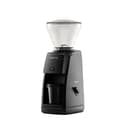 Most repairable · Electric, hopper-fed 40 mm Etzinger M2 conical · 40 settings split 1-20 espresso / 21-40 filter · factory-calibrated · 1-year warranty · parts and repair guides published Baratza sells the components and documents the repair. | Baratza sells the components and documents the repair.40 mm Etzinger M2 conical · 40 settings split 1-20 espresso / 21-40 filter · factory-calibrated · 1-year warranty · parts and repair guides published | $199.95In stock, checked October 17, 2026 Check Price on Amazon |
| 2 | 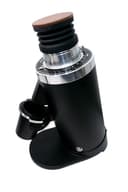 #2 DF64 Gen 2 Easiest burr swap · Step up 64 mm flat (stainless or Red Titanium) · stepless micrometric · 50 g single-dose bellows hopper · 250 W, 1,400 RPM · 1-year warranty 64 mm is the platform aftermarket burr sets are made for. | 64 mm is the platform aftermarket burr sets are made for.64 mm flat (stainless or Red Titanium) · stepless micrometric · 50 g single-dose bellows hopper · 250 W, 1,400 RPM · 1-year warranty | $389.00In stock, checked October 17, 2026 Check Price on Amazon |
| 3 | 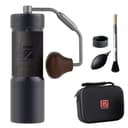 Fewest failure points · Hand grinder 48 mm coated burr · external ring, 8 microns per click · 35-40 g catch cup · about 700 g · 1-year limited warranty No motor, no gearbox, no duty cycle. | No motor, no gearbox, no duty cycle.48 mm coated burr · external ring, 8 microns per click · 35-40 g catch cup · about 700 g · 1-year limited warranty | $199.00In stock, checked October 17, 2026 Check Price on Amazon |
Replace the burrs or the grinder?
Three questions settle it, and they are the same questions we ask about machines in repair or replace.
- Can you buy the burrs? If yes, and they cost a modest fraction of a new grinder, replace the burrs. This is the usual answer for Baratza and for the 64 mm flat platform.
- Is the failure the motor or the adjustment? A dead motor in a cheap grinder is usually the end; drifting adjustment is often just a dirty thread and a clean away.
- Would you buy this grinder again today? If your brewing has moved on — you bought an espresso machine, or you now single-dose — the repair money is better spent on the grinder you would choose now. Our how to choose a grinder guide is the place to start that over.
At the very cheap end the arithmetic is blunt: a sub-$100 grinder is rarely worth a paid repair. The Timemore C3 ESP is a good grinder for the money, but note that Timemore publishes no warranty information at all — so plan to replace rather than service it.
The short version
Grinders do not die on a schedule; they get quietly worse. Burrs are the wear part, throughput is the clock, and the only manufacturer lifespan figures we could find — Baratza's roughly 500 lb for steel and 750 lb for ceramic — apply to its Flat Series rather than to grinders in general. At one or two doses a day, that kind of number means years.
So buy for the parts channel. A grinder whose maker publishes repair guidance and sells burrs is a long-term purchase at any price; a sealed grinder with no parts is a consumable however good it is on day one. If your current grinder is showing every sign on this page, start with a clean and fresh beans, then price a set of burrs before you price a replacement.
What we know, and how we know it
What we did
- Took the specs from the manufacturer's own documentation — Baratza's published repairability statements and its Flat Series burr support article, plus the manufacturers' own spec pages for each grinder named. Not from a retailer listing, and not from another blog.
- Priced it from Amazon's API, with the date we checked shown next to the number. If that price is more than 48 hours old, this page stops showing a number at all rather than show you a wrong one.
- Formed a verdict from those specs, the price, and what owners publicly report.
Where we hedged, and why
We have not worn out a set of burrs under instrumentation, we run no lab, and we have no failure-rate data for any grinder. The lifespan figures on this page are Baratza's, scoped to Baratza's Flat Series— roughly 500 lb of coffee for steel burrs and about 750 lb for ceramic, from their support article "Flat Series | Ceramic Vs. Steel Burr" and the model numbers it lists. We have not applied those numbers to any other grinder, including the conical Baratzas.
We searched for published burr-life figures from Breville, Timemore, 1Zpresso and DF Grinders and found none, so this page predicts no lifespan for the grinders it recommends. The dose arithmetic in the text (500 lb at 18 g per double) is simple conversion, clearly labelled as such, not a durability claim. The wear symptoms listed are the mechanical consequences of dulling burrs as described by the makers and standard practice, not measurements we took. No price appears in our prose; every number here is live from Amazon with the date it was checked.
What we did not do
We do not run a lab. We have not pulled thousands of shots on this machine, and we are not going to pretend otherwise. We have not used this unit ourselves. Everything above is sourced research, and it is labeled as such. Where we have used a machine, we say so and show it.
How we're paid
If you buy through a link on this page, we earn a commission. It costs you nothing extra and it does not change what we recommend — we link to the better option for the buyer even when it earns us less. See how we review and our full disclosure.
Frequently asked questions
How long do coffee grinder burrs last?
It depends on how much coffee passes through them rather than how long you have owned them. The only manufacturer figures we could find are Baratza's, for its Flat Series: roughly 500 lb of coffee (about 225 kg) for steel burrs and around 750 lb for ceramic. At two double espresso doses a day that is on the order of a decade. No maker publishes a figure for the conical home grinders most people own.
How do I know when to replace my burrs?
Look for change rather than a state. The signature is creeping the grind finer over months to hit the same shot time, coffee that has gone bitter and thin at once, longer grind times for the same dose, and more channeling despite unchanged puck prep. Rule out stale beans and a dirty burr chamber first — both mimic worn burrs and cost nothing to fix.
Do hand grinders last longer than electric ones?
They have fewer ways to fail. A manual grinder has no motor, no gearbox and no duty cycle, so the two most common electric failures do not apply. What wears is the burr set and the bearings that keep the shaft aligned — and misalignment grinds unevenly however sharp the burrs are. For one or two doses a day there is very little to go wrong.
Is it worth replacing burrs or should I buy a new grinder?
Replace the burrs if you can buy them and they cost a modest fraction of a new grinder — that is the usual case for Baratza, which sells components and publishes repair guidance, and for the 64 mm flat platform the DF64 uses. Replace the grinder if the motor has died in a cheap machine, or if your brewing has changed enough that you would buy something different today.
What kills a grinder fastest?
A stone in a bag of beans, and heat. A foreign object can damage burrs in one grind, so stop immediately if you hear something hard going through. Heat from long back-to-back batches is what finishes small motors, so let the grinder rest if you are making six drinks in a row. Grinding spices or sugar also wears burrs quickly.
Does cleaning a grinder make it last longer?
It mainly protects the adjustment rather than the burrs. Coffee oils and fines pack into threads and chambers, which is why old grinders drift and why a setting stops meaning what it used to. Cleaning tablets are the cheapest maintenance in coffee, and a clean burr chamber also removes one of the causes that gets mistaken for burr wear.
Sources
Specs come from the manufacturer's own documentation. Prices come from Amazon's API. Where a claim comes from what owners report, we link the thread and say so.
- Baratza — 'How We Keep Baratza Grinders Out of the Landfill' (components designed to be accessed and serviced at home, parts sold including burrs, 'burrs eventually need replacing', 'a single component failure never needs to spell the end of your Baratza grinder')
- Baratza support — 'Flat Series | Ceramic Vs. Steel Burr' (steel burrs roughly 500 lb of coffee, ceramic burrs around 750 lb on average, for the Flat Series model numbers listed in that article)
- Baratza — coffee grinder parts and accessories (replacement burrs and burr removal tools sold individually)
- Baratza Encore ESP product page (40 mm Etzinger M2 conical, factory-calibrated, 1-year warranty)
- DF Grinders — DF64 technical specifications (64 mm flat burrs, stepless micrometric, 250 W / 1400 RPM, 1-year warranty)
- 1Zpresso J-Ultra official product page (48 mm coated burr, 8 microns per click, 1-year limited warranty)
Keep reading
- Espresso machine cleaning and maintenance gearIncluding the grinder cleaning tablets mentioned above.
- How long do espresso machines last?The same question for the machine on the other side of the counter.
- Repair or replace an espresso machineThe decision framework this page borrows.
- How to choose a coffee grinderIf the answer is a new grinder, start here.
- Conical vs flat burrsThe geometry behind the burr-life figures.
- The best grinders under $200Where the most repairable grinder on this page sits.