
Espresso Machines · Alternatives
Alternatives to the De'Longhi Magnifica
Nearly everyone shopping away from a Magnifica is reacting to one of three things: the manual milk frother on the Start, the maintenance, or the realisation that they wanted control instead of automation. Each points at a different machine.
The short answer
Buy the Philips 3200 Series LatteGo: it is the alternative that fixes the Magnifica Start's biggest gap, because it pours five one-touch drinks including cappuccino and latte macchiato through a two-part tube-free milk carafe that rinses in about 15 seconds, and its AquaClean filter means no descaling for up to 5,000 cups. The budget pick is the Breville Bambino Plus - the cheapest machine here, and the cheapest way out of bean-to-cup altogether if you would rather have control.
We earn a commission if you buy through a link on this page. It costs you nothing extra and it does not change what we recommend. Full disclosure.
All five alternatives, compared
Every pick on this page in one view, with the live Amazon price and stock on each row. Specs are the figures the maker or the listing publishes — nothing measured or scored by us. Prices are read from Amazon's API and were last checked November 22, 2026; where we have no verified price, the row says so rather than show you an old number.
| # | Machine | Who it's for | Price & availability |
|---|---|---|---|
| 1 | 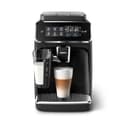 #1 Philips 3200 Series LatteGo (EP3241/54) Best overall · Under $1,000 5 one-touch drinks: espresso, coffee, americano, cappuccino, latte macchiato · 100% ceramic grinder · touch display · 2-part LatteGo carafe, no tubes, rinses in about 15 seconds or dishwasher · AquaClean: no descaling up to 5,000 cups · 17.6 lb · 2-year warranty For the Magnifica routine with the milk automated. | For the Magnifica routine with the milk automated.5 one-touch drinks: espresso, coffee, americano, cappuccino, latte macchiato · 100% ceramic grinder · touch display · 2-part LatteGo carafe, no tubes, rinses in about 15 seconds or dishwasher · AquaClean: no descaling up to 5,000 cups · 17.6 lb · 2-year warranty | $529.00In stock, checked November 22, 2026 Check Price on Amazon |
| 2 | 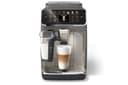 #2 Philips 4400 Series LatteGo (EP4444/90) Most drinks · Over $700 12 one-touch presets including iced drinks and hot water · 2 saved user profiles · color display · 3-part tube-free LatteGo, rinses in about 10 seconds · QuickStart · SilentBrew, Quiet Mark certified · 2-year warranty For a household where two people want different drinks saved. | For a household where two people want different drinks saved.12 one-touch presets including iced drinks and hot water · 2 saved user profiles · color display · 3-part tube-free LatteGo, rinses in about 10 seconds · QuickStart · SilentBrew, Quiet Mark certified · 2-year warranty | $699.99In stock, checked November 22, 2026 Check Price on Amazon |
| 3 | 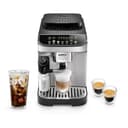 #3 De'Longhi Magnifica Evo Espresso Machine Staying in the family · Under $1,000 7 one-touch or customizable drinks: espresso, cappuccino, latte macchiato, iced coffee, coffee, hot water, My Latte · 13 grind settings · automatic milk frother · 21.2 lb · 2-year warranty plus a year with registration For fixing the Start's manual frother without changing brand. | For fixing the Start's manual frother without changing brand.7 one-touch or customizable drinks: espresso, cappuccino, latte macchiato, iced coffee, coffee, hot water, My Latte · 13 grind settings · automatic milk frother · 21.2 lb · 2-year warranty plus a year with registration | $549.95In stock, checked November 22, 2026 Check Price on Amazon |
| 4 | 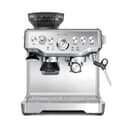 #4 Breville Barista Express (BES870XL) Control instead · Under $1,000 Semi-automatic with built-in grinder · steel conical burrs, 16 grind settings, 250 g hopper · PID · 54 mm portafilter · manual commercial-style 360° swivel steam wand · pre-infusion · 15 bar For the buyer who realised they wanted to make coffee, not order it. | For the buyer who realised they wanted to make coffee, not order it.Semi-automatic with built-in grinder · steel conical burrs, 16 grind settings, 250 g hopper · PID · 54 mm portafilter · manual commercial-style 360° swivel steam wand · pre-infusion · 15 bar | $494.95In stock, checked November 22, 2026 Check Price on Amazon |
| 5 | 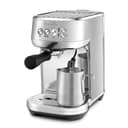 #5 Breville Bambino Plus (BES500) Budget pick · Under $500 ThermoJet, 3 seconds to temperature · automatic hands-free milk, 3 temperatures x 3 foam levels · PID · 54 mm · no grinder · 1.9 L tank · 7.5" wide · 2-year limited warranty The cheapest pick here, and the smallest. Needs a separate grinder. | The cheapest pick here, and the smallest. Needs a separate grinder.ThermoJet, 3 seconds to temperature · automatic hands-free milk, 3 temperatures x 3 foam levels · PID · 54 mm · no grinder · 1.9 L tank · 7.5" wide · 2-year limited warranty | $485.00In stock, checked November 22, 2026 Check Price on Amazon |
Which Magnifica complaint do you have?
"Magnifica" covers several machines, and which one you own changes the answer, so start here.
If your complaint is the milk, you almost certainly own a Magnifica Start. De'Longhi's deliberate cost saving on that model is the milk system: it has a manual frother rather than the automatic LatteCrema system, which starts at the pricier Evo tier. So you bought a machine specifically to stop doing work, and it still asks you to froth by hand. This is the most common reason people shop away from a Magnifica and it has two clean fixes: the Philips 3200 LatteGo, or the Magnifica Evo, which solves it inside the same brand. Our Start vs Evo comparison is the detail.
If your complaint is cleaning and descaling, look hard at the LatteGo carafe. Philips publishes it as a two-part system with no tubes that rinses in about 15 seconds or goes in the dishwasher, and the AquaClean filter is rated for no descaling up to 5,000 cups. Milk tubes and descaling schedules are the two maintenance jobs that make people abandon super-automatics, and that is a design answer to both.
If your complaint is the coffee itself, no super-automatic is the answer, and we would rather say so than sell you a different one. A bean-to-cup machine grinds, doses, tamps and brews to its own program; you cannot weigh a dose, choose a basket or steer a pressure curve. If what you have discovered is that you want to makecoffee, you want a semi-automatic with a grinder — the Barista Express — or a compact one plus a separate grinder. The honest version of that argument is in semi-automatic vs super-automatic.
What to compare on, in this category
1. The milk system, which is where the money goes.Super-automatics are separated far more by milk than by espresso. The spectrum runs from a manual frother (the Magnifica Start) through an automatic frother (the Magnifica Evo) to a tube-free carafe system (LatteGo on both Philips). What matters practically is not foam quality, which is decent across all of them, but how many parts you rinse afterwards — because that is the chore that decides whether you keep using the milk function at all.
2. Drink count, and how much of it you will use.Philips publishes 5 presets on the 3200 and 12 on the 4400, with 2 saved user profiles on the latter; De'Longhi publishes 7 one-touch or customisable drinks on the Evo, including iced coffee and hot water. Most households use two or three. The genuine value of a higher count is the saved profile, not the menu — in a two-person house where one drinks a long black and the other a latte macchiato, saved profiles end a daily negotiation.
3. Descaling and filtration, which is the long-run cost.Philips' AquaClean claim of no descaling up to 5,000 cups is the strongest published maintenance number in this comparison, and it is a claim about filter changes rather than about never maintaining the machine. De'Longhi publishes a two-year warranty plus a year on registration for the Evo; Philips publishes two years on both machines. Any bean-to-cup machine in hard water needs a filtration plan — see water for espresso.
4. Grinder.Philips publishes a 100% ceramic grinder on the 3200; De'Longhi publishes 13 grind settings on the Evo and on the Start. Ceramic burrs do not transfer heat the way steel does, which is the stated reason Philips uses them. Both are built in and neither is user-replaceable, which is the structural compromise of the whole category.
The five alternatives
Philips 3200 Series LatteGo — the one to buy
Who it is for:the Magnifica Start owner whose whole complaint is the manual frother. Published specs: five one-touch drinks — espresso, coffee, americano, cappuccino and latte macchiato — a 100% ceramic grinder, a touch display, the two-part tube-free LatteGo carafe that rinses in about 15 seconds or goes in the dishwasher, an AquaClean filter rated for no descaling up to 5,000 cups, 17.6 lb, and a two-year warranty. The LatteGo design is the reason this leads rather than the drink count: a milk system with no tubes is a milk system you will still be using in a year, and tube cleaning is what kills the milk function on most machines. Honest catches: it is a different brand, so parts, service and app support all change, and 5 presets is the smaller menu here. Philips 3200 vs De'Longhi Magnifica is the direct head-to-head.
Philips 4400 Series LatteGo — the most drinks
Who it is for: a household of two or more where people want different drinks, reliably, without re-setting the machine. Published: 12 one-touch presets including iced drinks and hot water, up to 2 saved user profiles, a colour display, a three-part tube-free LatteGo carafe that rinses in about 10 seconds, QuickStart, and SilentBrew with a Quiet Mark certification. Two years of warranty. The saved profiles are the real upgrade over the 3200 — the preset count is mostly menu — and the Quiet Mark certification is a genuine third-party noise credential, which almost nothing in this category carries. The catch is price: it is the most expensive machine on this page, and the three-part carafe is one more piece to rinse than the 3200's two. See Philips 3200 vs 4400.
De'Longhi Magnifica Evo — staying in the family
Who it is for:the Magnifica Start owner who likes the machine, dislikes exactly one thing about it, and would rather not relearn a brand. The Evo is where De'Longhi's automatic milk begins: published specs are 7 one-touch or customisable drinks — espresso, cappuccino, latte macchiato, iced coffee, coffee, hot water and My Latte — 13 grind settings, an automatic milk frother, 21.2 lb, and a two-year warranty plus a year with product registration. If the milk was the problem, this fixes the milk and changes nothing else, which is a real advantage: the interface, the water tank routine and the service network all stay familiar. It is also heaviest machine here and the one whose milk system has the most parts to rinse, which is precisely where LatteGo wins. Start vs Evo covers the upgrade properly.
Breville Barista Express — control instead of automation
Who it is for: the owner who has worked out that they did not want a coffee dispenser. The Barista Express is a semi-automatic with a grinder built in: steel conical burrs with 16 grind settings and a 250 g hopper, PID temperature control, a 54 mm portafilter, pre-infusion, a 15 bar pump, and a manual commercial-style 360-degree swivel steam wand. In other words it keeps the all-in-one footprint of a bean-to-cup machine while handing you the three things one will never give you: a dose you weigh, a grind you choose, and milk you texture yourself. That is also the honest warning. It is slower, messier and more demanding every single morning, and if the household includes someone who just wants a cappuccino at a press, this is a bad trade for them. The full review is the long version.
Breville Bambino Plus — the budget pick
Who it is for: someone leaving bean-to-cup who wants the cheapest and smallest way to do it, and who is prepared to buy a grinder separately. This is the budget pick and the cheapest machine on the page. Breville publishes a ThermoJet heater reaching extraction temperature in 3 seconds, automatic hands-free milk texturing across three temperatures and three foam levels, PID, a 54 mm portafilter, a 1.9 L tank, a 7.5-inch width and a two-year limited warranty. It is the one machine here that automates milk without automating espresso, which is an unusual and genuinely useful combination for an ex-Magnifica owner. The obvious catch: no grinder. Add a grinder to the price before you compare it with anything else on this page.
When the Magnifica is still the right answer
Since we earn a commission whichever way this goes, the case for keeping what you have:
- If you only drink black coffee, the Start's manual frother is irrelevant and you are shopping over a feature you do not use. Nothing on this page makes better espresso than it does for the money.
- If the machine is out of warranty but working, a full descale, a new water filter and a grinder clean restore more performance than most people expect. Read the super-automatic roundup for where the Start actually sits before replacing it.
- If your household wants fewer decisions, not more, resist the pull toward a semi-automatic. The Barista Express is a better machine and a worse appliance.
If you are still weighing brands rather than models, Philips vs De'Longhi super-automatics is the brand-level comparison, and how to choose a super-automatic walks the whole decision. For the general machine shortlist, see the best espresso machines for home.
What we know, and how we know it
What we did
- Took the specs from the manufacturer's own documentation. Not from a retailer listing, and not from another blog.
- Priced it from Amazon's API, with the date we checked shown next to the number. If that price is more than 48 hours old, this page stops showing a number at all rather than show you a wrong one.
- Formed a verdict from those specs, the price, and what owners publicly report.
Where we hedged, and why
The two Brevilles are in our spec database and their figures come from Breville's own product pages and manuals. The Philips 3200, Philips 4400 and Magnifica Evo are not in it: every figure quoted for them — preset counts, the LatteGo part count and rinse times, AquaClean's 5,000-cup descaling claim, the ceramic grinder, grind settings, weights and warranty terms — is what Philips or De'Longhi publishes, reported as their claim rather than as a measurement of ours. Philips' SilentBrew Quiet Mark is a third-party certification they state; we have not measured noise.
We have not used these machines side by side and we have not tested milk quality, extraction, descaling intervals or reliability. The ordering comes from which published feature answers which specific Magnifica complaint, plus price — not from a test we did not run. There are no scores or awards here beyond that reasoning. Prices and tier labels come from the live price layer at the date stamped on the table above.
What we did not do
We do not run a lab. We have not pulled thousands of shots on this machine, and we are not going to pretend otherwise. We have not used this unit ourselves. Everything above is sourced research, and it is labeled as such. Where we have used a machine, we say so and show it.
How we're paid
If you buy through a link on this page, we earn a commission. It costs you nothing extra and it does not change what we recommend — we link to the better option for the buyer even when it earns us less. See how we review and our full disclosure.
More on the espresso machines hub, and the brand pages for De'Longhi and Breville.
Frequently asked questions
What is the best alternative to a De'Longhi Magnifica?
The Philips 3200 Series LatteGo. It fixes the Magnifica Start's biggest gap by pouring five one-touch drinks including cappuccino and latte macchiato through a two-part tube-free milk carafe that rinses in about 15 seconds, and its AquaClean filter is rated for no descaling up to 5,000 cups. If you would rather not change brand, the Magnifica Evo fixes the milk inside De'Longhi's own range.
Why does the De'Longhi Magnifica Start have a manual frother?
It is De'Longhi's deliberate cost saving on that model. The automatic LatteCrema milk systems start at the pricier Evo tier, so the Start gives you push-button espresso from whole beans but still asks you to froth milk by hand. That mismatch - buying automation and still doing the milk - is the most common reason people shop away from a Magnifica.
Is the Philips LatteGo better than De'Longhi's milk system?
It is easier to live with, which in practice is what matters. Philips publishes LatteGo as a two-part carafe with no tubes that rinses in about 15 seconds or goes in the dishwasher, against a frother with more parts on the De'Longhi side. Milk-tube cleaning is the chore that stops people using the milk function at all, so removing the tubes is a real design advantage rather than a marketing one.
Should I replace my Magnifica or repair it?
Repair first. Weak coffee, slow flow, odd grinder noises and a milk system that stopped frothing are usually service items on a bean-to-cup machine - a full descale, a new water filter and a grinder clean restore more performance than most owners expect. Only replace once you have ruled those out, because the machines here cost four figures.
What should I buy instead of a super-automatic if I want more control?
A semi-automatic with a built-in grinder, which keeps the one-box footprint while giving you a dose you weigh, a grind you choose and milk you texture. The Breville Barista Express is the clearest example: steel conical burrs with 16 settings, PID, a 54 mm portafilter and a manual swivel steam wand. It is a better machine and a more demanding appliance, every morning.
Is the Magnifica Evo worth upgrading to from the Start?
If the milk is your complaint, yes, and it is the lowest-friction fix because nothing else about the machine changes. De'Longhi publishes 7 one-touch or customisable drinks on the Evo, 13 grind settings, an automatic milk frother and a two-year warranty plus a year on registration. If cleaning is also a complaint, the tube-free Philips LatteGo carafe is the better answer.
Which super-automatic is best for two people with different drinks?
The Philips 4400 Series LatteGo, because of saved profiles rather than preset count. Philips publishes 12 one-touch presets including iced drinks and hot water, plus up to 2 saved user profiles - and in a two-person household the profiles end a daily negotiation. It is the most expensive machine on this page, and its LatteGo carafe is three parts rather than the 3200's two.
Sources
Specs come from the manufacturer's own documentation. Prices come from Amazon's API. Where a claim comes from what owners report, we link the thread and say so.
- Philips - 3200 Series LatteGo EP3241/54 product page (5 drinks, 100% ceramic grinder, 2-part LatteGo, AquaClean 5,000 cups, 2-year warranty)
- Philips - 4400 Series LatteGo EP4444/90 product page (12 presets, 2 profiles, 3-part LatteGo, QuickStart, SilentBrew Quiet Mark)
- De'Longhi - Magnifica Evo product page (7 drinks, 13 grind settings, automatic milk frother, 21.2 lb, warranty)
- De'Longhi - ECAM22022B Magnifica Start product page (manual frother, not LatteCrema)
- Breville - BES870XL Barista Express product page (burrs, 16 settings, PID, swivel wand)
- Breville - BES500 Bambino Plus product page (ThermoJet 3 seconds, automatic milk)
Keep reading
- De'Longhi Magnifica Start vs EvoThe in-family fix for the manual frother, compared properly.
- Philips 3200 vs De'Longhi MagnificaThis page's top pick against the machine you already own.
- Philips vs De'Longhi super-automaticsThe brand-level comparison, if you are choosing a camp first.
- Semi-automatic vs super-automaticThe decision behind the two Brevilles on this page.
- Repair or replace an espresso machineRead this before replacing a working bean-to-cup machine.
- The best espresso machines for homeThe general shortlist, if you are starting the decision again.