
Espresso Machines · Rentals
The Best Espresso Machines for an Airbnb
A rental machine is not judged on the quality of its shots. It is judged on whether a guest who has never seen one can make coffee at midnight without calling you — and on what it costs you when they cannot.
The short answer
The Philips 3200 Series LatteGo is the best espresso machine for an Airbnb: five one-touch drinks, a two-part milk carafe with no tubes that rinses under the tap in about 15 seconds, and an AquaClean filter Philips says avoids descaling for up to 5,000 cups. A two-year warranty backs it.
We earn a commission if you buy through a link on this page. It costs you nothing extra and it does not change what we recommend. Full disclosure.
Key takeaways
- One-touch operation is the whole brief. If a drink needs a tamp, a grinder setting or a steam wand, some guests will not make it and some will break something trying.
- The milk system is the hygiene risk, not a luxury. A carafe you can rinse in seconds beats a tube that a departing guest leaves full of milk.
- Maintenance has to fit your cleaning turnaround. A filter your cleaner swaps when prompted is realistic; a descaling cycle between check-out and check-in is not.
- Replacement cost is a feature. Decide in advance whether you are putting several hundred dollars or barely a hundred on that counter, because sooner or later one of them walks out or dies.
Buying for guests is a different problem
Every other machine recommendation on this site optimises for the cup. This one does not. A rental machine is used by people you will never meet, once or twice, without instructions they will read, at hours when you are asleep. It will be operated wrongly. Milk will be left in it. The beans will run out mid-stay. Nobody will descale it.
So the thing you are buying is not espresso quality — it is the absence of problems. In practice that pushes you toward a bean-to-cup machine, because it collapses the entire grind-dose-tamp-brew-froth sequence into one button, and because there is no second appliance for a guest to leave switched on. It pushes you away from anything that requires a separate grinder or a hand-frothed jug.
The exception is the budget end, where the sensible play is the opposite: a machine so cheap that its loss is a rounding error. We cover both ends below.
The four things that actually matter
- One-touch drinks.Not "easy to use" — literally one button per drink, with the grinder inside. The Philips machines list their drinks on the display; the Magnifica Start brews at a button but leaves milk to the guest.
- A milk system that cannot hide milk.This is the one most hosts get wrong. Philips' LatteGo is a two-part carafe with no tubes and no hidden channels, which Philips says rinses under the tap in about 15 seconds or goes in the dishwasher. A system with tubes is a system that will be returned to you full.
- Maintenance a cleaner can do in a turnaround.Philips' AquaClean filter is the standout here: change it when the machine prompts and Philips says descaling is not needed for up to 5,000 cups. Compare that with a machine your cleaner must descale on a schedule nobody is tracking.
- A replacement cost you have already accepted. Write the number down before you shop. There is no correct answer — there is only the machine you can shrug about when it is gone.
All four machines, compared
Every pick on this page in one view, with the live Amazon price and stock on each row. Specs are the figures the maker or the listing publishes — nothing measured or scored by us. Prices are read from Amazon's API and were last checked October 17, 2026; where we have no verified price, the row says so rather than show you an old number.
| # | Machine | Why it's here | Price & availability |
|---|---|---|---|
| 1 | 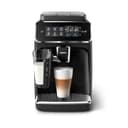 #1 Philips 3200 Series LatteGo (EP3241/54) Best for rentals · One-touch milk 5 one-touch drinks · 100% ceramic grinder · touch display · 2-part LatteGo carafe, no tubes, rinses in about 15 seconds or dishwasher · AquaClean: no descaling up to 5,000 cups · 2-year warranty One button per drink, and a milk carafe that cannot hide milk. | One button per drink, and a milk carafe that cannot hide milk.5 one-touch drinks · 100% ceramic grinder · touch display · 2-part LatteGo carafe, no tubes, rinses in about 15 seconds or dishwasher · AquaClean: no descaling up to 5,000 cups · 2-year warranty | $554.29In stock, checked October 17, 2026 Check Price on Amazon |
| 2 | 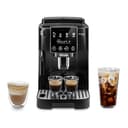 #2 De'Longhi Magnifica Start (ECAM22022) Budget bean-to-cup · Entry automatic Built-in conical burr, 13 grind settings, 250 g hopper · Thermoblock (ALU/stainless) · 15 bar · 1.8 L tank · 1250 W (US) · manual frother, NOT the automatic LatteCrema system The cheapest one-button route from whole beans to black coffee. | The cheapest one-button route from whole beans to black coffee.Built-in conical burr, 13 grind settings, 250 g hopper · Thermoblock (ALU/stainless) · 15 bar · 1.8 L tank · 1250 W (US) · manual frother, NOT the automatic LatteCrema system | $599.95In stock, checked October 17, 2026 Check Price on Amazon |
| 3 | 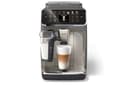 #3 Philips 4400 Series LatteGo (EP4444/90) Premium rental · Upmarket automatic 12 presets · 2 user profiles · 3-part LatteGo · QuickStart · SilentBrew with a Quiet Mark · 2-year warranty More drinks and quieter operation, for a listing that sells on amenities. | More drinks and quieter operation, for a listing that sells on amenities.12 presets · 2 user profiles · 3-part LatteGo · QuickStart · SilentBrew with a Quiet Mark · 2-year warranty | $705.00In stock, checked October 17, 2026 Check Price on Amazon |
| 4 | 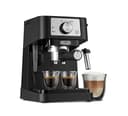 #4 De'Longhi Stilosa (EC260BK) Lowest risk · Under $150 Stainless steel boiler · 15 bar · 1 L tank · 1100 W · 8.61 lb · pannarello frother · 1-year warranty plus 1 with registration Cheap enough that losing it is an annoyance rather than an event. | Cheap enough that losing it is an annoyance rather than an event.Stainless steel boiler · 15 bar · 1 L tank · 1100 W · 8.61 lb · pannarello frother · 1-year warranty plus 1 with registration | $149.95In stock, checked October 17, 2026 Check Price on Amazon |
The four machines
Philips 3200 Series LatteGo — the rental machine
| One-touch drinks | 5 — espresso, coffee, americano, cappuccino, latte macchiato |
|---|---|
| Grinder | 100% ceramic, built in |
| Controls | Touch display |
| Milk system | LatteGo 2-part carafe, no tubes or hidden parts — Philips: rinses under the tap in about 15 seconds, or dishwasher safe |
| Descaling | AquaClean filter — Philips says no descaling needed for up to 5,000 cups if the filter is replaced when prompted |
| Warranty | 2 years |
Who it is for: the host who wants a guest to make a cappuccino at 7 am without reading anything, and wants the milk parts rinsed in the time it takes to put a mug away.
Everything about this machine answers a rental problem. Five one-touch drinks on a touch display means a guest taps a picture. The ceramic grinder inside removes the need for a second appliance or any ground coffee logistics. The LatteGo carafe is the quiet masterstroke: two parts, no tubes, no channels — so there is nowhere for milk to sit and sour between guests, and your cleaner can rinse it in seconds or put it in the dishwasher. And the AquaClean filter turns descaling, the maintenance task no short-term rental ever performs, into a prompt-driven filter swap.
The honest cons.A super-automatic serves the machine's idea of espresso rather than a barista's — it is the trade you make for one-touch everything, and we lay it out in semi vs super-automatic. It is also a real asset sitting in a property other people have keys to, which is a conversation with your insurer rather than with us.
De'Longhi Magnifica Start — the budget bean-to-cup
| Type | Super-automatic (bean-to-cup) |
|---|---|
| Portafilter | De'Longhi does not publish a portafilter size for this machine, so we're not going to state one. The figures you'll find online come from third-party sellers of aftermarket portafilters, not from De'Longhi. |
| Boiler | Thermoblock (ALU/stainless) |
| PID temperature control | No |
| Built-in grinder | Built-in conical burr, 13 grind settings, 250 g hopper |
| Milk | Manual frother — NOT the automatic LatteCrema system (that starts at the Evo tier) |
| Pump pressure | 15 bar |
| Water tank | 1.8 L |
| Power | 1250 W1250 W is the US 120 V machine. De'Longhi's EU sibling lists 1450 W — that's a 230 V unit and does not apply here. |
| Dimensions | ~9.25" W x 17" D x 14" H |
| Weight | Not published reliably. De'Longhi's stated net weight is heavier than their own stated shipping weight, which can't be right — so we're not repeating either number. |
| Warranty | Not published on this model's page. |
| In the box | Not published by De'Longhi for this model. |
Who it is for:the host who wants whole-bean coffee at a button and is happy for milk drinks to be a guest's own problem.
This is the cheapest honest route into bean-to-cup: a built-in conical burr with 13 grind settings and a 250 g hopper, a 1.8 L tank, and a button that turns beans into espresso. For a listing where you provide good beans and most guests drink their coffee black or add cold milk, it does the job for noticeably less than the Philips.
The honest con, and it is the deciding one for rentals: the Magnifica Start has a manual frother, not De'Longhi's automatic LatteCrema system — that starts at the pricier Evo and Plus tiers. So a guest who wants a cappuccino has to texture milk at a wand, which is exactly the step that produces scalded milk, mess and questions. De'Longhi also publishes no warranty term on this model's page and no reliable weight, which we note rather than resolve.
Philips 4400 Series LatteGo — for a listing that sells on amenities
| Presets | 12 |
|---|---|
| User profiles | 2 |
| Milk system | LatteGo, 3-part |
| Start-up | QuickStart |
| Noise | SilentBrew, carrying a Quiet Mark |
| Warranty | 2 years |
Who it is for: the premium or city-apartment listing where the coffee machine is part of the pitch, and where noise travels.
Twelve presets and two saved profiles are more machine than a one-night guest needs, but they photograph well and they cover the requests you would otherwise field. The two features that genuinely earn their place in a rental are QuickStart, because guests do not wait patiently, and SilentBrew — a grinder firing at 6 am in a studio apartment is a review you do not want. Note that the 4400's LatteGo is a three-part carafe rather than the 3200's two-part one; Philips quotes about 10 seconds to rinse it, against about 15 for the 3200.
The honest cons. It is the most expensive machine here by a wide margin, in a property you do not occupy. More presets also means more ways for a guest to change a setting you will have to put back.
De'Longhi Stilosa — the near-zero-risk option
| Type | Semi-automatic, no grinder |
|---|---|
| Portafilter | De'Longhi does not publish a portafilter size for this machine, so we're not going to state one. The figures you'll find online come from third-party sellers of aftermarket portafilters, not from De'Longhi. |
| Boiler | Stainless steel boiler — the only De'Longhi here with a real boiler, not a Thermoblock |
| PID temperature control | No |
| Built-in grinder | No — you'll need a separate grinder |
| Milk | Manual — pannarello-style frother |
| Pump pressure | 15 bar |
| Water tank | 1 L |
| Power | 1100 W |
| Dimensions | 8.07" W x 13.5" D x 11.22" H |
| Weight | 8.61 lb (3.9 kg) |
| Warranty | 1 year, plus 1 more with product registration |
| In the box | Portafilter, tamper, single filter, double filter, measuring spoon, ESE pod filter |
Who it is for: the host furnishing several units, or anyone who wants espresso capability on the counter without an asset to worry about.
The strategy here is the opposite of the Philips: instead of making the machine guest-proof, make it disposable. The Stilosa is the cheapest machine in De'Longhi's manual lineup, weighs 8.61 lb, has a stainless steel boiler — the only De'Longhi in our database with a real boiler rather than a Thermoblock — and carries a one-year warranty plus a second with registration. If it is damaged in year two, you replace it and move on.
The honest cons.It needs ground coffee, a tamp and a hand at the pannarello frother, which means a meaningful share of guests will make bad coffee or none. Treat it as "espresso is available if you know how" rather than as an amenity, provide pre-ground coffee, and keep a kettle in the cupboard for everyone else.
What not to put in a rental
Three categories cause the complaints, and all three are machines we recommend warmly elsewhere on this site for people buying for themselves.
- Anything that needs a separate grinder. A machine plus a grinder is two appliances, two sets of instructions and two things to go wrong — and a guest who grinds at the wrong setting will conclude the machine is broken. If you want the quality of a separate grinder, you are buying for yourself, not for guests.
- 58 mm manual machines. A Gaggia Classic Pro or a Rancilio Silvia rewards skill and punishes its absence. In a rental, the punishment lands on your messages at midnight.
- Milk systems with tubes.If milk can sit somewhere a guest cannot see, it will. This is the single most common source of "the coffee machine smells" reviews, and it is why the tube-free LatteGo design is the recommendation here.
Setting it up so it survives
The machine is half the job. A few host-side decisions do the rest, and none of them costs anything.
- Laminate one card, four lines long. Fill water here, beans go here, press this, rinse this. Guests will read four lines; they will not read a manual.
- Decide the coffee supply. A sealed bag of beans per stay is simpler than a hopper someone has to judge. Keep it closed and keep it out of the fridge.
- Make the water filter a turnaround task.Add "check machine prompt, swap filter if lit" to the cleaner's checklist. This is where the AquaClean promise actually pays off.
- Know your water. Hard water is what kills machines in rentals, because nobody descales. Our water for espresso guide explains what to do about it, and how often to descale sets the realistic interval.
- Keep a kettle. Some guests do not want espresso. A kettle prevents the machine from being operated by someone who did not want it in the first place.
Which one for which rental
| If this is you | Buy | Because |
|---|---|---|
| You want guests to make cappuccinos unaided | Philips 3200 LatteGo | One-touch milk drinks and a tube-free carafe. |
| Your cleaner has 90 minutes between guests | Philips 3200 LatteGo | Carafe rinses in seconds; AquaClean replaces descaling. |
| You want bean-to-cup for the lowest outlay | Magnifica Start | Built-in burr and one-button espresso — milk is manual. |
| The coffee machine is part of your listing's pitch | Philips 4400 LatteGo | 12 presets, QuickStart and a Quiet Mark for SilentBrew. |
| Early risers share a wall with the kitchen | Philips 4400 LatteGo | Noise is a review problem; SilentBrew addresses it. |
| You are furnishing several units at once | Stilosa | Lowest replacement cost of anything we would recommend. |
| You expect hard water and no descaling discipline | Philips, either model | The AquaClean filter is the only maintenance a rental reliably gets. |
| You want the best espresso on that counter | None of these — buy for yourself | Guest-proofing and shot quality pull in opposite directions. |
The verdict
The Philips 3200 Series LatteGo is the machine to put in an Airbnb. Five one-touch drinks, a built-in ceramic grinder, a two-part milk carafe with no tubes that rinses in about fifteen seconds, and an AquaClean filter that stands in for the descaling nobody will do. Every one of those is a specification aimed at the problems a rental actually has, and a two-year warranty sits behind it.
If the budget is tighter, the Magnifica Start gives you one-button espresso from whole beans — accept that its frother is manual, so milk drinks depend on the guest. For a premium listing, the 4400 LatteGo adds presets, QuickStart and quieter brewing. And if what you want is espresso capability with no asset risk at all, the Stilosa is cheap, light and replaceable — provide pre-ground coffee and set expectations accordingly.
If this is for a shared workplace rather than a rental, the constraints are different again — volume and cleaning rather than guest confusion. That version of the question is in the best espresso machines for an office.
What we know, and how we know it
What we did
- Took the specs from the manufacturer's own documentation — Philips' published LatteGo specifications, De'Longhi's Magnifica Start and Stilosa product pages. Not from a retailer listing, and not from another blog.
- Priced it from Amazon's API, with the date we checked shown next to the number. If that price is more than 48 hours old, this page stops showing a number at all rather than show you a wrong one.
- Formed a verdict from those specs, the price, and what owners publicly report.
Where we hedged, and why
We have not run these machines in a rental property, we run no lab, and we have no failure-rate data for any of them. Every specification here is the manufacturer's: five one-touch drinks, the ceramic grinder, the two-part tube-free LatteGo carafe, the roughly 15-second rinse, the AquaClean 5,000-cup descaling claim and the two-year warranty from Philips; the built-in burr, 13 grind settings, 1.8 L tank and manual frother from De'Longhi.
The 5,000-cup figure is Philips' claim, not our measurement, and it is conditional on replacing the filter when the machine prompts. We also publish the gaps: De'Longhi states no warranty term on the Magnifica Start's own page, and their published net weight for it exceeds their own published shipping weight, which cannot be right — so we repeat neither number. Hosting advice on this page is operational judgement about what rentals do and do not get maintained, not a claim about any machine's durability. Nothing here is insurance, tax or regulatory advice. No price appears in our prose; every number is live from Amazon with the date it was checked.
What we did not do
We do not run a lab. We have not pulled thousands of shots on this machine, and we are not going to pretend otherwise. We have not used this unit ourselves. Everything above is sourced research, and it is labeled as such. Where we have used a machine, we say so and show it.
How we're paid
If you buy through a link on this page, we earn a commission. It costs you nothing extra and it does not change what we recommend — we link to the better option for the buyer even when it earns us less. See how we review and our full disclosure.
Frequently asked questions
What kind of espresso machine should I put in an Airbnb?
A bean-to-cup (super-automatic) machine with one-touch drinks and a tube-free milk carafe, or — at the other extreme — a machine cheap enough that its loss does not matter. The Philips 3200 LatteGo is the first strategy: five one-touch drinks, a built-in ceramic grinder, and a two-part milk carafe Philips says rinses under the tap in about 15 seconds. The De'Longhi Stilosa is the second.
Is a super-automatic worth it for a rental?
For guest use, yes, and for a reason that has nothing to do with coffee quality: it removes every step a guest can get wrong. Grinding, dosing, tamping and frothing all collapse into one button, and there is no second appliance in the kitchen. You give up the control a semi-automatic offers, which matters to you at home and not at all to a one-night guest.
How do I stop the milk system from smelling?
Buy a milk system with nowhere for milk to hide. Philips' LatteGo is a two-part carafe with no tubes or hidden channels — Philips says it rinses clean under the tap in about 15 seconds, or goes in the dishwasher. Systems with tubes are the usual cause of 'the coffee machine smells' reviews, because a departing guest leaves milk in a part your cleaner cannot see.
Who descales the machine in a short-term rental?
Realistically, nobody — which is why the Philips machines are the pick. Philips says that if you replace the AquaClean filter when the machine prompts, you will not need to descale for up to 5,000 cups, turning a scheduled task into a prompt-driven filter swap a cleaner can do in a turnaround. Hard water is what kills machines in rentals, so check yours first.
Should I provide beans or ground coffee?
Beans, if the machine grinds them — a sealed bag per stay is simpler than a hopper someone has to judge, and it avoids stale coffee sitting between bookings. If you have chosen a manual machine like the Stilosa, provide pre-ground coffee, because a guest who has to grind will either do it wrong or give up.
What about a pod machine instead?
It is a legitimate answer to the same brief — foolproof, cheap, nothing to clean — and we are not going to pretend otherwise. What you give up is the drink: pods are a different product from espresso pulled from fresh beans, and a bean-to-cup machine is a genuine amenity in a listing while a pod machine is an expectation. We compare the two directly in our espresso machine vs Nespresso guide.
Sources
Specs come from the manufacturer's own documentation. Prices come from Amazon's API. Where a claim comes from what owners report, we link the thread and say so.
- Philips 3200 Series LatteGo (EP3241/54) — manufacturer specifications as published on its Amazon listing, read October 2026 (5 one-touch drinks, 100% ceramic grinder, touch display, 2-part tube-free LatteGo rinsing in about 15 seconds, AquaClean up to 5,000 cups without descaling, 2-year warranty)
- Philips 4400 Series LatteGo (EP4444/90) — manufacturer specifications as published on its Amazon listing, read October 2026 (12 presets, 2 profiles, 3-part LatteGo, QuickStart, SilentBrew with Quiet Mark, 2-year warranty)
- Philips — fully automatic espresso machines (official range page)
- De'Longhi Magnifica Start (ECAM22022B) product page (built-in conical burr, 13 grind settings, 250 g hopper, 1.8 L tank, 15 bar, 1250 W US, manual frother; no warranty term published)
- De'Longhi EC260BK Stilosa product page (stainless steel boiler, 15 bar, 1 L tank, 1100 W, 8.61 lb, 1-year warranty plus 1 with registration)
Keep reading
- The best espresso machines for an officeThe shared-use version of this problem: volume, not confusion.
- The best super-automatic espresso machinesThe full bean-to-cup field, including both Philips machines.
- Semi-automatic vs super-automaticWhat one-touch convenience costs you in the cup.
- Espresso machine vs NespressoThe pod alternative, assessed honestly.
- Water for espressoHard water is what kills machines nobody descales.
- The best espresso machines for small kitchensIf counter space in the unit is the binding constraint.