
Espresso Machines · Under $1,000
The Best Super-Automatic Espresso Machines Under $1,000
A thousand dollars is the sweet spot of the bean-to-cup market, not the entry to it. Here is what the money buys, what it does not, and which of three machines fits which household.
The short answer
Under $1,000 the most machine you can buy is the Philips 4400 LatteGo: 12 one-touch presets, two saved user profiles and the tube-free LatteGo carafe. The Philips 3200 LatteGo gives the same automatic milk for less, and the De'Longhi Magnifica Start is the cheapest way in if you will froth milk yourself.
We earn a commission if you buy through a link on this page. It costs you nothing extra and it does not change what we recommend. Full disclosure.
Key takeaways
- You do not need the full $1,000. All three machines here sit comfortably under the cap, and the cheapest is less than half of it.
- The milk system is what you are really buying. Automatic, tube-free milk is the single biggest price step in this bracket; a manual frother saves real money.
- Drink count is a convenience feature, not a quality one — the same espresso comes out of a five-drink machine and a twelve-drink machine.
- Everything in this bracket shares one ceiling: a sealed brew unit you cannot control beyond grind and strength. More money does not remove it.
This page is deliberately narrower than our main super-automatic roundup, which ranks the category as a whole. The question here is a budget question: if you have up to a thousand dollars and you have already decided you want the machine to do the grinding, dosing, tamping and brewing, how much of the category does that money reach, and where should you stop spending?
All three machines, compared
Every pick on this page in one view, with the live Amazon price and stock on each row. Specs are the figures the maker or the listing publishes — nothing measured or scored by us. Prices are read from Amazon's API and were last checked October 10, 2026; where we have no verified price, the row says so rather than show you an old number.
| # | Machine | Why you'd pick it | Price & availability |
|---|---|---|---|
| 1 | 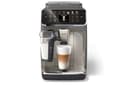 #1 Philips 4400 Series LatteGo Most machine · Automatic milk 12 one-touch presets · 2 saved user profiles · three-part tube-free LatteGo carafe · QuickStart · SilentBrew, Quiet Mark · model EP4444/90 The widest one-touch menu and saved profiles — the shared-kitchen machine. | The widest one-touch menu and saved profiles — the shared-kitchen machine.12 one-touch presets · 2 saved user profiles · three-part tube-free LatteGo carafe · QuickStart · SilentBrew, Quiet Mark · model EP4444/90 | $705.00In stock, checked October 10, 2026 Check Price on Amazon |
| 2 | 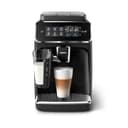 #2 Philips 3200 Series LatteGo Best value · Automatic milk 5 one-touch drinks · 100% ceramic grinder · two-part tube-free LatteGo carafe, rinses in about 15 seconds or goes in the dishwasher · AquaClean: no descaling for up to 5,000 cups · 2-year warranty · model EP3241/54 The same automatic milk as the 4400, for a lot less money. | The same automatic milk as the 4400, for a lot less money.5 one-touch drinks · 100% ceramic grinder · two-part tube-free LatteGo carafe, rinses in about 15 seconds or goes in the dishwasher · AquaClean: no descaling for up to 5,000 cups · 2-year warranty · model EP3241/54 | $500.04In stock, checked October 10, 2026 Check Price on Amazon |
| 3 | 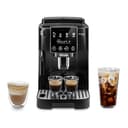 #3 De'Longhi Magnifica Start (ECAM22022) Cheapest way in · Manual frother Built-in conical burr grinder, 13 grind settings, 250 g hopper · Thermoblock · 15 bar · 1.8 L tank · 1250 W (US 120 V) · manual milk frother, not the automatic LatteCrema system Half the budget, if you are happy to froth the milk yourself. | Half the budget, if you are happy to froth the milk yourself.Built-in conical burr grinder, 13 grind settings, 250 g hopper · Thermoblock · 15 bar · 1.8 L tank · 1250 W (US 120 V) · manual milk frother, not the automatic LatteCrema system | $599.95In stock, checked October 10, 2026 Check Price on Amazon |
What $1,000 actually buys
The useful thing to understand about this bracket is that a thousand dollars is not the entry price for bean-to-cup — it is near the top of the mainstream range. You can be fully automatic for half of it. What the extra few hundred buys, in order of how much it changes your morning:
- Automatic milk. The difference between a machine that pours a cappuccino and one that makes you steam the milk yourself. This is the biggest real step in the bracket.
- Saved user profiles. Two people, two strengths, two volumes, no re-adjusting. Trivial on paper, genuinely useful in a shared kitchen.
- One-touch drink count. More named buttons for drinks you could otherwise set up manually. Convenience only.
- Interface and noise. A fuller display, and on the 4400 a quieter brew cycle Philips markets as SilentBrew with a Quiet Mark.
Notice what is not on that list: better espresso. Within this bracket the brewing hardware is broadly the same idea at every price, so the money goes on automation and interface rather than on the cup. That is the single most useful fact for deciding where to stop.
The milk system is the price
If you only read one section, read this one. In both the Philips and De'Longhi ranges, the jump from "you froth the milk" to "the machine froths the milk" is the decision that moves the price most, and it is also the decision that most affects whether you use the machine on a Tuesday morning.
Philips' answer is LatteGo: a carafe with no tubes and no hidden parts that draws, froths and pours milk into the cup untouched. Philips says the two-part version rinses clean under the tap in about 15 seconds, or goes in the dishwasher. Crucially, the same system appears on the cheaper 3200, so automatic milk is not the reason to step up to the 4400. De'Longhi's automatic equivalent, LatteCrema, does not appear on the Magnifica Start at all — that machine has a manual frother, and the automatic systems start at the pricier Evo and Plus tiers. That is De'Longhi's deliberate cost saving, and it is why the Start is the cheapest machine here.
The three machines
Philips 4400 Series LatteGo — most machine under the cap
| One-touch presets | 12 |
|---|---|
| User profiles | 2 saved profiles |
| Milk system | Three-part tube-free LatteGo carafe |
| Start-up | QuickStart |
| Noise | SilentBrew — carries a Quiet Mark |
| Model | EP4444/90 |
Who it is for: a household of two or more where people take their coffee differently and nobody wants to re-set the machine every morning.
This is the most automation a thousand dollars reaches, and the two features that justify it are the saved profiles and the twelve presets. Profiles are the quietly valuable one: each person's preferred strength and volume is remembered, so a two-taste house stops negotiating with a dial. The longer preset menu turns drinks the 3200 would have you adjust by hand into their own buttons.
The honest cons.The extra cost buys convenience, not a better cup — the espresso and the milk are shared with the cheaper machine. Philips' model naming across the 4400 trims is a maze of similar numbers and suffixes, so it is genuinely easy to buy a variant without the specific drinks or iced options you thought you were getting; read the full model number on the listing. We compare the two trims directly in Philips 3200 vs 4400.
Philips 3200 Series LatteGo — the value pick
| One-touch drinks | 5 — espresso, coffee, americano, cappuccino, latte macchiato |
|---|---|
| Grinder | 100% ceramic burrs |
| Milk system | Two-part tube-free LatteGo carafe; Philips says it rinses clean in about 15 seconds, or goes in the dishwasher |
| Descaling | AquaClean filter — Philips says no descaling for up to 5,000 cups if replaced when prompted |
| Warranty | 2 years |
| Model | EP3241/54 |
Who it is for: the household that orders an espresso and one milk drink and wants it at one touch, for the least money that buys automatic milk.
For most buyers under this cap, this is the sensible machine. The five one-touch drinks cover what the majority of households actually order; the grinder is 100% ceramic; the LatteGo carafe is the same tube-free design as the 4400's, which is the feature that makes automatic milk tolerable to live with rather than a cleaning chore. The AquaClean programme is a genuine running-cost benefit: replace the filter when prompted and Philips says you will not need to descale for up to 5,000 cups. Two-year warranty.
The honest cons. One set of preferences rather than per-person profiles, so a two-taste household adjusts it daily. The short menu means more drinks involve setting strength and volume yourself. And it shares the category ceiling below.
De'Longhi Magnifica Start — the cheapest way in
| Type | Super-automatic (bean-to-cup) |
|---|---|
| Portafilter | De'Longhi does not publish a portafilter size for this machine, so we're not going to state one. The figures you'll find online come from third-party sellers of aftermarket portafilters, not from De'Longhi. |
| Boiler | Thermoblock (ALU/stainless) |
| PID temperature control | No |
| Built-in grinder | Built-in conical burr, 13 grind settings, 250 g hopper |
| Milk | Manual frother — NOT the automatic LatteCrema system (that starts at the Evo tier) |
| Pump pressure | 15 bar |
| Water tank | 1.8 L |
| Power | 1250 W1250 W is the US 120 V machine. De'Longhi's EU sibling lists 1450 W — that's a 230 V unit and does not apply here. |
| Dimensions | ~9.25" W x 17" D x 14" H |
| Weight | Not published reliably. De'Longhi's stated net weight is heavier than their own stated shipping weight, which can't be right — so we're not repeating either number. |
| Warranty | Not published on this model's page. |
| In the box | Not published by De'Longhi for this model. |
Who it is for: a mostly-black-coffee drinker who wants bean-to-cup convenience and will happily froth milk by hand when they want a cappuccino.
The Magnifica Start is the simplest way into the category and roughly half the budget. You get the part that matters — press a button, get espresso from whole beans — with a built-in conical burr grinder offering 13 grind settings and a 250 g hopper, a Thermoblock heater, a 15 bar pump and a 1.8 L tank. What you do not get is automatic milk: there is a manual frother, and De'Longhi's automatic LatteCrema systems start at the pricier Evo and Plus tiers. For an espresso-and-americano household that is a smart saving rather than a compromise; for a daily cappuccino drinker it is the wrong machine.
The honest cons.De'Longhi does not publish a warranty on this model's page, does not publish what is in the box, and its published net weight is heavier than its own published shipping weight, so we do not repeat either figure — worth reading alongside our warranty guide, because the two-year Philips cover is a real difference at this money. Milk is manual. Our full review is at the Magnifica Start review, and the step up to the automatic-milk sibling is covered in Magnifica Start vs Evo.
What more money would add
Since the question is where to stop, it is worth being clear about what sits above this bracket and whether you are missing it. Spending beyond a thousand dollars on a super-automatic buys more of the same automation: longer drink menus, more profiles, larger displays, app connectivity, milk systems with more settings, and in some cases a quieter or faster brew cycle. Whether that is worth paying for is the same question we put to expensive machines generally in are expensive espresso machines worth it.
What it does not buy is control. Every machine in and above this bracket brews through a sealed brewing unit you cannot adjust beyond grind setting and strength: no dose you choose, no tamp you control, no shot you can watch and stop. That is the ceiling of the whole category, not a limitation of the cheaper models, and it is why a four-figure super-automatic and a $500 one can taste more alike than either tastes like a well-pulled manual shot. If that ceiling bothers you, the answer is a different category, not a bigger budget — which brings us to the honest alternative.
The same money, spent manually
At this budget you have a real fork. The same thousand dollars buys a capable semi-automatic machine and a genuinely good separate grinder, which is the setup that produces the best cup available at the money — and demands five minutes and some learning every morning. Our semi-automatic vs super-automatic guide lays out that trade properly, and the best machines under $1,000 covers the manual options at this exact cap.
The deciding question is not which is better. It is whether you want espresso as a result or as an activity. A super-automatic is the right purchase for someone who wants a good cappuccino with no hobby attached, and buying one is not a compromise — it is matching the machine to the life. Buying a manual machine for a household that wanted a button is how expensive machines end up unused on a counter.
Which one for which buyer
| If this is you | Buy | Because |
|---|---|---|
| Two or more people, two different orders | Philips 4400 LatteGo | Two saved profiles and twelve presets end the daily re-adjusting. |
| You want automatic milk for the least money | Philips 3200 LatteGo | Same tube-free LatteGo carafe as the 4400, for considerably less. |
| Running cost and descaling bother you | Philips 3200 LatteGo | AquaClean: Philips says no descaling for up to 5,000 cups. |
| You drink espresso and americano, rarely milk | Magnifica Start | Half the budget, and the manual frother covers occasional milk. |
| The machine runs in an open-plan kitchen at 6am | Philips 4400 LatteGo | SilentBrew carries a Quiet Mark; the others make no noise claim. |
| You want to learn latte art | None of these | One-touch milk pours into the cup, so there is no pour to control. |
| You want the best cup this money can make | A semi-automatic plus a grinder | More control, more skill, more time — a different proposition entirely. |
The verdict
The most machine under the cap is the Philips 4400 LatteGo, and the reason to buy it is a shared kitchen: two saved profiles and twelve one-touch presets are worth real money in a house where people take their coffee differently. Buy it knowing the espresso and the milk are the same as the cheaper Philips, and read the full model number before you order.
For most buyers, though, the right answer under a thousand dollars is to spend less. The Philips 3200 LatteGo gives you the identical tube-free milk carafe, a ceramic grinder, five drinks that cover what households actually order, and the AquaClean descaling programme, for a lot less. And if your coffee is mostly black, the De'Longhi Magnifica Start is bean-to-cup convenience at roughly half the budget — froth the milk yourself on the days you want it.
Whichever you pick, the ceiling is the same: a sealed brew unit and the machine's idea of espresso rather than yours. If that is a deal-breaker, read how to choose a super-automatic before you spend, because the category may not be the one you want — and if it is, what living with one is actually like is the next page. Cross-brand, these machines meet De'Longhi's automatic-milk tiers in Philips 3200 vs De'Longhi Magnifica and Philips 4400 vs Magnifica Evo.
What we know, and how we know it
What we did
- Took the specs from the manufacturer's own documentation — Philips' published specifications for the 3200 and 4400 LatteGo, and De'Longhi's Magnifica Start product page. Not from a retailer listing, and not from another blog.
- Priced it from Amazon's API, with the date we checked shown next to the number. If that price is more than 48 hours old, this page stops showing a number at all rather than show you a wrong one.
- Formed a verdict from those specs, the price, and what owners publicly report.
Where we hedged, and why
We have not used any of these machines and we run no lab, so there is no shot comparison, timing or tasting behind this page. The Magnifica Start is in our spec database and its table is generated from it. The two Philips machines are not, so their tables are rendered inline from Philips' own published specifications and the manufacturer specifications on their listings, read October 2, 2026, and they carry only what is actually published there.
The $1,000 framing is about price, not performance.All three machines were under that figure when this page was written, but prices move — the live number on each card is checked daily and carries its own date, and we deliberately state no price in the prose. If a sale or an increase moves a machine across the cap, the page's reasoning still holds; the number on the button is the one to trust.
Where a maker is silent, we say so: De'Longhi publishes no warranty or box contents for the Magnifica Start and its own weight figures contradict each other, so we repeat neither. Philips' AquaClean and SilentBrew claims are theirs, attributed as such. We make no claim about which machine tastes better, because we have not compared them.
What we did not do
We do not run a lab. We have not pulled thousands of shots on this machine, and we are not going to pretend otherwise. We have not used this unit ourselves. Everything above is sourced research, and it is labeled as such. Where we have used a machine, we say so and show it.
How we're paid
If you buy through a link on this page, we earn a commission. It costs you nothing extra and it does not change what we recommend — we link to the better option for the buyer even when it earns us less. See how we review and our full disclosure.
Frequently asked questions
What is the best super-automatic espresso machine under $1,000?
The Philips 4400 LatteGo is the most machine the budget reaches: 12 one-touch presets, two saved user profiles, the tube-free LatteGo milk carafe, QuickStart and Philips' SilentBrew. If you do not need profiles or a long drink menu, the Philips 3200 LatteGo gives you the same automatic milk for considerably less, and the De'Longhi Magnifica Start is the cheapest way into bean-to-cup if you will froth milk by hand.
Do you need to spend $1,000 on a super-automatic?
No. All three machines here sit under that cap and the cheapest is less than half of it. A thousand dollars is near the top of the mainstream bean-to-cup range rather than the entry to it. The money above about $500 buys automation and interface — automatic milk, saved profiles, more one-touch drinks — not better espresso.
Which milk system should I pay for?
Automatic milk is the biggest price step in this bracket, so decide it first. Philips' LatteGo is a tube-free carafe that froths and pours into the cup and rinses in about 15 seconds, and it appears on both the 3200 and the 4400 — so you do not need to step up for it. De'Longhi's automatic LatteCrema system is not on the Magnifica Start, which uses a manual frother.
Can a super-automatic under $1,000 make latte art?
No, and nor can a more expensive one. Every one-touch milk system pours textured milk straight into the cup, which leaves no pour for you to control. Latte art requires texturing milk yourself with a manual steam wand, which means a semi-automatic machine. If latte art is a goal, you are shopping in the wrong category.
Is a super-automatic or a semi-automatic better at this budget?
They answer different questions. A thousand dollars buys a capable semi-automatic plus a good separate grinder, which produces the better cup and asks for five minutes and some skill every morning. A super-automatic produces a consistently good drink at one touch and cannot be pushed further. Choose by whether you want espresso as a result or as an activity.
What does spending more than $1,000 on a super-automatic add?
More automation: longer drink menus, more user profiles, bigger displays, app connectivity and more configurable milk systems. What it does not add is control — every machine in the category brews through a sealed brewing unit you cannot adjust beyond grind and strength. That ceiling is the category's, not the price bracket's.
Sources
Specs come from the manufacturer's own documentation. Prices come from Amazon's API. Where a claim comes from what owners report, we link the thread and say so.
- Philips Series 3200 Fully Automatic Espresso Machine LatteGo (EP3241/54) — 5 one-touch drinks, 100% ceramic grinder, two-part LatteGo, AquaClean up to 5,000 cups, 2-year warranty
- Philips Series 4400 Fully Automatic Espresso Machine LatteGo (EP4444/90) — 12 presets, three-part LatteGo, 2 user profiles, QuickStart, SilentBrew with Quiet Mark
- De'Longhi Magnifica Start (ECAM22022B) product page — built-in conical burr grinder with 13 settings, 250 g hopper, Thermoblock, 15 bar, 1.8 L tank, 1250 W, manual frother
- Philips — fully automatic espresso machines, range and support
Keep reading
- The best super-automatic machinesThe category ranked as a whole, including the machines above this cap.
- Philips 3200 vs 4400The two trims here, head to head, if the budget stretches either way.
- How to choose a super-automaticSettle whether the category suits you before you pick a model.
- Semi-automatic vs super-automaticThe fork behind this whole page: result or activity.
- The best machines under $1,000What the same cap buys if you are willing to pull the shot yourself.
- De'Longhi Magnifica Start reviewOur spec review of the cheapest machine on this page.