
Guides · Explainers
Espresso vs Coffee: What's Actually Different
Espresso is not a bean, a roast or a plant. It is a way of brewing coffee — and once you see which four variables it changes, everything else about it makes sense.
The short answer
Espresso is a brew method, not a bean. It uses the same coffee ground much finer, at roughly a 1:2 coffee-to-water ratio, forced through a compressed puck at about nine bars for 25 seconds. Filter coffee uses a coarser grind, roughly 1:16, and gravity over minutes. The beans can be identical.
Key takeaways
- Espresso is a brew method, not a bean. The same bag of coffee can make espresso or filter — what changes is how you brew it.
- Four variables change: grind (much finer), ratio (roughly 1:2 instead of 1:16), pressure (about nine bars instead of none) and time (about 25 seconds instead of minutes).
- A shot is concentrated, not strong. Per millilitre it is far more intense; per serving, a mug of filter usually carries more total caffeine.
- "Espresso beans" is a label, not a category. It usually means a darker roast and a blend chosen to suit espresso — useful, but not a different plant.
- Espresso needs a machine and a capable grinder. Filter needs a brewer and a far cheaper grinder. That gap, not the beans, is the real difference in cost.
Espresso is not a bean
The single most common misunderstanding in coffee is that espresso is a kind of coffee. It is not. Espresso is a brew method — a specific, fairly extreme way of passing water through ground coffee — and the beans that go into it can be exactly the same beans you would put in a drip machine, a French press or a V60.
That matters practically, not just pedantically. It means the bag of single-origin Ethiopian in your cupboard is a legitimate espresso coffee; it means your drip grinder is not automatically the right tool for espresso; and it means that when people ask "is espresso stronger than coffee" they are usually asking two different questions at once and getting a muddled answer. Separate the method from the bean and the whole subject gets simpler.
Everything on this page follows from that one fact. Espresso is coffee brewed in a way that pushes four variables to an extreme — and each of those extremes explains one of the things people notice about a shot.
The four variables that change
Every brew method is a combination of grind size, coffee-to-water ratio, pressure and contact time. Espresso and filter coffee sit at opposite ends of all four.
| Variable | Espresso | Filter coffee (drip, pour over, press) |
|---|---|---|
| Grind | Fine — like powdered sugar, and it clumps when squeezed | Medium to coarse — coarse sand through to sea salt |
| Ratio | Roughly 1 part coffee to 2 parts water | Roughly 1 part coffee to 15-17 parts water |
| Pressure | About nine bars, supplied by a pump or a lever | None beyond gravity |
| Contact time | About 25-30 seconds | Two to four minutes (hours for cold brew) |
| Serving | A 1-2 oz shot, or that shot plus milk or water | An 8-12 oz mug |
| Crema | Yes — emulsified oils and dissolved CO₂, a product of the pressure | No — there is no pressure to create it |
The variables are not independent, which is the part worth internalising. The fine grind exists because of the pressure: pressurised water needs resistance, and a compressed bed of fine grounds provides it. The short time exists because the strong ratio and the pressure extract very fast. Change one and you have to change the others — which is why you cannot make espresso by putting espresso-ground coffee in a drip machine, something we cover in can you use regular coffee in an espresso machine. Where each method sits on the grind axis is laid out in the coffee grind size chart.
What that does to the cup
Concentration. This is the headline difference. At roughly 1:2 instead of 1:16, espresso has something like eight times as much dissolved coffee per millilitre as filter. That is why a shot tastes dense and syrupy and why it is served in a small cup — and why it works as a base for milk drinks, since it is strong enough to stay recognisable under six ounces of steamed milk.
Texture. Espresso has body that filter coffee cannot have. The pressure emulsifies oils into the water rather than leaving them behind in a paper filter, and it drives dissolved carbon dioxide out as crema — the pale foam on a fresh shot. Both are products of the method. No crema on your shot is a diagnostic rather than an aesthetic complaint; we cover the causes in no crema on espresso.
Clarity versus intensity.A paper-filtered pour over tends to present a coffee's delicate aromatics with unusual clarity, because the paper traps oils and fines. Espresso trades some of that clarity for intensity and body. Neither is better; they are different renderings of the same beans, and plenty of people keep both methods in the kitchen for exactly that reason.
Margin for error. Espresso is the least forgiving method there is. Twenty-five seconds and nine bars mean a small grind error becomes a sour or bitter shot, which is why dialing in is a routine rather than a setting — ours is how to dial in espresso. Filter methods drift gently when you get something slightly wrong.
Which has more caffeine?
Both, depending on what you are measuring — and this is where most comparisons go wrong.
Per millilitre, espresso wins easily. It is a far more concentrated liquid, so ounce for ounce there is more caffeine in it.
Per serving, a mug of filter coffee usually wins. You drink one or two ounces of espresso and eight to twelve ounces of filter coffee. The bigger serving generally carries more total caffeine, even though it is weaker.
So "is espresso stronger?" depends entirely on whether "stronger" means concentration or dose. We work through the arithmetic properly, with the sourced figures, in is espresso stronger than regular coffee and how much caffeine is in a shot of espresso. We are not going to repeat invented numbers here — caffeine content varies with bean species, roast, dose and extraction, which is exactly why a single confident figure should make you suspicious.
So what are "espresso beans"?
A marketing label applied to a roast, not a botanical category. There is no espresso plant. When a bag says "espresso", it usually means one or more of three things:
A darker roast. Darker roasts dissolve more readily and taste less acidic, which historically suited the method and suits milk drinks. Useful information, not a different bean.
A blend built for espresso. Many espresso bags are blends balanced for body and sweetness under pressure, sometimes with robusta added for crema and a heavier mouthfeel. A deliberate recipe, again not a different species of coffee.
A roaster's recommendation.Increasingly a bag will say "espresso" simply because the roaster thinks it shines that way, and will suggest a ratio to start from. That is the most honest version of the label.
The practical upshot: you can absolutely pull espresso with a bag labelled for filter, and you can absolutely brew a V60 with a bag labelled espresso. The second may taste heavier and less bright than the brewer intends, and the first may need a different grind setting, but neither is a mistake.
Which should you make at home?
Honestly: this is a question about which drinks you want and how much process you enjoy, not about which is better coffee.
Make espresso if you drink lattes, cappuccinos, flat whites or Americanos — all of which are espresso plus something — or if you actively enjoy a hands-on routine with a measurable result. Espresso is the only route to a real milk drink at home; there is no way to make a cappuccino from filter coffee.
Make filter coffee if you drink mugs of black coffee, want the least fuss, or want the clearest expression of an interesting single-origin bean. A pour over or a press costs a fraction of an espresso setup and, for black coffee, many people genuinely prefer the result.
Make both if that is what your household drinks — which is very common, and the practical consequence is mostly about the grinder, since one grinder has to cover both ranges. How to choose a coffee grinder walks through that decision, and is a home espresso machine worth it is the honest cost-benefit case for adding espresso to a filter household.
What it takes to make each one
We earn a commission if you buy through a link on this page. It costs you nothing extra and it does not change what we recommend. Full disclosure.
Here is the part that actually separates the two at home, and it is not the beans. Espresso needs a machine that can produce and hold nine bars at a stable temperature and a grinder capable of fine, repeatable adjustment. Filter needs a brewer that costs very little and a much cheaper grinder. Two machines and one brewer, below, bracket the realistic options.
What each route costs you in equipment
Every pick on this page in one view, with the live Amazon price and stock on each row. Specs are the figures the maker or the listing publishes — nothing measured or scored by us. Prices are read from Amazon's API and were last checked October 5, 2026; where we have no verified price, the row says so rather than show you an old number.
| # | Equipment | What it gets you | Price & availability |
|---|---|---|---|
| 1 | 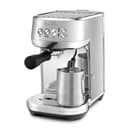 #1 Breville Bambino Plus (BES500) Best espresso route · Semi-automatic, no grinder 54 mm portafilter · ThermoJet heating, 3-second heat-up as published by Breville · automatic hands-free milk texturing · 2-year warranty Real espresso and automatic milk, so the hardest manual skill is handled for you. | Real espresso and automatic milk, so the hardest manual skill is handled for you.54 mm portafilter · ThermoJet heating, 3-second heat-up as published by Breville · automatic hands-free milk texturing · 2-year warranty | $399.95In stock, checked October 5, 2026 Check Price on Amazon |
| 2 | 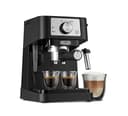 #2 De'Longhi Stilosa (EC260BK) Cheapest espresso route · Manual pump, no grinder Stainless steel boiler · manual steam wand · De'Longhi publishes no portafilter size for it, so we state none The least you can spend on a machine that makes genuine pump espresso. | The least you can spend on a machine that makes genuine pump espresso.Stainless steel boiler · manual steam wand · De'Longhi publishes no portafilter size for it, so we state none | $99.95In stock, checked October 5, 2026 Check Price on Amazon |
| 3 | 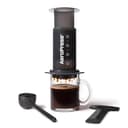 #3 AeroPress Original Coffee Press Best filter route · Immersion brewer Full-immersion press with a paper filter · brews a mug, not a shot · no power, no pressure system The cheapest, most forgiving way to find out whether you prefer concentrated coffee at all. | The cheapest, most forgiving way to find out whether you prefer concentrated coffee at all.Full-immersion press with a paper filter · brews a mug, not a shot · no power, no pressure system | $39.95In stock, checked October 5, 2026 Check Price on Amazon |
Breville Bambino Plus — the espresso route most people should take
| Type | Semi-automatic, no grinder |
|---|---|
| Portafilter | 54 mm |
| Boiler | ThermoJet — ideal extraction temperature in 3 seconds |
| PID temperature control | Yes |
| Built-in grinder | No — you'll need a separate grinder |
| Milk | Automatic, hands-free — 3 milk temperatures x 3 foam levels, with auto-purge |
| Pump pressure | 15 bar |
| Pre-infusion | Yes |
| Heat-up time | 3 seconds (Breville's own figure, stated on the product page and in the manual) |
| Water tank | 1.9 L |
| Power | 1560 W |
| Dimensions | 7.5" W x 13.5" D x 12" H |
| Weight | 10.91 lb (4.95 kg) |
| Warranty | 2 years limited |
| In the box | 54 mm tamper, Razor precision dosing tool, 480 ml stainless milk jug, 1- and 2-cup single- and dual-wall baskets, cleaning tool and disc |
If the answer to "which should I make" is espresso, this is the machine we point most people at. It is compact, Breville publishes a three-second heat-up for its ThermoJet system, and — the feature that matters most for a beginner — it textures milk hands-free to a set temperature and foam, so the hardest manual skill in espresso is automated. Who it is for: someone who mainly drinks milk drinks and wants a real shot under them. The honest con: it has no grinder, so budget one as well — that is not optional, and the full argument is in the Bambino grinder guide.
De'Longhi Stilosa — the cheapest honest way in
| Type | Semi-automatic, no grinder |
|---|---|
| Portafilter | De'Longhi does not publish a portafilter size for this machine, so we're not going to state one. The figures you'll find online come from third-party sellers of aftermarket portafilters, not from De'Longhi. |
| Boiler | Stainless steel boiler — the only De'Longhi here with a real boiler, not a Thermoblock |
| PID temperature control | No |
| Built-in grinder | No — you'll need a separate grinder |
| Milk | Manual — pannarello-style frother |
| Pump pressure | 15 bar |
| Water tank | 1 L |
| Power | 1100 W |
| Dimensions | 8.07" W x 13.5" D x 11.22" H |
| Weight | 8.61 lb (3.9 kg) |
| Warranty | 1 year, plus 1 more with product registration |
| In the box | Portafilter, tamper, single filter, double filter, measuring spoon, ESE pod filter |
The least you can spend on a machine that makes genuine pump espresso rather than something espresso-shaped. It has a stainless steel boiler and a manual steam wand, and it will teach you the method. Who it is for: someone finding out whether the espresso ritual appeals before committing real money. The honest cons: everything is manual, milk takes practice, and it still needs a grinder — which at this budget is the harder purchase of the two. See the best machines under $200 for the tier it anchors.
AeroPress Original — the filter route, and the cheapest experiment
If you are not yet sure whether you want espresso or simply better coffee, this is the cheapest way to find out. An AeroPress is a full-immersion press that makes a concentrated, clean mug of coffee with a paper filter, and it is extremely forgiving about grind — so it works with a cheap grinder while you decide. It is not espresso: no pressure system, no crema, no portafilter, and it will not make you a cappuccino. Who it is for: anyone who wants to improve their coffee this week for very little money. The method is in the AeroPress guide, and if you want to know what upgrading from here looks like, upgrading from drip to espresso is the path.
The short version
Espresso is coffee, brewed differently. Grind it much finer, use roughly a 1:2 ratio instead of 1:16, push the water through at about nine bars instead of letting gravity do it, and finish in twenty-five seconds instead of three minutes. The result is concentrated rather than necessarily stronger per serving, it has body and crema the method creates, and it is the only way to make a real milk drink at home.
"Espresso beans" are a roast and a recipe, not a species — so buy on roast date and on what the roaster recommends, and ignore the word on the front of the bag. If you drink milk drinks, make espresso: the Breville Bambino Plus with a grinder is the sensible route, the De'Longhi Stilosa the cheapest honest one. If you drink mugs of black coffee, make filter and spend the difference on beans — an AeroPress will tell you within a week which camp you are in.
If the next question is about the hardware rather than the method, espresso machine vs coffee maker is the equipment comparison, and types of espresso machines explains what the categories mean. More explainers are on the guides hub.
What we know, and how we know it
What we did
- Took the specs from the manufacturer's own documentation — SCA and NCA brewing guidance, plus Breville's and De'Longhi's product pages. Not from a retailer listing, and not from another blog.
- Priced it from Amazon's API, with the date we checked shown next to the number. If that price is more than 48 hours old, this page stops showing a number at all rather than show you a wrong one.
- Formed a verdict from those specs, the price, and what owners publicly report.
Where we hedged, and why
The ratio, pressure and time figures are conventional ranges, not our measurements. Roughly 1:2 at about nine bars for 25-30 seconds is how espresso is conventionally defined, and roughly 1:15 to 1:17 over two to four minutes is standard filter brewing guidance; both are widely published by industry bodies including the SCA and the NCA. We describe them as approximate because they genuinely are — recipes vary by roast, by machine and by taste.
We deliberately publish no caffeine milligram figures on this page. Caffeine content varies with species, roast, dose and extraction, so a single confident number is a fabrication dressed as a fact. The comparison we make — more per millilitre in espresso, usually more per serving in a mug of filter — follows from the serving sizes and concentrations, and the sourced arithmetic lives on our dedicated caffeine pages.
The grind textures (powdered sugar, coarse sand, sea salt) are descriptive references to help you recognise a grind in the hand, not measurements — there is no cross-brand standard mapping a grinder setting to a particle size. The two machines recommended here are in our spec database and their tables are generated from it; we have not used either, and the three-second ThermoJet heat-up is Breville's published figure, not ours. De'Longhi publishes no portafilter size for the Stilosa, so we state none. No price appears in our prose — every number is live from Amazon with the date it was checked.
What we did not do
We do not run a lab. We have not pulled thousands of shots on this machine, and we are not going to pretend otherwise. We have not used this unit ourselves. Everything above is sourced research, and it is labeled as such. Where we have used a machine, we say so and show it.
How we're paid
If you buy through a link on this page, we earn a commission. It costs you nothing extra and it does not change what we recommend — we link to the better option for the buyer even when it earns us less. See how we review and our full disclosure.
Frequently asked questions
What is the difference between espresso and coffee?
Espresso is a brew method, not a type of coffee. The same beans can make either. Espresso grinds them much finer, uses roughly one part coffee to two parts water, forces the water through a compressed puck at about nine bars of pressure, and finishes in 25 to 30 seconds. Filter coffee uses a coarser grind, roughly one part coffee to 15-17 parts water, and gravity over two to four minutes. The result is concentration, body and crema versus clarity and volume.
Are espresso beans different from coffee beans?
No — there is no espresso plant and no espresso bean. The word on the bag is a label for a roast and a recipe: usually a darker roast that dissolves readily and tastes less acidic, often a blend balanced for body under pressure, sometimes just the roaster saying they think it shines as espresso. You can pull espresso with beans labelled for filter and brew a V60 with beans labelled espresso. What genuinely matters on the bag is the roast date.
Does espresso have more caffeine than coffee?
Per millilitre, yes — it is a far more concentrated liquid. Per serving, usually no: you drink one or two ounces of espresso against eight to twelve ounces of filter coffee, so the mug typically carries more total caffeine despite being weaker. 'Stronger' confuses concentration with dose, which is why the answer sounds contradictory. Actual caffeine content varies with species, roast, dose and extraction, so treat any single confident figure with suspicion.
Can I make espresso in a coffee maker?
No. A drip coffee maker has no way to generate the roughly nine bars of pressure espresso requires — it drips hot water through a bed of coffee under gravity. Putting espresso-ground coffee in it will not produce espresso; it will produce over-extracted, bitter filter coffee, and may clog the basket. Espresso needs a pump or lever machine that can both make pressure and hold a stable brew temperature.
Is espresso better than filter coffee?
Neither is better — they are different renderings of the same beans. Espresso gives you concentration, body and crema, and it is the only route to a real latte or cappuccino at home. Paper-filtered pour over gives unusual clarity and tends to show a delicate single-origin coffee more faithfully. Choose by which drinks you want: milk drinks and short intense coffees point to espresso, mugs of black coffee point to filter.
Do I need a special grinder for espresso?
Yes, and it is the part people underestimate. Espresso needs a fine, precise, repeatable grind, because a hair's difference swings a 25-second shot from sour to bitter — so an espresso grinder is sold on how finely its adjustment steps. Filter coffee is far more tolerant of grind size and needs only evenness and a usable coarse range, which costs much less. If you add espresso to a filter household, the grinder is usually the real upgrade.
Sources
Specs come from the manufacturer's own documentation. Prices come from Amazon's API. Where a claim comes from what owners report, we link the thread and say so.
Keep reading
- Espresso machine vs coffee makerThe equipment comparison, once you know the methods are different.
- Is espresso stronger than regular coffee?The caffeine arithmetic, with the sourced figures.
- Can you use regular coffee in an espresso machine?The practical version of the grind question, answered.
- Coffee grind size chartWhere espresso and every filter method sit on the same axis.
- Is a home espresso machine worth it?The honest cost-benefit case for adding espresso to a filter household.
- Upgrading from drip to espressoThe path, if this page has convinced you the method is what you want.