
Accessories · Puck screens
Espresso Puck Screens: What They Do, and What They Don't
A metal disc you lay on top of the coffee. It will definitely keep your group head cleaner. Whether it improves the shot is a much weaker claim than the listings suggest — so here is the honest version, and the right size for your machine.
The short answer
Get the diameter right first: 58.5 mm for a Gaggia, Rancilio or other 58 mm machine, 53.3 mm for a Breville. The Normcore 1.7 mm screens are the pick in both sizes. Buy one for a cleaner group head and an easier wipe-down — not because it will fix a bad shot, which it will not.
We earn a commission if you buy through a link on this page. It costs you nothing extra and it does not change what we recommend. Full disclosure.
Key takeaways
- What a puck screen definitely does: keeps coffee off your shower screen, so the group head needs wiping far less often.
- What it might do: slightly smooth the start of the flow by closing the gap above the bed. This is a hypothesis, not a measured result.
- What it will not do: fix channeling caused by clumpy grounds or a bad grind. That is a distribution problem and it lives underneath the screen.
- Size is a hard gate. 58 mm machines take a 58.5 mm screen; a Breville's 54 mm basket takes a 53.3 mm screen. They are not interchangeable.
- Thickness costs you headspace. 1.7 mm is the common choice; 0.8 mm and thinner exist for machines where the portafilter is already a tight fit.
What a puck screen is
A puck screen — also sold as a "lower shower screen" or a "contact screen" — is a thin perforated metal disc that you lay on top of the tamped coffee before you lock the portafilter into the machine. Water from the group comes through the machine's own shower screen, hits your disc, and passes through it into the coffee. It sits between the group and the puck, which is the whole of the design.
That position gives it exactly one effect that nobody disputes: coffee fines and oils that would otherwise end up smeared across the machine's shower screen end up on a removable disc instead. If you have ever taken the shower screen off a machine that has run a few hundred shots, you know why someone invented this.
Everything beyond that — better extraction, less channeling, more even saturation — is the contested part, and we are going to deal with it honestly rather than repeat listing copy. First, though, the thing that actually determines whether the one you buy is usable.
Size first: 58.5 mm or 53.3 mm
58.5 mm — the commercial format. The Gaggia Classic Pro and the Rancilio Silvia both use the 58 mm commercial standard, as does essentially every prosumer and café machine. Screens for this format are made in the largest volume, come in the widest range of thicknesses, and are the cheapest per unit. If you own a 58 mm machine, this is a solved shopping problem.
53.3 mm — Breville. Breville's home range — Barista Express, Barista Pro, Bambino Plus — uses a 54 mm portafilter, and the screens sold for it are labeled 53.3 mm (occasionally 53.5 mm, which is the same product with a different rounding). A 58.5 mm screen will not go in, and there is no adapter.
De'Longhi — measure yours. As we say on the tampers page, De'Longhi does not publish a portafilter diameter for the Dedica, the Stilosa or the Magnifica in their own manuals. We are not going to repeat a figure the manufacturer will not stand behind. Measure the inside of your basket before buying anything that has to fit inside it. Note also that if your machine is running the pressurized basket it shipped with, a puck screen is close to pointless — more on that below.
What the evidence actually shows
We went looking for a controlled study. There is not one — not from Normcore, not from any of the manufacturers, and not from any independent lab we could find. What exists is this:
- One measured owner comparison. A Home-Barista forum user ran a refractometer comparison using a 1.7 mm Normcore screen and reported 12.2 Brix with the screen against 10.9 without, and said they intended to keep repeating it. That is a single person, a tiny sample, and no blinding — it is a reason to be curious, not a result.
- A vendor hypothesis about headspace.Clive Coffee's write-up argues that slightly reducing the gap between the group's shower screen and the coffee bed smooths out flow and mitigates channeling. That mechanism is plausible, but it is a retailer blog with no published method attached.
- A skeptical position worth hearing. At least one guide argues that well-executed distribution and tamping minimize whatever advantage a puck screen offers, and that a screen may even shave extraction yield slightly. Also uncited.
- Thickness. Owner reports comparing a very thin screen against a thicker one favor the thicker one for keeping the group clean and for self-cleaning. Nobody has isolated headspace as a variable.
So the honest summary is: the one benefit that is uncontested is group cleanliness, and it is a real convenience that will save you wiping the shower screen after every session. The extraction benefit is unproven in either direction and is probably small, machine-specific and technique-specific. Anyone telling you that the cheapest disc in home espresso transformed their shots is describing a feeling, not a measurement.
If your shots are bad, the puck screen is the wrong place to spend attention. The order that actually matters is grinder, then distribution, then dialing in. A puck screen is a housekeeping upgrade that might also be a small flow upgrade.
Thickness, mesh and headspace
Thickness: 1.7 mm versus 0.8 mm and thinner
This is the real choice once you have the diameter right. A 1.7 mm screen is rigid, stays flat, is easy to pick out of a hot basket, and is the thickness the owner reports above were run on. The cost is headspace: it occupies 1.7 mm of the gap between your tamped puck and the group, and if you already dose near the top of your basket, adding it can make the portafilter hard to lock in. If that happens, the fix is to drop your dose by about a gram rather than to force the handle — see why your portafilter is hard to lock in.
A 0.8 mm screen takes almost nothing out of the basket and still does the group-cleanliness job. It is the right answer for anyone running a generous dose, and the right answer for most Breville owners, whose 54 mm baskets are shallower to begin with. Ultra-thin screens around 0.2 mm exist; they are flimsy, they are harder to handle hot, and owner reports do not favor them.
Mesh: what the micron number means
150 μm is the standard, and it is the figure on most of the picks below. The mesh has to be fine enough that coffee grounds do not come up through it when you knock the puck out, and open enough that the screen is not the restriction in the system — your coffee bed is supposed to be the restriction. Finer meshes (100 μm) exist and a couple of makers offer them. There is no published data showing the difference matters in the cup, so we would buy whichever is in stock in the right size.
Material
316 stainless is what the better screens use, and all four Normcore picks below state it. It handles repeated contact with descaler and backflush detergent without pitting, which matters because you will be soaking this thing periodically.
All six puck screens, compared
Every pick on this page in one view, with the live Amazon price and stock on each row. Specs are the figures the maker or the listing publishes — nothing measured or scored by us. Prices are read from Amazon's API and were last checked October 19, 2026; where we have no verified price, the row says so rather than show you an old number.
| # | Puck screen | Why it is here | Price & availability |
|---|---|---|---|
| 1 | 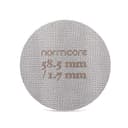 #1 Normcore 58.5mm Puck Screen (1.7mm, 150μm) Best, 58 mm · Entry 58.5 mm · 1.7 mm thick · 150 μm · 316 stainless The default for a commercial-format machine. | The default for a commercial-format machine.58.5 mm · 1.7 mm thick · 150 μm · 316 stainless | $13.99In stock, checked October 19, 2026 Check Price on Amazon |
| 2 | 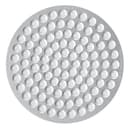 #2 Normcore 58.5mm Puck Screen (0.8mm) Best for tight baskets · Entry 58.5 mm · 0.8 mm thick · 316 stainless Same job, barely touches your headspace. | Same job, barely touches your headspace.58.5 mm · 0.8 mm thick · 316 stainless | $13.99In stock, checked October 19, 2026 Check Price on Amazon |
| 3 | 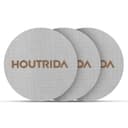 #3 HOUTRIDA 58.5mm Puck Screens, 3-pack Cheapest per screen · Entry 58.5 mm · 1.7 mm thick · 150 μm · 316 stainless · 3 per pack Three of them, for when one is in the sink. | Three of them, for when one is in the sink.58.5 mm · 1.7 mm thick · 150 μm · 316 stainless · 3 per pack | $4.99In stock, checked October 19, 2026 Check Price on Amazon |
| 4 | 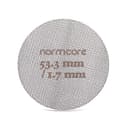 #4 Normcore 53.3mm Puck Screen (1.7mm, 150μm) Best, Breville · Entry 53.3 mm · 1.7 mm thick · 150 μm · 316 stainless The default for a 54 mm Breville basket. | The default for a 54 mm Breville basket.53.3 mm · 1.7 mm thick · 150 μm · 316 stainless | $13.99In stock, checked October 19, 2026 Check Price on Amazon |
| 5 | 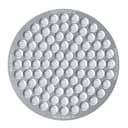 #5 Normcore 53.3mm Puck Screen (0.8mm) Best Breville, big dose · Entry 53.3 mm · 0.8 mm thick · 316 stainless The one that will not stop the handle locking in. | The one that will not stop the handle locking in.53.3 mm · 0.8 mm thick · 316 stainless | $13.99In stock, checked October 19, 2026 Check Price on Amazon |
| 6 | 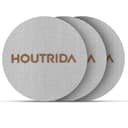 #6 HOUTRIDA 53.3mm Puck Screens, 3-pack Cheapest, Breville · Entry 53.3 mm · 1.7 mm thick · 150 μm · 316 stainless · 3 per pack Multipack for the 54 mm format. | Multipack for the 54 mm format.53.3 mm · 1.7 mm thick · 150 μm · 316 stainless · 3 per pack | $4.99In stock, checked October 19, 2026 Check Price on Amazon |
58.5 mm: Gaggia, Rancilio and most machines
Normcore 58.5 mm, 1.7 mm — the default
The listing states 58.5 mm, 1.7 mm thickness, 150 μm mesh and 316 stainless steel. This is the specification the measured owner comparison above was run on, which is the closest thing to a reason to prefer one screen over another that exists in this category. It is rigid enough to lift straight out of a hot basket with a fingernail rather than needing to be pried.
The honest cons. It takes 1.7 mm of headspace, which on a generously dosed 18-20 g basket is enough to make the portafilter feel tight. It is a single screen, so on the day it is soaking you are back to a bare puck. And Normcore does not publish any extraction data for it — nor does anyone — so you are buying the convenience with the possibility of a small flow benefit attached.
Normcore 58.5 mm, 0.8 mm — for a tight basket
Same diameter, same 316 stainless, 0.8 mm thickper the listing. Buy this one if you dose high, if your machine's portafilter is already a firm lock, or if you simply do not want to change your dose to accommodate an accessory. The group-cleanliness benefit is identical — that function has nothing to do with thickness.
The honest cons.Thinner screens are reported by owners to be less self-cleaning and slightly more awkward to handle, and this version's listing does not state a micron figure, so you cannot compare its mesh against the 1.7 mm model before it arrives. If headspace is not a problem for you, buy the 1.7 mm instead.
HOUTRIDA 58.5 mm, 3-pack — the cheap way to always have one
The listing states three screens, 58.5 mm, 150 μm mesh, 1.7 mm thickness and 316 stainless — the same headline specification as the Normcore, in a multipack, from a generalist seller. The practical argument for a multipack is real: a puck screen collects coffee oil, it wants an occasional soak, and the reason people abandon this accessory is that the only one they own is always dirty.
The honest cons. HOUTRIDA is not an espresso brand with a reputation to protect, and the finish and flatness consistency on budget screens is the thing owners report varying — a slightly dished screen is annoying rather than harmful. There is no manufacturer support behind it. If you want one screen and want it to be right, buy the Normcore; if you want three and do not mind variance, buy this.
53.3 mm: Breville
One more time, because it is the mistake that costs a return: your Breville takes a 54 mm portafilter, and the screen you need is labeled 53.3 mm.
Normcore 53.3 mm, 1.7 mm — the Breville default
The listing states 53.3 mm, 1.7 mm, 150 μm, 316 stainless, and describes it as a contact screen for a 54 mm portafilter basket. For a Barista Express or Barista Pro owner this is the one to start with — those machines grind straight into the portafilter and throw fines around, so the shower-screen benefit is larger here than on a machine fed from a separate grinder.
The honest cons.Breville's 54 mm baskets are shallower than a 58 mm basket, so 1.7 mm of headspace is a bigger proportional loss. If you dose 19 g or more into a Breville basket you will probably want the 0.8 mm version below instead. And a Bambino Plus or Barista Express running its stock pressurized basket gets very little out of this — fix that first.
Normcore 53.3 mm, 0.8 mm — for the bigger dose
The listing states 53.3 mm, 0.8 mm thickness, 316 stainless, for a Breville or Sage 54 mm basket. This is the version we would actually recommend to most Breville owners, because the headspace margin on a 54 mm basket is the tightest in home espresso and this one costs you almost none of it.
The honest cons. No stated micron figure on the listing, the same self-cleaning caveat as the other thin screen, and it is flexible enough that you will want to lift it with a tool rather than a fingernail when it is hot.
HOUTRIDA 53.3 mm, 3-pack — the Breville multipack
Three 53.3 mm screens at 1.7 mm and 150 μm in 316 stainless per the listing — the budget route for the Breville format, with the same rotation argument as the 58.5 mm multipack above.
The honest cons. Same as its 58.5 mm sibling: no espresso-brand reputation behind it, flatness consistency is the thing to watch, and at 1.7 mm it is the thickness most likely to crowd a Breville basket. If you are buying budget and you dose high, you are choosing badly on two axes at once — spend the extra on the 0.8 mm Normcore.
Cleaning one, and when to replace it
A puck screen does its job by catching what would otherwise coat your machine, which means it gets dirty. Rinse it under hot water after each session and the grounds come off; the coffee oil does not, and after a couple of weeks you will see the mesh darken and the water pass through less evenly.
Soak it in the same espresso-machine detergent you use to backflush — the products on our cleaning and maintenance page are the right ones — for fifteen or twenty minutes, then rinse thoroughly. This is the argument for owning more than one: a screen in the cleaning cup is a screen you are not using.
Replace it when the mesh is physically deformed or when it has been bent out of flat. A dished screen sits unevenly on the puck, which defeats the only mechanism anyone has proposed for it helping flow. In 316 stainless, that is a dropping-it problem rather than a wear problem.
When to skip it entirely
- You are running a pressurized (dual-wall) basket. That basket creates its own back-pressure through one small hole, which makes the whole upstream flow question largely moot. The upgrade that changes your shot is a non-pressurized basket, and it costs about the same.
- You have a super-automatic or a bean-to-cup machine. There is no portafilter and no basket to put a screen in. Nothing on this page applies to a super-automatic.
- Your shots are genuinely bad right now. Then your problem is the grind, the dose or the distribution, and a disc on top of the puck will not touch any of them. Read channeling and WDT tools instead — same money, far more effect.
- You already dose to the top of the basket and do not want to change it. Then buy the 0.8 mm version or buy nothing. Forcing a portafilter into a group is how gaskets get damaged.
What we know, and how we know it
What we did
- Took the specs from the manufacturer's own documentation. Not from a retailer listing, and not from another blog.
- Priced it from Amazon's API, with the date we checked shown next to the number. If that price is more than 48 hours old, this page stops showing a number at all rather than show you a wrong one.
- Formed a verdict from those specs, the price, and what owners publicly report.
Where these figures came from
Every diameter, thickness, mesh and material figure above is read off the live Amazon listing for that screen, checked on 2026-10-19. Puck screens are not in our machine-and-grinder spec database and none of these makers publishes a spec sheet, so where a listing omits a figure — micron mesh on the two 0.8 mm Normcores, for example — we say it is not stated rather than fill it in. The evidence discussion is sourced to the Home-Barista threads and the Clive Coffee write-up linked below; we have not run a refractometer comparison ourselves and we do not claim one.
What we did not do
We do not run a lab. We have not pulled thousands of shots on this machine, and we are not going to pretend otherwise. We have not used this unit ourselves. Everything above is sourced research, and it is labeled as such. Where we have used a machine, we say so and show it.
How we're paid
If you buy through a link on this page, we earn a commission. It costs you nothing extra and it does not change what we recommend — we link to the better option for the buyer even when it earns us less. See how we review and our full disclosure.
The verdict
Buy by size, then by how much headspace you can spare. On a 58 mm machine the Normcore 58.5 mm 1.7 mm is the pick; on a Breville, the Normcore 53.3 mm — and we would take the 0.8 mm version there, because the 54 mm basket is the one where thickness actually bites. If you would rather have three cheap ones in rotation than one good one, the HOUTRIDA multipacks carry the same headline specification for less.
But buy it for the right reason. A puck screen is a few dollars that keeps your group head clean and makes maintenance easier, with a possible small flow benefit that nobody has properly measured. That is a decent deal at this price, and it is not the thing standing between you and better espresso. If you are choosing one accessory this month, a scale or a WDT tool will do more. The rest of the short list is on the accessories hub.
Frequently asked questions
Do puck screens actually make better espresso?
The honest answer is that nobody has shown it properly. There is no controlled study from any manufacturer or independent lab. The strongest datapoint we found is one Home-Barista user's refractometer comparison on a 1.7 mm Normcore screen — 12.2 Brix with it against 10.9 without — which is a single unblinded sample. What a puck screen definitely does is keep coffee off your machine's shower screen. Buy it for that, and treat any extraction benefit as a bonus that may not be there.
What size puck screen do I need for a Breville?
53.3 mm (sometimes labeled 53.5 mm, which is the same product rounded differently). Breville's home machines use a 54 mm portafilter, and the screen has to sit inside the basket, so it is cut slightly under that. A 58.5 mm screen will not fit and there is no adapter. This catches people constantly because the machine is advertised as 54 mm.
What size puck screen for a Gaggia Classic Pro?
58.5 mm. The Gaggia Classic Pro uses the 58 mm commercial portafilter standard, as does the Rancilio Silvia and almost every prosumer machine. That format has the widest choice of screens and the lowest prices, because it is also what cafés buy.
Is a 1.7mm or a 0.8mm puck screen better?
1.7 mm is stiffer, easier to handle hot, better reported by owners for self-cleaning, and it is the thickness the one measured comparison used. 0.8 mm costs you almost no headspace, which matters if you dose near the top of your basket — and Breville's 54 mm baskets are shallow enough that most Breville owners are better off with the thin one. Nobody has published data showing thickness changes what is in the cup.
Does a puck screen replace WDT or a tamper?
No. A puck screen sits on top of the finished puck and never touches the inside of the coffee bed. Clumps, voids and uneven distribution all live underneath it, which is what a WDT tool addresses and what actually causes channeling. If you are picking one of the two to buy, buy the WDT tool.
Why won't my portafilter lock in after adding a puck screen?
Because the screen has taken 1.7 mm out of the gap between your puck and the group head, and you were already dosing close to the limit. Do not force the handle — that stresses the group gasket. Drop your dose by about a gram, or switch to a 0.8 mm screen. Either fixes it.
How do you clean a puck screen?
Rinse it in hot water after each session to clear the grounds, and soak it periodically in the same espresso-machine detergent you would use to backflush, for fifteen to twenty minutes, then rinse well. Coffee oil is what clogs the mesh and plain water will not shift it. This is the practical case for owning two or three, so one can always be in the cleaning cup.
Can I use a puck screen with a pressurized basket?
You can, but there is very little point. A pressurized dual-wall basket generates its own back-pressure through a single small hole, so the flow conditions a puck screen might smooth out are not what is governing your shot. Replace the pressurized basket with a standard one first; then accessories like this start to matter.
Sources
Specs come from the manufacturer's own documentation. Prices come from Amazon's API. Where a claim comes from what owners report, we link the thread and say so.
- Clive Coffee — "Puck screens: how much do they really impact extraction?"
- Home-Barista — puck screen thread (refractometer comparison, 1.7 mm Normcore)
- Home-Barista — puck screen thickness thread
- Diameters, thicknesses, mesh and material: the live Amazon listings for each screen, checked 2026-10-19
Keep reading
- WDT toolsThe accessory on the other side of the puck, and the one with a real mechanism behind it. Buy this first.
- Portafilter sizes: 54mm vs 58mmWhich format you own decides which screen fits — and nothing else on this page matters until you know.
- Pressurized vs non-pressurized basketsIf you are still on the dual-wall basket, this is the upgrade that comes first.
- Espresso machine cleaning and maintenanceThe detergent you soak a puck screen in is the same one you backflush with.
- Why your espresso channelsThe problem people hope a puck screen will fix, and the reason it mostly won't.
- All accessoriesA deliberately short list. This page is near the bottom of it, honestly.