
Espresso machines · Alternatives
Alternatives to the Breville Barista Express
The Barista Express sells one idea: a grinder and an espresso machine in one box, for one price. Here is what to buy instead, depending on whether you want that box cheaper, faster, or taken apart.
The short answer
The best alternative to the Breville Barista Express for most people is to split it in two: a Breville Bambino Plus plus a Baratza Encore ESP costs about the same money and gives you a better, upgradeable grinder with hands-free milk. If you want one box and more speed, the Barista Pro; if the budget is the problem, the De'Longhi Dedica Duo.
We earn a commission if you buy through a link on this page. It costs you nothing extra and it does not change what we recommend. Full disclosure.
What the Barista Express is known for
Before recommending anything else, it is worth being precise about what you would be giving up, using only figures Breville publishes on its own product page and in its own manual.
- A grinder in the box. Steel conical burrs, 16 grind settings and a 250 g hopper, grinding straight into the portafilter. This is the entire reason the machine sells: one purchase, one price, no second appliance.
- PID temperature control and pre-infusion, a 54 mm portafilter, 15 bar, and an extraction pressure gauge on the front panel that tells you whether the shot is running in the right band.
- A 2 L water tank and a box that includes the Razor dose-trimming tool, a dosing funnel, single- and dual-wall baskets, a milk jug, a cleaning kit and a water filter.
- Manual milk.A commercial-style 360-degree swivel steam wand — you texture the milk yourself.
- 22.09 lb and 12.5 inches wide, with a 1-yearlimited warranty — shorter than the Bambino Plus and Barista Pro, which both carry two.
Two honest gaps in Breville's own documentation, which matter later on this page. Breville publishes a heat-up figure for its ThermoJet machines (3 seconds) but publishes none for the Barista Express's Thermocoil, so we do not state one. And Breville's own sources conflict on wattage: 1600 W on the product page, 1750 W on the rating plate inside their own manual. We are not going to pick one and call it a fact.
That is a coherent, deservedly popular machine, and this page is not an argument against it — our own Barista Express review is positive. This is a page for the reader who has already decided to look elsewhere, and that decision almost always has one of four causes: the price, the quality of the built-in grinder, the warm-up, or a want for a machine with a higher ceiling. Each one points at a different purchase.
The five alternatives, compared
Every pick on this page in one view, with the live Amazon price and stock on each row. Specs are the figures the maker or the listing publishes — nothing measured or scored by us. Prices are read from Amazon's API and were last checked November 22, 2026; where we have no verified price, the row says so rather than show you an old number.
| # | Machine | Why it's here | Price & availability |
|---|---|---|---|
| 1 | 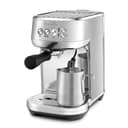 #1 Breville Bambino Plus (BES500) Best overall · Semi-automatic, no grinder ThermoJet, ideal extraction temperature in 3 seconds · automatic milk: 3 temperatures x 3 foam levels with auto-purge · PID · pre-infusion · 54 mm portafilter · 1.9 L tank · 1560 W · 10.91 lb · 2-year warranty Pair it with a separate grinder and the money buys a better grind than the Express's. | Pair it with a separate grinder and the money buys a better grind than the Express's.ThermoJet, ideal extraction temperature in 3 seconds · automatic milk: 3 temperatures x 3 foam levels with auto-purge · PID · pre-infusion · 54 mm portafilter · 1.9 L tank · 1560 W · 10.91 lb · 2-year warranty | $485.00In stock, checked November 22, 2026 Check Price on Amazon |
| 2 | 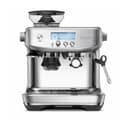 #2 Breville Barista Pro (BES878) Best one-box · Semi-automatic, grinder built in The Express's layout with ThermoJet (3 seconds) · 30 grind settings instead of 16 · LCD interface · PID · pre-infusion · 54 mm · 2 L tank · 1680 W · 20.92 lb · 2-year warranty Everything the Express does, faster and finer - for more money. | Everything the Express does, faster and finer - for more money.The Express's layout with ThermoJet (3 seconds) · 30 grind settings instead of 16 · LCD interface · PID · pre-infusion · 54 mm · 2 L tank · 1680 W · 20.92 lb · 2-year warranty | $629.95In stock, checked November 22, 2026 Check Price on Amazon |
| 3 | 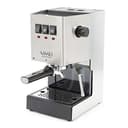 Highest ceiling · Semi-automatic, 58 mm 58 mm commercial-size portafilter · aluminum boiler · commercial-style steam wand · 15 bar · no PID from the factory · the largest modification and parts ecosystem at this price Usually costs less, keeps improving for years, and needs a grinder. | Usually costs less, keeps improving for years, and needs a grinder.58 mm commercial-size portafilter · aluminum boiler · commercial-style steam wand · 15 bar · no PID from the factory · the largest modification and parts ecosystem at this price | $449.76In stock, checked November 22, 2026 Check Price on Amazon |
| 4 | 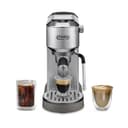 #4 De'Longhi Dedica Duo (EC890M) Cheapest real shot · Semi-automatic, no grinder 15 cm wide · 'My LatteArt' cool-touch steam wand · one-touch Cold Extraction cold brew, under five minutes per De'Longhi · Thermoblock · 15 bar · 1.1 L tank · 1450 W · 9.2 lb · no PID; no portafilter size published If the real objection is the price, this is the shortest way to a real shot. | If the real objection is the price, this is the shortest way to a real shot.15 cm wide · 'My LatteArt' cool-touch steam wand · one-touch Cold Extraction cold brew, under five minutes per De'Longhi · Thermoblock · 15 bar · 1.1 L tank · 1450 W · 9.2 lb · no PID; no portafilter size published | $199.95In stock, checked November 22, 2026 Check Price on Amazon |
| 5 | 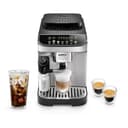 #5 De'Longhi Magnifica Evo Espresso Machine Least work · Super-automatic 7 one-touch or customizable drinks: espresso, cappuccino, latte macchiato, iced coffee, coffee, hot water, My Latte · 13 grind settings · automatic milk frother · 21.2 lb · 2-year warranty plus a year with registration If you wanted a machine that does more, not a machine that teaches you more. | If you wanted a machine that does more, not a machine that teaches you more.7 one-touch or customizable drinks: espresso, cappuccino, latte macchiato, iced coffee, coffee, hot water, My Latte · 13 grind settings · automatic milk frother · 21.2 lb · 2-year warranty plus a year with registration | $549.95In stock, checked November 22, 2026 Check Price on Amazon |
Which reason brought you here
"It costs too much."Then the Dedica Duo is the answer, and you should know what the saving actually costs you: no PID, no grinder, no pressure gauge, and a narrower machine with a smaller tank. It still pulls a real shot through a real portafilter with a real steam wand, which is the line that matters. Budget for a grinder on top — see the best coffee grinders under $100— because a cheap machine fed by a blade grinder is a worse buy than no machine.
"The built-in grinder is the weak part." This is the most technically sound objection to the Barista Express, and it is why our top pick is a split setup rather than another all-in-one. A built-in grinder cannot be upgraded without replacing the whole machine, and 16 settings is a coarse ladder when espresso needs most of its resolution inside a narrow band. A separate grinder survives every machine you will ever own. The full argument, including the case against it, is in all-in-one vs a separate grinder, and the specific pairings for this machine are in the best grinders for the Breville Barista Express.
"I do not want to wait for it to warm up."Then you want a ThermoJet machine: either the Bambino Plus or the Barista Pro. Breville states 3 seconds to ideal extraction temperature for both, and states nothing at all for the Express's Thermocoil. If you pull one drink and leave the kitchen, that is the difference you will feel every single morning — more on it in how long espresso machines take to heat up.
"I want a machine I can keep improving."Then the Gaggia Classic Pro, which trades every piece of Breville's convenience for a 58 mm commercial-size group and a parts ecosystem nothing else at this price can match. It is the opposite philosophy to an all-in-one, deliberately: nothing is integrated, so nothing is a dead end. We put the two head to head in Barista Express vs Gaggia Classic Pro.
"I actually want less work, not more." Then you want a bean-to-cup machine rather than another semi-automatic, and the Magnifica Evo is the pick. Read that trade carefully: it automates the shot and the milk, and it takes the pressure gauge, the dose control and the ability to improve away with them.
The five alternatives
Breville Bambino Plus — the same money, split in two
Who it is for:the reader whose objection is the built-in grinder, or who wants the milk handled for them. This is our top pick because of arithmetic rather than loyalty: a Bambino Plus and a capable standalone grinder land near Barista Express money, and what you get for it is a better grind, a machine that is ready in 3 seconds by Breville's own figure, hands-free milk texturing across 3 temperatures and 3 foam levels, half the weight, five fewer inches of counter and a 2-year warranty instead of 1. The grinder we would pair it with first is the Encore ESP:
Baratza re-engineered the Encore specifically for espresso: 40 mm conical steel burrs made by Etzinger, and a split adjustment where settings 1–20 are fine espresso micro-steps and 21–40 are coarser filter steps. Against 16 settings covering the entire range on the Express's built-in grinder, that is a different class of resolution — and when you replace the machine in five years, the grinder stays. The rest of that field, electric and hand-powered, is in the best conical burr grinders. The honest cons: this is two purchases and two objects on the counter; the Bambino Plus has no grinder at all, so there is no version of this setup that works with supermarket pre-ground coffee; and there is no pressure gauge to tell you how the shot is running while you learn. Full detail in the Bambino Plus review, and the direct head-to-head is Bambino Plus vs Barista Express.
Breville Barista Pro — the one-box answer
Who it is for:someone who wants exactly what the Barista Express is, with the two things it does least well fixed. Breville frames it as "where precision meets speed", and the spec sheet is the Express's layout with a ThermoJet heater rated at 3 seconds to ideal extraction temperature, an LCD interface, and 30 grind settings instead of 16. It also carries a 2-year warranty where the Express has 1, keeps the 54 mm portafilter, PID, pre-infusion and the 2 L tank, and is slightly lighter at 20.92 lb. The honest cons:it costs more than the machine you came here to replace, which makes it an upgrade rather than an alternative for anyone whose objection was price; the grinder is still built in, so it still cannot be upgraded; and the milk is still manual, which surprises people who assume the pricier Breville must be the more automatic one — it is not. The comparison is Barista Express vs Barista Pro, and the whole range is mapped in Breville espresso machines explained.
Gaggia Classic Pro — the one you can keep upgrading
Who it is for: the reader who wants a machine to grow into, usually for less than the Express costs. The Classic Pro uses a 58 mmportafilter — the commercial standard, which means every basket, tamper, puck screen, distribution tool and bottomless portafilter in the world fits it — with an aluminum boiler and a commercial-style steam wand that textures milk better than any Breville wand at this price. It ships without PID, which is the single most common owner modification. The honest cons: it has no grinder, so the real budget is machine plus grinder and the total can exceed the Express; it has no PID, no pre-infusion and no gauge, so temperature management becomes a technique (see temperature surfing); and it is slower to be useful on a weekday morning than anything with a ThermoJet. Buy it because you want the ceiling. Read the Gaggia Classic Pro review and 54 mm vs 58 mm portafilters first, because basket size is the real fork in the road.
De'Longhi Dedica Duo — the cheapest real shot
Who it is for:the reader whose constraint is the budget, full stop. At 15 cm wide it is the narrowest machine here, and De'Longhi publishes a Thermoblock boiler, 15 bar, a 1.1 L tank, 1450 W, 9.2 lb, a "My LatteArt" cool-touch steam wand, a digital display with espresso and double-espresso presets, and a one-touch Cold Extraction cold brew mode the company says runs in under five minutes — a feature no Breville on this page has. The honest cons:no PID, no grinder, no pressure gauge, a small tank, and an upgrade path that effectively ends with the machine. De'Longhi also publishes no portafilter diameter for it anywhere, including the technical data table in its own manual, so we do not state one — which also makes third-party accessories a gamble. And be careful what you are reading online: most "Dedica" reviews describe the discontinued EC885M, not this machine. More in the Dedica Duo review and Barista Express vs Dedica.
De'Longhi Magnifica Evo — automate it instead
Who it is for: the reader who liked the idea of grind-to-cup in one box but does not actually want to learn to tamp and steam. The model this button links to is the ECAM29084SB, which De'Longhi lists with an automatic milk frother, 13 grind settings and seven one-touch or customizable drinks: espresso, cappuccino, latte macchiato, iced coffee, coffee, hot water and a savable "My Latte" recipe. It weighs 21.2 lb and carries a 2-year warranty, plus a third year with product registration. The honest cons: you give up the portafilter entirely, and with it the pressure gauge, the dose control, the basket choice and the ability to improve. Bean-to-cup machines also have more to clean and more to go wrong than a semi-automatic, and the milk system is the part that most often needs attention. Model numbering in this range shifts constantly, so confirm the code andthe milk system on the listing — the cheaper Magnifica Start has a manual frother. Context in the best super-automatic espresso machines and semi-automatic vs super-automatic.
When to just buy the Barista Express
Three cases, and they are common enough to say out loud on a page like this.
You want one appliance and one purchase.Nothing cheaper on this page does that, and the only one-box alternative here costs more. If a second object on the counter is genuinely unacceptable — a small kitchen, a shared apartment, an office — the Express is still the most machine you can get for its price in a single footprint, and the built-in-grinder roundup lists the rest.
You want the pressure gauge while you learn.It is the Express's quietest advantage: a dial that tells you whether the shot is choking or running fast, which is exactly the feedback a beginner does not otherwise have. Both De'Longhis here and the Gaggia have none. If you are starting from zero, read how to dial in espresso and decide whether you want that dial in your hand.
You are buying it on a real discount. This machine has been on the market long enough that its price moves a lot, and at the bottom of its range the split-setup arithmetic above stops working. The button at the top of this page shows the live price with the date it was checked; compare it against the best espresso machines under $1,000 before you decide.
Whichever way you go, the purchase that most reliably improves any of these machines is not the next machine — it is the grinder. That argument is why the grinder matters more than the machine, and if you are substituting the Bambino rather than the Express, the sibling page is alternatives to the Breville Bambino Plus.
What we know, and how we know it
What we did
- Took the specs from the manufacturer's own documentation. Not from a retailer listing, and not from another blog.
- Priced it from Amazon's API, with the date we checked shown next to the number. If that price is more than 48 hours old, this page stops showing a number at all rather than show you a wrong one.
- Formed a verdict from those specs, the price, and what owners publicly report.
Where we hedged, and why
Every machine on this page except the Magnifica Evo is in our spec database, sourced from Breville's, De'Longhi's, Gaggia's and Baratza's own product pages and manuals. The Barista Express figures we quote — 16 grind settings, a 250 g hopper, PID, pre-infusion, a 54 mm portafilter, 15 bar, a 2 L tank, 22.09 lb and a 1-year warranty — are Breville's own published numbers, not our measurements. Where Breville publishes nothing, we say so: there is no heat-up figure for the Thermocoil, and no single wattage, because Breville's product page and its own manual's rating plate disagree (1600 W against 1750 W).
The Magnifica Evo is positioned from the feature set De'Longhi publishes for the ECAM29084SB rather than from a spec sheet we have verified line by line, which is why its row lists drinks, grind settings, weight and warranty and nothing internal. De'Longhi publishes no portafilter diameter for the Dedica Duo, so we state none. We have not used these machines and we have not tested them against each other: the recommendations are formed from published specs, current prices and what each machine is built to do. The "same money, split in two" arithmetic in our top pick depends on the live prices of two products and can stop being true — check both buttons before you act on it.
What we did not do
We do not run a lab. We have not pulled thousands of shots on this machine, and we are not going to pretend otherwise. We have not used this unit ourselves. Everything above is sourced research, and it is labeled as such. Where we have used a machine, we say so and show it.
How we're paid
If you buy through a link on this page, we earn a commission. It costs you nothing extra and it does not change what we recommend — we link to the better option for the buyer even when it earns us less. See how we review and our full disclosure.
If you are still choosing rather than substituting, start with how to choose an espresso machine or the best espresso machines for beginners. More on the espresso machines hub.
Frequently asked questions
What is the best alternative to the Breville Barista Express?
For most people, splitting it in two: a Breville Bambino Plus plus a standalone grinder such as the Baratza Encore ESP lands near Barista Express money and buys a better, upgradeable grind, a 3-second ThermoJet heat-up, hands-free milk texturing and a 2-year warranty. If you insist on one box, the Barista Pro is the alternative - but it costs more, not less.
Is there a cheaper all-in-one espresso machine with a grinder?
Not one we would recommend. The only all-in-one alternative on this page, the Barista Pro, is dearer than the Barista Express, and the cheap machines-with-grinders below it generally pair a weak grinder with a pressurized basket, which undermines both halves. If one appliance at a lower price is the requirement, waiting for a discount on the Express itself is the more honest answer.
Barista Express or Barista Pro?
The Barista Pro is the same idea done faster and finer: Breville rates its ThermoJet heater at 3 seconds to ideal extraction temperature, gives it 30 grind settings instead of 16, adds an LCD interface and doubles the warranty to 2 years. The Barista Express is the cheaper machine and keeps the same 54 mm portafilter, PID, pre-infusion and 2 L tank. Both texture milk manually.
Is the Barista Express's built-in grinder good enough for espresso?
It is good enough to make espresso, and it is the weakest part of the machine. Steel conical burrs with 16 settings have to cover espresso through French press, so the espresso range is a handful of clicks - and because it is built in, it cannot be upgraded without replacing the machine. A standalone espresso grinder gives you finer resolution and survives every machine you later own.
Should I buy the Gaggia Classic Pro instead of the Barista Express?
Only if you want a machine to grow into. The Classic Pro usually costs less and uses a 58 mm commercial-size portafilter, so the entire accessory and modification world fits it - but it has no grinder, no PID from the factory and no pressure gauge, so your total budget is higher and the learning curve is steeper. The Express is the easier machine; the Gaggia has the higher ceiling.
Do I need to buy a grinder with these alternatives?
Yes for the Bambino Plus, the Gaggia Classic Pro and the Dedica Duo, which have no grinder at all. No for the Barista Pro and the Magnifica Evo, which grind built in. Budget the grinder as part of the machine price rather than as an accessory: fed by a grinder that cannot hold a fine, even grind, every machine on this page makes worse coffee than it should.
What does the Barista Express do that cheaper machines do not?
Three things. It grinds, doses and brews from one appliance at one price. It has PID temperature control and pre-infusion, which the cheap De'Longhi machines do not. And it has an extraction pressure gauge on the front, which is the single most useful piece of feedback a beginner can have while learning to dial in a shot - neither De'Longhi here nor the Gaggia offers one.
Sources
Specs come from the manufacturer's own documentation. Prices come from Amazon's API. Where a claim comes from what owners report, we link the thread and say so.
- Breville Barista Express (BES870XL) product page and official manual (16 grind settings, 250 g hopper, 54 mm portafilter, PID, pre-infusion, 15 bar, 2 L tank, 22.09 lb, 1-year limited warranty; the product page states 1600 W while the manual's rating plate states 1750 W, and no heat-up figure is published for the Thermocoil)
- Breville Bambino Plus (BES500) product page and official manual (ThermoJet ideal extraction temperature in 3 seconds, 3 milk temperatures x 3 foam levels with auto-purge, PID, pre-infusion, 54 mm portafilter, 1.9 L tank, 1560 W, 10.91 lb, 2-year limited warranty)
- Breville Barista Pro (BES878) product page and official manual (ThermoJet 3 seconds, 30 grind settings, 250 g hopper, LCD interface, 2 L tank, 1680 W, 20.92 lb, 2-year limited warranty)
- Baratza Encore ESP product page (40 mm conical steel M2 burrs made by Etzinger, 40 stepped settings split 1-20 espresso and 21-40 filter, 300 g hopper, 1-year warranty)
- Gaggia Classic Pro (E24) product page (58 mm portafilter, commercial-style steam wand, 15 bar)
- De'Longhi Dedica Duo (EC890M) product page (15 cm width, My LatteArt steam wand, one-touch Cold Extraction cold brew stated at under five minutes, Thermoblock, 15 bar, 1.1 L tank, 1450 W, 9.2 lb; no portafilter diameter published)
- De'Longhi Magnifica Evo (ECAM29084SB) published feature set: 7 one-touch or customizable drinks, 13 grind settings, automatic milk frother, 21.2 lb, 2-year warranty plus a year with registration
- Availability and prices for every product on this page were checked against the Amazon Product Advertising (Creators) API on November 16, 2026; the live figures on the buttons come from that same layer.
Keep reading
- Breville Barista Express reviewThe machine itself, on the specs Breville publishes. Read it before you substitute.
- Bambino Plus vs Barista ExpressOur top alternative, head to head with the machine it replaces.
- Barista Express vs Barista ProThe one-box alternative: what the extra money buys, item by item.
- All-in-one vs a separate grinderThe argument behind the split setup, including the case against it.
- Best grinders for the Breville Barista ExpressIf you keep the machine: what to add, and what the built-in grinder cannot do.
- Alternatives to the Breville Bambino PlusThe sibling page, for the reader shopping away from the Bambino instead.