
Guides · Temperature
How Long Does an Espresso Machine Take to Heat Up?
Breville says three seconds. Gaggia and Rancilio say nothing at all. That gap is not an oversight — it is the difference between heating a trickle of water and heating two kilos of brass.
The short answer
Breville publishes three seconds for its ThermoJet machines (Bambino Plus, Barista Pro). Almost no other maker publishes a figure at all. A thermoblock machine is ready in seconds to a couple of minutes; a brass-boiler machine reaches its ready light quickly but needs much longer before the group and portafilter are hot enough to pull a good shot.
We earn a commission if you buy through a link on this page. It costs you nothing extra and it does not change what we recommend. Full disclosure.
Key takeaways
- Only Breville publishes a heat-up figure for the machines in our database: 3 seconds for its ThermoJet models. Breville publishes none for its own Thermocoil Barista Express.
- De'Longhi calls its Thermoblock heat-up 'quick' but publishes no number. Gaggia and Rancilio publish nothing at all.
- The ready light reports the heater, not the group head, portafilter or basket — which is why a heavy machine can say ready and still pull a cold shot.
- Fast heat-up and thermal stability are opposite design goals. Choose which one you are buying.
What the makers actually publish
We keep a spec database built only from manufacturer sources, and heat-up time is the field where it is most revealing — because it is mostly empty. Here is the honest state of what the makers of the machines we cover will commit to in writing.
| Breville Bambino Plus | 3 seconds to ideal extraction temperature — Breville's own figure, stated on the product page and in the manual (ThermoJet) |
|---|---|
| Breville Barista Pro | 3 seconds — Breville's own figure (ThermoJet) |
| Breville Barista Express | Not published. Breville publishes the 3-second figure for its ThermoJet machines but none for the Thermocoil Barista Express, so we do not state one |
| De'Longhi Dedica Duo | Not published as a number. De'Longhi says the Thermoblock gives 'a quick heat up time' |
| De'Longhi Stilosa | Not published |
| De'Longhi Magnifica Start | Not published |
| Gaggia Classic Pro E24 | Not published |
| Rancilio Silvia | Not published |
That pattern is the answer to the question. The only machines with a published heat-up time are the ones whose heat-up time is a selling point. Breville prints three seconds because ThermoJet heats a very small volume of water on demand; Gaggia and Rancilio print nothing because the honest answer for a brass-boiler machine is "longer than you want, and it depends what you mean by ready".
Heat-up is two questions
Almost every argument about this on the internet comes from two people answering different questions. Separate them and the whole topic becomes simple.
- When is the heater at temperature? This is what a published figure measures and what the ready light reports. On a thermoblock or a ThermoJet, seconds. On a boiler machine, a few minutes.
- When is the whole brew path at temperature? The group head, the portafilter, the basket and the cup all pull heat out of your shot. Until they have equalised with the boiler, the water that reaches the coffee is cooler than the water that left the heater. This is what actually determines whether your first shot tastes like your fifth.
For a light thermoblock machine the two answers are nearly the same, because there is barely any metal to warm. For a heavy brass machine they are far apart — the boiler reaches temperature long before a brass group and a chrome-plated portafilter do. That is not a defect; thermal mass is exactly what you bought. The mechanism behind both designs is in Thermoblock vs boiler.
Why the ready light lies
The ready light is wired to a sensor on the heating element or boiler. It cannot see the group head, and it certainly cannot see the cold portafilter you just clicked in. So on a machine with real thermal mass, the light comes on while the metal between the boiler and your coffee is still climbing.
The symptom is a first shot that tastes thin and sour, pulled from a machine that insisted it was ready — and that is one of the most common complaints we see about good machines. If your espresso is reliably disappointing early and fine later, you are not dialing in wrong; you are brewing on cold metal. Our pages on why your espresso is cold and why espresso tastes sour both lead back here more often than to anything else.
Heat-up by machine type
With the published figures laid out above, here is what each design implies — described by mechanism, because the numbers mostly do not exist.
- ThermoJet / thermoblock (Bambino Plus, Barista Pro, Dedica Duo, Magnifica Start). Water is heated as it flows through a small block or coil, so there is almost no reservoir to bring up to temperature. Breville's published three seconds is the extreme end of this design. Practically: you can switch on and brew. The trade-off is temperature stability under back-to-back shots and steaming, not readiness.
- Thermocoil (Barista Express). An integrated stainless water coil — more metal than a ThermoJet, much less than a boiler. Breville publishes no figure for it, which is itself informative. Expect a short warm-up rather than an instant one.
- Single boiler, brass (Gaggia Classic Pro E24, Rancilio Silvia). A reservoir of water inside a metal boiler, feeding a heavy group. The boiler reaches temperature in minutes; the group, portafilter and basket take considerably longer, and neither maker publishes a figure for either stage. These machines reward patience and the routine below.
- Super-automatic (Magnifica Start, Philips LatteGo). Thermoblock-based and designed to be switched on and used, often with a rinse cycle on start-up. Readiness is a non-issue; the ceiling is elsewhere.
If you are choosing between these designs rather than diagnosing one you own, the single-boiler trade-offs are covered in single boiler vs dual boiler, and the tier above that — where warm-up gets longer still — in dual boiler vs heat exchanger.
Machines at both extremes
The fast ones and the patient one
Every pick on this page in one view, with the live Amazon price and stock on each row. Specs are the figures the maker or the listing publishes — nothing measured or scored by us. Prices are read from Amazon's API and were last checked October 10, 2026; where we have no verified price, the row says so rather than show you an old number.
| # | Machine | What its heat-up means | Price & availability |
|---|---|---|---|
| 1 | 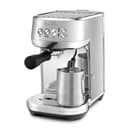 #1 Breville Bambino Plus (BES500) Fastest published · ThermoJet, no grinder ThermoJet — ideal extraction temperature in 3 seconds (Breville's figure, product page and manual) · 54 mm portafilter · automatic milk texturing · 2-year warranty Switch on, pull a shot. The best answer if waiting is the thing you hate. | Switch on, pull a shot. The best answer if waiting is the thing you hate.ThermoJet — ideal extraction temperature in 3 seconds (Breville's figure, product page and manual) · 54 mm portafilter · automatic milk texturing · 2-year warranty | $399.95In stock, checked October 10, 2026 Check Price on Amazon |
| 2 | 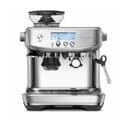 #2 Breville Barista Pro (BES878) Fast, with a grinder · ThermoJet, built-in grinder ThermoJet — 3 seconds to extraction temperature (Breville's figure) · built-in conical burr grinder · 54 mm portafilter · PID · 2-year warranty The same instant start with the grinder built in, for a one-box morning. | The same instant start with the grinder built in, for a one-box morning.ThermoJet — 3 seconds to extraction temperature (Breville's figure) · built-in conical burr grinder · 54 mm portafilter · PID · 2-year warranty | $629.95In stock, checked October 10, 2026 Check Price on Amazon |
| 3 | 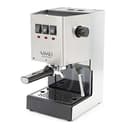 #3 Gaggia Classic Pro E24 (RI9380) Thermal mass · Brass single boiler Lead-free brass boiler and group on the current E24 · 58 mm portafilter · solenoid valve · no PID · heat-up time not published by Gaggia · 1350 W Slow to be genuinely ready, and more stable once it is. The opposite purchase. | Slow to be genuinely ready, and more stable once it is. The opposite purchase.Lead-free brass boiler and group on the current E24 · 58 mm portafilter · solenoid valve · no PID · heat-up time not published by Gaggia · 1350 W | $450.83In stock, checked October 10, 2026 Check Price on Amazon |
Breville Bambino Plus — the three-second machine
| Type | Semi-automatic, no grinder |
|---|---|
| Portafilter | 54 mm |
| Boiler | ThermoJet — ideal extraction temperature in 3 seconds |
| PID temperature control | Yes |
| Built-in grinder | No — you'll need a separate grinder |
| Milk | Automatic, hands-free — 3 milk temperatures x 3 foam levels, with auto-purge |
| Pump pressure | 15 bar |
| Pre-infusion | Yes |
| Heat-up time | 3 seconds (Breville's own figure, stated on the product page and in the manual) |
| Water tank | 1.9 L |
| Power | 1560 W |
| Dimensions | 7.5" W x 13.5" D x 12" H |
| Weight | 10.91 lb (4.95 kg) |
| Warranty | 2 years limited |
| In the box | 54 mm tamper, Razor precision dosing tool, 480 ml stainless milk jug, 1- and 2-cup single- and dual-wall baskets, cleaning tool and disc |
Who it is for: anyone whose real complaint about espresso at home is the waiting — people with a commute, a toddler, or an eight-minute morning.
This is the machine Breville prints the number on, and the number is three seconds to ideal extraction temperature, stated both on the product page and in the manual. Because a ThermoJet heats water on demand rather than holding a tank of it, there is very little metal and almost no water to bring up to temperature — so the gap between "the light is on" and "the brew path is hot" nearly disappears. It is also the machine we point most first-time buyers at for other reasons, laid out in the Bambino Plus review.
Breville Barista Pro — the same start, with the grinder
| Type | Semi-automatic, with built-in grinder |
|---|---|
| Portafilter | 54 mm |
| Boiler | ThermoJet — ideal extraction temperature in 3 seconds |
| PID temperature control | Yes |
| Built-in grinder | Steel conical burrs, 30 grind settings, 250 g hopper |
| Milk | Manual — 360° swivel steam wand. NOT automatic, despite costing more than the Bambino Plus. |
| Pump pressure | 15 bar |
| Pre-infusion | Yes |
| Heat-up time | 3 seconds (Breville's own figure) |
| Water tank | 2 L |
| Power | 1680 W |
| Dimensions | 13.5" W x 13.9" D x 13.5" H |
| Weight | 20.92 lb (9.49 kg) |
| Warranty | 2 years limited |
| In the box | Dosing funnel, 1- and 2-cup single- and dual-wall baskets, Razor dose-trimming tool, 480 ml stainless milk jug, cleaning kit, water filter |
Who it is for: the buyer who wants the instant start and does not want a separate grinder on the counter.
Same ThermoJet, same published three seconds, with a built-in conical burr grinder and a PID. Worth knowing if you are comparing it with its stablemate: Breville publishes no heat-up figure for the Thermocoil Barista Express, so the two machines that look like siblings on a shelf are not equivalent on this specific point. We compare them in Barista Express vs Barista Pro.
Gaggia Classic Pro — the patient machine
| Type | Semi-automatic, no grinder |
|---|---|
| Portafilter | 58 mm — the commercial size, so baskets and tampers are easy to find |
| Boiler | Single boiler (brew + steam), lead-free brass on the current E24 generation. Earlier Evo Pro and Classic 2019 units used an aluminum boiler — Gaggia's own service manual confirms it. Check which one you're buying. |
| PID temperature control | No |
| Built-in grinder | No — you'll need a separate grinder |
| Milk | Manual — commercial-style stainless steam wand (a panarello attachment is also in the box) |
| Pump pressure | 15 bar |
| 3-way solenoid valve | Yes — dumps pressure off the puck after the shot, so the used puck comes out dry |
| Pre-infusion | No |
| Water tank | 2.1 L |
| Power | 1350 W1350 W per gaggia.com and Gaggia's service manual. Gaggia's North American site says 1425 W. We're citing the two that agree. |
| Dimensions | 8" W x 9.5" D x 14.2" H |
| Weight | ~18-19 lb — Gaggia's global and North American sites disagree (8.1 kg vs 19 lb), so we give the range |
| Warranty | 1 year parts and labor (wear parts excluded) |
| In the box | Three baskets — 1 pressurized 'Crema perfetta' (pre-installed), 1 traditional single, 1 traditional double — plus a plastic tamper, a scoop, and a panarello frothing attachment |
Who it is for: the buyer who wants a commercial-format 58 mm machine and is happy to switch it on before the shower rather than before the shot.
The Classic Pro is here as the deliberate counter-example. Gaggia publishes no heat-up figure at all, and the reason is structural: the current E24 generation heats water in a lead-free brass boiler feeding a brass group, and that mass has to equalise before the water reaching your coffee is the temperature the boiler thinks it is. In exchange you get the stability and the 58 mm commercial format that make this machine a long-term keeper. It has no PID, so temperature management is on you — which is where the routine below earns its keep, and where temperature surfing comes from.
The five-minute routine
This works on any machine and matters most on heavy ones. It costs you nothing but a little water and some attention.
- Switch on earlier than you think. On a boiler machine, turn it on when you get up, not when you want coffee. On a ThermoJet machine, this step is genuinely unnecessary.
- Leave the portafilter locked in. It is part of the brew path and it is the coldest part. Clicking it in while the machine warms lets it come up with everything else.
- Run a blank flush. Once the ready light is on, run water through the group with the empty portafilter in place for several seconds. This pushes hot water over the group, the basket and the spouts rather than just heating the boiler.
- Warm the cup.A thick ceramic cup at room temperature can take a surprising amount of heat out of a 30 ml drink. Fill it with the flush water and tip it out before you pull — and if your cups are thin glass, see espresso cups, because the cup is part of the thermal system.
- Pull a throwaway shot if the machine has been off overnight. On a brass-boiler machine without a PID this is the difference between a sour first espresso and a good one. Use the cheapest coffee in the cupboard for it.
If your morning cannot absorb that, the honest conclusion is to buy a thermoblock machine rather than to fight a boiler machine. Matching the machine to the morning is the whole point of how to choose a machine.
Should you leave it on?
It is the obvious workaround and it comes with real trade-offs, so here is the balanced version. Leaving a machine on keeps the whole brew path hot and removes the warm-up problem entirely, which is why many enthusiasts do it and why café machines run all day.
Against that: it uses electricity continuously, it keeps the heating element and thermostat cycling, and on a machine with a small boiler it means more hours of hot water sitting against metal, which accelerates scale formation if your water is hard. Many machines have an auto-off which exists partly for these reasons. Our running cost guide covers the energy side, and water for espresso covers the scale side — which matters more than the electricity for most people.
The middle path most owners land on: switch it on twenty minutes before you want coffee, rather than leaving it on all day, and treat descaling as non-negotiable either way. How often that is depends on your water, not on a calendar — how often to descale gets into it.
When heat-up is a fault
Slow heat-up is usually physics. But there are cases where it is a problem, and they are worth separating out.
- It never reaches temperature, or the light never changes. That is a fault rather than thermal mass — most often a thermostat, a thermal fuse or a scaled-up heating path. Start with espresso machine not heating up, or with espresso machine will not turn on if nothing lights up at all.
- There is a burning smell as it heats.Not a warm-up characteristic. A new machine can smell faintly of manufacturing residue on its first few cycles; anything electrical or persistent should be investigated before you keep using it — when a machine smells like burning.
- It spits water when you start steaming. Usually condensation in the wand rather than a heat-up fault: purge the wand before you put it in the milk. If it keeps happening, see espresso machine spitting water.
- It used to be faster. Scale is the usual culprit: mineral deposits insulate the heating element and narrow the water path, so the same machine takes longer and brews cooler. Descaling often restores it — how to descale.
- The descaling light stays on after descaling. Different problem, common annoyance, and usually a reset sequence rather than a fault: when the descaling light will not turn off.
- Hot machine, cold coffee. If the machine is genuinely hot and the drink still is not, the heat is going into cold cups, cold milk or a cold portafilter rather than being missing: why your espresso is cold.
The short version
The published answer is three seconds on Breville's ThermoJet machines and silence almost everywhere else — and that silence is informative rather than careless. A thermoblock machine is ready when the light says so because there is nothing much to heat. A brass-boiler machine reaches its ready light quickly and is not ready to pull a good shot until the group, portafilter and basket have caught up, which no maker will put a number on.
So decide which you are buying. If the wait is what puts you off espresso at home, buy a ThermoJet machine and enjoy the three seconds. If you want the stability and the commercial format, buy the brass machine and switch it on earlier — then run the five-minute routine, which makes more difference to your first shot than any accessory you could buy.
What we know, and how we know it
What we did
- Took the specs from the manufacturer's own documentation — Breville's product pages and manuals, De'Longhi's product pages, and Gaggia's and Rancilio's published specifications. Not from a retailer listing, and not from another blog.
- Priced it from Amazon's API, with the date we checked shown next to the number. If that price is more than 48 hours old, this page stops showing a number at all rather than show you a wrong one.
- Formed a verdict from those specs, the price, and what owners publicly report.
Where we hedged, and why
We have not timed any machine. We own none of them and run no lab, so there is no stopwatch behind this page. Every figure in the table above is either a maker's published claim — Breville's three seconds for its ThermoJet machines, stated on the product page and in the manual — or an explicit "not published", taken straight from our spec database.
We deliberately give no warm-up number for boiler machines. You will see twenty or thirty minutes quoted widely for machines like the Gaggia Classic Pro and the Rancilio Silvia. Neither maker publishes such a figure, and we have not measured one, so we describe the mechanism — thermal mass in the boiler and group has to equalise before the brew water arrives at temperature — and give you a routine instead of a number we cannot support.
The claim that a ready light reports the heater rather than the group is a description of how these machines are built, not a test result. Our advice to leave a machine on for twenty minutes rather than all day is a judgement about trade-offs we name openly (electricity, cycling, scale), not a manufacturer recommendation. No price appears in our prose; every number on this page is live from Amazon with the date it was checked.
What we did not do
We do not run a lab. We have not pulled thousands of shots on this machine, and we are not going to pretend otherwise. We have not used this unit ourselves. Everything above is sourced research, and it is labeled as such. Where we have used a machine, we say so and show it.
How we're paid
If you buy through a link on this page, we earn a commission. It costs you nothing extra and it does not change what we recommend — we link to the better option for the buyer even when it earns us less. See how we review and our full disclosure.
Frequently asked questions
How long does an espresso machine take to heat up?
It depends entirely on the heating design, and most makers publish nothing. Breville states 3 seconds to ideal extraction temperature for its ThermoJet machines, the Bambino Plus and Barista Pro. De'Longhi calls its Thermoblock heat-up 'quick' without giving a number. Gaggia and Rancilio publish no figure at all for their brass-boiler machines, where the group and portafilter take far longer than the boiler.
Why does my espresso taste cold even when the machine says it is ready?
Because the ready light reports the heater, not the brew path. The group head, portafilter, basket and cup all draw heat out of a 30 ml drink, and on a machine with real thermal mass they are still climbing when the light comes on. Leave the portafilter locked in while it warms, run a blank flush through the group, and warm the cup.
Is it bad to leave an espresso machine on all day?
It is a trade-off rather than a straight no. Leaving it on keeps the whole brew path hot and removes the warm-up problem, which is why café machines run all day. Against that: continuous electricity use, a heating element and thermostat cycling for hours, and more time with hot water against metal, which accelerates scale in hard-water areas. Twenty minutes before use is the usual compromise.
Which espresso machine heats up fastest?
Of the machines in our database, Breville's ThermoJet models — the Bambino Plus and the Barista Pro — at a published 3 seconds to ideal extraction temperature. That is possible because a ThermoJet heats water on demand rather than holding a reservoir, so there is almost no metal or water to bring up to temperature. The trade-off is stability under heavy back-to-back use, not readiness.
Why is my espresso machine suddenly taking longer to heat up?
Usually scale. Mineral deposits insulate the heating element and narrow the water path, so the same machine takes longer to reach temperature and brews cooler than it used to. Descaling frequently restores it. If the machine never reaches temperature at all, or the ready light never changes, that is a fault — commonly a thermostat or thermal fuse — rather than a gradual slowdown.
Do I need to pull a throwaway shot first?
On a brass-boiler machine without a PID that has been off overnight, yes — it is the difference between a sour first espresso and a good one, and it costs you a few grams of cheap coffee. On a ThermoJet or thermoblock machine it is largely unnecessary, because there is so little metal in the path that a blank flush through the group does the same job.
Sources
Specs come from the manufacturer's own documentation. Prices come from Amazon's API. Where a claim comes from what owners report, we link the thread and say so.
- Breville BES500 Bambino Plus product page and instruction manual — ThermoJet, ideal extraction temperature in 3 seconds
- Breville BES878 Barista Pro product page — ThermoJet, 3 seconds to extraction temperature
- Breville BES870 Barista Express product page and manual — Thermocoil; Breville publishes no heat-up figure for this model
- Gaggia Classic E24 official spec page — lead-free brass boiler and group on the current generation; no heat-up figure published
- Rancilio Silvia official spec sheet — 0.3 L insulated brass boiler and commercial brass group; no heat-up figure published
Keep reading
- Thermoblock vs boilerThe design decision behind every number on this page.
- Temperature surfingWhat to do on a machine with no PID once it is finally warm.
- Why is my espresso cold?The symptom this page usually turns out to be the cause of.
- Espresso machine not heating upWhen slow heat-up is a fault rather than thermal mass.
- Breville Bambino Plus reviewThe three-second machine, reviewed in full.
- How much it costs to run an espresso machineThe energy side of leaving it switched on.