
Accessories · Pour over
The Best Pour Over Coffee Makers Under $50
Three drippers, three different amounts of technique required. The expensive part of pour-over is not the dripper and never was.
The short answer
Buy the Kalita Wave 185: its flat bed and restricted flow smooth over an uneven pour, so it makes an excellent cup without the technique a V60 demands. The budget pick is the Hario V60 plastic dripper, the cheapest thing on this site that brews a genuinely good coffee - and the plastic version holds temperature better than the ceramic one.
We earn a commission if you buy through a link on this page. It costs you nothing extra and it does not change what we recommend. Full disclosure.
All three picks, compared
Every pick on this page in one view, with the live Amazon price and stock on each row. Specs are the figures the maker or the listing publishes — nothing measured or scored by us. Prices are read from Amazon's API and were last checked November 6, 2026; where we have no verified price, the row says so rather than show you an old number.
| # | Dripper | Who it's for | Price & availability |
|---|---|---|---|
| 1 | 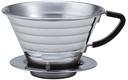 Best overall · Under $50 Flat-bottom bed · three small drain holes restricting flow · stainless body · proprietary wave filters · 185 size, aimed at one to two cups For an excellent cup every morning without practising a pour. | For an excellent cup every morning without practising a pour.Flat-bottom bed · three small drain holes restricting flow · stainless body · proprietary wave filters · 185 size, aimed at one to two cups | $39.00In stock, checked November 6, 2026 Check Price on Amazon |
| 2 | 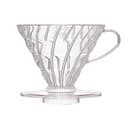 #2 Hario V60 Plastic Dripper (02) Budget pick · Under $15 60-degree cone with a single large drain hole and spiral ribs · 02 size covers one large mug or two small ones · plastic holds brew temperature better than ceramic For the cheapest genuinely good cup, if you will learn to pour. | For the cheapest genuinely good cup, if you will learn to pour.60-degree cone with a single large drain hole and spiral ribs · 02 size covers one large mug or two small ones · plastic holds brew temperature better than ceramic | $12.00In stock, checked November 6, 2026 Check Price on Amazon |
| 3 | 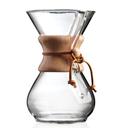 Best for more than a mug · Under $50 Brewer and carafe in one piece of borosilicate glass · thick proprietary bonded filters, nothing else fits properly · 6-cup capacity · wooden collar and leather tie For brewing for two or three people, and for a counter it will live on. | For brewing for two or three people, and for a counter it will live on.Brewer and carafe in one piece of borosilicate glass · thick proprietary bonded filters, nothing else fits properly · 6-cup capacity · wooden collar and leather tie | $47.03In stock, checked November 6, 2026 Check Price on Amazon |
Why the whole category is under $50
A pour-over dripper is a shaped funnel. It has no pump, no heating element and no moving parts; the variables that decide the cup are your grind, your water temperature, your ratio and your pour. Which means there is no flagship tier to aspire to: the drippers professionals use in competition cost about the same as the ones in a supermarket, and the most expensive thing on this page is a glass carafe with a wooden collar.
So "best pour over coffee maker under $50" is not a budget question, it is the whole question. What you are choosing between is shapes, and each shape asks a different amount of skill from you. That is the frame for the rest of this page.
Each pick below was under $50 at our last price check, and the date of that check is stamped on the comparison table and beside every price. Prices move, so the live figure on the button is the authority rather than any number in prose.
Flat bed or cone: the only real choice
A cone— the Hario V60 — has a single large drain hole and spiral ribs, so water leaves quickly and the coffee bed is deep in the middle and shallow at the edges. That gives you control and it gives you rope: pour unevenly and the result changes noticeably, which is why V60 coffee can be superb and can also be the reason people decide pour-over is fussy.
A flat bed— the Kalita Wave — has three small holes that restrict flow and a filter that sits away from the wall. The restriction means the water level in the bed largely sets the contact time, so an imperfect pour matters much less. You trade some ceiling for a much higher floor. For a once-a-morning brewer, the higher floor is worth more.
A brewer-and-carafe— the Chemex — is a cone with the vessel attached and a much thicker filter. The thick bonded filter is the defining feature: it removes more oils and fines than paper cones, which makes the cleanest, lightest cup of the three.
None of these is better than the others in the abstract, and anyone telling you one is has skipped the part where it depends what you want. The full method — the 1:16 starting ratio, the bloom, the pour pattern — is in how to make pour-over coffee.
The three picks
Kalita Wave 185 — the forgiving one
Who it is for:the drinker who wants an excellent cup every morning without practising a pour. The Wave is a flat-bottom dripper with three small drain holes and a wave-shaped filter that stands off the dripper wall. Those two details do the work: the small holes restrict flow so the water level, not your pouring hand, largely sets the contact time, and the standoff keeps the temperature more even across the bed. In practice that means you can pour approximately and still get a good, repeatable cup — which is why this is the dripper we would hand to someone who liked the idea of pour-over and bounced off the V60. The costs are honest: the wave filters are a proprietary shape and cost more than V60 cones, and the 185 is a one-to-two-cup size.
Hario V60 plastic dripper (02) — the budget pick
Who it is for:anyone who wants the cheapest genuinely good coffee on this site, and is willing to learn a pour. The V60 is the default dripper of specialty coffee for a reason: the 60-degree cone with its single large hole and spiral ribs gives the brewer more control than any other shape here, and the 02 size covers one large mug or two smaller ones. It is also the cheapest product on this page by a long way, and the plastic version is the one to get rather than the ceramic — it holds brew temperature better and costs much less. The catch is the flip side of the control: an uneven or rushed pour shows up in the cup. If that sounds like a chore rather than a craft, buy the Kalita.
Chemex Classic, 6-cup — for brewing beyond one mug
Who it is for: someone brewing for two or three people, and for a counter the brewer will be left out on. The Chemex is brewer and carafe in a single piece of borosilicate glass with a wooden collar, and the thick bonded filters are the functional story: they trap more oils and fines than a paper cone, so the cup is the cleanest and lightest of the three. Being one vessel also means you brew straight into what you serve from, which is genuinely easier for more than one drink. Two honest cautions. The proprietary filters are thicker and dearer than cone filters and nothing else fits properly, so buy them at the same time as the brewer. And if you like a heavy-bodied cup, this is the wrong brewer — the filter is removing exactly the thing you like.
Filters are the running cost
The thing nobody mentions when recommending a dripper: the filters are a subscription. V60 cones are the cheapest and most widely available of the three, Kalita wave filters cost more and are a proprietary shape, and Chemex bonded filters are the dearest per brew. Over a year of daily brewing, that difference is larger than the price gap between the drippers themselves — which is worth factoring in before the dripper price decides it for you.
One practical note on V60 filters: buy the matching Hario tabbed cones rather than off-brand ones. Third-party cones vary in paper thickness enough to change the drawdown time, which means the same grind and the same pour give you a different cup — a frustrating variable to add for the sake of a tiny saving.
Where the money should actually go
If you have, say $150 to put into pour-over, do not spend it on drippers. Spend about $15 on the V60 and the rest on the two things that actually decide the cup.
The grinder, first and by a distance. Pour-over is more sensitive to grind uniformity than almost any other method, because the drawdown time is the brew time: fines clog the bed, slow the flow and over-extract. A burr grinder that holds a medium setting cleanly transforms pour-over in a way no dripper can. The best grinders for pour over covers the options, and the best grinders for espresso and pour over is the page if you brew both.
A kettle you can aim, second.The pour pattern is a real variable in a cone, and a standard kettle spout makes it hard to control. A gooseneck is the fix, and it is cheap — the best gooseneck kettles under $100 covers both stovetop and variable-temperature electric versions, and the full kettle roundup includes the step-up options.
A scale, third and cheapest. A known ratio is the difference between a repeatable brew and a guess. See coffee scales. And if you are deciding whether pour-over is the method you want at all, there is espresso machine vs pour over and the best French presses under $50 for the cheaper, lower-effort alternative.
What we know, and how we know it
What we did
- Took the specs from the manufacturer's own documentation. Not from a retailer listing, and not from another blog.
- Priced it from Amazon's API, with the date we checked shown next to the number. If that price is more than 48 hours old, this page stops showing a number at all rather than show you a wrong one.
- Formed a verdict from those specs, the price, and what owners publicly report.
Where we hedged, and why
None of these brewers is in our spec database, which covers pump espresso machines and grinders only. Every figure above is what Hario, Kalita or Chemex publishes, or what the Amazon listing states — cone angle, hole count, size designation, capacity, materials and filter type. None of these makers publishes a flow-rate or drawdown figure, so we describe the shapes and what they do rather than quoting numbers nobody states.
We have not brewed with these drippers ourselves and we have not measured extraction. The ordering comes from the published geometry, the filter situation and the amount of technique each shape demands — not from a test we did not run. The "under $50" framing reflects the live price layer at the date stamped on the table above.
What we did not do
We do not run a lab. We have not pulled thousands of shots on this machine, and we are not going to pretend otherwise. We have not used this unit ourselves. Everything above is sourced research, and it is labeled as such. Where we have used a machine, we say so and show it.
How we're paid
If you buy through a link on this page, we earn a commission. It costs you nothing extra and it does not change what we recommend — we link to the better option for the buyer even when it earns us less. See how we review and our full disclosure.
For the brewing itself, read how to make pour-over coffee— the ratio, the bloom and the pour, without the mysticism. More on the accessories hub.
Frequently asked questions
What is the best pour over coffee maker under $50?
The Kalita Wave 185. Its flat bed and three small drain holes restrict the flow, so the water level in the bed largely sets the contact time instead of your pouring hand - which means an imperfect pour still makes a good cup. The Hario V60 plastic dripper is the budget pick at a fraction of the price, and the Chemex is the one to buy for more than a single mug.
Is a more expensive pour over dripper better?
No, because there is nothing to make expensive. A dripper is a shaped funnel with no pump, no heating element and no moving parts - your grind, water temperature, ratio and pour decide the cup. The drippers used in competition cost about the same as the ones in a supermarket. Spend the money on a grinder and a gooseneck kettle instead.
Kalita Wave or Hario V60: which should I buy?
It depends how much technique you want to supply. The V60's single large hole and steep cone give you more control and more ways to go wrong, so a rushed or uneven pour shows in the cup. The Kalita Wave's flat bed and three small holes restrict flow, so pour approximately and you still get a repeatable cup. Higher ceiling versus higher floor - for a once-a-morning brew, take the floor.
Should I buy the plastic or ceramic Hario V60?
Plastic. Cold ceramic pulls heat out of the brew while it warms, so a ceramic V60 needs a long pre-heat to behave; the plastic version holds brew temperature better and costs a fraction as much. It is one of the rare cases where the cheapest version of a product also performs better, which is why the plastic 02 is our budget pick rather than a compromise.
How much do pour over filters cost over a year?
Enough to matter more than the dripper price. V60 cones are the cheapest and most widely available, Kalita wave filters cost more and are a proprietary shape, and Chemex bonded filters are the dearest per brew because they are much thicker. Over a year of daily brewing the filter difference is larger than the price gap between the three drippers, so factor it in before the sticker price decides.
Can I use generic filters in a Hario V60?
You can, but buy the matching Hario tabbed cones instead. Third-party cones vary in paper thickness enough to change the drawdown time, which means the same grind and the same pour produce a different cup. That is an unnecessary extra variable in a method where drawdown time is the brew time, and the saving is tiny.
Does a Chemex make better coffee than a V60?
It makes different coffee. The Chemex's thick bonded filters trap more oils and fines than a paper cone, so the cup is cleaner and lighter - excellent if that is what you want, and the wrong brewer if you like a heavier body. The Chemex is also brewer and carafe in one, which genuinely makes it easier for two or three drinks.
What should I buy before upgrading my dripper?
A grinder, then a gooseneck kettle, then a scale. Pour-over is unusually sensitive to grind uniformity because drawdown time is brew time - fines clog the bed and over-extract. A burr grinder that holds a medium setting cleanly changes the cup more than any dripper can, and a gooseneck gives you control of the one variable the dripper leaves to you.
Sources
Specs come from the manufacturer's own documentation. Prices come from Amazon's API. Where a claim comes from what owners report, we link the thread and say so.
- Hario - V60 dripper official product information
- Chemex - Classic series official product page (bonded filters, borosilicate glass)
- Kalita Wave 185, Hario V60 02 plastic dripper, Hario V60 02 paper filters and Chemex Classic 6-cup - construction, size and filter type as published on the Amazon listings, read November 7, 2026
- Specialty Coffee Association - coffee research and standards
Keep reading
- How to make pour-over coffeeThe method behind this page: ratio, bloom and pour, without the mysticism.
- Best grinders for pour overWhere the money should go first. Grind uniformity decides pour-over more than shape does.
- Best gooseneck kettles under $100The second purchase: control of the one variable a cone leaves entirely to you.
- Best French presses under $50The cheaper, lower-effort alternative if pouring sounds like a chore.
- Espresso machine vs pour overTwo very different amounts of money for two very different drinks.
- Coffee scalesThe cheapest upgrade of the three, and the one that makes a brew repeatable.