
Grinders · Dual purpose
The Best Grinder for Espresso and Pour Over
Espresso needs tiny adjustments inside a narrow window. Pour over needs a much coarser grind and forgives small errors. Buying one grinder for both is entirely possible — but only if you know which specification decides it.
The short answer
The Baratza Encore ESP is the best single grinder for espresso and pour over: Baratza splits its 40 settings into a dedicated 1-20 espresso range and a 21-40 filter range, so both jobs get appropriate step sizes. The 1Zpresso K-Ultra is the hand-grinder answer; the DF64 Gen 2 is the stepless one.
We earn a commission if you buy through a link on this page. It costs you nothing extra and it does not change what we recommend. Full disclosure.
Key takeaways
- The two brew methods want opposite things from a dial: espresso needs small steps, pour over needs a lot of travel.
- A grinder that does both well has fine resolution AND enough total range — not one or the other.
- The Baratza Encore ESP solves it by splitting the dial: fine steps across 1-20 for espresso, coarse steps across 21-40 for filter.
- Hand grinders do this well because an external dial can carry a hundred clicks per rotation; the 1Zpresso K-Ultra is the pick.
- Nobody publishes particle data at this price, so every claim here is about published adjustment and burr specs, not measured grind quality.
Why one grinder is awkward
Espresso and pour over sit at opposite ends of the grind range, and they ask the dial for different favours. Espresso lives in a narrow band where a few microns change the flow rate of the whole shot, so you need small, controllable steps. Pour over lives much coarser and much wider, where contact time absorbs small errors, so what you need there is travel — the ability to get from a shot to a V60 grind without twenty turns of a fine thread.
Grinders optimised for one are clumsy at the other. A dedicated espresso grinder with a very fine thread will reach filter eventually, but moving between the two becomes a chore you stop doing. A filter-first grinder with coarse steps jumps straight over the espresso window. Our grind size chart shows the distance involved, and it is further than most people expect.
The good news is that this is a solved problem at a sane price. Two approaches work: a dial with different step sizes in different parts of its range, or an external dial with enough clicks per rotation that both ends are reachable quickly.
What to look for
Four specifications decide whether a grinder can hold down both jobs. All four are published by the makers worth buying.
- Step size in the espresso range. This is the gate. If the smallest adjustment is too large, espresso becomes guesswork no matter how good the burrs are. The Encore ESP addresses it with micro-steps across 1-20; hand grinders quote it directly in microns per click.
- Total range, and how fast you cross it.Clicks per rotation is the useful number on a hand grinder: the 1Zpresso K-Ultra's 100-plus clicks per rotation means espresso to French press is a couple of turns, not twenty.
- Stepped or stepless. Stepped gives you a number to come back to, which matters when you are switching between two brew methods and two settings every day. Stepless lets you land anywhere, at the cost of keeping your own notes.
- Burrs, with a published size. Burr diameter and geometry set the ceiling on consistency. Prefer makers who state both — several brands in this bracket publish neither, and we will not estimate figures they withhold.
All four picks, compared
Every pick on this page in one view, with the live Amazon price and stock on each row. Specs are the figures the maker or the listing publishes — nothing measured or scored by us. Prices are read from Amazon's API and were last checked October 17, 2026; where we have no verified price, the row says so rather than show you an old number.
| # | Grinder | Why it's here | Price & availability |
|---|---|---|---|
| 1 | 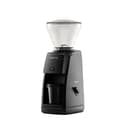 Best for both · Electric, hopper-fed 40 mm Etzinger M2 conical · 40 settings split 1-20 espresso / 21-40 filter · factory-calibrated · 300 g hopper, 120 g bin · 70 W, 550 RPM · 1-year warranty The dial is literally divided into an espresso range and a filter range. | The dial is literally divided into an espresso range and a filter range.40 mm Etzinger M2 conical · 40 settings split 1-20 espresso / 21-40 filter · factory-calibrated · 300 g hopper, 120 g bin · 70 W, 550 RPM · 1-year warranty | $199.95In stock, checked October 17, 2026 Check Price on Amazon |
| 2 | 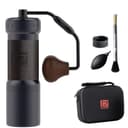 #2 1Zpresso K-Ultra Manual Coffee Grinder Best hand grinder · Hand, all-round Stainless conical 'K Burr' set · external dial, 20 microns per click, 100+ clicks per rotation · 35-40 g magnetic catch cup · 700 g · case included · 1-year limited A hundred clicks per rotation makes crossing the range quick. | A hundred clicks per rotation makes crossing the range quick.Stainless conical 'K Burr' set · external dial, 20 microns per click, 100+ clicks per rotation · 35-40 g magnetic catch cup · 700 g · case included · 1-year limited | $259.00In stock, checked October 17, 2026 Check Price on Amazon |
| 3 | 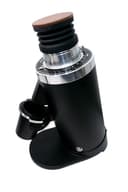 #3 DF64 Gen 2 Best stepless · Step up 64 mm flat (stainless or Red Titanium) · stepless micrometric · 50 g single-dose bellows hopper · 250 W, 1,400 RPM · 15 lb · 1-year warranty Land anywhere you like — and swap in aftermarket 64 mm burrs later. | Land anywhere you like — and swap in aftermarket 64 mm burrs later.64 mm flat (stainless or Red Titanium) · stepless micrometric · 50 g single-dose bellows hopper · 250 W, 1,400 RPM · 15 lb · 1-year warranty | $389.00In stock, checked October 17, 2026 Check Price on Amazon |
| 4 | 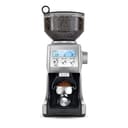 #4 Breville Smart Grinder Pro (BCG820) Most programmable · Mid Stainless conical (Breville publishes no diameter) · 60 stepped settings · grind time programmable in 0.2 s steps · 18 oz hopper · 165 W · 1-year warranty Breville's own claim: finest espresso to coarsest French press, in 60 steps. | Breville's own claim: finest espresso to coarsest French press, in 60 steps.Stainless conical (Breville publishes no diameter) · 60 stepped settings · grind time programmable in 0.2 s steps · 18 oz hopper · 165 W · 1-year warranty | $199.95In stock, checked October 17, 2026 Check Price on Amazon |
| 5 | 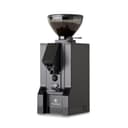 Compact stepless · Italian, stepless 50 mm flat burrs · stepless micrometric collar · compact body, no touch panel · Eureka publishes no warranty term Stepless adjustment in the smallest footprint here. | Stepless adjustment in the smallest footprint here.50 mm flat burrs · stepless micrometric collar · compact body, no touch panel · Eureka publishes no warranty term | $299.00In stock, checked October 17, 2026 Check Price on Amazon |
The four picks
Baratza Encore ESP — the dial that was designed for this
| Type | Electric |
|---|---|
| Burrs | 40 mm conical steel (M2), made by Etzinger in Liechtenstein |
| Adjustment | 40 stepped settings, adjusted by twisting the hopper. Dual range: 1-20 espresso, 21-40 filter. |
| Stepless? | No — it clicks between steps (most grinders described as 'stepless' online aren't) |
| Good for espresso? | Yes, and it is the headline use — Baratza: 'delivers the grind resolution you need to brew creamy, syrupy shots of espresso' |
| Capacity | 300 g hopper, 120 g grounds bin |
| Motor | 70 W, 550 RPM. Grinds 1.3-2.2 g/sec. |
| Dimensions | 13 x 15 x 34 cm (W x D x H) |
| Weight | 7 lb (3.1 kg) |
| Warranty | 1 year |
Who it is for: the household that pulls shots on weekdays and brews V60 at the weekend, and wants one machine and one number for each job.
Baratza re-engineered the Encore for espresso and in doing so built the cleanest answer to this page's question. Settings 1-20 are fine micro-steps for espresso; 21-40 are coarser macro-steps for filter. You get appropriate resolution at both ends and a numbered position to return to, which is exactly what you want when you are switching back and forth. The burrs are 40 mm conical steel M2 from Etzinger, each unit is factory-calibrated, and Baratza's parts and repair documentation means a worn grinder is a repair rather than a replacement.
The honest cons. It is stepped, so some coffees will want to sit between two clicks. The 70 W motor at 550 RPM grinding 1.3-2.2 g per second is unhurried. And it is hopper-fed, so some coffee lives in the machine between doses.
1Zpresso K-Ultra — the hand grinder that crosses the range fastest
| Burrs | Stainless conical, 1Zpresso's 'K Burr' set |
|---|---|
| Adjustment | External dial, 20 microns per click, more than 100 clicks per rotation |
| Stepless | No — clicked |
| Capacity | 35-40 g magnetic catch cup |
| Weight | 700 g |
| Warranty | 1 year limited |
| In the box | Carrying case included |
Who it is for: the brewer who wants one grinder for everything, does not want a motor on the counter, and is happy to turn a handle for a dose.
This is the hand grinder for people who brew more than one way. Twenty microns per click is coarser than 1Zpresso's espresso-tuned J-Ultra, and that is the point: with more than a hundred clicks per rotation, moving from espresso to pour over is a couple of turns of the external dial, and the numbers on it let you note each setting. The 35-40 g catch cup takes a double espresso dose or a single filter dose, and a carrying case is included.
The honest cons.Twenty microns per click is twice the J-Ultra's step, so pure espresso specialists will prefer that grinder — the comparison is in J-Ultra vs K-Ultra. And it is a hand grinder: one dose is pleasant, four on a weekday morning is work.
DF64 Gen 2 — if you would rather have no steps at all
| Type | Electric |
|---|---|
| Burrs | 64 mm flat — stainless, or Red Titanium (TiCN) coated |
| Adjustment | Stepless micrometric |
| Stepless? | Yes — genuinely stepless |
| Good for espresso? | Yes — the stepless adjustment is sold specifically on easier espresso dial-in |
| Capacity | 50 g single-dose bellows hopper |
| Motor | 250 W, 1400 RPM |
| Dimensions | 13 x 22.5 x 30 cm (W x D x H) |
| Weight | 15 lb (6.8 kg) |
| Warranty | 1 year |
Who it is for: the enthusiast who changes beans often, weighs every dose, and wants to land exactly where the brew wants to be rather than at the nearest click.
Stepless micrometric adjustment removes the compromise entirely: there is no nearest setting, only the setting you choose. Sixty-four millimetres of flat burr is the largest here, the 50 g single-dose bellows hopper means nothing stale sits in the machine between an espresso session and a filter one, and the 64 mm platform is the one aftermarket burr sets are built for. If you are already the kind of person who keeps dial-in notes, this is the most capable grinder on the page.
The honest cons. Stepless means no number to return to, so switching between two brew methods daily means re-dialing or keeping records. At 15 lb and 13 x 22.5 x 30 cm it is a real appliance. And it costs considerably more than the Baratza.
Breville Smart Grinder Pro — the programmable all-rounder
| Type | Electric |
|---|---|
| Burrs | Stainless steel conical |
| Adjustment | 60 stepped settings. Grind time is separately programmable in 0.2-second increments. |
| Stepless? | No — it clicks between steps (most grinders described as 'stepless' online aren't) |
| Good for espresso? | Yes — Breville: '60 precise grind settings from the finest espresso to the coarsest French Press grind' |
| Capacity | 18 oz (Breville publishes ounces only — no gram figure exists) |
| Motor | 165 W. RPM not published. |
| Dimensions | 8.5" W x 6.3" D x 15.3" H |
| Weight | 6.39 lb (2.9 kg) |
| Warranty | 1 year |
Who it is for: the buyer who wants one grinder for the whole brew spectrum with a dose timer, and especially the owner of a Breville machine.
Breville makes the dual-purpose claim directly: 60 settings "from the finest espresso to the coarsest French Press grind." Grind time is separately programmable in 0.2-second increments, so a repeatable dose is a button rather than a judgement, and both 50-54 mm and 58 mm portafilter cradles are in the box — it grinds straight into a portafilter, which is why it pairs so naturally with a Breville machine.
The honest cons.Breville publishes no burr diameter for it anywhere, so the most important structural comparison on this page cannot be made for this grinder — any "40 mm burr" figure you read elsewhere is not manufacturer-sourced. Dosing by time rather than by weight also drifts as beans age. And at the time of writing we have no verified price for it, so the button above will send you to Amazon to check rather than quoting a number we cannot stand behind.
When two grinders is the right answer
We would rather talk you out of a purchase than sell you a compromise. There are two cases where one grinder is the wrong plan.
If you pull espresso every day and brew filter every day, two grinders will make both drinks better and save you the twice-daily dial dance. A dedicated espresso grinder — the options are here — plus a cheap, wide-range hand grinder for filter is a common and sensible setup, and it often costs less than one grinder good enough to do both without complaint.
If espresso is 95% of what you drink, buy the espresso grinder and accept a slightly imperfect pour over. The 1Zpresso J-Ultra at 8 microns per click or the stepless DF-series will both reach filter grinds; they are just slower to get there.
For a smaller footprint in the stepless camp, the Eureka Mignon Nottebrings the Mignon platform's stepless micrometric collar and 50 mm flat burrs in a compact body — bearing in mind that Eureka publishes no warranty term at all.
Which one for which brewer
| If this is you | Buy | Because |
|---|---|---|
| Espresso on weekdays, pour over at weekends | Baratza Encore ESP | Two ranges, two sets of step sizes, numbered settings. |
| You want no motor on the counter | 1Zpresso K-Ultra | 100+ clicks per rotation crosses the range in two turns. |
| You change coffees weekly and weigh everything | DF64 Gen 2 | Stepless adjustment and a single-dose hopper. |
| You own a Breville machine | Smart Grinder Pro | Grinds into the portafilter; both cradle sizes in the box. |
| You want a programmable dose by time | Smart Grinder Pro | Grind time adjustable in 0.2-second increments. |
| Counter space is tight | Encore ESP or Mignon Notte | 13 cm wide, and the Mignon is deliberately compact. |
| Espresso is nearly all you drink | Neither — a dedicated espresso grinder | Buy for the 95%, not the 5%. |
| You brew both, daily, and have the budget | Two grinders | No dial dance, and both drinks get the right tool. |
The verdict
The Baratza Encore ESP is the answer for most people asking this question. Its split dial is a direct solution to the dual-purpose problem rather than a compromise, it arrives calibrated, and it is repairable. If you want the same flexibility without a motor, the 1Zpresso K-Ultra is the hand grinder built for range, and the included case makes it the travel answer as well.
Spend more and the DF64 Gen 2 gives you stepless freedom and the most upgradeable burr platform in the bracket. The Breville Smart Grinder Pro is the one to buy if you own a Breville machine and want to grind straight into the portafilter, with the caveat that Breville will not tell you how big its burrs are.
And if you take one thing from this page, take the sizing question seriously: a grinder is the component that decides most of what lands in the cup, which we argue in full in why the grinder matters more than the machine.
What we know, and how we know it
What we did
- Took the specs from the manufacturer's own documentation — Baratza's Encore ESP product page, 1Zpresso's K-Ultra product page, DF Grinders' DF64 specifications and Breville's BCG820 product page. Not from a retailer listing, and not from another blog.
- Priced it from Amazon's API, with the date we checked shown next to the number. If that price is more than 48 hours old, this page stops showing a number at all rather than show you a wrong one.
- Formed a verdict from those specs, the price, and what owners publicly report.
Where we hedged, and why
We have not ground coffee with these grinders, we run no lab, and we have measured no particle distributions. Every figure on this page is the manufacturer's: the 1-20 / 21-40 split and the 40 mm Etzinger M2 burrs from Baratza, 20 microns per click and 100+ clicks per rotation from 1Zpresso, 64 mm flat and stepless micrometric from DF Grinders, 60 settings and 0.2-second grind-time steps from Breville.
Two gaps we will not fill. Breville publishes no burr diameter for the BCG820 — the only mm figures on their page are the portafilter cradle sizes — so we cannot compare it on burr size, and we have not borrowed a figure from elsewhere. And nobody in this bracket publishes particle distribution data, so this page compares published adjustment and burr specifications rather than claiming one grinder produces a more uniform grind than another. No price appears in our prose; every number here is live from Amazon with the date it was checked, and where we have no verified price the button simply says so.
What we did not do
We do not run a lab. We have not pulled thousands of shots on this machine, and we are not going to pretend otherwise. We have not used this unit ourselves. Everything above is sourced research, and it is labeled as such. Where we have used a machine, we say so and show it.
How we're paid
If you buy through a link on this page, we earn a commission. It costs you nothing extra and it does not change what we recommend — we link to the better option for the buyer even when it earns us less. See how we review and our full disclosure.
Frequently asked questions
Can one grinder really do both espresso and pour over?
Yes, if it has fine enough steps for espresso and enough total range to reach filter quickly. The Baratza Encore ESP is the clearest example because Baratza splits the dial deliberately: settings 1-20 are fine micro-steps for espresso, 21-40 coarser macro-steps for filter. Grinders with one uniform step size across the whole range are the ones that end up frustrating at one end or the other.
What is the best hand grinder for espresso and pour over?
The 1Zpresso K-Ultra. Its external dial moves 20 microns per click with more than 100 clicks per rotation, so crossing from an espresso setting to a pour-over setting takes a couple of turns rather than twenty, and the numbered dial means you can note both positions. If espresso is overwhelmingly your main drink, the J-Ultra's 8 microns per click is the better espresso tool but slower to move across the range.
Is a stepless grinder better for brewing two ways?
It gives you more precision but less repeatability. Stepless adjustment lets you land exactly where a brew wants to be instead of at the nearest click, which enthusiasts value. The cost is that there is no number to return to, so switching between an espresso setting and a pour-over setting every day means keeping your own notes or re-dialing each time.
How much do I need to spend for a grinder that does both?
Around $200 buys a grinder with a dial designed for both jobs. Below that, electric grinders generally have adjustment too coarse to hold an espresso setting, and the honest alternative under $100 is a hand grinder — the picks are in our under-$100 roundup. Spending more buys stepless adjustment, bigger burrs and single-dosing rather than extra capability at either end.
Should I just buy two grinders instead?
If you brew both methods every day, two grinders is genuinely better: each is set once, and you skip the twice-daily dial change. A dedicated espresso grinder plus a cheap wide-range hand grinder for filter can cost less than one grinder good enough to do both without complaint. If one method is 90% of your drinking, buy for that method.
Does burr size matter for dual-purpose grinding?
Burr diameter and geometry set the ceiling on consistency, so bigger generally helps — but it is not what decides whether a grinder can do both jobs. Adjustment does. A 64 mm flat burr with coarse steps is still awkward for espresso, while a 40 mm conical with a split espresso/filter range is comfortable at both. Prefer makers who publish the burr size; several in this bracket do not.
Sources
Specs come from the manufacturer's own documentation. Prices come from Amazon's API. Where a claim comes from what owners report, we link the thread and say so.
- Baratza Encore ESP product page (40 mm Etzinger M2 conical; 40 settings split 1-20 espresso / 21-40 filter; factory-calibrated; 70 W, 550 RPM, 1.3-2.2 g/sec)
- 1Zpresso K-Ultra official product page (20 microns per click, 100+ clicks per rotation, 35-40 g catch cup, 700 g, case included)
- DF Grinders — DF64 technical specifications (64 mm flat, stepless micrometric, 50 g single-dose bellows hopper, 250 W / 1400 RPM, 15 lb)
- Breville BCG820 product page (60 stepped settings 'from the finest espresso to the coarsest French Press grind', grind time programmable in 0.2 s increments, 165 W; no burr diameter published)
- National Coffee Association — how to brew coffee (grind guidance by method)
Keep reading
- The best grinders for espressoIf espresso is most of what you drink, start here instead.
- The best grinder for pour overThe filter-first version of this page.
- Grind size chartHow far apart the two brew windows actually sit.
- How to choose a coffee grinderThe full decision framework, in order.
- Single dose vs hopperWhy switching brew methods makes single-dosing attractive.
- Baratza Encore ESP vs DF54Stepped and serviceable against stepless and single-dose.