
Espresso machines · Iced coffee
The Best Espresso Machines for Iced Coffee
Ice dilutes. That one fact changes which machine you should buy — and only two of the machines we cover publish an iced function at all.
The short answer
Buy the Philips 4400 Series LatteGo for iced coffee: Philips publishes 12 presets including iced drinks plus a hot-water spout, with one-touch LatteGo milk, so an iced latte is one button and the machine keeps up with several. The budget pick is the De'Longhi Stilosa, the cheapest machine here that pulls a shot strong enough to survive ice.
We earn a commission if you buy through a link on this page. It costs you nothing extra and it does not change what we recommend. Full disclosure.
All five picks, compared
Every pick on this page in one view, with the live Amazon price and stock on each row. Specs are the figures the maker or the listing publishes — nothing measured or scored by us. Prices are read from Amazon's API and were last checked November 6, 2026; where we have no verified price, the row says so rather than show you an old number.
| # | Machine | Who it's for | Price & availability |
|---|---|---|---|
| 1 | 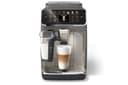 #1 Philips 4400 Series LatteGo Best overall · Super-automatic 12 one-touch presets including iced drinks and hot water · color display, up to 2 saved profiles · three-part tube-free LatteGo carafe, rinses in about 10 seconds · QuickStart · SilentBrew, Quiet Mark certified · 2-year warranty For the household making iced lattes on repeat and wanting one button. | For the household making iced lattes on repeat and wanting one button.12 one-touch presets including iced drinks and hot water · color display, up to 2 saved profiles · three-part tube-free LatteGo carafe, rinses in about 10 seconds · QuickStart · SilentBrew, Quiet Mark certified · 2-year warranty | $737.45In stock, checked November 6, 2026 Check Price on Amazon |
| 2 | 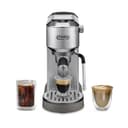 #2 De'Longhi Dedica Duo (EC890M) Only real cold brew · Semi-automatic One-touch Cold Extraction cold brew preset, which De'Longhi says runs in under five minutes · 15 cm wide · Thermoblock · 15 bar · 1.1 L tank · 1450 W · 9.2 lb · no PID; De'Longhi publishes no portafilter size For the iced-coffee drinker on a narrow counter who wants actual cold brew. | For the iced-coffee drinker on a narrow counter who wants actual cold brew.One-touch Cold Extraction cold brew preset, which De'Longhi says runs in under five minutes · 15 cm wide · Thermoblock · 15 bar · 1.1 L tank · 1450 W · 9.2 lb · no PID; De'Longhi publishes no portafilter size | $249.00In stock, checked November 6, 2026 Check Price on Amazon |
| 3 | 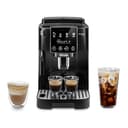 #3 De'Longhi Magnifica Start (ECAM22022) Cheapest bean-to-cup · Super-automatic Built-in conical burr, 13 grind settings, 250 g hopper · Thermoblock · 15 bar · 1.8 L tank — the largest here · 1250 W · manual frother, NOT the automatic LatteCrema system · De'Longhi publishes no warranty term for this model For volume on a budget, if you will froth cold milk yourself. | For volume on a budget, if you will froth cold milk yourself.Built-in conical burr, 13 grind settings, 250 g hopper · Thermoblock · 15 bar · 1.8 L tank — the largest here · 1250 W · manual frother, NOT the automatic LatteCrema system · De'Longhi publishes no warranty term for this model | $599.95In stock, checked November 6, 2026 Check Price on Amazon |
| 4 | 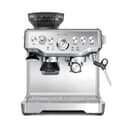 #4 Breville Barista Express (BES870XL) Best hands-on · Semi-automatic, grinder built in 54 mm portafilter · PID · steel conical burrs, 16 settings, 250 g hopper · Thermocoil · 15 bar, pre-infusion · 2 L tank · 22.09 lb · 1-year limited warranty For someone who wants to pull a deliberately strong iced shot by hand. | For someone who wants to pull a deliberately strong iced shot by hand.54 mm portafilter · PID · steel conical burrs, 16 settings, 250 g hopper · Thermocoil · 15 bar, pre-infusion · 2 L tank · 22.09 lb · 1-year limited warranty | $499.95In stock, checked November 6, 2026 Check Price on Amazon |
| 5 | 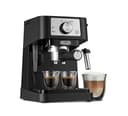 #5 De'Longhi Stilosa (EC260BK) Budget pick · Semi-automatic Stainless steel boiler — a real boiler, not a Thermoblock · 15 bar · 1 L tank · 1100 W · 8.61 lb · pannarello frother · 1-year warranty plus 1 with registration For the cheapest shot strong enough to pour over ice and not vanish. | For the cheapest shot strong enough to pour over ice and not vanish.Stainless steel boiler — a real boiler, not a Thermoblock · 15 bar · 1 L tank · 1100 W · 8.61 lb · pannarello frother · 1-year warranty plus 1 with registration | $149.95In stock, checked November 6, 2026 Check Price on Amazon |
What ice actually does to a shot
Pour a normal double shot over a glass of ice and two things happen at once. The ice melts and adds water, and the coffee drops 60 degrees in a few seconds. Both of those thin the drink: by the time you are drinking it, a shot that tasted balanced hot tastes watery and sour, because cold suppresses perceived sweetness and body while the meltwater has already diluted the concentration.
The practical consequence is that an iced drink needs more coffee than a hot one of the same size. Most people making iced lattes at home end up pulling a longer or a double-double shot, or brewing two singles. That is the fact that reorders the buying criteria: for iced coffee, how much coffee a machine can make, how quickly, and how little work each extra shot costs you matter more than steam-wand finesse. If you want milk texture and latte art, the page you want is the best espresso machines for lattes — that is a different question and we answer it separately.
It also means the grind and dose matter more, not less. A thin hot shot is drinkable; a thin iced shot is water with a hint of coffee. If your shots currently run fast, read why espresso pours too fast before you blame the machine.
What to look for, in this order
1. A published iced or cold function, if you want one.This is rarer than marketing suggests. Of every machine we cover, exactly two publish anything specific: Philips lists 12 presets on the 4400 Series "including iced drinks and hot water", and De'Longhi publishes a one-touch Cold Extraction cold brew mode on the Dedica Duo that it says runs in under five minutes. Everything else makes iced coffee the way you would make it anyway — pull a shot, pour it over ice — which is completely fine and worth knowing before you pay for a feature that is not there.
2. Throughput. Iced drinks come in rounds. A bean-to-cup machine grinds, doses, tamps and brews on a button, so the second and third drinks cost nothing extra in effort. On a semi-automatic you re-grind and re-dose every time. That is the strongest practical argument for a super-automatic here, and it is why the two picks at the top of this page are bean-to-cup.
3. Tank size. You are making bigger drinks, so you refill more often. The Magnifica Start publishes the largest tank on this page at 1.8 L, the Barista Express 2 L, the Dedica Duo 1.1 L and the Stilosa 1 L. It is a small thing until it is the thing you do four times a day.
4. A hot-water spout, if you drink iced americanos. The Philips 4400 publishes one. It is a genuine convenience: dilute to taste from the machine rather than boiling a kettle to make a drink you are about to chill.
The five picks
Philips 4400 Series LatteGo — the one to buy
Who it is for:the household making iced lattes on repeat and wanting one button to do it. Philips publishes 12 one-touch presets "including iced drinks and hot water", a colour display with up to two saved user profiles, the three-part tube-free LatteGo carafe that rinses in about ten seconds, QuickStart, SilentBrew with Quiet Mark certification, and a two-year warranty. For iced coffee specifically, the combination that matters is the iced presets plus the hot-water spout plus bean-to-cup throughput: a round of three iced drinks is three button presses, not three dosing cycles. The trade is total loss of hands-on control — you cannot dial a shot on this machine, you choose from its menu. If that is a dealbreaker, skip to the Barista Express. We compare it to its cheaper sibling in Philips 3200 vs 4400and to the De'Longhi alternative in Philips 4400 vs Magnifica Evo.
De'Longhi Dedica Duo — the only one that makes real cold brew
Who it is for:the iced-coffee drinker on a narrow counter who wants actual cold brew rather than a chilled shot. The Dedica Duo is the only espresso machine we cover with a dedicated one-touch Cold Extraction mode, which De'Longhi says runs in under five minutes, and at 15 cm wide it is the narrowest real espresso machine you can buy. Published specs: Thermoblock, 15 bar, a 1.1 L tank, 1450 W, 9.2 lb, a "My LatteArt" cool-touch steam wand, no PID — and De'Longhi publishes no portafilter diameter for it anywhere, so neither do we. Two honest cautions. First, five minutes is not a cold steep, so treat the output as a fast cold extraction rather than overnight cold brew; we have not tasted it and we do not tell you how it tastes. Second, most Dedica reviews online describe the discontinued EC885M, not this machine. Full write-up: the Dedica Duo review.
De'Longhi Magnifica Start — bean-to-cup for less
Who it is for: someone who wants bean-to-cup throughput for iced rounds and will froth or pour cold milk themselves. It publishes a built-in conical burr with 13 grind settings and a 250 g hopper, Thermoblock, 15 bar, the largest tank on this page at 1.8 L, and 1250 W on the US 120 V machine. The deliberate cost saving is milk: this is a manualfrother, not the automatic LatteCrema system, which starts at the pricier Evo and Plus tiers. For iced lattes that matters less than it sounds, since you are usually pouring cold milk anyway — which is exactly why this machine is better value for iced drinks than for hot cappuccinos. De'Longhi publishes no warranty term for this model and its own published net and shipping weights contradict each other, so we publish neither. More in the Magnifica Start review.
Breville Barista Express — for pulling iced shots by hand
Who it is for:someone who wants to pull a deliberately strong, short shot for ice and adjust it themselves. Published: a 54 mm portafilter, PID temperature control, steel conical burrs with 16 grind settings and a 250 g hopper, a Thermocoil boiler, 15 bar with pre-infusion, a 2 L tank, 22.09 lb, and a one-year limited warranty — shorter than the Bambino Plus and Barista Pro, both two years. For iced coffee, the useful part is the grinder and the pressure gauge in one box: making a ristretto-style concentrate that does not disappear under meltwater is a dialing exercise, and this is the cheapest machine we cover that gives you the grinder and the feedback to do it. Breville's own sources disagree on wattage (1600 W on the product page, 1750 W on the rating plate in their manual), so we do not pick one. Full write-up: the Barista Express review.
De'Longhi Stilosa — the budget pick
Who it is for:the cheapest honest route to an iced latte at home. The Stilosa is the least expensive machine on this page, and the one genuinely interesting thing on its spec sheet is manufacturer-stated: it is the only De'Longhi here with a real stainless steel boiler rather than a Thermoblock. Also published: 15 bar, a 1 L tank, 1100 W, 8.61 lb, a pannarello-style frother, and a one-year warranty plus a second with registration. It has no iced function, no PID and no grinder, so you supply all three — which is the point: it is the machine to buy when the budget is the constraint and you already have, or will buy, a grinder. See the best espresso machines under $200 for the rest of that tier.
Iced espresso is not cold brew
Worth separating, because the words get used interchangeably and they are different drinks. Iced espresso is hot-extracted coffee chilled by ice: fast, bright, and more acidic, because hot water pulls acids efficiently. Cold brew is coffee steeped cold for hours, which extracts far less acid and reads as smooth and sweet. One is not a substitute for the other, and no espresso machine at any price turns a shot into cold brew by chilling it.
That is why the Dedica Duo's Cold Extraction mode is interesting and also why we hedge on it: De'Longhi says it runs in under five minutes, and five minutes of cold contact is nowhere near an overnight steep. Whether the result lands closer to real cold brew or closer to a chilled americano is a taste question we have not tested, so we will not tell you the answer. If genuine cold brew is what you are after, the cheapest and best route is no machine at all — a jug and a French press, which we walk through in the cold brew guide, with the grind size covered in the best grinders for French press.
What we know, and how we know it
What we did
- Took the specs from the manufacturer's own documentation. Not from a retailer listing, and not from another blog.
- Priced it from Amazon's API, with the date we checked shown next to the number. If that price is more than 48 hours old, this page stops showing a number at all rather than show you a wrong one.
- Formed a verdict from those specs, the price, and what owners publicly report.
Where we hedged, and why
The Dedica Duo, Magnifica Start, Barista Express and Stilosa are all in our machine spec database, sourced from De'Longhi's and Breville's own product pages and manuals. The Philips 4400 Series is not, so its figures are the manufacturer specifications published on its listing — the 12 presets including iced drinks and hot water, the LatteGo rinse claim, QuickStart, the Quiet Mark certification and the two-year warranty.
Where a maker publishes nothing, we say so: no portafilter diameter for the Dedica Duo, no warranty term for the Magnifica Start, no single wattage for the Barista Express because Breville's own sources conflict. We have not made iced drinks on any of these machines, and we have not tasted the Dedica Duo's cold brew — so there is no taste verdict on this page, only the published functions and what dilution does to a shot.
What we did not do
We do not run a lab. We have not pulled thousands of shots on this machine, and we are not going to pretend otherwise. We have not used this unit ourselves. Everything above is sourced research, and it is labeled as such. Where we have used a machine, we say so and show it.
How we're paid
If you buy through a link on this page, we earn a commission. It costs you nothing extra and it does not change what we recommend — we link to the better option for the buyer even when it earns us less. See how we review and our full disclosure.
If one-touch drinks are the appeal, the best super-automatic espresso machines is the full list, and how to choose a super-automatic explains the tiers. If you want to make a strong shot deliberately, start with how to dial in espresso. More on the espresso machines hub.
Frequently asked questions
What is the best espresso machine for iced coffee?
The Philips 4400 Series LatteGo. Philips publishes 12 one-touch presets including iced drinks and a hot-water spout, a LatteGo carafe that rinses in about ten seconds, and bean-to-cup throughput so a round of three iced drinks is three button presses. For a cheaper hands-on route, the De'Longhi Stilosa is the budget pick, and the Dedica Duo is the only machine we cover with a real cold brew mode.
Why does iced espresso taste weak?
Two things happen at once when you pour a shot over ice: the ice melts and dilutes the coffee, and the temperature drops, which suppresses perceived sweetness and body. A shot that tasted balanced hot will taste thin and sour iced. The fix is more coffee per drink - a longer or doubled shot, or a deliberately short, concentrated one - not a different machine.
Do any espresso machines have an iced coffee setting?
Very few, and far fewer than marketing suggests. Of the machines we cover, exactly two publish anything specific: the Philips 4400 Series lists 12 presets including iced drinks and hot water, and the De'Longhi Dedica Duo has a one-touch Cold Extraction cold brew mode that De'Longhi says runs in under five minutes. Every other machine makes iced coffee the normal way: pull a shot, pour it over ice.
Is a super-automatic better for iced coffee?
For volume, yes. Iced drinks come in rounds and need more coffee each, and a bean-to-cup machine grinds, doses and brews on a button so the second and third drinks cost no extra effort. A semi-automatic means re-grinding and re-dosing every time. The trade is that you cannot dial the shot yourself, which matters if you want a deliberately concentrated base.
Does steam power matter for iced lattes?
Hardly at all. An iced latte normally takes cold milk poured straight into the glass with no steaming, so the steam wand - the headline spec in most machine comparisons - is close to irrelevant for this use. What does help is a milk system that is fast to clean. If you want cold foam, a separate milk frother with a cold setting does it better than any machine here.
Is iced espresso the same as cold brew?
No. Iced espresso is hot-extracted coffee chilled with ice, so it is brighter and more acidic. Cold brew is steeped cold for hours, which extracts far less acid and reads smooth and sweet. No espresso machine turns a shot into cold brew by chilling it. For genuine cold brew the cheapest route is a French press and a night in the fridge.
What size water tank do I need for iced drinks?
Bigger than you would for hot ones, because each drink uses more. Among these picks the Breville Barista Express publishes a 2 L tank and the De'Longhi Magnifica Start 1.8 L, while the Dedica Duo is 1.1 L and the Stilosa 1 L. It is a minor spec until you are refilling four times on a hot afternoon.
Can I make iced coffee on a cheap espresso machine?
Yes. Nothing about ice requires an expensive machine - it requires a shot with enough concentration to survive dilution, which is mostly down to grind, dose and a tight extraction rather than the machine's price. The De'Longhi Stilosa is the budget pick here for exactly that reason. Spend the difference on a grinder, which is what actually controls shot strength.
Sources
Specs come from the manufacturer's own documentation. Prices come from Amazon's API. Where a claim comes from what owners report, we link the thread and say so.
- De'Longhi EC890M Dedica Duo product page (one-touch Cold Extraction cold brew mode, 15 cm width, 1.1 L tank, 1450 W)
- Breville Barista Express (BES870XL) product page (54 mm portafilter, PID, 16 grind settings, 2 L tank)
- De'Longhi Magnifica Start (ECAM22022) product page (13 grind settings, 250 g hopper, 1.8 L tank, manual frother)
- De'Longhi Stilosa (EC260) product page (stainless steel boiler, 15 bar, 1 L tank, 1100 W)
- Philips 4400 Series LatteGo - manufacturer specifications as published on the Amazon listing (12 presets including iced drinks and hot water, 3-part LatteGo rinsing in about 10 seconds, QuickStart, SilentBrew / Quiet Mark, 2-year warranty), read November 7, 2026
Keep reading
- Best espresso machines for lattesThe hot-milk question. Steam power and texture, which barely matter for iced drinks.
- How to brew cold brewThe real thing, for the price of a French press and a night in the fridge.
- De'Longhi Dedica Duo reviewThe only machine we cover with a cold brew button, in full — including what we can't tell you.
- Best super-automatic espresso machinesThe full one-touch list, if throughput is what decides it for you.
- Best espresso machines for a familySame throughput problem, hot drinks. The Philips 4400 earns its place there too.
- How to dial in espressoMaking a shot concentrated enough to survive ice is a dialing exercise.