
Grinders · French press
The Best Grinder for French Press
A French press asks one thing of a grinder: coarse grounds with as few fines as possible. That is a far cheaper requirement than espresso — and it is the one job a blade grinder cannot fake.
The short answer
Buy the Breville Smart Grinder Pro: Breville publishes 60 settings spanning the finest espresso to the coarsest French press grind, which is exactly the range a press owner needs. The Baratza Encore ESP is the repairable alternative, the Timemore C3 ESP the cheapest grinder worth owning, and any blade grinder is the wrong answer.
We earn a commission if you buy through a link on this page. It costs you nothing extra and it does not change what we recommend. Full disclosure.
Key takeaways
- A French press needs a coarse grind with few fines. Grind size precision barely matters; grind uniformity matters a lot.
- A metal mesh filter cannot hold fines back the way paper can, so every small particle a grinder makes ends up in your cup as sludge and over-extracted bitterness.
- Burrs are the one non-negotiable. A blade grinder chops at random and produces dust alongside boulders, which is the exact failure mode a press punishes.
- Because resolution is not the constraint, a press owner needs far less grinder than an espresso drinker — real burrs at under $100 are enough.
All five picks, compared
Every pick on this page in one view, with the live Amazon price and stock on each row. Specs are the figures the maker or the listing publishes — nothing measured or scored by us. Prices are read from Amazon's API and were last checked October 10, 2026; where we have no verified price, the row says so rather than show you an old number.
| # | Grinder | Why it's here | Price & availability |
|---|---|---|---|
| 1 | 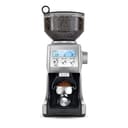 #1 Breville Smart Grinder Pro (BCG820) Best overall · Electric, hopper-fed Stainless conical burrs (diameter not published) · 60 stepped settings, espresso to coarsest French press · grind time programmable in 0.2-second steps · 18 oz hopper · 165 W · 1-year warranty Breville names the French press end of the range in its own specification. | Breville names the French press end of the range in its own specification.Stainless conical burrs (diameter not published) · 60 stepped settings, espresso to coarsest French press · grind time programmable in 0.2-second steps · 18 oz hopper · 165 W · 1-year warranty | $159.95In stock, checked October 10, 2026 Check Price on Amazon |
| 2 | 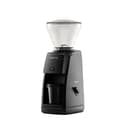 Best to keep for years · Electric, hopper-fed 40 mm conical M2 steel burrs by Etzinger · 40 stepped settings, 21-40 are the coarser filter range · factory-calibrated · 300 g hopper, 120 g bin · 70 W at 550 rpm · 1-year warranty Baratza publishes parts and repair guides, so it is a grinder you fix, not replace. | Baratza publishes parts and repair guides, so it is a grinder you fix, not replace.40 mm conical M2 steel burrs by Etzinger · 40 stepped settings, 21-40 are the coarser filter range · factory-calibrated · 300 g hopper, 120 g bin · 70 W at 550 rpm · 1-year warranty | $199.95In stock, checked October 10, 2026 Check Price on Amazon |
| 3 | 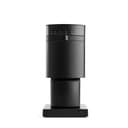 #3 Fellow Opus Conical Burr Grinder Best all-rounder · Electric, bin-fed 40 mm six-blade stainless conical burrs · 41+ settings on an inner ring · 110 g load bin · 6 Nm torque motor · 2-year limited warranty plus a year with US registration Fellow positions it from espresso to cold brew, so press is comfortably inside its range. | Fellow positions it from espresso to cold brew, so press is comfortably inside its range.40 mm six-blade stainless conical burrs · 41+ settings on an inner ring · 110 g load bin · 6 Nm torque motor · 2-year limited warranty plus a year with US registration | $199.95In stock, checked October 10, 2026 Check Price on Amazon |
| 4 | 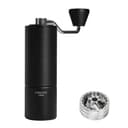 Best manual · Hand grinder 38 mm S2C660 CNC-machined stainless conical burrs · 0.0233 mm per click, 30 clicks per rotation · 20 g catch cup · warranty not published by Timemore Coarse grinding by hand is quick and quiet — a press is the easiest ask for a manual. | Coarse grinding by hand is quick and quiet — a press is the easiest ask for a manual.38 mm S2C660 CNC-machined stainless conical burrs · 0.0233 mm per click, 30 clicks per rotation · 20 g catch cup · warranty not published by Timemore | $99.00In stock, checked October 10, 2026 Check Price on Amazon |
| 5 | 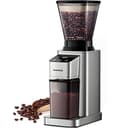 #5 SHARDOR Conical Burr Coffee Grinder Cheapest real burr · Electric, budget Conical burrs rather than blades · multiple grind settings · built-in timer · SHARDOR publishes little verifiable detail beyond that The least you can spend and still own burrs instead of a propeller. | The least you can spend and still own burrs instead of a propeller.Conical burrs rather than blades · multiple grind settings · built-in timer · SHARDOR publishes little verifiable detail beyond that | $69.98In stock, checked October 10, 2026 Check Price on Amazon |
What a press actually needs
A French press is an immersion brewer. The grounds sit in hot water for four minutes, you press a metal mesh plunger through the slurry, and you pour. Nothing about that process is pressurised and nothing about it is fast, which means grind size is a loose variable: a little coarser or a little finer shifts the strength of the cup rather than breaking the brew. Compare that with espresso, where a 25-second window is steered entirely by grind and a single click can ruin the shot.
So the shopping list inverts. For espresso you buy adjustment resolution — the ability to make tiny changes — and you pay a lot for it. For a press you buy uniformity at a coarse setting, and you need surprisingly little else. That is why a grinder that would be hopeless for espresso can be entirely sufficient for a press, and why we would not tell a press-only household to spend espresso money. The method itself is covered properly in our French press guide.
Why fines ruin a press
Here is the mechanism, because it explains every recommendation on this page. All grinders produce a distribution of particle sizes, not a single size: some target-sized grounds, some larger "boulders", and some very small particles called fines. In a pour over, a paper filter catches most of the fines before they reach the cup. A French press has no paper. Its filter is a metal mesh with holes big enough to let fine particles straight through.
That has two consequences you can taste. The fines that pass the mesh land in the cup as sediment — the silt at the bottom of a press mug that everyone assumes is just how press coffee is. And because small particles have far more surface area for their volume, they extract much faster than the grounds around them, so they over-extract during a four-minute steep and push bitterness into a brew whose ideal is heavy, round and sweet. Muddy, bitter press coffee is usually a grind problem wearing a brewing costume.
The one hard rule: burrs
A burr grinder sets a gap between two abrasive surfaces and passes beans through it until they are small enough to fall out. The gap is a size you choose, so the output clusters around it. A blade grinder spins a propeller and chops whatever it hits for as long as you hold the button — so it makes dust and boulders simultaneously, and "coarse" is just a shorter button press with bigger boulders and the same dust.
For espresso that is disqualifying. For a French press it is especially disqualifying, because the press is the one brewer with no paper to protect you from the dust. This is the rare case where the cheap upgrade is the whole upgrade: moving from a blade grinder to even a modest conical burr grinder changes press coffee more than any other single purchase. The full mechanical argument is in burr vs blade grinders.
The five grinders
Breville Smart Grinder Pro — the best overall
| Type | Electric |
|---|---|
| Burrs | Stainless steel conical |
| Adjustment | 60 stepped settings. Grind time is separately programmable in 0.2-second increments. |
| Stepless? | No — it clicks between steps (most grinders described as 'stepless' online aren't) |
| Good for espresso? | Yes — Breville: '60 precise grind settings from the finest espresso to the coarsest French Press grind' |
| Capacity | 18 oz (Breville publishes ounces only — no gram figure exists) |
| Motor | 165 W. RPM not published. |
| Dimensions | 8.5" W x 6.3" D x 15.3" H |
| Weight | 6.39 lb (2.9 kg) |
| Warranty | 1 year |
Who it is for: the household that brews press most mornings and wants the dose to be one button, with enough range left over for drip or espresso later.
Breville's own claim for this grinder is "60 precise grind settings from the finest espresso to the coarsest French Press grind" — the press end is in the specification rather than inferred from the dial. Stainless conical burrs do the actual work, and the feature that matters daily is programmable grind time in 0.2-second increments: once you know how long your press dose takes, grinding becomes a single press of a button rather than a weighing exercise. The 18 oz hopper suits a method that uses a lot of coffee per brew. Note that Breville publishes no burr diameter for it, so we do not state one.
Baratza Encore ESP — the one to keep for years
| Type | Electric |
|---|---|
| Burrs | 40 mm conical steel (M2), made by Etzinger in Liechtenstein |
| Adjustment | 40 stepped settings, adjusted by twisting the hopper. Dual range: 1-20 espresso, 21-40 filter. |
| Stepless? | No — it clicks between steps (most grinders described as 'stepless' online aren't) |
| Good for espresso? | Yes, and it is the headline use — Baratza: 'delivers the grind resolution you need to brew creamy, syrupy shots of espresso' |
| Capacity | 300 g hopper, 120 g grounds bin |
| Motor | 70 W, 550 RPM. Grinds 1.3-2.2 g/sec. |
| Dimensions | 13 x 15 x 34 cm (W x D x H) |
| Weight | 7 lb (3.1 kg) |
| Warranty | 1 year |
Who it is for: the buyer who brews press now but expects to own an espresso machine eventually, and wants a grinder that outlives both.
The Encore ESP is espresso-first by design — settings 1-20 are fine micro-steps — but settings 21-40 are the coarser macro-step range intended for filter, which is where a press lives. The burrs are 40 mm conical M2 steel made by Etzinger, the hopper holds 300 g, and every unit is factory calibrated. The real argument for it on a press page is longevity: Baratza publishes parts diagrams and repair guides, so this is a grinder you service rather than replace. If espresso is genuinely never happening, you are paying for a fine range you will not use — in which case the Breville or the Timemore is the better-matched buy.
Fellow Opus — the all-rounder
| Burrs | 40 mm six-blade stainless conical |
|---|---|
| Adjustment | 41+ settings via an inner adjustment ring |
| Capacity | 110 g load bin |
| Motor | 6 Nm torque |
| Warranty | 2-year limited, plus a further year with free US registration |
| Positioning | Fellow positions it across the full range, from espresso to cold brew |
Who it is for: the house that makes press, pour over and the occasional espresso, and wants one good-looking grinder for all of it.
Fellow positions the Opus across the whole range from espresso to cold brew, and cold brew is coarser than press — so a press grind is comfortably inside its intended use rather than at the edge of it. The 110 g load bin suits press dosing, since a press brew uses a lot of coffee at once, and the warranty is the longest here. One current caveat: Fellow has moved the line on to the Opus 2 with larger 48 mm burrs, so availability of the original comes and goes and the price swings with it. We compare it directly with the Baratza in Encore ESP vs Fellow Opus.
Timemore Chestnut C3 ESP — the manual pick
| Type | Manual hand grinder |
|---|---|
| Burrs | 38 mm S2C660 conical, stainless steel, CNC-machined |
| Adjustment | The ESP dial gives 0.0233 mm per click (30 clicks per rotation). The standard C3's 'Classic' dial is nearly four times coarser at 0.0833 mm per click. For espresso that difference is the entire ballgame — make sure you are buying the ESP. |
| Stepless? | No — it clicks between steps (most grinders described as 'stepless' online aren't) |
| Good for espresso? | Yes, with the ESP dial — Timemore: 'ESP and ESP Pro models feature finer control for espresso dialing' |
| Capacity | 20 g catch cup |
| Dimensions | Not published by Timemore. |
| Weight | Not published by Timemore. (The 530 g figure you'll see quoted everywhere comes from retailers, not from Timemore.) |
| Warranty | Not published — timemore.com has no warranty page at all. |
Who it is for: one or two press drinkers a day who would rather spend the money on burrs than on a motor.
Hand grinding has a reputation for being hard work, and that reputation comes almost entirely from espresso. Coarse grinding is the easy end: the burrs meet much less resistance, so a press dose goes through quickly and quietly. The C3 ESP brings 38 mm S2C660 CNC-machined stainless conical burrs — a published burr specification, which is more than Breville or SHARDOR give you — for less than either electric here. The 20 g catch cup is the real limit: a 1-litre press wants more coffee than that, so a big brew means two loads. Timemore publishes no warranty at all, which you should factor in.
SHARDOR conical burr grinder — the cheapest real burr
Who it is for: someone replacing a blade grinder on the same budget who will not hand-grind.
If the choice is between this and a blade grinder, this wins and it is not close: conical burrs instead of a propeller, multiple grind settings and a built-in timer, at a blade grinder price. That is the entire recommendation, and it is a real one for a press owner, because the press is where blade-grinder dust does the most damage. Be clear-eyed about the rest: SHARDOR publishes very little verifiable specification, so we recommend it for what it plainly is rather than for numbers we cannot check, and the step from here to the Breville or the Baratza is a real step in build and consistency.
How coarse is coarse?
Press grind is usually described as resembling coarse sea salt or breadcrumbs — distinct particles you can see individually, nothing powdery. On a 40-setting grinder like the Encore ESP you are up in the macro-step range above 21; on a 60-setting Breville you are near the top of the dial; on a hand grinder you are several rotations out from the burrs touching. Our grind size chart puts the methods side by side so you can see how far apart press and espresso sit.
Two practical notes. First, going coarser is not a fix for bitterness on its own — if your press tastes harsh, the fines are the likelier cause, and only better burrs reduce those. Second, press is forgiving enough that you should treat grind as a strength dial: coarser and the cup gets lighter and cleaner, finer and it gets heavier and muddier. Find the setting you like and leave it there, which is a luxury no espresso drinker gets.
Why this costs less than espresso
It is worth stating plainly, because the grinder market is priced around espresso. The expensive parts of an espresso grinder are fine adjustment resolution, low retention and the rigidity to hold a setting under load at a very fine grind. A press needs none of those. It needs burrs, a coarse range, and a reasonably consistent output.
So if you brew press and only press, you can stop reading the espresso-grinder arguments entirely — a sub-$100 burr grinder is a legitimate end state rather than a stepping stone, and the money is better spent on fresher beans. If there is any chance of an espresso machine in your future, buy one of the two electrics above instead, since both reach the fine end too. The argument about which to buy first is in machine or grinder first.
The verdict
For most press drinkers the Breville Smart Grinder Pro is the buy: Breville explicitly specifies the coarsest French press grind in its 60-setting range, the burrs are conical steel, and programmable grind time turns the daily dose into one button. The Baratza Encore ESP is the better long-term purchase if espresso is anywhere in your future, because of the Etzinger burrs and the published repair documentation. The Fellow Opus is the one to buy if it has to be beautiful and cover every brew method you own.
If the budget is tight, the honest advice is not to stretch — buy the Timemore C3 ESP and crank it, or the SHARDOR if you will not, and put the saved money into coffee bought closer to its roast date. For a press, that trade is almost always the better-tasting one. Then get the method right in our French press guide, or see how the press compares with the other immersion option in AeroPress vs French press.
What we know, and how we know it
What we did
- Took the specs from the manufacturer's own documentation — Manufacturer product pages for Breville, Baratza, Timemore and Fellow. Not from a retailer listing, and not from another blog.
- Priced it from Amazon's API, with the date we checked shown next to the number. If that price is more than 48 hours old, this page stops showing a number at all rather than show you a wrong one.
- Formed a verdict from those specs, the price, and what owners publicly report.
Where we hedged, and why
We have not used these grinders and we run no lab, so there is no particle-size analysis or blind tasting behind this page. The Breville, Baratza and Timemore grinders are in our spec database and their tables are generated from it. The Fellow Opus is not, so its table is rendered inline from Fellow's own published specification. SHARDOR publishes very little verifiable detail, so it has no spec table at all and is recommended for what it plainly is — a genuine conical burr grinder at a blade grinder price.
The fines argument is mechanical, not measured by us. That burr grinders produce a tighter particle distribution than blade grinders, and that a metal mesh filter passes fines a paper filter would hold back, are properties of how the equipment works. We do not attach percentages to either, because we have not measured them and no instrumented dataset we could cite covers these specific grinders.
Breville publishes no burr diameter for the Smart Grinder Pro and Timemore publishes no warranty, weight or dimensions; both absences are stated rather than filled in. No price appears in our prose — every number on this page is live from Amazon and carries the date it was checked.
What we did not do
We do not run a lab. We have not pulled thousands of shots on this machine, and we are not going to pretend otherwise. We have not used this unit ourselves. Everything above is sourced research, and it is labeled as such. Where we have used a machine, we say so and show it.
How we're paid
If you buy through a link on this page, we earn a commission. It costs you nothing extra and it does not change what we recommend — we link to the better option for the buyer even when it earns us less. See how we review and our full disclosure.
Frequently asked questions
What grind size do you need for a French press?
Coarse — usually described as resembling coarse sea salt or breadcrumbs, with distinct particles and nothing powdery. On a 40-setting grinder that is the upper macro-step range; on a 60-setting Breville it is near the top of the dial. More important than the exact number is the absence of fines, because a press has no paper filter to hold them back.
Can I use a blade grinder for French press?
You can, but it is the worst pairing in coffee. A blade grinder chops rather than sizing, so it produces dust and boulders at the same time, and a French press has a metal mesh filter that lets that dust straight into the cup as sediment and bitterness. Moving from a blade grinder to even a modest conical burr grinder changes press coffee more than any other single purchase.
Do I need an expensive grinder for French press?
No. Expensive grinders are priced around espresso, which needs fine adjustment resolution, low retention and rigidity at a very fine grind. A press needs burrs, a coarse range and reasonable consistency. A sub-$100 conical burr grinder is a legitimate end state for a press-only household, and the money saved is better spent on fresher beans.
Is a hand grinder good for French press?
Yes — it is the easiest ask you can make of one. Hand grinders are hard work at espresso settings because fine grinding meets a lot of resistance; coarse grinding goes through quickly and quietly. The limit is capacity: the Timemore C3 ESP holds 20 g per load, so a 1-litre press needs two loads.
Why is my French press coffee muddy and bitter?
Most often fines. Small particles pass through the metal mesh into the cup as sediment, and because they have more surface area for their volume they over-extract during a four-minute steep and add bitterness. Grinding coarser on a blade grinder does not fix it, because blades make dust at every setting. Better burrs do.
Can one grinder do French press and espresso?
Yes, if it reaches the fine end properly. The Breville Smart Grinder Pro spans espresso to the coarsest press grind across 60 settings, and the Baratza Encore ESP splits 40 settings into a fine espresso range and a coarser filter range. A press-only grinder does not need that fine end at all, so only pay for it if espresso is genuinely in your plans.
Sources
Specs come from the manufacturer's own documentation. Prices come from Amazon's API. Where a claim comes from what owners report, we link the thread and say so.
- Breville Smart Grinder Pro (BCG820) product page — '60 precise grind settings from the finest espresso to the coarsest French Press grind', stainless conical burrs, programmable grind time, 18 oz hopper, 165 W
- Baratza Encore ESP product page (40 mm Etzinger M2 conical burrs, 40 stepped settings with 21-40 as the filter range, factory calibration, 300 g hopper)
- Timemore Chestnut C3 series official specifications (38 mm S2C660 CNC-machined stainless conical burrs, 20 g catch cup; no warranty, weight or dimensions published)
- Fellow Opus published specification (40 mm six-blade stainless conical burrs, 41+ settings, 110 g load bin, espresso-to-cold-brew positioning)
- Specialty Coffee Association — coffee research and standards
Keep reading
- The French press guideThe method itself: ratio, steep time and the filtering step that actually goes wrong.
- Burr vs blade grindersWhy a press is the brewer that punishes a blade grinder hardest.
- The best grinder for pour overThe other filter method, and why paper changes the fines argument.
- Coffee grind size chartHow far apart press and espresso sit on the same dial.
- The best grinders under $100Where a press-only budget lands, and what it buys.
- AeroPress vs French pressThe other immersion brewer, and which one suits your mornings.