
Grinders · Comparison
Baratza Encore ESP vs Fellow Opus
Two conical burr grinders that usually land within a few dollars of each other, built on opposite premises: one is espresso-first and factory-calibrated, the other is an all-purpose grinder that happens to reach espresso.
The short answer
Buy the Baratza Encore ESP if espresso is the job: its 40 settings are split into a dedicated 1-20 espresso range and a 21-40 filter range, each unit is factory-calibrated, and Baratza publishes parts and repair guides. Choose the Fellow Opus only if you want one grinder from espresso to cold brew.
We earn a commission if you buy through a link on this page. It costs you nothing extra and it does not change what we recommend. Full disclosure.
The short answer
These two grinders usually sit within a few dollars of each other, and that is the only thing they genuinely share. The Baratza Encore ESP is an espresso grinder with a filter range alongside it: Baratza re-engineered its entry-level classic specifically for espresso, split the 40 settings into fine micro-steps (1-20) and coarser macro-steps (21-40), and calibrates every unit at the factory. The Fellow Opus is the opposite proposition — an all-purpose grinder Fellow positions for everything from espresso to cold brew, with 41-plus settings on an inner adjustment ring, a 110 g load bin and a two-year warranty.
If espresso is why you are buying a grinder, buy the Encore ESP. A dial that spends half its travel on espresso gives you somewhere to go when a shot runs three seconds fast, and factory calibration means setting 8 is a real espresso setting rather than a guess. If you brew espresso on Saturdays and filter, French press and cold brew the rest of the week, the Opus is the more honest fit for your actual life — with one significant caveat we deal with below, because Fellow has already moved the line on to the Opus 2.
Neither of these is a hand grinder, and at this money a manual grinder is a real alternative that buys better burrs for less — the argument either way is in hand vs electric grinders.
Same money, different premise
Both are 40 mm conical burr grinders. Both are hopper-or-bin fed rather than true single-dosers. Both are stepped rather than stepless. On paper they look like the same class of machine, and the price usually agrees. The difference is what the makers built them to do, and it shows up in exactly one place: how the adjustment range is spent.
- Baratza spends half the dial on espresso. Settings 1-20 are fine micro-steps intended for espresso; 21-40 are coarser macro-steps for filter. You adjust by twisting the hopper. That split is the entire design intent of the ESP version, and it is why the grinder exists alongside the standard Encore.
- Fellow spends the dial on everything.The Opus offers 41-plus settings with an inner adjustment ring, and Fellow's own positioning spans espresso through to cold brew. A range that wide has to put fewer clicks inside any one brew method's useful window.
That is not a knock on the Opus. A grinder that covers espresso, pour over, press and cold brew is the right buy for a lot of households, and most people brew more filter coffee than they admit. But it does mean the two grinders answer different questions, and the right one for you depends on which question you are actually asking. If that is still open, start with how to choose a coffee grinder.
Baratza Encore ESP: the espresso one
| Type | Electric |
|---|---|
| Burrs | 40 mm conical steel (M2), made by Etzinger in Liechtenstein |
| Adjustment | 40 stepped settings, adjusted by twisting the hopper. Dual range: 1-20 espresso, 21-40 filter. |
| Stepless? | No — it clicks between steps (most grinders described as 'stepless' online aren't) |
| Good for espresso? | Yes, and it is the headline use — Baratza: 'delivers the grind resolution you need to brew creamy, syrupy shots of espresso' |
| Capacity | 300 g hopper, 120 g grounds bin |
| Motor | 70 W, 550 RPM. Grinds 1.3-2.2 g/sec. |
| Dimensions | 13 x 15 x 34 cm (W x D x H) |
| Weight | 7 lb (3.1 kg) |
| Warranty | 1 year |
Who it is for: the person whose main drink is espresso and who wants a grinder that is right out of the box and repairable for years afterwards.
The specification that matters most here is not the burr diameter — it is the dual range. Baratza's own description of the ESP is that it "delivers the grind resolution you need to brew creamy, syrupy shots of espresso", and the way it does that is by giving espresso twenty dedicated fine steps instead of asking one all-purpose dial to cover everything. The burrs are 40 mm conical M2 steel made by Etzinger in Liechtenstein, the motor is a modest 70 W at 550 rpm grinding 1.3-2.2 g per second, and each unit is factory calibrated so the numbers on the dial correspond to something real.
The second thing you are buying is Baratza's support model. Baratza publishes parts diagrams and repair guides for its grinders, which makes the Encore ESP a grinder you maintain rather than a sealed appliance you replace. Over five years that is worth more than most spec-sheet differences.
The honest cons. It is stepped, not stepless, so you choose the nearer of two clicks rather than landing exactly where you want — for espresso that occasionally matters, and stepped vs steplessexplains when. The 70 W motor is not quick. It is a plain-looking machine. And at 300 g the hopper quietly encourages you to store beans in it, which is the one habit that will undo the grinder's advantage.
Fellow Opus: the all-purpose one
| Burrs | 40 mm six-blade stainless conical |
|---|---|
| Adjustment | 41+ settings via an inner adjustment ring |
| Capacity | 110 g load bin |
| Motor | 6 Nm torque |
| Weight | About 4 lb |
| Warranty | 2-year limited, plus a further year with free US registration |
| Positioning | Fellow positions it across the full range, from espresso to cold brew |
Who it is for: the household that brews several different ways in the same week and wants one grinder — and one that looks like it belongs on a visible counter.
The Opus is the better-designed object by a distance, and that is a legitimate reason to buy a thing you look at every morning. It is also the better-warranted one: two years limited, plus another year if you register it for free in the US, against Baratza's one. The 110 g load bin nudges you toward weighing beans in per brew rather than storing them in a hopper, which is better for freshness even though the Opus is not a true single-doser. Six-blade 40 mm stainless conical burrs and a 6 Nm torque motor cover the whole range Fellow claims.
The honest cons.A range that stretches from espresso to cold brew has to spread its clicks thin, so the espresso window is narrower in practice than the Encore ESP's twenty dedicated steps. There is no factory espresso calibration to lean on. And the big one is below: Fellow has already superseded this grinder.
Both grinders, compared
Every pick on this page in one view, with the live Amazon price and stock on each row. Specs are the figures the maker or the listing publishes — nothing measured or scored by us. Prices are read from Amazon's API and were last checked October 10, 2026; where we have no verified price, the row says so rather than show you an old number.
| # | Grinder | Why you'd pick it | Price & availability |
|---|---|---|---|
| 1 | 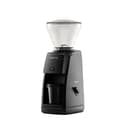 Best for espresso · Espresso-first, hopper-fed 40 mm conical M2 steel burrs by Etzinger · 40 stepped settings, dual range (1-20 espresso, 21-40 filter) · factory-calibrated · 300 g hopper, 120 g bin · 70 W at 550 rpm · 1-year warranty Half the dial is espresso, and Baratza publishes parts and repair guides. | Half the dial is espresso, and Baratza publishes parts and repair guides.40 mm conical M2 steel burrs by Etzinger · 40 stepped settings, dual range (1-20 espresso, 21-40 filter) · factory-calibrated · 300 g hopper, 120 g bin · 70 W at 550 rpm · 1-year warranty | $199.95In stock, checked October 10, 2026 Check Price on Amazon |
| 2 | 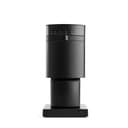 #2 Fellow Opus Conical Burr Grinder Best all-rounder · All-purpose, bin-fed 40 mm six-blade stainless conical burrs · 41+ settings on an inner ring · 110 g load bin · 6 Nm torque motor · about 4 lb · 2-year limited warranty plus a year with registration One grinder from espresso to cold brew, and the nicer object — if you find one. | One grinder from espresso to cold brew, and the nicer object — if you find one.40 mm six-blade stainless conical burrs · 41+ settings on an inner ring · 110 g load bin · 6 Nm torque motor · about 4 lb · 2-year limited warranty plus a year with registration | $199.95In stock, checked October 10, 2026 Check Price on Amazon |
| 3 | 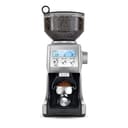 #3 Breville Smart Grinder Pro (BCG820) Best for a Breville · Programmable, hopper-fed Stainless conical burrs (diameter not published by Breville) · 60 stepped settings · grind time programmable in 0.2-second steps · 18 oz hopper · 165 W · 50-54 mm and 58 mm portafilter cradles in the box Grinds straight into the portafilter, which is the daily difference on a Breville. | Grinds straight into the portafilter, which is the daily difference on a Breville.Stainless conical burrs (diameter not published by Breville) · 60 stepped settings · grind time programmable in 0.2-second steps · 18 oz hopper · 165 W · 50-54 mm and 58 mm portafilter cradles in the box | $159.95In stock, checked October 10, 2026 Check Price on Amazon |
The adjustment question
Both grinders are stepped, so neither lets you land between clicks. What differs is how much of the range is useful for the brew you care about, and this is where the comparison is actually decided.
For espresso you are chasing a target that moves: a few seconds either side of your intended shot time is the difference between sour and balanced, and you correct it by changing grind size by a hair. A dial with twenty fine steps reserved for espresso gives you room to make that correction more than twice. A dial that also has to reach cold brew does not, however many total settings it advertises. Total setting count is the number that gets printed; distribution is the number that matters.
For filter brewing the pressure comes off entirely. Pour over and press are forgiving about grind size and mostly ask for consistency, which is why the best grinder for pour overis a cheaper shopping list than the espresso one. If filter is most of your week, the Opus's wide range costs you nothing and its 110 g bin suits the way you already brew.
The Opus 2 problem
An honest, current note that changes this comparison: Fellow has moved the line on to the Opus 2, which carries larger 48 mm burrs, and the original Opus is being cleared out. That has two practical consequences.
First, availability comes and goes, so the button above will sometimes show a live price and sometimes read "check price on Amazon" instead — that is the listing, not our price layer failing. Second, a clearance price on a superseded grinder can be a genuine bargain or a long-term support headache, depending on how the discontinued model is treated. Check which generation a listing is actually selling you before you buy; the names differ by a single digit.
That asymmetry is the strongest practical argument for the Encore ESP. It is the grinder still in production, from the maker with the published repair documentation, at the same money. If you want the Opus specifically, want it for its range and its looks, and find it discounted, it remains a good grinder — just buy it knowing it is the outgoing model.
If you own a Breville machine
| Type | Electric |
|---|---|
| Burrs | Stainless steel conical |
| Adjustment | 60 stepped settings. Grind time is separately programmable in 0.2-second increments. |
| Stepless? | No — it clicks between steps (most grinders described as 'stepless' online aren't) |
| Good for espresso? | Yes — Breville: '60 precise grind settings from the finest espresso to the coarsest French Press grind' |
| Capacity | 18 oz (Breville publishes ounces only — no gram figure exists) |
| Motor | 165 W. RPM not published. |
| Dimensions | 8.5" W x 6.3" D x 15.3" H |
| Weight | 6.39 lb (2.9 kg) |
| Warranty | 1 year |
Who it is for: a Breville Bambino Plus or Gaggia owner who wants to grind straight into the portafilter and program the dose.
Neither grinder above is built to dose into a portafilter. The Smart Grinder Pro is: both 50-54 mm and 58 mm cradles are in the box, the 60 stepped settings span the full brew spectrum, and grind time is programmable in 0.2-second increments so your usual dose is one button. Breville publishes no burr diameter for it, so we do not state one — any "40 mm burr" figure you read elsewhere is not manufacturer-sourced. If you own a Breville machine the workflow argument is real, and it is laid out further in the best grinder for the Bambino.
Which one for which buyer
| If this is you | Buy | Because |
|---|---|---|
| Espresso is the main drink in the house | Encore ESP | Twenty fine steps reserved for espresso, and factory calibration. |
| You want a grinder you can repair in five years | Encore ESP | Baratza publishes parts diagrams and repair guides. |
| You brew espresso, filter, press and cold brew | Fellow Opus | Fellow positions its range across all of them; the Encore leans espresso. |
| The grinder lives on a visible counter | Fellow Opus | It is the better-designed object, and that is a real reason. |
| You want the longer warranty of the two | Fellow Opus | Two years limited, plus a third with free US registration. |
| You dose straight into a portafilter | Breville Smart Grinder Pro | Both portafilter cradles are in the box and the dose is programmable. |
| You want the best burrs per dollar and will crank | Neither — buy a hand grinder | At this money a manual grinder spends nothing on a motor or housing. |
The verdict
For espresso, the Baratza Encore ESP is the better buy and it is not especially close. The dual range is the whole point of the machine: twenty fine steps that exist only for espresso, factory-calibrated so they mean something on day one, with Etzinger-made 40 mm conical burrs behind them and published repair documentation behind that. It is plain, it is stepped and the motor is slow. Those are prices worth paying for a grinder aimed at the thing you are actually brewing.
The Fellow Opus is the better grinder for a house that brews four different ways, has the longer warranty, and is unquestionably the nicer object. Buy it for the range, not for the espresso, and buy it knowing Fellow has already replaced it with the 48 mm Opus 2 — check which generation the listing is selling, and treat a clearance price as the compensation for being the outgoing model.
Either way, see where both sit against the rest of the field in the best grinders under two hundred, or step up a tier in the best grinders under five hundred.
What we know, and how we know it
What we did
- Took the specs from the manufacturer's own documentation — Baratza's Encore ESP product page and Fellow's published Opus specification. Not from a retailer listing, and not from another blog.
- Priced it from Amazon's API, with the date we checked shown next to the number. If that price is more than 48 hours old, this page stops showing a number at all rather than show you a wrong one.
- Formed a verdict from those specs, the price, and what owners publicly report.
Where we hedged, and why
We have not used either grinder and we run no lab, so there is no grind-consistency or taste comparison behind this page. Every figure above is the maker's own: burr material and diameter, setting counts and ranges, capacities, motor figures, weights and warranties. The Encore ESP and the Smart Grinder Pro are in our spec database and their tables are generated from it; the Fellow Opus is not, so its table is rendered inline and captioned with its source.
We do not claim a measured difference in the cup.Our argument is about how each maker distributes its adjustment range, which is a published fact, and about factory calibration, which Baratza states. We do not assert that either grinder produces a measurably more uniform grind, because we have not measured one. Breville publishes no burr diameter for the Smart Grinder Pro, so that row reads "not published" rather than repeating a figure from elsewhere.
The Opus 2 supersession is Fellow's own product move, and the patchy Amazon availability that comes with it is what the listing shows. No price appears in our prose; every number on this page is live from Amazon and carries the date it was checked.
What we did not do
We do not run a lab. We have not pulled thousands of shots on this machine, and we are not going to pretend otherwise. We have not used this unit ourselves. Everything above is sourced research, and it is labeled as such. Where we have used a machine, we say so and show it.
How we're paid
If you buy through a link on this page, we earn a commission. It costs you nothing extra and it does not change what we recommend — we link to the better option for the buyer even when it earns us less. See how we review and our full disclosure.
Frequently asked questions
Is the Baratza Encore ESP better than the Fellow Opus for espresso?
For espresso, yes. The Encore ESP splits its 40 settings into a dedicated fine espresso range (1-20) and a coarser filter range (21-40), and every unit is factory-calibrated, so you get roughly twenty usable steps inside the espresso window. The Opus spreads 41-plus settings from espresso to cold brew, which leaves fewer clicks in the espresso range even though the total count looks similar.
Is the Fellow Opus discontinued?
Fellow has moved the line on to the Opus 2, which uses larger 48 mm burrs, and the original Opus is being cleared out. It is still sold, but availability comes and goes, which is why the buy button here sometimes shows a live price and sometimes reads 'check price on Amazon'. Read the listing carefully so you know which generation you are buying.
Which grinder has the better warranty?
The Fellow Opus. Fellow publishes a two-year limited warranty plus a further year with free US registration; Baratza publishes one year on the Encore ESP. Baratza's counterweight is repairability rather than warranty length — it publishes parts diagrams and repair guides for its grinders, so an out-of-warranty Encore is a machine you can fix.
Can the Fellow Opus do espresso at all?
Yes. Fellow positions the Opus across the full range from espresso to cold brew, so espresso is inside its intended use. The caveat is resolution, not capability: with the range stretched that wide, fewer clicks land in the espresso window, so dialing in involves bigger jumps than on a grinder with a dedicated espresso range.
Are these single-dose grinders?
Neither is a true single-doser. The Encore ESP is hopper-fed with a 300 g hopper and a 120 g grounds bin. The Opus has a 110 g load bin, which nudges you toward weighing in per brew without being a bellows single-doser. If the single-dose workflow is what you want, read our single dose vs hopper guide before buying either.
Should I buy a hand grinder instead at this price?
It is a genuine option. A hand grinder spends nothing on a motor, a housing or a hopper, so more of the money goes into the burrs and the adjustment — which is why a good manual grinder at half this price can match an electric here on grind quality. You pay in effort: 30 to 60 seconds of cranking per double shot, every time.
Sources
Specs come from the manufacturer's own documentation. Prices come from Amazon's API. Where a claim comes from what owners report, we link the thread and say so.
- Baratza Encore ESP product page (40 mm Etzinger M2 conical burrs, 40 stepped settings, dual 1-20 espresso / 21-40 filter range, factory calibration, 300 g hopper, 70 W at 550 rpm)
- Fellow Opus published specification (40 mm six-blade stainless conical burrs, 41+ settings, 110 g load bin, 6 Nm torque, 2-year limited warranty plus a year with US registration)
- Breville Smart Grinder Pro (BCG820) product page (60 settings, programmable grind time, 50-54 mm and 58 mm portafilter cradles, 165 W)
Keep reading
- The best grinders under $200The tier both of these sit in, and what else competes at the money.
- Baratza Encore ESP vs Breville Smart Grinder ProThe same Baratza against the programmable Breville, if dosing into a portafilter matters.
- How to choose a coffee grinderSix questions that settle which of these two you are actually shopping for.
- Stepped vs stepless grindersBoth of these are stepped. Here is when that costs you something.
- Single dose vs hopperThe workflow fork behind the Opus's 110 g bin and the Encore's 300 g hopper.
- The best grinders for espressoWhere both land against the full field, electric and manual.