
Brew Methods · Cold brew
Cold Brew at Home, in a French Press
The easiest good coffee there is: coarse grind, cold water, wait overnight. You almost certainly already own the equipment, and the only real skill is patience.
The short answer
Grind coarse — coarser than for French press — combine with cold water at roughly 1 part coffee to 5 parts water for a concentrate, steep 12 to 24 hours, then filter. A French press is the vessel to use: the mesh does the first filtering and you dilute the concentrate to taste.
Key takeaways
- Cold brew is immersion brewing without heat. Coarse grounds sit in cold water for twelve to twenty-four hours, and time does the work heat normally does.
- A French press is the right vessel for most people — its mesh handles the first filtering, and you probably already own one.
- Grind coarser than you would for French press. This is the coarsest grind of any common method, and the single most common mistake is grinding too fine.
- Brew a concentrate at roughly 1:5 and dilute to taste, or a ready-to-drink batch at roughly 1:15. Start there, then adjust.
- Filtering is what goes wrong, not steeping. Plan a second filter through paper if you want a genuinely clean concentrate.
What cold brew actually is
Cold brew is the simplest brewing method in coffee, and the one with the fewest ways to fail. You combine coarsely ground coffee with cold water, leave it for a long time, and then separate the two. There is no pouring technique, no temperature to hit, no timer counting seconds. The only variables are grind, ratio and how long you wait.
Mechanically it is the same family as French press and the AeroPress — full immersion, where the whole dose steeps in the whole volume of water rather than having water poured through it. What changes is that removing the heat slows extraction down enormously, so the four minutes a French press needs becomes twelve to twenty-four hours.
The reason people like the result is that cold water extracts the coffee differently from hot water: the long, cold steep is conventionally described as pulling less acid and less bitterness out of the grounds, which is why cold brew tastes rounder and sweeter than the same beans brewed hot and then chilled. That difference in character is the whole appeal — and it is also why cold brew and iced coffee are not the same drink, which we come back to below.
The method, step by step
Using a French press, which is what we would recommend for a first batch.
1. Grind coarse. Coarser than you would for a French press — think cracked peppercorns rather than sea salt. Weigh the coffee rather than scooping it.
2. Combine with cold water. Put the grounds in the carafe, add cold filtered water, and stir gently until everything is wet. Dry pockets of grounds will not extract, and unstirred batches come out weak and uneven.
3. Leave the plunger up. Rest the lid on top without pressing. You want the grounds floating in the water, not compressed.
4. Steep for twelve to twenty-four hours. Room temperature is faster, the fridge is slower and safer if your kitchen is warm. Twelve hours is a reasonable first attempt; eighteen is a good default.
5. Plunge gently, then decant immediately. Press the plunger slowly to the bottom and pour the liquid out of the carafe straight away. Leaving it sitting on the grounds continues the extraction and the result turns muddy and bitter.
6. Filter again if you want it clean. A press mesh catches the grounds but not the fines. Pouring the result through a paper filter — a coffee filter in a sieve is fine — turns a slightly silty concentrate into a genuinely clean one.
7. Dilute and store. If you brewed a concentrate, cut it with water or milk to taste. Keep it in a sealed container in the fridge and drink it within a few days; it fades rather than spoils dramatically, but it does fade.
The grind: coarsest of all
Cold brew wants the coarsest grind of any common brew method, and getting this wrong is the most common reason a first batch disappoints.
The logic is the same as every other method: grind size balances against contact time. Twelve to twenty-four hours is an enormous contact time, so you need the least surface area to avoid over-extraction. Grind fine and the batch comes out harsh and muddy; worse, fines make the filtering stage miserable, clogging the mesh and leaving silt in the concentrate no matter how carefully you pour.
Where cold brew sits relative to everything else is in our coffee grind size chart. And the reason a burr grinder matters here is not precision but evenness: a blade grinder produces dust alongside chunks, and in cold brew that dust over-extracts for twenty hours and then refuses to filter out. See burr vs blade for the mechanism.
Ratio and steep time
There are two ways to brew cold brew and it is worth deciding which you are doing before you start, because the ratios are very different.
Concentrate — roughly 1 part coffee to 5 parts water by weight, as a conventional starting point. You get a small volume of strong liquid that you dilute with water, milk or ice when you serve it. This is what most people want: it stores compactly, it stretches a long way, and it lets each person dilute to their own taste.
Ready-to-drink — roughly 1 part coffee to 15 parts water, which comes out of the carafe at drinking strength. Simpler, but it fills your fridge with a lot of liquid and you lose the flexibility.
On time: twelve hours is the usual floor and twenty-four the usual ceiling. Longer steeps extract more and taste heavier; shorter ones are brighter and thinner. Room temperature extracts faster than the fridge, so an overnight batch on the counter and a twenty-four-hour batch in the fridge land in roughly similar places. Treat all of these as starting points — they are conventional recipes rather than laws, and the right numbers for your beans and your taste are the ones you arrive at after two or three batches. Write them down.
Filtering: the part that goes wrong
Almost every cold brew guide spends its length on steeping and skips the part people actually struggle with. Filtering is where a batch is won or lost.
A French press mesh is designed to hold back coffee grounds, not fines — the same property that gives press coffee its heavier body. Over a four-minute hot brew that is a pleasant texture. Over a twenty-hour cold brew with a much larger dose, it is silt. So:
Grind coarse and even, which minimises the fines in the first place. Plunge slowly, because forcing the mesh down pushes fines through it. Decant immediately rather than storing the concentrate on top of the grounds. And if you want a genuinely clean result, pass it through paper — a paper coffee filter in a sieve over a jug is all it takes, and it is the single biggest improvement available to a home cold brew.
If the grit is the part that bothers you most, the equipment answer is a press built to catch fines: the Espro P3's double micro-filter was designed for exactly that complaint, and it helps here as much as it does with hot press coffee.
Cold brew is not iced coffee
These get used interchangeably and they are different drinks made by different processes.
Iced coffee is coffee brewed hot and then cooled — poured over ice, or chilled. It keeps the character hot extraction gives it: brighter, more acidic, more like the coffee you would have drunk warm. Japanese-style iced pour over, brewed hot directly onto ice, is the refined version of this and it is genuinely excellent.
Cold brew never gets hot at all. The long cold steep is what gives it the rounder, sweeter, lower-acid character people associate with the drink.
Neither is better. If you like the taste of your favourite coffee and just want it cold, brew it hot and chill it — you will keep the flavours you already like. If you want the smooth, sweet, low-acid profile, you want a real cold steep, and no shortcut reproduces it exactly. For a quick version of the hot-then-cold route, an Americano over iceis the espresso drinker's answer.
If it tastes wrong
Weak and watery. Either your ratio was too dilute for the method, your steep was too short, or the grounds were not all wetted at the start. Stir properly next time, and either add coffee or add hours.
Harsh and bitter. Usually too fine a grind, sometimes too long a steep, and very often concentrate left sitting on the grounds after the steep finished. Grind coarser and decant straight away.
Silty and muddy. Fines, which means grind evenness and filtering. Grind coarser, plunge more slowly, and run the result through paper.
Flat and dull. Most likely the beans. Cold brew is forgiving about technique and completely unforgiving about staleness — it cannot rescue coffee that was roasted months ago. Roast date is the thing to check, which is the argument we make in coffee beans for espresso and it applies just as much here.
What to buy
We earn a commission if you buy through a link on this page. It costs you nothing extra and it does not change what we recommend. Full disclosure.
You almost certainly do not need to buy a dedicated cold brew device. A French press does the job well, and a press you already own for hot coffee is the right starting point. If you are buying, these are the three vessels and the one grinder we would point you at.
Cold brew kit, compared
Every pick on this page in one view, with the live Amazon price and stock on each row. Specs are the figures the maker or the listing publishes — nothing measured or scored by us. Prices are read from Amazon's API and were last checked October 5, 2026; where we have no verified price, the row says so rather than show you an old number.
| # | Item | Why it's here | Price & availability |
|---|---|---|---|
| 1 | 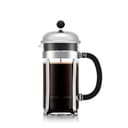 #1 Bodum Chambord French Press (34 oz) Best vessel · French press, 8-cup Borosilicate glass carafe · three-part stainless mesh filter · 34 oz / 8-cup · made in Portugal · replacement beakers and filters widely available Does hot press coffee and cold brew with the same carafe, and the parts are replaceable. | Does hot press coffee and cold brew with the same carafe, and the parts are replaceable.Borosilicate glass carafe · three-part stainless mesh filter · 34 oz / 8-cup · made in Portugal · replacement beakers and filters widely available | $39.69In stock, checked October 5, 2026 Check Price on Amazon |
| 2 | 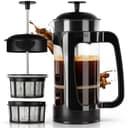 Least sediment · French press, filtered Double micro-filter catching more fines than a single mesh · glass carafe · filter assembly to keep clean Built for the exact complaint cold brew amplifies: grit and silt in the finished batch. | Built for the exact complaint cold brew amplifies: grit and silt in the finished batch.Double micro-filter catching more fines than a single mesh · glass carafe · filter assembly to keep clean | $39.94In stock, checked October 5, 2026 Check Price on Amazon |
| 3 | 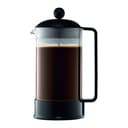 #3 Bodum Brazil French Press (34 oz) Cheapest way to try · French press, budget Same borosilicate carafe and mesh filter as the Chambord · plastic frame instead of chrome · 34 oz / 8-cup The same brew for less money — you give up the frame, not the coffee. | The same brew for less money — you give up the frame, not the coffee.Same borosilicate carafe and mesh filter as the Chambord · plastic frame instead of chrome · 34 oz / 8-cup | $19.99In stock, checked October 5, 2026 Check Price on Amazon |
| 4 | 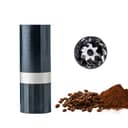 #4 1Zpresso Q Air Manual Coffee Grinder Best cheap grinder · Hand grinder, filter-leaning 30 clicks per rotation · 15-20 g capacity · 365 g · 1Zpresso aims it at pour over, French press and cold brew The maker names cold brew as a target use, and the coarse end is all this method needs. | The maker names cold brew as a target use, and the coarse end is all this method needs.30 clicks per rotation · 15-20 g capacity · 365 g · 1Zpresso aims it at pour over, French press and cold brew | $69.00In stock, checked October 5, 2026 Check Price on Amazon |
Bodum Chambord — the vessel to use
The archetypal French press, and the reason we recommend it for cold brew is that it does both jobs: four minutes of hot press coffee in the morning and an overnight cold steep in the same carafe. Borosilicate glass, a proper three-part stainless mesh filter, made in Portugal, and — important for an object with a glass beaker — replacement beakers and filters are easy to find. The 34 oz / 8-cup size is right for a concentrate batch. Who it is for: anyone making a first batch who does not want a single-purpose gadget. The honest cons: glass breaks, and the mesh alone will leave some silt, so plan a paper pass.
Espro P3 — if the silt bothers you
Espro built the P3 around the single most common French press complaint — sediment in the cup — with a double micro-filter that catches far more fines than a standard single mesh. Cold brew amplifies that complaint, because the dose is larger and the steep far longer, so this is the press that most directly addresses the stage of the process that actually goes wrong. Who it is for: someone who has made cold brew before and found it silty. The honest cons: a modest premium over the Bodum and a filter assembly to keep clean.
Bodum Brazil — the cheapest way to try it
Bodum's entry model: the same borosilicate carafe and mesh filter as the Chambord in a plainer plastic frame. It makes the same coffee for less money, so if you want to find out whether cold brew is a habit before spending, start here. Who it is for: the first batch. The honest con: you are giving up the chrome frame and the looks, nothing about the brew.
1Zpresso Q Air — the grinder, if you need one
| Adjustment | 30 clicks per rotation |
|---|---|
| Capacity | 15–20 g |
| Weight | 365 g |
| Positioning | 1Zpresso aims it at pour over, French press and cold brew — it can be pushed to espresso, but that is not what it is for |
If you are grinding for cold brew and little else, this is the cheapest grinder we would recommend, and the reason is that 1Zpresso names cold brew as a target use for it. Thirty clicks per rotation is a coarse resolution — a liability for espresso and completely irrelevant here, because cold brew lives at the coarse end. Who it is for: a filter-and-cold-brew household, and anyone grinding away from home. The honest cons: 15-20 g per load means two grinds for a big concentrate batch, and it is the wrong grinder if you will also pull espresso — the options there are in the best grinder for pour over and the best hand grinders.
The one machine with a cold brew button
| Type | Semi-automatic, no grinder |
|---|---|
| Portafilter | De'Longhi does not publish a portafilter size for this machine, so we're not going to state one. The figures you'll find online come from third-party sellers of aftermarket portafilters, not from De'Longhi. |
| Boiler | Thermoblock (ALU/stainless) |
| PID temperature control | No |
| Built-in grinder | No — you'll need a separate grinder |
| Milk | Manual — 'My LatteArt' cool-touch steam wand |
| Pump pressure | 15 bar |
| Heat-up time | De'Longhi says the Thermoblock gives 'a quick heat up time' but publishes no figure. |
| Water tank | 1.1 L |
| Power | 1450 W |
| Dimensions | 5.8" W x 12.9" D x 12" H (only 15 cm wide) |
| Weight | 9.2 lb (4.2 kg) |
| Warranty | Not clearly published. De'Longhi's site banner says 3 years; their older product pages say 1 year plus 1 with registration; this model's page states no term at all. |
| In the box | Portafilter, 1-cup filter, 2-cup filter, spoon, tamper, cleaning needle, water-hardness test paper, milk jug (on some models) |
One espresso machine we cover addresses cold brew directly. The De'Longhi Dedica Duo has a one-touch cold brew preset — De'Longhi calls it Cold Extraction Technology, and their claim is that it produces cold brew in under five minutes rather than overnight. It is 15 cm wide, which makes it the narrowest real espresso machine you can buy, and the cold brew button sits on the display alongside espresso and double espresso.
We have not run it, so we are not going to tell you how it tastes. What we will say is the honest framing: a process that compresses an overnight steep into five minutes is doing something different from steeping, and whether the result is closer to real cold brew or closer to a chilled Americano is exactly the kind of question we will not answer from a manufacturer's claim. If you drink iced coffee most days for four months of the year, it is the only machine we cover that addresses that at all; if you do not, it is a button you will never press. The full assessment is in our Dedica Duo review.
Is espresso the next step?
For cold brew drinkers specifically, the honest answer is more often "not necessarily" than it is for other methods — and we would rather say so than sell you a machine.
If you do want to go that way, start with espresso vs coffee to understand what actually changes, then the best machines for beginners. Otherwise, stay here: cold brew is excellent coffee, it costs almost nothing to make, and the best upgrade available to you is fresher beans rather than new hardware. More methods are on the brew methods hub.
What we know, and how we know it
What we did
- Took the specs from the manufacturer's own documentation — NCA and SCA brewing guidance, plus Bodum's, Espro's, 1Zpresso's and De'Longhi's own pages. Not from a retailer listing, and not from another blog.
- Priced it from Amazon's API, with the date we checked shown next to the number. If that price is more than 48 hours old, this page stops showing a number at all rather than show you a wrong one.
- Formed a verdict from those specs, the price, and what owners publicly report.
Where we hedged, and why
The ratios and steep times here are conventional starting points, not our measurements. Roughly 1:5 for a concentrate, roughly 1:15 ready-to-drink, and twelve to twenty-four hours of steeping are the figures standard brewing guidance converges on; we present them as a place to start and say plainly that the right numbers are the ones you reach after a few batches. We have not run a controlled comparison of steep times.
The characterisation of cold brew as lower in acid and bitterness than hot-brewed coffee is the conventional explanation for the taste difference, and we describe it as such rather than citing an extraction figure we did not measure. The grind texture reference (cracked peppercorns) is descriptive, to help you recognise the grind in the hand — there is no cross-brand standard mapping a grinder setting to a particle size, which is why we publish no micron range.
Product details come from the makers: Bodum's borosilicate carafes, three-part mesh and 34 oz / 8-cup sizing; Espro's double micro-filter; 1Zpresso's published Q Air figures and its own positioning of that grinder for cold brew. The Dedica Duo is in our spec database and its table is generated from it; its cold brew claim — Cold Extraction Technology, under five minutes — is De'Longhi's, and we have not used it or tasted its output. No price appears in our prose; every number is live from Amazon with the date it was checked.
What we did not do
We do not run a lab. We have not pulled thousands of shots on this machine, and we are not going to pretend otherwise. We have not used this unit ourselves. Everything above is sourced research, and it is labeled as such. Where we have used a machine, we say so and show it.
How we're paid
If you buy through a link on this page, we earn a commission. It costs you nothing extra and it does not change what we recommend — we link to the better option for the buyer even when it earns us less. See how we review and our full disclosure.
Frequently asked questions
How do you make cold brew in a French press?
Grind coarse — coarser than for hot press coffee — put the grounds in the carafe, add cold filtered water at roughly 1 part coffee to 5 parts water for a concentrate, and stir until everything is wet. Rest the lid on top without plunging and leave it for twelve to twenty-four hours, on the counter or in the fridge. Then plunge slowly, decant immediately so it stops extracting, and filter through paper if you want it clean.
What grind size is best for cold brew?
The coarsest of any common brew method — coarser than French press, closer to cracked peppercorns than sea salt. The reason is contact time: twelve to twenty-four hours is an enormous steep, so you want the least surface area to avoid over-extraction. Grinding too fine is the most common cold brew mistake, and it causes two problems at once — a harsh, muddy taste and fines that make filtering miserable.
How long should cold brew steep?
Twelve to twenty-four hours, with eighteen a good default. Longer steeps extract more and taste heavier; shorter ones come out brighter and thinner. Room temperature extracts faster than the fridge, so an overnight batch on the counter and a twenty-four-hour batch in the fridge land in roughly similar places. Whatever you choose, decant the liquid off the grounds as soon as the steep is done — leaving it sitting turns the batch bitter.
What is the difference between cold brew and iced coffee?
The process, and it changes the taste. Iced coffee is brewed hot and then cooled, so it keeps the brighter, more acidic character hot extraction gives it. Cold brew never gets hot at all — the long cold steep is conventionally described as pulling less acid and bitterness from the grounds, which is why it tastes rounder and sweeter. If you like your usual coffee and just want it cold, brew it hot and chill it.
Why is my cold brew gritty or cloudy?
Fines, and the fix is in the grind and the filtering rather than the steep. Grind coarser and more evenly — a burr grinder matters here for evenness, not precision — plunge the press slowly rather than forcing the mesh down, and decant immediately instead of storing the concentrate on the grounds. Then pass the result through a paper coffee filter in a sieve, which is the single biggest improvement available to a home batch.
Can an espresso machine make cold brew?
One we cover addresses it: the De'Longhi Dedica Duo has a one-touch cold brew preset that De'Longhi calls Cold Extraction Technology, claiming cold brew in under five minutes rather than overnight. We have not run it, so we will not tell you how it tastes — but a process that compresses an overnight steep into minutes is doing something different from steeping, and whether the result resembles real cold brew or a chilled Americano is a fair question to ask.
Sources
Specs come from the manufacturer's own documentation. Prices come from Amazon's API. Where a claim comes from what owners report, we link the thread and say so.
- National Coffee Association — how to brew coffee (brew ratios and cold brewing)
- Specialty Coffee Association — coffee research and standards
- Bodum — French press range (Chambord and Brazil, borosilicate carafes, mesh filters)
- 1Zpresso Q Air — official product page (30 clicks per rotation, 15-20 g, 365 g, filter and cold brew positioning)
- De'Longhi EC890M Dedica Duo product page (Cold Extraction Technology cold brew preset, 15 cm width)
Keep reading
- French press, properlyThe hot version in the same carafe, and the technique that matters most.
- Coffee grind size chartCold brew is the coarsest row — here is where everything else sits.
- AeroPress vs French pressChoosing the immersion brewer that will also be your cold brew vessel.
- De'Longhi Dedica Duo reviewThe one machine we cover with a cold brew button, assessed in full.
- The best grinder for pour overIf you grind for filter and cold brew rather than espresso, start here.
- Upgrading from drip to espressoThe path, if an iced latte is really what you are after.