
Espresso Machines · Travel & portable
The Best Portable Espresso Maker for Travel
A travel espresso maker has one job no countertop machine has to think about: it must work with whatever water, power and patience the place you are staying happens to provide. That rules out almost everything.
The short answer
Buy the Wacaco Nanopresso for most trips: 336 g, a pressurized basket that forgives pre-ground coffee, and a capsule adapter available for hotel rooms. Carry the Picopresso instead if you travel with a hand grinder, the Flair 2GO if you want a real folding lever, and the AeroPress Go if great coffee beats espresso specifically.
We earn a commission if you buy through a link on this page. It costs you nothing extra and it does not change what we recommend. Full disclosure.
Key takeaways
- None of these heats water. Every one of them needs a kettle, a stove or a tap that runs genuinely hot. Plan that before you plan the coffee.
- The grinder is the real packing problem, not the brewer. A travel espresso maker plus pre-ground supermarket coffee is a compromise you should choose deliberately.
- Wacaco Nanopresso for most trips: lightest, cheapest, and its pressurized basket forgives the coffee you can actually buy on the road.
- Wacaco Picopresso if you travel with a hand grinder — a real non-pressurized 52 mm basket and an 18 g dose, at the cost of needing an ultra-fine grind.
- Flair 2GO folds a genuine lever into a case for a van or a second home; AeroPress Go is the honest pick if you want excellent coffee rather than espresso specifically.
What travel changes
A home espresso machine gets to assume things: a socket, a worktop, a kettle it can ignore because it has a boiler, a grinder beside it, and a few minutes of warm-up nobody minds. Strip all of that away and the shortlist collapses to a handful of devices that share one design decision — they make pressure with your hand instead of with a pump.
That is why there are no pump machines on this page. The smallest mains-powered espresso machines are still a kettle-sized appliance that needs a socket and a dedicated grinder; those are covered in the best machines for small kitchens, which is a different problem — small space, not no infrastructure. And if what you actually want is a manual lever that lives on a counter rather than in a bag, our manual and lever machine roundup is the page to read: it recommends the countertop Flair 49 PRO, which at seven pounds and over a foot long is emphatically not a travel object.
One more honest framing before the picks. Travel espresso is a genuine category with genuine devices in it — and it is also where the most wishful marketing in coffee lives. Several of these makers produce excellent shots. None of them produces the shot your home machine does, because none of them has a temperature-stable boiler or a grinder. Buy them for the trip, not as an upgrade.
The five things that actually matter
1. Packed size and weight, not size on a worktop. The number that matters is what it measures folded, in a bag, with the bits it needs. The Nanopresso is 336 g; the Picopresso 350 g; the Flair 2GO folds to about 3.5 by 7 by 3.25 inches at four pounds. That spread is the difference between a daypack and a car.
2. Pressurized basket or not. This is the single most consequential specification on the page and almost nobody explains it. A pressurized basket has a restrictor that creates back-pressure for you, so it produces a crema-topped shot from a coarser grind and a sloppy dose — forgiving, with a ceiling. A non-pressurized basket does what a real portafilter does: the coffee bed itself provides the resistance, which means a better shot if your grind is right and a disaster if it is not. We explain the mechanism properly in pressurized vs non-pressurized baskets.
3. What grind it demands. Flowing from the point above: Wacaco states the Picopresso needs an ultra-fine grind, and that requirement is not negotiable. If you are not carrying a grinder that can deliver it, the device cannot do its job.
4. How you get hot water. None of these heats water. A hotel kettle, a camp stove, a van kettle or a cafe asking nicely — decide which before you buy, because it determines whether the whole plan works.
5. How many shots per fill. Most of these are one-shot devices: the Wacacos hold 80 ml of water, the Flair 2GO 60 ml in and 45 ml out. Travelling as a couple means two runs, every time.
All four, compared
Every pick on this page in one view, with the live Amazon price and stock on each row. Specs are the figures the maker or the listing publishes — nothing measured or scored by us. Prices are read from Amazon's API and were last checked October 5, 2026; where we have no verified price, the row says so rather than show you an old number.
| # | Travel brewer | Who it's for | Price & availability |
|---|---|---|---|
| 1 | 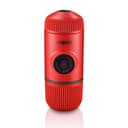 #1 Wacaco Nanopresso (Red Patrol edition) Best overall · Pocket, pressurized Pressurized basket, 8 g (16 g with Barista Kit) · 80 ml water · 18 bar stated max · 62 × 71 × 156 mm, 336 g · built-in cup · 1-year warranty Forgives pre-ground coffee, so it works with what you can buy on the road. | Forgives pre-ground coffee, so it works with what you can buy on the road.Pressurized basket, 8 g (16 g with Barista Kit) · 80 ml water · 18 bar stated max · 62 × 71 × 156 mm, 336 g · built-in cup · 1-year warranty | $64.90In stock, checked October 5, 2026 Check Price on Amazon |
| 2 | 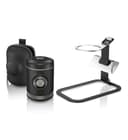 #2 Wacaco Picopresso (with stand bundle) Best shot quality · Pocket, non-pressurized 52 mm non-pressurized basket, 18 g double · 80 ml water · 18 bar stated max · ultra-fine grind required · 71 × 78 × 106 mm, 350 g · 2-year warranty A real basket and a real double — if you're carrying a grinder that can feed it. | A real basket and a real double — if you're carrying a grinder that can feed it.52 mm non-pressurized basket, 18 g double · 80 ml water · 18 bar stated max · ultra-fine grind required · 71 × 78 × 106 mm, 350 g · 2-year warranty | $159.90In stock, checked October 5, 2026 Check Price on Amazon |
| 3 | 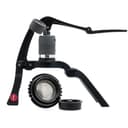 Best real lever · Folding lever 40 mm bottomless 2-in-1 portafilter, 12-18 g · 6-9 bar with gauge · 60 ml in / 45 ml out · no-preheat cylinder · folds to 3.5 × 7 × 3.25 in, 4 lb · 1-year limited warranty Lever mechanism, pressure gauge and a carrying case — for a van or a second home. | Lever mechanism, pressure gauge and a carrying case — for a van or a second home.40 mm bottomless 2-in-1 portafilter, 12-18 g · 6-9 bar with gauge · 60 ml in / 45 ml out · no-preheat cylinder · folds to 3.5 × 7 × 3.25 in, 4 lb · 1-year limited warranty | $169.00In stock, checked October 5, 2026 Check Price on Amazon |
| 4 | 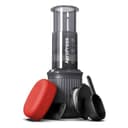 #4 AeroPress Go Travel Coffee Press Most practical · Immersion, not espresso Full-immersion press with paper filters · packs inside its own mug and lid · makes a mug rather than a shot Not espresso — but the easiest, most reliable great coffee away from a kitchen. | Not espresso — but the easiest, most reliable great coffee away from a kitchen.Full-immersion press with paper filters · packs inside its own mug and lid · makes a mug rather than a shot | $49.95In stock, checked October 5, 2026 Check Price on Amazon |
The picks
Wacaco Nanopresso — the one to take
| Type | Hand-pumped piston, portable — no pump motor, no heater |
|---|---|
| Basket | Pressurized; 8 g (16 g with the add-on Barista Kit) |
| Water capacity | 80 ml |
| Max pressure | 18 bar (261 psi), as stated by Wacaco |
| Grind | Extra-fine |
| Size / weight | 62 × 71 × 156 mm / 336 g (11.9 oz) |
| Heats water? | No — fill with hot water before brewing |
| Accessories | NS adapter (Nespresso-style capsules), Barista Kit (double), DG Kit — sold separately |
| Warranty | 1 year |
For most trips this is the right answer, and the reason is not that it makes the best coffee — it does not. It is that the pressurized basket forgives the coffee you can actually get. On the road you are buying a bag of supermarket pre-ground or borrowing from a hotel, and a restrictor-based basket will still turn that into a small, crema-topped, genuinely enjoyable shot. A non-pressurized device fed the same coffee produces a sour trickle.
Everything else about it suits a bag: 336 g, a built-in espresso cup so you are not hunting for crockery, a cloth pouch, and no electronics whatsoever. Wacaco states 18 bar maximum from the hand pump. And the optional NS adapter for Nespresso-style capsules makes it the only device here that works with what a hotel room or an office kitchen may already stock.
Who it is for: the traveller who wants a real, hot, concentrated coffee in a hotel room or at a campsite and is not carrying a grinder.
The honest cons. The pressurized basket is the ceiling as well as the kindness: the crema is manufactured by the restrictor, the 8 g dose is half a modern double, and the shot will never match a Picopresso with a good grinder. The body is mostly polymer, the warranty is one year, there is no gauge, and you pump until it stops. It is a travel espresso maker, not a machine you learn espresso on.
Wacaco Picopresso — if you travel with a grinder
| Type | Hand-pumped piston, portable — no pump motor, no heater |
|---|---|
| Basket | 52 mm, non-pressurized (standard double basket for 18 g; 12 g basket sold separately) |
| Dose | 18 g |
| Water capacity | 80 ml |
| Max pressure | 18 bar (261 psi), as stated by Wacaco |
| Grind | Ultra-fine |
| Size / weight | 71 × 78 × 106 mm / 350 g (12.35 oz) |
| Heats water? | No — requires pre-boiled water |
| Accessories | Pressure gauge and stand sold separately (the Amazon listing we link includes the stand) |
| Warranty | 2 years |
This is the serious one, and the thing that makes it serious is the basket: Wacaco's own FAQ confirms the Picopresso "does not use a pressurized head", and it takes a 52 mm non-pressurized double for an 18 g dose. That is a real portafilter arrangement in something the size of a travel mug, and it is why the Picopresso can produce a shot you would be happy with at home — provided you feed it correctly. Wacaco is explicit that it needs an ultra-finegrind, and the box includes a tamper, a distribution tool, a dosing funnel and a case. It is 350 g and carries a two-year warranty, double the Nanopresso's.
Who it is for: the traveller already carrying an espresso-capable hand grinder, who wants a trip shot that is genuinely good rather than merely welcome.
The honest cons.The grind requirement is the whole catch — without a grinder that can hit ultra-fine, this is the wrong device and the Nanopresso is the right one. There is no pressure gauge in the box (Wacaco sells one separately), so you pump by feel while learning. The 80 ml chamber makes one double. It is fiddlier to load and clean than a lever with a handled portafilter, and there are plastics in the brew path. One listing note: the Amazon product we link is Wacaco's official stand bundle, since the stand is a separate accessory on Wacaco's own site — compare both before you buy.
Flair 2GO — the lever that folds
| Type | Direct lever, folding — no pump, no heater |
|---|---|
| Portafilter | 40 mm bottomless 2-in-1 |
| Dose range | 12–18 g |
| Brew pressure | 6–9 bar, pressure gauge included |
| Water capacity / yield | 60 ml / 45 ml |
| Preheat | Thin-walled no-preheat cylinder |
| Weight | 4 lb |
| Size unfolded / folded | 12 × 9 × 6 in / 3.5 × 7 × 3.25 in |
| Heats water? | No — you supply hot water |
| In the box | Frame, cylinder with sleeve, portafilter, gauge/piston, carrying case, tamper, screen, dosing funnel |
| Warranty | 1-year limited |
If you want the lever experience away from home rather than a hand pump, this is it. The 2GO keeps the direct-lever mechanism and — crucially for learning — a pressure gauge, so you can see the 6-9 bar band rather than guess at it. It folds to roughly 3.5 by 7 by 3.25 inches into an included case, uses a 40 mm bottomless portafilter at 12-18 g, and has a thin-walled no-preheat cylinder, which skips the cylinder-warming step the bigger Flairs want. Buy the grounds model; Flair says the machine takes both ground coffee and pods, but grounds are the point of owning a lever.
Who it is for:a van, a camper, a second home, a long road trip — anywhere "portable" means a bag in a vehicle rather than a daypack, and where you want a real lever and a gauge.
The honest cons.Four pounds is portable by car, not by aeroplane carry-on philosophy. The 60 ml cylinder yields 45 ml, so it is a one-shot device and a modest one. The 40 mm basket is a small target for distribution and tamping, so channeling is easier to trigger than on a larger basket. And it sits above the Wacacos on price while carrying a one-year warranty — you are paying for the fold and the gauge, not for a better shot than the Picopresso's.
AeroPress Go — the honest alternative
We would be doing you a disservice to leave this off. The AeroPress Go is not an espresso maker — it is a full-immersion press with a paper filter, and it makes a mug of coffee, not a shot. But for an enormous number of travellers it is the better purchase, and here is why: it is the most forgiving brewer there is about grind size, it packs inside its own mug and lid so the whole kit nests, it is nearly indestructible in a bag, it needs no fine grind, and it makes excellent coffee with whatever beans you find.
If your actual goal is "good coffee away from home" rather than "espresso specifically", buy this and spend the difference on better beans. If your goal really is a short, concentrated, crema-topped drink, it will not scratch that itch — and one of the three above is your answer. Our full guide to the method is the AeroPress, properly, and the grind latitude it gives you is laid out in the grind size chart.
Who it is for: the traveller who wants reliably good coffee with the least fuss, and anyone travelling with another person, since it makes a mug rather than a single shot.
The honest cons. It is not espresso and makes no claim to be: no pressure, no crema, no portafilter. You need paper filters, which are cheap but are a consumable you must remember to pack.
The grinder problem, and the travel answer
Here is the part most travel-espresso articles skip. The brewer is the easy half of the packing problem; the grinder is the hard half. Pre-ground coffee stales within days of opening, and the Picopresso in particular cannot work with it at all — Wacaco requires an ultra-fine grind, which no bag of supermarket pre-ground provides.
The travel answer is a small hand grinder. The 1Zpresso Q Airis the one we would carry: 1Zpresso publishes 365 g and a 15-20 g capacity, with 30 clicks per rotation. Be clear about its limits, though — 1Zpresso aims it at pour over, French press and cold brew rather than espresso, and 30 clicks per rotation is a coarse resolution for pulling shots. It is the right grinder if your travel brewing is AeroPress or filter, or if you accept a stretch for the forgiving Nanopresso. If you want a travel grinder that genuinely satisfies the Picopresso's ultra-fine requirement, the espresso-tuned option is the J-Ultra at 8 microns per click, and the all-rounder that ships with a carrying case is the K-Ultra — we compare the two in J-Ultra vs K-Ultra, and the full field is in the best hand grinders.
Where the hot water comes from
Every device on this page is, strictly speaking, half a machine: you bring the pressure and you bring the heat. Sort the heat out before you travel.
Hotels usually have a kettle, and that is the easiest case — though note that the Wacacos want water at brewing temperature poured in immediately, so boil and pour rather than boil and wander off. Campsites and vansmean a stove or a camp kettle, and the Flair 2GO's no-preheat cylinder is a genuine advantage there, because you are not spending precious gas warming a metal tube. Offices usually have a hot tap or a kettle; if yours has a shared machine instead, our office machine guide is the better page. Aeroplanes and trains are the hard case — cabin crew will often give you hot water, but temperature is whatever it is, and that is a real limit on shot quality.
What not to take
A mains espresso machine, however small. Even the most compact pump machines need a socket, a counter, a warm-up and a grinder, and voltage differs between countries. Small-kitchen machines solve a space problem, not a travel one.
A moka pot, unless you have a hob. A moka pot is a lovely travel object for a self-catering kitchen or a camp stove and useless in a hotel room with only a kettle, since it needs a heat source under it. If you do have a hob, it is a strong and cheap option — the moka pot guide covers it, and espresso machine vs moka pot explains why it is not espresso.
Pre-ground coffee and a non-pressurized device. The combination simply does not work. Either take a grinder, or take the Nanopresso with its pressurized basket.
A glass brewer. A Chemex or a glass French press in a bag is a question of when, not whether. Keep the glass at home — that is what the French press guide is for.
Which one for which trip
| If this is your trip | Take | Because |
|---|---|---|
| Hotel rooms, no grinder, buying coffee as you go | Nanopresso | Its pressurized basket turns pre-ground coffee into a decent crema-topped shot. |
| You already travel with an espresso-capable hand grinder | Picopresso | A real 52 mm non-pressurized basket and an 18 g double, plus a two-year warranty. |
| Van, camper or second home, by road | Flair 2GO | A genuine lever with a gauge, and a no-preheat cylinder that saves stove gas. |
| You want great coffee, not espresso specifically | AeroPress Go | Forgiving about grind, nests in its own mug, and nearly indestructible. |
| Two of you, every morning | AeroPress Go | Everything else here is a one-shot device — two people means two runs. |
| Hotel rooms with a capsule machine or capsules available | Nanopresso + NS adapter | The only device here that can use Nespresso-style capsules. |
| You want the lever on your kitchen counter, not in a bag | None of these — buy a Flair 49 PRO | The countertop lever, covered in our manual machine roundup. |
The verdict
For most travellers, buy the Wacaco Nanopresso. It is the lightest and cheapest option here, it needs nothing but hot water and your hand, and its pressurized basket is the feature that matters on the road, because it makes a pleasant shot from the coffee you can realistically buy at a destination. Go in knowing that the restrictor-made crema and the 8 g dose set a ceiling — that is the deal, and on a trip it is the right deal.
If you are already carrying a hand grinder that reaches ultra-fine, take the Picopresso instead: a genuine 52 mm non-pressurized basket, an 18 g double and a two-year warranty make it the best shot on this page by a clear margin. Take the Flair 2GO if you travel by road and want a real lever with a gauge, and take the AeroPress Go if you will admit that what you want is excellent coffee rather than espresso in particular — for a great many trips, that is the honest answer and the one you will use most.
Whatever you pack, sort the hot water and the grind before you leave. Those two decide whether the device works; the device only decides how good it can be. More machine guides by buyer and by budget are on the espresso machines hub.
What we know, and how we know it
What we did
- Took the specs from the manufacturer's own documentation — Wacaco's, Flair's and AeroPress's own product pages for the four devices listed. Not from a retailer listing, and not from another blog.
- Priced it from Amazon's API, with the date we checked shown next to the number. If that price is more than 48 hours old, this page stops showing a number at all rather than show you a wrong one.
- Formed a verdict from those specs, the price, and what owners publicly report.
Where we hedged, and why
We have not used any of these devices and we run no lab, so there is no shot we pulled, no temperature we logged and no taste comparison behind this page. Every figure above — weights, dimensions, water capacities, dose ranges, basket sizes, warranties and the stated 18 bar maximum on both Wacacos — is read off the maker's own product page and captioned with its source. None of these is a pump machine, so none is in our spec database; all the tables are rendered inline for that reason.
The pressurized-versus-non-pressurized argument is mechanical, not a tasting note.A restrictor creates back-pressure independently of the coffee bed, which is why it tolerates a coarser grind; a non-pressurized basket relies on the bed itself. That is how the parts work. We do not claim a measured difference in extraction yield between them. Wacaco's statement that the Picopresso "does not use a pressurized head" and requires an ultra-fine grind is theirs, from their own FAQ and product page.
We are explicit that the AeroPress Go is not an espresso maker, because it is not, and that the Picopresso Amazon listing we link is the official stand bundle rather than the bare unit. No price appears anywhere in our prose — every number on this page is live from Amazon and carries the date it was checked.
What we did not do
We do not run a lab. We have not pulled thousands of shots on this machine, and we are not going to pretend otherwise. We have not used this unit ourselves. Everything above is sourced research, and it is labeled as such. Where we have used a machine, we say so and show it.
How we're paid
If you buy through a link on this page, we earn a commission. It costs you nothing extra and it does not change what we recommend — we link to the better option for the buyer even when it earns us less. See how we review and our full disclosure.
Frequently asked questions
What is the best portable espresso maker for travel?
The Wacaco Nanopresso for most travellers. At 336 g with a built-in espresso cup it packs anywhere, it needs no power, and its pressurized basket forgives a coarse grind and an inexact dose — which matters because on the road you are usually brewing supermarket pre-ground coffee. If you already travel with an espresso-capable hand grinder, carry the Picopresso instead: a real 52 mm non-pressurized basket and an 18 g double.
Do portable espresso makers heat their own water?
No — not one of the devices on this page does. The Wacacos, the Flair 2GO and the AeroPress Go all require you to supply hot water from a kettle, a stove or a hot tap. That is the first thing to plan when you choose one: a hotel kettle is easy, a campsite needs a stove, and an aeroplane means asking cabin crew for hot water of whatever temperature they happen to have.
Can I use pre-ground coffee in a portable espresso maker?
It depends entirely on the basket. A pressurized basket like the Nanopresso's has a restrictor that creates back-pressure for you, so pre-ground coffee still produces a crema-topped shot. A non-pressurized basket like the Picopresso's relies on the coffee bed for resistance, and Wacaco states it needs an ultra-fine grind — pre-ground supermarket coffee will not work in it. Match the device to whether you are carrying a grinder.
What is the difference between the Nanopresso and the Picopresso?
The basket, and everything follows from it. The Nanopresso uses a pressurized 8 g basket (16 g with Wacaco's Barista Kit) that forgives coarse grinds; the Picopresso uses a 52 mm non-pressurized basket with an 18 g double and requires an ultra-fine grind. The Picopresso makes a considerably better shot if you can feed it, carries a two-year warranty against the Nanopresso's one, and costs more. Both hold 80 ml of water and state 18 bar maximum.
Is the AeroPress Go better than a travel espresso maker?
For many travellers, yes — as long as you accept it is not espresso. The AeroPress Go is a full-immersion press with a paper filter: it makes a mug rather than a shot, with no pressure and no crema. In exchange it is the most forgiving brewer about grind size, nests inside its own mug and lid, survives a bag, and makes excellent coffee from whatever beans you find. If your goal is good coffee rather than espresso specifically, buy it.
Do I need a grinder to travel with an espresso maker?
For the Picopresso, effectively yes — Wacaco requires an ultra-fine grind that pre-ground coffee does not provide. For the Nanopresso and the AeroPress Go, no: the pressurized basket and the immersion method respectively are forgiving enough to work with what you can buy. If you do pack one, a small hand grinder is the answer; the 1Zpresso Q Air is 365 g, though 1Zpresso aims it at filter rather than espresso, so for shots the J-Ultra or K-Ultra is the better travel grinder.
Sources
Specs come from the manufacturer's own documentation. Prices come from Amazon's API. Where a claim comes from what owners report, we link the thread and say so.
- Wacaco — Nanopresso product page (pressurized basket, 8 g / 16 g with Barista Kit, 80 ml, 18 bar stated, 336 g, dimensions, warranty, NS adapter)
- Wacaco — Picopresso product page and FAQ (52 mm non-pressurized basket, 18 g, 80 ml, 18 bar stated, ultra-fine grind, 350 g, 2-year warranty)
- Flair — 2GO product page (40 mm bottomless 2-in-1, 12-18 g, 6-9 bar with gauge, 60 ml / 45 ml, no-preheat cylinder, folded dimensions, 4 lb, 1-year limited warranty)
- AeroPress — the official manufacturer site
- 1Zpresso Q Air — official product page (30 clicks per rotation, 15-20 g, 365 g, dimensions)
Keep reading
- The best manual espresso machinesThe countertop levers, including the Flair 49 PRO that is too big to travel with.
- Pressurized vs non-pressurized basketsThe single specification that decides which of these devices suits you.
- The best hand grindersThe other half of the packing problem, and the one most guides ignore.
- The AeroPress, properlyThe method behind the most practical pick on this page.
- Best machines for small kitchensIf your problem is counter space rather than travel, start here instead.
- Best espresso machine for the officeFor a shared desk or workplace, a travel device is the wrong tool.