
Espresso machines · Manual & lever
The Best Manual Espresso Machines Under $200
Under $200 you can buy a real lever with a pressure gauge, or a piston that fits in a bag. What you cannot buy is a machine that heats its own water - and that changes the shopping list.
The short answer
The best manual espresso machine under $200 is the Flair 2GO: a real direct-lever machine with a pressure gauge and a 40 mm bottomless portafilter that folds into a case. The Flair Classic is the cheaper countertop Flair, the Wacaco Picopresso is the pocket-sized pick with a real non-pressurized basket, and the Minipresso GR is the budget pick.
We earn a commission if you buy through a link on this page. It costs you nothing extra and it does not change what we recommend. Full disclosure.
The six picks, compared
Every pick on this page in one view, with the live Amazon price and stock on each row. Specs are the figures the maker or the listing publishes — nothing measured or scored by us. Prices are read from Amazon's API and were last checked November 22, 2026; where we have no verified price, the row says so rather than show you an old number.
| # | Machine | Who it's for | Price & availability |
|---|---|---|---|
| 1 | 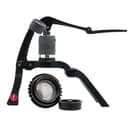 Best overall · Direct lever, folding 40 mm bottomless 2-in-1 portafilter · 12-18 g dose · 6-9 bar with pressure gauge included · 60 ml in, 45 ml out · thin-walled no-preheat cylinder · 4 lb · 1-year limited warranty A genuine lever with a gauge that still fits in a bag. | A genuine lever with a gauge that still fits in a bag.40 mm bottomless 2-in-1 portafilter · 12-18 g dose · 6-9 bar with pressure gauge included · 60 ml in, 45 ml out · thin-walled no-preheat cylinder · 4 lb · 1-year limited warranty | $169.00In stock, checked November 22, 2026 Check Price on Amazon |
| 2 | 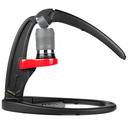 #2 Flair Classic Manual Espresso Maker Cheapest real lever · Direct lever, countertop Flair's original home lever · pressure gauge and two portafilters included, per Flair's own listing · retailers list a 40 mm portafilter and a 12-18 g dose; Flair's spec page was unreachable for us, so we state no capacity or weight For a lever that never leaves the counter, at the lowest price. | For a lever that never leaves the counter, at the lowest price.Flair's original home lever · pressure gauge and two portafilters included, per Flair's own listing · retailers list a 40 mm portafilter and a 12-18 g dose; Flair's spec page was unreachable for us, so we state no capacity or weight | $159.00In stock, checked November 22, 2026 Check Price on Amazon |
| 3 | 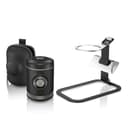 #3 Wacaco Picopresso (with stand bundle) Best pocket-size · Hand-pumped piston 52 mm NON-pressurized basket · 18 g dose · 80 ml chamber · 18 bar stated by Wacaco · ultra-fine grind required · aluminum and stainless, 350 g · 2-year warranty · gauge not included Real espresso from a device the size of a flask, if your grinder is up to it. | Real espresso from a device the size of a flask, if your grinder is up to it.52 mm NON-pressurized basket · 18 g dose · 80 ml chamber · 18 bar stated by Wacaco · ultra-fine grind required · aluminum and stainless, 350 g · 2-year warranty · gauge not included | No verified price right now Check Price on Amazon |
| 4 | 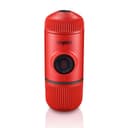 #4 Wacaco Nanopresso (Red Patrol edition) Best for travel · Hand-pumped piston Pressurized filter · 8 g basket (16 g with the add-on Barista Kit) · 80 ml chamber · 18 bar stated by Wacaco · 336 g with built-in cup · NS capsule adapter sold separately · 1-year warranty Forgiving enough to use with whatever coffee the trip provides. | Forgiving enough to use with whatever coffee the trip provides.Pressurized filter · 8 g basket (16 g with the add-on Barista Kit) · 80 ml chamber · 18 bar stated by Wacaco · 336 g with built-in cup · NS capsule adapter sold separately · 1-year warranty | $51.92In stock, checked November 22, 2026 Check Price on Amazon |
| 5 | 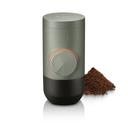 Best value piston · Hand-pumped piston Wacaco's own listing states 18 bar, a patented adjustable basket for 8-12 g and espresso up to 60 ml · ground coffee only · does not heat water The adjustable basket is the thing the original GR does not have. | The adjustable basket is the thing the original GR does not have.Wacaco's own listing states 18 bar, a patented adjustable basket for 8-12 g and espresso up to 60 ml · ground coffee only · does not heat water | $43.92In stock, checked November 22, 2026 Check Price on Amazon |
| 6 | 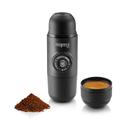 Budget pick · Hand-pumped piston The original ground-coffee Minipresso: hand-pumped, pressurized filter, no heater · retailers disagree on its capacity, pressure and weight, so we publish none of those figures The cheapest way to pull something espresso-like by hand. | The cheapest way to pull something espresso-like by hand.The original ground-coffee Minipresso: hand-pumped, pressurized filter, no heater · retailers disagree on its capacity, pressure and weight, so we publish none of those figures | $37.52In stock, checked November 22, 2026 Check Price on Amazon |
What "manual" means at this price
The phrase "manual espresso machine" gets used for two completely different things, and sorting that out is the most useful thing this page can do early. De'Longhi and other makers call their plug-in pump machines "manual" because you grind, dose and tamp yourself. Enthusiasts call those semi-automatic, and if that is what you are shopping for under $200, you want the best espresso machines under $200 instead — those machines plug in, heat their own water and have a milk wand.
This page is about the other kind: the genuinely hand-powered espresso maker. There is no pump, no boiler and no cord. You boil water in a kettle, pour it into a cylinder, and supply the pressure yourself through a lever or a piston. In exchange you get direct control over the whole shot, near silence, nothing electrical to fail, and — under $200 — a shot quality that embarrasses pump machines at the same price, because none of your money went into a motor.
That is the real argument for buying manual at this budget. A $150 pump machine has to pay for a pump, a thermoblock, a housing and a pressurized basket before anything is left for the brew path. A $150 lever spends it all on the brew path. The catch is honest and it is not small: the machine does nothing for you, and the list of things you still have to buy is at the bottom of this page.
The three things that separate them
1. A real basket or a pressurized one.This is the single most important line on the page. A non-pressurized (bottomless or standard) basket makes espresso the way a real machine does: the resistance comes from the coffee bed, so the grind and the distribution decide the shot — and so do your mistakes. A pressurized basket adds a valve that creates back-pressure artificially, which produces crema from a coarser, less even grind. For a learner with a modest grinder that forgiveness is genuinely useful; for anyone chasing a proper shot it is a ceiling. Both Flairs and the Picopresso use real baskets. The Nanopresso and both Minipresso models are pressurized. More on the difference in pressurized vs non-pressurized baskets.
2. Preheating.A manual machine has no thermal mass of its own, so a cold metal cylinder steals heat from your brew water and the shot tastes thin and sour. Most levers want a preheat ritual — rinse the cylinder with hot water first. Flair's 2GO is the exception here: its thin-walled cylinder is specified as no-preheat, which is exactly one less step before coffee at 6 a.m. If the machine will be used on weekday mornings rather than on weekends, that detail matters more than the spec sheet suggests.
3. Dose and yield.These are small devices and they are honest about it. The 2GO takes 60 ml of water and yields 45 ml, which is one shot. The Picopresso holds 80 ml and doses 18 g, which is a proper double. The Nanopresso doses 8 g, or 16 g with Wacaco's add-on Barista Kit. None of them makes two drinks in a row without being refilled and re-loaded, so if there are two coffee drinkers in the house, read that as two rounds rather than one.
The picks under $200
Flair 2GO — the one to buy
Who it is for:anyone who wants a genuine lever experience under $200 and would like it to travel as well. The 2GO keeps Flair's direct-lever mechanism and its pressure gauge, then folds to roughly 3.5 by 7 by 3.25 inches and drops into an included carrying case. Flair publishes a 40 mm bottomless "2-in-1" portafilter, a 12–18 g dose, the same 6–9 bar working band as its dearer levers, a stainless tamper and dispersion screen, and a thin-walled no-preheat cylinder. At 4 lb it is genuinely packable. Buy the grounds model, which is the one the button above links to; Flair says the machine also works with pods, but pods are not why you buy a lever.
| Type | Direct lever, folding — no pump, no heater |
|---|---|
| Portafilter | 40 mm bottomless 2-in-1 |
| Dose range | 12–18 g |
| Brew pressure | 6–9 bar, pressure gauge included |
| Water capacity / yield | 60 ml / 45 ml |
| Preheat | Thin-walled no-preheat cylinder |
| Weight | 4 lb |
| Size unfolded / folded | 12 × 9 × 6 in / 3.5 × 7 × 3.25 in |
| Heats water? | No — you supply hot water |
| Warranty | 1-year limited |
The honest cons. The cylinder is small, so this is a one-shot machine and a modest one. The 40 mm basket is a small target for distribution and tamping, which makes channelingeasier to trigger than on a 49 mm or 58 mm basket. There is more polymer in the build than in the all-metal levers above it, and the warranty is one year rather than five. It is also not the cheapest Flair — the Classic below undercuts it — so you are paying for the fold.
Flair Classic — the cheapest real lever
Who it is for:the reader whose lever will live on a counter and never go anywhere, and who wants the lowest price Flair charges for one. The Classic is the original Flair — the machine that started the modern home-lever category — and Flair's own listing for the current version publishes two things that matter: a pressure gauge and two portafilters, described as one for convenience and one for control. That two-portafilter arrangement is the same idea that makes the dearer 49 PRO such a good first lever: a forgiving basket for your first week and an honest one for later, without having to choose on the day you buy.
What we will not tell you about it.We could not retrieve Flair's own specification page for the Classic while writing this page — flairespresso.com returned repeated rate-limit errors to us on November 16, 2026 — so we are not going to state its cylinder capacity, yield, weight or dimensions, and you should treat any such figure you read elsewhere with care: the retailer listings we did read disagree with each other on its weight. Retailers consistently list a 40 mm portafilter and a 12–18 g dose range, which matches the rest of Flair's 40 mm family, and we report that as a retailer figure rather than as Flair's. The one thing we can state from Flair's own listing is the gauge and the two portafilters.
The honest cons.It is a countertop object with a lever that needs headroom, so measure the space under your cabinets. It wants preheating, unlike the 2GO. The older generation of this machine sold the pressure gauge as an optional kit, so if you are buying used, confirm the gauge is actually included. And in Flair's own range it sits below the 49 PRO on build: the step up to an all-stainless brew path and a five-year warranty is the subject of the next section.
Wacaco Picopresso — the pocket-size one with a real basket
Who it is for: someone who wants genuine espresso from a device the size of a small flask, and who already owns a grinder that can go ultra-fine. The Picopresso is a hand-pumped piston rather than a lever, but it earns its place because Wacaco built it around a genuinely non-pressurized 52 mm basket— the feature that separates a real espresso maker from a travel gadget. Wacaco publishes an 18 g double basket, an 80 ml water chamber, a stated 18 bar maximum, an aluminum and stainless body at 350 g, and a box that includes a tamper, a distribution tool, a dosing funnel and a protective case. The Amazon listing we link is Wacaco's official stand bundle; the bare unit is available direct from wacaco.com, so compare both before buying.
The honest cons.No pressure gauge in the box — Wacaco sells one separately — so you pump by feel while learning. The ultra-fine grind requirement is not negotiable and rules out most cheap grinders; this device only makes sense beside an espresso-capable hand grinder like the ones in the hand grinder roundup. The 80 ml chamber makes one double and that is all, and it is fiddlier to load and clean than a lever with a proper portafilter.
Wacaco Nanopresso — the travel pick
Who it is for: the traveler who wants coffee that is better than the hotel kettle sachet and does not want to carry a grinder to get it. The Nanopresso uses a pressurized filterand an 8 g basket — 16 g with Wacaco's add-on Barista Kit — with the same 80 ml chamber and stated 18 bar maximum as the Picopresso, and it weighs about 336 g with a built-in espresso cup. The pressurized basket is exactly why it belongs here for this buyer: it forgives a coarser grind and an inexact dose, so pre-ground coffee still produces a decent, crema-topped shot. Wacaco also sells an NS capsule adapter, which makes it the one device here that works with what a hotel room actually has.
The honest cons.The pressurized basket is a ceiling, not a feature: you cannot dial a shot on this the way you can on a Flair or a Picopresso, and a better grinder will not unlock much more. Eight grams is a single, not a double, unless you buy the kit. Everything that improves it — the Barista Kit, the NS adapter, the DG kit — is sold separately, so the real price creeps. And the brew path is mostly polymer. The fuller travel shortlist, including this one, is the best espresso machines for travel.
Wacaco Minipresso GR2 — the value piston
Who it is for:the reader who wants the cheapest Wacaco that does not annoy them. The GR2 is the current version of the original ground-coffee Minipresso, and Wacaco's own listing publishes the three figures that make it the better of the two Minipressos: a stated 18 bar, a patented adjustable basket that takes 8 to 12 g, and espresso up to 60 ml. That adjustable basket is the real upgrade — it lets you dose up rather than live with a fixed single — and the price difference over the original GR is small.
The honest cons.It is still a pressurized piston, so everything said about the Nanopresso's ceiling applies here too. Wacaco has produced a confusing number of Minipresso variants — GR, GR2, NS, NS2, kit bundles — and the NS models take capsules rather than ground coffee, so read the model name on the listing carefully before you order. It does not heat water, and there is no gauge.
Wacaco Minipresso GR — the budget pick
Who it is for:the cheapest possible entry, or a gift for someone curious rather than committed. The original Minipresso GR is the device that started Wacaco's range: hand-pumped, ground coffee, a pressurized filter, an integrated cup, and no electricity anywhere. It is the least money on this page by a clear margin, and for a desk drawer or a camping box it does the job it claims to.
The honest cons, including a documentation one.The retailer listings we read disagree with each other about this model's water capacity, maximum pressure and weight — and some of them visibly mix in Nanopresso copy — so we are not going to state any of those figures for it. What is not in dispute: it is pressurized, it takes a single small dose, it does not heat water and it has no gauge. If the GR2's adjustable 8–12 g basket is within your budget, buy that instead; the gap between them is smaller than the gap in usefulness.
What the $359 lever buys
The honest comparison this page owes you. Flair's 49 PRO sits well above the cap here:
For roughly double the 2GO it adds an all-stainless brew path with no plastic in the water or coffee path, a 49 mm handled portafilter — a much larger, easier target than 40 mm — both a pressurized and a bottomless basket in the box, a 90 ml cylinder yielding up to 55 ml, which is a full double by manual standards, and a five-year limited warrantyagainst the 2GO's one. That is a real list, not a finish upgrade, and it is why the 49 PRO is the top pick on the full manual and lever roundup.
Our recommendation is still the unexciting one. If the lever is a curiosity or a second way to make coffee, stay under $200 — the 2GO makes espresso that is limited by your grinder long before it is limited by the machine. If you have decided that hand-pulled espresso is how you want to make coffee for years, the 49 PRO is the one you will not replace. And in either case, if you are choosing between spending the next $150 on a better lever or a better grinder, spend it on the grinder: the grinder matters more than the machine, and it matters even more here, because there is no pressurized basket to hide behind.
What you still have to buy
Three things, and leaving them out of the budget is the most common way this purchase disappoints people.
A kettle.Any kettle boils water, so this is not a specialized purchase — but a variable-temperature kettle is genuinely useful here, because brew temperature is one of the few variables a manual machine hands you directly. If you already make pour-over, you have one; if not, the best gooseneck kettles under $100 covers the sensible end of that market.
An espresso-capable grinder.Non-negotiable for the Flairs and the Picopresso, which have real baskets and will punish an uneven grind. Under $120 the honest answer is a hand grinder — the conical burr roundup and the best grinders under $100 both land on the same two or three models. Pair that with a WDT tool for about twenty dollars, because a small basket and a clumping grinder is the channeling recipe.
A frother, if you drink milk drinks.There is no steam wand on any machine here and there is no way to add one. A standalone frother is the fix — see milk frothers— or accept that this is a black-coffee setup. If milk drinks are the main event, a cheap pump machine with a wand serves you better than any lever at this price, and the best machines for lattes is the page you want.
Whichever of these you buy, the grinder decides the ceiling: a real non-pressurized basket gives you nothing to hide behind. Our pairing picks, from a budget hand grinder to an electric single-doser, are in the best grinder for a Flair.
What we know, and how we know it
What we did
- Took the specs from the manufacturer's own documentation. Not from a retailer listing, and not from another blog.
- Priced it from Amazon's API, with the date we checked shown next to the number. If that price is more than 48 hours old, this page stops showing a number at all rather than show you a wrong one.
- Formed a verdict from those specs, the price, and what owners publicly report.
Where we hedged, and why
Lever and piston machines have no pump, boiler or PID, so they do not fit our pump-machine spec database. The figures for the Flair 2GO, the Picopresso, the Nanopresso and the Flair 49 PROare the manufacturers' own published specifications, captured from flairespresso.com and wacaco.com and already used on our manual and lever roundup; the 18 bar figures are Wacaco's claims, not our measurements.
Two products here are deliberately under-specified. Flair's own page for the Classiccould not be retrieved on the day we wrote this — repeated requests to flairespresso.com returned rate-limit errors on November 16, 2026 — so the only figures we state from Flair for that model are the pressure gauge and the two portafilters published on Flair's own Amazon listing; the 40 mm portafilter and 12–18 g dose are attributed to retailers, and no capacity, yield or weight is stated at all. For the Minipresso GR, retailer listings contradict each other on capacity, pressure and weight, with some mixing in Nanopresso copy, so we publish none of those numbers either. The GR2figures come from Wacaco's own Amazon listing copy.
We have not brewed with these machines. The ordering comes from basket type, published dose and yield, preheat behavior and warranty — not from a test we did not run. Every pick was checked against Amazon's Product Advertising (Creators) API on November 16, 2026 and was in stock with a live offer under $200 at that moment; the "under $200" framing reflects the live price layer with the date stamped beside each button, so trust the button over the heading.
What we did not do
We do not run a lab. We have not pulled thousands of shots on this machine, and we are not going to pretend otherwise. We have not used this unit ourselves. Everything above is sourced research, and it is labeled as such. Where we have used a machine, we say so and show it.
How we're paid
If you buy through a link on this page, we earn a commission. It costs you nothing extra and it does not change what we recommend — we link to the better option for the buyer even when it earns us less. See how we review and our full disclosure.
If you are not sure a manual machine is the right answer at all, read the full manual and lever roundup for the category, or how to make espresso without an espresso machine for the cheaper ways to get close. More on the espresso machines hub.
Frequently asked questions
What is the best manual espresso machine under $200?
The Flair 2GO. It is a real direct-lever machine with a pressure gauge, a 40 mm bottomless portafilter and a 12-18 g dose range, and Flair specifies a thin-walled no-preheat cylinder so there is one less step before coffee. It also folds into an included case at 4 lb. The Flair Classic is the cheaper countertop alternative, and the Wacaco Picopresso is the pocket-sized pick with a real non-pressurized basket.
Can a manual espresso maker make real espresso?
Yes, if it uses a non-pressurized basket. The Flairs and the Picopresso build resistance from the coffee bed itself, exactly as a pump machine does, and Flair's levers work in the same 6-9 bar band. Devices with pressurized baskets - the Nanopresso and both Minipresso models - create back-pressure with a valve instead, which produces crema from a coarser grind but puts a ceiling on how good the shot can get.
Do manual espresso machines heat their own water?
No. Not one machine on this page has a heater, a boiler or a cord. You boil water in a kettle and pour it in, and most levers want you to preheat the cylinder with hot water first so the metal does not steal heat from the shot. The Flair 2GO is the exception: Flair specifies a thin-walled no-preheat cylinder for it.
Flair 2GO or Flair Classic?
The 2GO if the machine might ever travel, or if you want to skip preheating - it folds into a case, weighs 4 lb and has a no-preheat cylinder. The Classic if it will live on a counter and you want the lowest price Flair charges for a lever: Flair's listing includes a pressure gauge and two portafilters, one forgiving and one bottomless. Flair publishes less about the Classic, so we state fewer figures for it.
Is a manual espresso machine better than a cheap pump machine?
For shot quality at this price, usually yes. A $150 pump machine spends most of its budget on the pump, the heater and the housing, and typically ships with a pressurized basket; a $150 lever spends it all on the brew path and hands you the pressure curve. For convenience the answer reverses completely: the pump machine heats its own water and has a steam wand, and the lever does neither.
Do I need a special grinder for a manual espresso machine?
You need an espresso-capable grinder, and for the real-basket machines here it is the single biggest factor in the result. The Picopresso specifically requires an ultra-fine grind. Under about $120 a hand grinder gives you more grind quality per dollar than any electric, because it spends nothing on a motor - and a WDT tool for around twenty dollars stops the clumps that cause channeling in small baskets.
Can you make a latte with a manual espresso maker?
Only with a separate frother. No machine on this page has a steam wand and none can have one added, so milk has to be textured some other way - a handheld or electric frother, or the jug-and-whisk method. If milk drinks are the main reason you want espresso, a cheap pump machine with a steam wand will serve you better than a lever at this budget.
Sources
Specs come from the manufacturer's own documentation. Prices come from Amazon's API. Where a claim comes from what owners report, we link the thread and say so.
- Flair 2GO product page (40 mm bottomless 2-in-1 portafilter, 12-18 g dose, 6-9 bar with gauge, 60 ml / 45 ml, thin-walled no-preheat cylinder, 4 lb, folded 3.5 x 7 x 3.25 in, 1-year limited warranty)
- Flair 49 PRO product page (all-stainless brew path, 49 mm handled portafilter, pressurized and bottomless baskets, 12-20 g dose, 6-9 bar with gauge, 90 ml / up to 55 ml, 7 lb, 5-year limited warranty)
- Flair Classic: pressure gauge and two portafilters as published on Flair's own Amazon listing, read November 16, 2026. Flair's product page for this model returned repeated rate-limit errors to us on the same date, so no capacity, yield, weight or dimension figure is stated here; the 40 mm portafilter and 12-18 g dose range are retailer figures.
- Wacaco Picopresso product page (52 mm non-pressurized basket, 18 g dose, 80 ml chamber, 18 bar stated, ultra-fine grind, aluminum and stainless at 350 g, 2-year warranty, gauge and stand sold separately)
- Wacaco Nanopresso product page (pressurized filter, 8 g basket or 16 g with the Barista Kit, 80 ml chamber, 18 bar stated, 336 g with built-in cup, NS adapter sold separately, 1-year warranty)
- Wacaco Minipresso GR2: 18 bar, patented adjustable basket for 8-12 g and espresso up to 60 ml, as published in Wacaco's own Amazon listing copy, read November 16, 2026. For the original Minipresso GR, retailer listings contradicted each other on capacity, pressure and weight, so no figures are stated for it.
- Availability and prices for all six picks verified against the Amazon Product Advertising (Creators) API on November 16, 2026: every one in stock with a live offer under $200.
Keep reading
- Manual and lever espresso machinesThe whole category, including the $359 Flair 49 PRO this page's cap excludes.
- Best espresso machines for travelThe same Wacaco devices judged on packability rather than price.
- Pressurized vs non-pressurized basketsThe single line that separates the real espresso makers here from the gadgets.
- Best conical burr grindersThe purchase that decides what any of these machines can actually do.
- Best espresso machines under $200If you meant a plug-in machine with a steam wand at this budget, start here.
- Best gooseneck kettles under $100Every machine on this page needs a kettle, and temperature is a variable you control.