
Guides · Method
How to Make Espresso Without an Espresso Machine
Espresso is defined by about nine bars of pressure, and nothing in a normal kitchen makes nine bars. But one hand-powered device genuinely does — and two others get close enough to be worth owning.
The short answer
Nothing in a normal kitchen reaches espresso pressure except a hand-pumped device: a Wacaco Nanopresso states an 18 bar maximum and makes a genuine crema-topped shot. A moka pot (1-2 bar) and an AeroPress (a few bar) make strong concentrate instead — excellent coffee, but not espresso.
We earn a commission if you buy through a link on this page. It costs you nothing extra and it does not change what we recommend. Full disclosure.
Key takeaways
- Espresso is about 9 bar of pressure through a fine, tamped bed of coffee in roughly 25-30 seconds. Pressure is the part a kitchen cannot fake.
- A moka pot makes on the order of 1-2 bar; an AeroPress makes a few bar at most by hand. Both produce concentrate, not espresso.
- A hand-pumped piston maker is the exception: Wacaco states an 18 bar maximum for the Nanopresso, which is real espresso pressure generated by your arm.
- Whatever you brew with, a grinder matters more than the brewer. Pre-ground supermarket coffee is the usual reason these methods disappoint.
What makes espresso espresso
Espresso is not a bean, a roast or a strength — it is a brewing method defined by its variables. About nine bars of pressure, forced through a finely ground, tamped bed of coffee, in roughly 25 to 30 seconds, producing a small, concentrated, crema-topped drink. Take the pressure away and you have not made weak espresso; you have made a different drink. We unpack that properly in espresso vs coffee, and the bar numbers themselves in espresso machine pressure.
That matters here because three of the four variables are easy without a machine. A fine grind is a grinder problem. Water near boiling is a kettle problem. A short brew time is a timing problem. Pressure is the one that needs hardware — and it is the one that creates crema, because nine bar is what emulsifies coffee oils and dissolves CO2into the liquid. So the only honest way to answer "can I make espresso without a machine" is to ask how much pressure each alternative actually produces.
The three options, ranked by honesty
Here is the field, in order of how close each gets to real espresso rather than in order of popularity.
- Hand-pumped piston maker — genuinely espresso pressure. You pump a piston by hand against a sealed basket. Wacaco states a maximum of 18 bar for the Nanopresso; you are generating the pressure, so it is real rather than theoretical. This is the only category on the page that produces a pressure-derived crema.
- Moka pot — 1 to 2 bar. A sealed lower chamber heats, and expanding steam and air push water up through a funnel and a coffee bed. The pressure is on the order of one to two bar: enough to move water uphill through coffee, nowhere near nine. The result is strong, syrupy, bitter-leaning coffee that is wonderful on its own terms. Full method in our moka pot guide.
- AeroPress — a few bar at most. Immersion plus hand pressure plus a paper filter. Press as hard as you like; a human arm against that plunger produces a few bar, not nine. What you get is a clean concentrate you can drink as is or lengthen with water. Full method in our AeroPress guide.
What you need either way
Before any gear recommendation, two requirements apply to every method below and they decide the result more than the brewer does.
A grinder that goes fine and stays consistent.All three methods want a grind between fine and very fine, and all three punish the dust-and-boulders output of a blade grinder. Pre-ground supermarket "espresso" coffee is ground for a machine with a pressurized basket and is usually stale on top of that, which is the single most common reason people decide these methods do not work. A burr grinder — hand or electric — changes the outcome more than switching brewers would. See burr vs blade if you need convincing, and the settings in our grind size chart.
Hot water from somewhere else. None of these devices heats water. The Nanopresso and the AeroPress need it poured in; the moka pot takes pre-boiled water in the base, which is the standard technique for avoiding a scorched, metallic brew. A kettle is not optional.
The gear that does it
The four pieces of gear
Every pick on this page in one view, with the live Amazon price and stock on each row. Specs are the figures the maker or the listing publishes — nothing measured or scored by us. Prices are read from Amazon's API and were last checked October 10, 2026; where we have no verified price, the row says so rather than show you an old number.
| # | Gear | What it gets you | Price & availability |
|---|---|---|---|
| 1 | 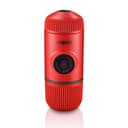 Closest to espresso · Hand-pumped Hand-pumped piston, no motor or heater · pressurized 8 g basket (16 g with the add-on kit) · 80 ml water capacity · 18 bar stated maximum · 336 g · 1-year warranty The only option here that makes genuine espresso pressure — and crema with it. | The only option here that makes genuine espresso pressure — and crema with it.Hand-pumped piston, no motor or heater · pressurized 8 g basket (16 g with the add-on kit) · 80 ml water capacity · 18 bar stated maximum · 336 g · 1-year warranty | $55.17In stock, checked October 10, 2026 Check Price on Amazon |
| 2 | 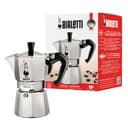 #2 Bialetti Moka Express (6-cup) Best strong coffee · Stovetop, 1-2 bar Aluminium stovetop steam-pressure brewer · roughly 1-2 bar · no filter paper · the original 1933 design, still the category standard Strong, syrupy stovetop coffee for about the price of two bags of beans. | Strong, syrupy stovetop coffee for about the price of two bags of beans.Aluminium stovetop steam-pressure brewer · roughly 1-2 bar · no filter paper · the original 1933 design, still the category standard | $49.98In stock, checked October 10, 2026 Check Price on Amazon |
| 3 | 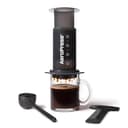 #3 AeroPress Original Coffee Press Most versatile · Manual, a few bar Immersion plus hand pressure plus a paper micro-filter · brews concentrate or a full cup · dishwasher-safe, essentially unbreakable · filters sold separately One brewer that makes concentrate, long coffee and everything between. | One brewer that makes concentrate, long coffee and everything between.Immersion plus hand pressure plus a paper micro-filter · brews concentrate or a full cup · dishwasher-safe, essentially unbreakable · filters sold separately | $29.96In stock, checked October 10, 2026 Check Price on Amazon |
| 4 | 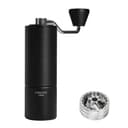 The grinder · Hand grinder 38 mm S2C660 CNC-machined stainless conical burrs · 0.0233 mm per click, 30 clicks per rotation · 20 g catch cup · warranty not published by Timemore Fine, consistent grind without a plug — the part you cannot skip. | Fine, consistent grind without a plug — the part you cannot skip.38 mm S2C660 CNC-machined stainless conical burrs · 0.0233 mm per click, 30 clicks per rotation · 20 g catch cup · warranty not published by Timemore | $99.00In stock, checked October 10, 2026 Check Price on Amazon |
Method: hand-pumped shot
| Type | Hand-pumped piston, portable — no pump motor, no heater |
|---|---|
| Basket | Pressurized; 8 g (16 g with the add-on Barista Kit) |
| Water capacity | 80 ml |
| Max pressure | 18 bar (261 psi), as stated by Wacaco |
| Grind | Extra-fine |
| Size / weight | 62 × 71 × 156 mm / 336 g (11.9 oz) |
| Heats water? | No — fill with hot water before brewing |
Who it is for: anyone who wants an actual pressure-brewed, crema-topped shot without a counter, a plug or a machine.
- Grind extra-fine — finer than you would for a moka pot, close to what a machine wants. Wacaco specifies extra-fine, and the device is unforgiving of coarse grind in the opposite direction to a machine: too coarse and the shot gushes thin.
- Dose the basket.8 g in the standard basket, 16 g with Wacaco's add-on kit. Level it and tamp lightly with the scoop — the basket is pressurized, so it tolerates an imperfect tamp.
- Fill the chamber with hot water to the 80 ml mark. Water just off the boil; the device adds no heat of its own, so anything cooler shows up as a sour, thin shot.
- Pump. Short, steady strokes. The first few build pressure with nothing coming out, then the shot starts. Keep going until the flow stops — there is no gauge, so the resistance in your hand is the instrument.
- Drink it immediately. It is a small shot in a small cup, and like any espresso it changes within a minute.
The honest ceiling. The pressurized basket that makes this forgiving is also what limits it: the crema is partly manufactured by the restrictor rather than purely by the coffee, and an 8 g dose is half a modern double. It will not taste like a well-pulled shot from a real machine with a good grinder. What it will do is make a genuinely espresso-like drink anywhere there is hot water. The wider category, including proper levers, is in the best manual espresso machines.
Method: moka pot
Who it is for: someone who wants strong, concentrated coffee on a stovetop for the least money, and does not need it to be espresso.
- Grind finer than drip, coarser than espresso.This is the single most common mistake: espresso-fine grind in a moka pot creates a bed that one to two bar cannot push through in time, the base keeps heating, and the brew eventually forces its way out bitter and scalded — the same burnt, ashy flavour an over-hot machine produces.
- Fill the base with pre-boiled water to just below the safety valve. Starting with hot water shortens the time the coffee spends sitting on a heating metal surface, which is where the burnt flavours come from.
- Fill the funnel level and do not tamp. Ever. Tamping is an espresso technique and it is exactly the wrong move at this pressure.
- Moderate heat. Medium, never full blast. High heat drives pressure up faster than water can pass through the bed and pushes the brew out harsh.
- Pull it off the heat the moment it gurgles. The gurgle is steam arriving where coffee used to be. Everything after it is the bitter part.
Done properly this is an excellent drink — concentrated, heavy, a little bitter in a way that suits milk very well. It is not espresso and no accessory makes it so, which we argue out in espresso machine vs moka pot. If you specifically want more foam from a stovetop, Bialetti's Brikka uses a weighted valve to hold back the brew until more pressure builds; availability on it comes and goes, and it is still nowhere near nine bar.
Method: AeroPress concentrate
Who it is for: someone who wants one cheap, indestructible brewer that makes an espresso-ish concentrate today and a clean filter cup tomorrow.
- Grind fine — between drip and espresso. Finer than a moka pot, coarser than the Nanopresso.
- Use a short, strong recipe for concentrate: a high dose against a small amount of water, brewed for about a minute to a minute and a half rather than the three minutes of a long cup.
- Press slowly. Thirty seconds of steady pressure rather than a shove. Fast pressing does not add extraction, it adds channelling and a bitter finish.
- Lengthen or not. Drink the concentrate as a small, intense cup, or add hot water for something closer to a long black and milk for something latte-shaped.
The AeroPress is the most versatile brewer on this page and the furthest from espresso in mechanism — a paper filter removes the oils that give espresso its body, which is why the result is clean rather than syrupy. That is a feature if you like clarity and a limitation if you want texture. Compared against the other immersion option in AeroPress vs French press.
What does not work
Three widely-shared methods that we would not recommend, and why.
- "French press espresso". A French press applies no pressure at all — the plunger separates grounds from liquid, it does not force water through them. Grinding fine for a press just fills your cup with silt, because a metal mesh filter cannot hold back fines.
- Instant espresso powder. Fine for baking and for an emergency. It is soluble coffee, not brewed coffee, and no amount of stirring creates crema or body.
- Forcing an espresso grind into a drip machine. You get a slow, over-extracted, bitter pot and a machine that may overflow its basket. Drip brewers are gravity-fed; there is no mechanism for pressure to appear.
If what you actually want is the strength rather than the method, it is worth reading is espresso stronger than regular coffee — the answer is less obvious than it looks, and a moka pot or AeroPress concentrate may already be giving you what you were chasing.
Which one to buy
If you want espresso specifically — pressure, crema, a small intense shot — the Wacaco Nanopresso is the only honest answer on this page. Eighteen bar stated maximum, generated by your hand, into a pressurized 8 g basket. It is also the cheapest route to a pressure-brewed shot that exists, and it travels in a bag.
If you want excellent strong coffee and do not need the label, buy the Bialetti Moka Express and learn the five steps above — it is the better daily drink for most people and costs very little. If you want flexibility, the AeroPress makes concentrate, long coffee and everything between, and it is almost impossible to break.
And whichever you choose, put the next money into a burr grinder rather than a second brewer. If you eventually decide you want real espresso on a counter, the entry point is cheaper than people assume — see the best machines under $200 or, if a pod machine is your current setup, upgrading from pods to espresso.
What we know, and how we know it
What we did
- Took the specs from the manufacturer's own documentation — Wacaco's Nanopresso product page and Timemore's C3-series specifications. Not from a retailer listing, and not from another blog.
- Priced it from Amazon's API, with the date we checked shown next to the number. If that price is more than 48 hours old, this page stops showing a number at all rather than show you a wrong one.
- Formed a verdict from those specs, the price, and what owners publicly report.
Where we hedged, and why
We have not used this equipment and we run no lab, so no pressure measurement, timing or tasting on this page is ours. The Timemore grinder is in our spec database and its table is generated from it; the Nanopresso's table is rendered inline from Wacaco's own product page. The 18 bar maximum is Wacaco's stated figure, attributed as such.
The pressure figures for moka pots and AeroPresses are orders of magnitude, not measurements."One to two bar" for a moka pot and "a few bar" for hand pressure on an AeroPress describe how these mechanisms work — steam pressure in a sealed chamber, and a human arm on a plunger — rather than readings we took. We use them to make a qualitative point about crema and body, and we do not attach precise numbers to either device.
The methods above are standard technique for each brewer, consistent with our own moka pot and AeroPress guides. We make no claim that any of these devices tastes as good as a machine shot, and we say plainly where each one stops. No price appears in our prose; every number is live from Amazon with the date it was checked.
What we did not do
We do not run a lab. We have not pulled thousands of shots on this machine, and we are not going to pretend otherwise. We have not used this unit ourselves. Everything above is sourced research, and it is labeled as such. Where we have used a machine, we say so and show it.
How we're paid
If you buy through a link on this page, we earn a commission. It costs you nothing extra and it does not change what we recommend — we link to the better option for the buyer even when it earns us less. See how we review and our full disclosure.
Frequently asked questions
Can you really make espresso without an espresso machine?
Only with a device that generates real pressure. A hand-pumped piston maker does: Wacaco states an 18 bar maximum for the Nanopresso, and because you supply the force it is genuine. A moka pot reaches roughly 1-2 bar and an AeroPress a few bar at most by hand, so both produce strong concentrate rather than espresso — good coffee, different drink.
Does a moka pot make espresso?
No. A moka pot is a steam-pressure brewer working at around one to two bar, where espresso needs about nine. It makes a strong, syrupy, slightly bitter concentrate that is excellent in its own right and very good with milk. Treating it as a low-pressure espresso machine — grinding espresso-fine and tamping — is the standard way to ruin it.
What grind do I need to make espresso without a machine?
It differs per device, and getting it wrong is the usual failure. A hand-pumped maker wants extra-fine, close to machine espresso grind. An AeroPress wants fine — between drip and espresso. A moka pot wants finer than drip but coarser than espresso, and never tamped. All three want burr-ground coffee; a blade grinder's dust ruins each of them.
Is an AeroPress espresso?
No, though it can make a concentrate that works like one in a milk drink. Hand pressure on the plunger produces a few bar at most against espresso's nine, and the paper filter removes the oils that give espresso its body — so the result is clean rather than syrupy. Use a high dose, a small amount of water, about 90 seconds and a slow press.
Can you make espresso in a French press?
No. A French press applies no pressure at all: the plunger separates grounds from brewed coffee rather than forcing water through them. Grinding fine to compensate only fills the cup with sediment, because the metal mesh filter cannot hold fines back. It is a fine brewer for what it is and the wrong tool entirely for this job.
What is the cheapest way to make real espresso at home?
A hand-pumped maker is the cheapest route to a genuinely pressure-brewed, crema-topped shot — far less than any pump machine. If you want espresso on a counter with a steam wand for milk, the entry point is an inexpensive pump machine plus a hand grinder, and our under-$200 roundup covers that bracket honestly, including what you give up.
Sources
Specs come from the manufacturer's own documentation. Prices come from Amazon's API. Where a claim comes from what owners report, we link the thread and say so.
- Wacaco Nanopresso product page (hand-pumped piston, pressurized 8 g basket, 80 ml capacity, 18 bar stated maximum, extra-fine grind, 336 g)
- Bialetti — Moka Express range and stovetop brewing instructions
- AeroPress — official brewing instructions and product information
- Timemore Chestnut C3 series official specifications (38 mm S2C660 stainless conical burrs, ESP dial at 0.0233 mm per click)
- Specialty Coffee Association — coffee research and standards
Keep reading
- The moka pot guideThe full method for the stovetop brewer, including the mistakes that burn it.
- The AeroPress guideStandard and inverted, grind, timing and the pressure question in detail.
- The best manual espresso machinesHand-powered levers and pistons, from the Nanopresso up to a 58 mm lever.
- Espresso machine vs moka potWhether the stovetop is enough, or a machine is the real upgrade.
- Espresso vs coffeeWhy espresso is a brew method rather than a bean or a strength.
- Espresso machine pressure explainedWhat nine bar actually does, and why 15 on the box means something else.