
Grinders · Drip coffee
The Best Coffee Grinder for Drip Coffee
Drip is the most forgiving brew method there is about grind size and the least forgiving about grind consistency. That inverts the shopping list - and it means you can spend a lot less here than an espresso buyer has to.
The short answer
Buy the Baratza Encore ESP: its 40 stepped settings include a dedicated filter range (21-40) sitting above an espresso range, so it does drip properly today and espresso later without a second purchase. The budget pick is the SHARDOR conical burr grinder - for drip only, it is genuinely enough, and the jump from a blade grinder to any burr grinder is far larger than the jump between these five.
We earn a commission if you buy through a link on this page. It costs you nothing extra and it does not change what we recommend. Full disclosure.
All five picks, compared
Every pick on this page in one view, with the live Amazon price and stock on each row. Specs are the figures the maker or the listing publishes — nothing measured or scored by us. Prices are read from Amazon's API and were last checked November 22, 2026; where we have no verified price, the row says so rather than show you an old number.
| # | Grinder | Who it's for | Price & availability |
|---|---|---|---|
| 1 | 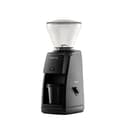 Best overall · Under $200 40 mm conical M2 steel burrs by Etzinger · 40 stepped settings, dual range (1-20 espresso, 21-40 filter) · factory-calibrated · 300 g hopper, 120 g bin · 70 W at 550 rpm · 1-year warranty For the drip drinker who might buy an espresso machine later. | For the drip drinker who might buy an espresso machine later.40 mm conical M2 steel burrs by Etzinger · 40 stepped settings, dual range (1-20 espresso, 21-40 filter) · factory-calibrated · 300 g hopper, 120 g bin · 70 W at 550 rpm · 1-year warranty | $199.95In stock, checked November 22, 2026 Check Price on Amazon |
| 2 | 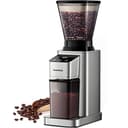 #2 SHARDOR Conical Burr Coffee Grinder Budget pick · Under $100 Conical burrs rather than blades, with multiple grind settings and a built-in timer per the listing · SHARDOR publishes no burr diameter and no spec sheet, so we quote none For drip only, forever. The cheapest thing here that does the job. | For drip only, forever. The cheapest thing here that does the job.Conical burrs rather than blades, with multiple grind settings and a built-in timer per the listing · SHARDOR publishes no burr diameter and no spec sheet, so we quote none | $59.99In stock, checked November 22, 2026 Check Price on Amazon |
| 3 | 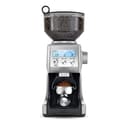 #3 Breville Smart Grinder Pro (BCG820) Easiest to live with · Under $200 Stainless conical burrs (Breville publishes no diameter) · 60 stepped settings spanning espresso to French press · grind time programmable in 0.2-second increments · 18 oz hopper · 165 W For the household that wants to press one button for the same dose daily. | For the household that wants to press one button for the same dose daily.Stainless conical burrs (Breville publishes no diameter) · 60 stepped settings spanning espresso to French press · grind time programmable in 0.2-second increments · 18 oz hopper · 165 W | $199.95In stock, checked November 22, 2026 Check Price on Amazon |
| 4 | 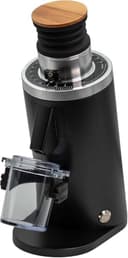 #4 DF54 Single Dose Coffee Grinder Best in the cup · Under $300 54 mm custom flat burrs · stepless micrometric adjustment · 25 g single-dose hopper · 150 W, 1,400 rpm · 4.7 kg · 1-year warranty For the drinker chasing clarity and switching beans often. | For the drinker chasing clarity and switching beans often.54 mm custom flat burrs · stepless micrometric adjustment · 25 g single-dose hopper · 150 W, 1,400 rpm · 4.7 kg · 1-year warranty | $260.00In stock, checked November 22, 2026 Check Price on Amazon |
| 5 | 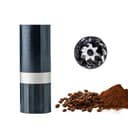 #5 1Zpresso Q Air Manual Coffee Grinder Best hand option · Under $100 30 clicks per rotation · 15-20 g capacity · 365 g · aimed by 1Zpresso at pour over, French press and cold brew · burr size and microns per click not published For one or two mugs a day, with no counter space to give up. | For one or two mugs a day, with no counter space to give up.30 clicks per rotation · 15-20 g capacity · 365 g · aimed by 1Zpresso at pour over, French press and cold brew · burr size and microns per click not published | $69.00In stock, checked November 22, 2026 Check Price on Amazon |
What drip coffee actually needs
A drip machine pours hot water onto a flat or cone-shaped bed of coffee and lets gravity pull it through a paper filter. There is no pump, no pressure and no 25-second window to hit. That makes the brew forgiving about grind size: a medium grind that is a little too coarse makes slightly weaker coffee, and a little too fine makes slightly stronger coffee, and both are drinkable. Compare that with espresso, where the same size error turns a shot into either water or sludge.
What drip is not forgiving about is consistency— how narrow the spread of particle sizes is. A bed with a wide spread extracts unevenly: the dust over-extracts into bitterness while the boulders under-extract into sourness, and because drip brews for four or five minutes, both of those have plenty of time to happen. The result is the flat, slightly papery, slightly bitter cup most people associate with home drip coffee and blame on the machine. It is usually the grinder.
That is the whole reason this page exists and the reason it is cheaper than the espresso version. Consistency comes from burrs crushing coffee to a set gap. Inconsistency comes from a blade chopping it for an arbitrary length of time. Crossing that line costs well under $100. Everything above that is refinement.
The three things worth paying for
1. Burrs instead of blades. This is the only step change. A blade grinder does not grind, it chops, and it produces dust and boulders in the same batch no matter how long you run it. Every pick on this page uses burrs. If you currently own a blade grinder, the cheapest grinder here will improve your coffee more than the most expensive one will improve on the cheapest. The full argument is in burr vs blade.
2. Dose capacity, because drip brews bigger than espresso.An espresso dose is 18 g or so. A 10-cup drip batch is nearer 60 g. That makes a hopper genuinely convenient here in a way it is not for an espresso single-doser: the Encore ESP holds 300 g with a 120 g grounds bin, the Smart Grinder Pro holds 18 oz (Breville publishes ounces only, with no gram figure anywhere). It also rules the smallest grinders out for batch brewing — the 1Zpresso Q Air takes 15-20 g per fill, which is one or two mugs, not a carafe.
3. Burr geometry, which is the last few percent.Flat burrs tend to produce a narrower particle distribution, which in filter coffee shows up as clarity — you taste the individual flavors in the bean rather than a blended average. That is what the DF54 is for. It is a real difference and it is also the smallest difference on this page: if you drink coffee with milk, you may not be able to find it. The reasoning in full is in conical vs flat burrs.
The five picks
Baratza Encore ESP — the one that covers drip and espresso
Who it is for: the drip drinker who suspects an espresso machine is in their future. The reason it leads a drip page rather than only an espresso one is the dial: Baratza splits 40 stepped settings into 1-20 for espresso and 21-40 for filter, so the coarse half of the range is a proper filter range rather than the tail end of an espresso dial. Published specs are 40 mm conical M2 steel burrs made by Etzinger in Liechtenstein, factory calibration on every unit, a 300 g hopper with a 120 g grounds bin, and a 70 W motor at 550 rpm grinding 1.3-2.2 g per second. For a 60 g batch that is roughly half a minute of noise, which is the honest cost of the slowest motor on this page. The full review has the rest.
SHARDOR Conical Burr Grinder — the budget pick
Who it is for: the person who brews drip coffee, intends to keep brewing drip coffee, and wants to stop drinking blade-ground coffee for as little money as possible. This is the budget pick and it is the cheapest product on the page. The listing states conical burrs rather than blades, multiple grind settings and a built-in timer; SHARDOR publishes no spec sheet, no burr diameter and no warranty term, so there are no figures here to quote. Being honest about where it sits: it is happiest at the coarser settings, which is precisely where drip lives, and we would not buy it to dial in espresso. For this one brew method it is not a compromise so much as the correct amount of grinder.
Breville Smart Grinder Pro — the easiest to live with
Who it is for:the household that brews the same size pot every morning and wants to press one button. Grind time is programmable in 0.2-second increments, so you set your batch once and repeat it; there are 60 stepped settings covering, in Breville's words, "the finest espresso to the coarsest French Press grind"; the hopper is published as 18 oz and the motor as 165 W, with no rpm figure and no burr diameter published anywhere by Breville. The catch with dosing by time rather than weight is drift: as a bag ages and the beans dry, the same seconds yield slightly less coffee. Weigh the output once a week and nudge it. It is also the natural companion to a Breville machine if one ever arrives.
DF54 — the best cup on the page
Who it is for:the drinker who buys interesting single-origin coffee and wants to taste what they paid for. Published specs are 54 mm custom flat burrs, stepless micrometric adjustment, a 25 g single-dose hopper, 150 W at 1,400 rpm, 4.7 kg, and a one-year warranty. Flat burrs narrow the particle spread, and in filter coffee that reads as clarity rather than body. Single-dosing means a bean change is clean instead of blended with the last three bags. The two honest catches are both about the hopper: 25 g is less than one drip batch, so a larger pot means grinding twice, and there is no hopper to grab from — you weigh every dose. If that sounds like a chore rather than a ritual, buy the Encore ESP.
1Zpresso Q Air — the hand grinder option
Who it is for:one or two mugs a day, in a kitchen with no counter space to spare. 1Zpresso publishes 30 clicks per rotation, a 15-20 g capacity and a 365 g body, and aims this model at pour over, French press and cold brew — the coarse end, which is where drip sits. It does not publish a burr diameter or a microns-per-click figure for the Q Air, so neither do we. Hand grinding at a coarse setting is genuinely easy; it is fine espresso that is hard work, and this grinder is not aimed at espresso. The limit is the capacity: 15-20 g is a single mug of drip coffee, so a full carafe means three or four fills, which nobody does twice. For batch brewing, buy a motor.
Where to set it, and how to adjust
Start at the middle of the filter range — settings 25 to 30 on the Encore ESP, the middle of the dial on the others — and use a ratio around 60 g of coffee per litre of water. Then let the taste tell you which way to move, because grind size is the lever and brew time is the readout:
- Thin, sour, watery, and the basket drained fast? Grind finer. The water is running through too quickly to extract much.
- Bitter, dry, harsh, and the basket was still draining late? Grind coarser. You are over-extracting and probably clogging the paper.
- Flat and papery with none of the bean's character? That is usually stale coffee or the grind spread rather than the size. Check the roast date first.
Change one thing at a time and give it two brews. The full reference for every method is the grind size chart, and if you also brew by hand, the French press grinder page and the two-method grinder page cover the overlap. Water chemistry is the other half of a flat-tasting drip cup, and that is here.
What we know, and how we know it
What we did
- Took the specs from the manufacturer's own documentation. Not from a retailer listing, and not from another blog.
- Priced it from Amazon's API, with the date we checked shown next to the number. If that price is more than 48 hours old, this page stops showing a number at all rather than show you a wrong one.
- Formed a verdict from those specs, the price, and what owners publicly report.
Where we hedged, and why
Three of these five grinders are in our spec database and every figure quoted for them comes from Baratza, Breville or 1Zpresso directly. Where a maker does not publish something we say so instead of borrowing a retailer's number: Breville publishes no burr diameter or rpm for the Smart Grinder Pro, 1Zpresso publishes no burr size or microns-per-click for the Q Air, and SHARDOR publishes no spec sheet at all.
We have not brewed with these grinders ourselves and we have not measured particle distribution. The ranking comes from published burr specs, adjustment ranges, dose capacity and price, plus the physics of a gravity-fed filter brew — not from a test we did not run. The claim that flat burrs read as clarity in filter coffee is the widely-held position in the specialty trade, not a measurement of ours. Prices and the tier labels come from the live price layer at the date stamped on the table above.
What we did not do
We do not run a lab. We have not pulled thousands of shots on this machine, and we are not going to pretend otherwise. We have not used this unit ourselves. Everything above is sourced research, and it is labeled as such. Where we have used a machine, we say so and show it.
How we're paid
If you buy through a link on this page, we earn a commission. It costs you nothing extra and it does not change what we recommend — we link to the better option for the buyer even when it earns us less. See how we review and our full disclosure.
More pairing pages on the grinders hub.
Frequently asked questions
What is the best coffee grinder for drip coffee?
The Baratza Encore ESP. Its 40 stepped settings are split into an espresso range (1-20) and a filter range (21-40), so the coarse half is a genuine filter dial rather than the tail of an espresso one, and it holds 300 g in the hopper, which suits drip's larger doses. If drip is the only thing you will ever brew, the SHARDOR conical burr grinder costs a fraction of it and is enough.
What grind size should I use for a drip coffee maker?
Medium - roughly the texture of granulated sugar - and start in the middle of your grinder's filter range, around settings 25 to 30 on a Baratza Encore ESP. Then adjust by taste: thin and sour with a fast drain means grind finer, bitter and harsh with a slow drain means grind coarser. Change one thing at a time and give each setting two brews.
Does the grinder really matter for drip coffee?
Yes, but for consistency rather than size. Drip is forgiving about how coarse the grind is and brutal about how uneven it is: a wide spread of particle sizes over-extracts the dust into bitterness and under-extracts the boulders into sourness over a four-minute brew. That flat, papery cup most people blame on their machine is usually the grinder.
Is a burr grinder worth it for drip coffee?
It is the single biggest upgrade available. A blade grinder chops rather than grinds and produces dust and boulders in the same batch regardless of how long you run it. Crossing from blades to any burr grinder costs well under $100 and improves the cup more than every step above it put together.
Can I use a hand grinder for drip coffee?
For one or two mugs, comfortably - coarse grinding is easy work, unlike fine espresso grinding. The limit is capacity: the 1Zpresso Q Air takes 15-20 g per fill, which is a single mug, so a full carafe means three or four refills. For batch brewing a whole pot, buy an electric grinder.
Is a flat burr grinder better for drip coffee?
Slightly, and only at the margin. Flat burrs tend to produce a narrower particle distribution, which in filter coffee reads as clarity - you taste individual notes rather than a blended average. The DF54 is the pick for that. It is also the smallest difference on this page, and if you drink your coffee with milk you may not find it at all.
What is the difference between a drip grinder and a pour over grinder?
Mostly dose size. An automatic drip machine brews a larger batch on a flat-bottom basket and controls the pour for you, so a hopper grinder is genuinely convenient. Pour over is a hand technique on a smaller cone where you control flow rate, which makes grind size a more active lever and makes a small single-dose or hand grinder perfectly practical.
Sources
Specs come from the manufacturer's own documentation. Prices come from Amazon's API. Where a claim comes from what owners report, we link the thread and say so.
- Baratza - Encore ESP product page (dual range, 40 mm M2 Etzinger burrs, throughput)
- Breville - BCG820 Smart Grinder Pro product page (60 settings, 0.2 s dosing, 18 oz hopper)
- 1Zpresso - Q Air product page (30 clicks per rotation, 15-20 g capacity, 365 g)
- SHARDOR conical burr grinder and DF54 - burr type, settings and single-dose hopper as published on the Amazon listings, read November 21, 2026
- Specialty Coffee Association - coffee research and standards
Keep reading
- The best grinder for pour overThe hand-poured cousin of this page, with a different shortlist.
- Grind size chartEvery brew method and where to set the dial, in one table.
- Burr vs blade grindersThe one upgrade on this page that is a step change rather than a refinement.
- The best electric coffee grindersThe wider electric shortlist, sorted by what the motor is for.
- The best grinder for French pressIf you brew coarse by hand as well as by machine.
- Water for espresso and coffeeThe other reason a drip cup tastes flat, and it is not the grinder.